
Home Blog Page 965

A typical U.S. family needs annual income of $145,000 to thrive, study finds. About half fall short.

0
A typical U.S. family needs annual income of 5,000 to thrive, study finds. About half fall short.


Roughly half of Americans fall short of the annual income needed to cover their basic needs, according to new research.

A U.S. family with children needs about $145,000 in income to be considered economically secure, according to a March 16 report from the Urban Institute. About 49% of Americans live below that financial threshold, the nonpartisan think tank found.

In 2024 (the latest available data), the median household income for married couples in the U.S. was $128,700, U.S. Census data shows

Ingredients for economic security 

According to Urban’s analysis, economic security today includes having enough money to pay for:

  • Adequate food
  • Clothing
  • Housing 
  • Health care
  • Child care
  • Transportation
  • Postsecondary education 
  • Student loan repayments
  • Savings for emergencies and retirement
  • Additional costs, such as for personal care products

The research comes as many Americans continue to feel the pinch of rising prices, with even some six-figure households saying they are struggling to pay for basics like utilities and health care

Riding the “hamster wheel”

While Urban’s measure differs from the poverty rate, which measures extreme hardship, it signals that even people with good-paying jobs may still not be earning enough to feel as if they are thriving. 

“That is consistent with the experiences that we’re hearing from people — that they might not be destitute, but some of them are skipping bills — and some of them are making their bills on a regular basis, but they’re not getting ahead,” economist Gregory Acs, vice president of Urban’s tax and income supports division and a co-author of the report, told CBS News. 

He added, “They feel like they’re on the hamster wheel economy.”

Earning above the $145,000 annual income threshold allows people to get ahead and feel financially secure, the analysis said.

“If you have more people feeling that their efforts are rewarded, that they have a stronger sense of autonomy, they are able to devote more time to their own communities, to their own families,” Acs said. “Parents can invest more in their kids — time, energy, money.”

The real poverty line?

The analysis echoes a viral Substack post from 2025 by Wall Street strategist Michael Green that posited that the actual poverty line in the U.S. — or how much you have to earn to afford necessities like food and shelter — is in reality much higher than the government’s official number, which stands at $33,000 for a family of four.

By Green’s calculation, Americans who earn less than $140,000 should be considered poor because their income isn’t sufficient to pay for basics like housing, childcare and food — similar to the measures the Urban Institute used in its analysis. 

“He called it a poverty rate — I think it actually was more of an economic security rate,” Acs said, referring to Green’s post. “His intuition, in his back-of-the-envelope calculation, is broadly consistent with the way we added things up.”

The same share of Americans likely remains below the economic security threshold in 2026, Acs noted, given that wages and inflation have been rising relatively in tandem in the last several years. Still, some households may be facing more acute financial stress this year, such as those who lost enhanced premium health credits for the Affordable Care Act plans when they expired in January. 

Who struggles most

The share of people who live below Urban’s economic security threshold varies by race, age and family composition, the analysis found. Single-parent households have among the lowest rates of economic security, with about 90% below the research firm’s proposed threshold. 

About 8 in 10 U.S. renters fall below the economic security line, roughly double the rate of homeowners, the research found, which also noted that about 45% of families with one member over the age of 65 lack economic security.

Under-65 households without children need about $95,900 in annual earnings to meet basic needs, less than families with kids, largely because they don’t face child care costs, according to Urban.

Families with at least one adult over 65 require $108,500 for economic security. While they don’t require childcare, older households tend to have higher healthcare costs, the analysis found.



Source link

Trump says US does not need Nato after being rebuffed over strait of Hormuz

0
Trump says US does not need Nato after being rebuffed over strait of Hormuz


Donald Trump has said the United States does not need Nato after being rebuffed by a number of the organisation’s member countries over his appeal for a multi-national naval force to reopen the key strait of Hormuz trade route closed by Iran.

Speaking to reporters from the Oval Office, the US president described the rejection of his calls as a “very foolish mistake”, adding without evidence: “Everyone agrees with us, but they don’t want to help. And we, you know, we as the United States have to remember that because we think it’s pretty shocking.”

Trump added that he thought Europe would have sent minesweepers to assist the with the operation in the strait, adding that it was “not a big deal” but was “unfair” to the US.

Once again among Trump’s targets was the British prime minister, Keir Starmer, who Trump said he was disappointed with, adding that the relationship with the UK had been good before Starmer took office.

Donald Trump points to a bust of Winston Churchill as he speaks to reporters during a meeting with the Irish prime minister in the Oval Office of the White House, on Tuesday. Photograph: Alex Brandon/AP

The US president’s remarks came after Starmer said on Monday that while the UK would be “taking the necessary action to defend ourselves and our allies, we will not be drawn into the wider war”. British government sources said there was no plan for UK ships to be deployed in the strait.

A number of US allies have questioned Trump’s changing logic for, and the necessity of, the US-Israeli war against Iran, now in its third week.

In an earlier post on his Truth Social network, Trump also called out Japan, Australia and South Korea for saying they would not be sending warships. “Because of the fact that we have had such Military Success, we no longer ‘need,’ or desire, the Nato Countries’ assistance _ WE NEVER DID!” he wrote.

“Likewise, Japan, Australia, or South Korea.”

His remarks came in the midst of an escalating crisis in the Middle East, which has seen Iran attack cargo vessels transiting the strait of Hormuz bringing oil shipments from large parts of the Gulf to a halt and triggering sharp rises in the global price of oil.

On a typical day, ships carrying about a fifth of the world’s oil travel through the narrow passageway but Iran has said it would not now allow “even a single litre” to be shipped to its enemies. That has sent oil prices above $100 (£75) per barrel and threatened a surge in inflation for the global economy.

In response to reports that he was considering potential ground operations by American or Israeli forces – either in the shape of taking over the Kharg Island oil port complex or in the area of Isfahan where Iran has stored stores much of its of highly enriched uranium – Trump said, “I’m really not afraid of that. I’m really not afraid of anything” when asked if such a move might risk a Vietnam-style quagmire.

Reuters meanwhile reported that the White House was encouraging the Ahmed al-Sharaa regime in Syria to help disarm Hezbollah in eastern Lebanon, a proposal that could pit Sunni former Salafists from the al-Nusra Front, which was implicated in sectarian massacres, against Shia Hezbollah forces.

Trump’s messaging on Tuesday remained contradictory as it has through much of the war, with the US president refusing to be drawn on a timeline even as he bragged about his military successes.

“Look, if we left right now it would take 10 years for them to rebuild,” he said. “We’re not ready to leave yet, but we’ll be leaving in the near future.”

Separately the Washington Post reported that senior Israeli officials told US diplomats that Iranian protesters would “get slaughtered” if they took to the streets against their government, even as Israel continued to publicly call for a popular uprising.

Iran launched fresh attacks across the Gulf on Tuesday, widening a conflict that has already begun to spill beyond its initial fronts.

Qatar said it had intercepted a missile, with falling debris causing a fire but no casualties. In the UAE, authorities briefly shut down airspace as the military responded to what it described as missile and drone threats before declaring the situation stabilised.

In Iraq, drone and rocket attacks reportedly struck near the US embassy in Baghdad, while a separate strike killed four people at a house said to be hosting Iranian advisers. The incidents underscored how quickly Iraq was being drawn deeper into the regional confrontation.

Explosions were also reported across Iran, including in Tehran, Ahvaz, Isfahan and Shiraz. Meanwhile, Iraq’s oil minister said Baghdad had reached an understanding with Tehran to allow tankers to cross the strait of Hormuz.Trump also hailed the reported death of Ali Larijani, the secretary of Iran’s supreme national security council, in an Israeli strike, without actually naming him but referring to his supposed role in spearheading the recent crushing of mass protests.

“Their leaders are gone,” Trump said of Iran’s clerical regime. “A lot of people say their actual top was killed yesterday, along with somebody else who was responsible for the killing 32,000 – he was in charge of the killing of protesters.

“It’s an evil group. I mean, they’ve killed much more than 32,000 people. And the man who was responsible for that was also killed yesterday.”


Source link

Congolese President Sassou Nguesso wins fifth term: Provisional results

0
Congolese President Sassou Nguesso wins fifth term: Provisional results


Congolese President Denis Sassou Nguesso’s election success will extend his nearly 42 years in power.

Republic of Congo President Denis Sassou Nguesso has been re-elected for a fifth consecutive term, extending his nearly 42 years in power, according to provisional results.

On Tuesday, Interior Minister Raymond Zephirin Mboulou announced on state TV that Sassou Nguesso received 94.82 percent of Sunday’s vote.

Recommended Stories

list of 3 itemsend of list

State television also reported turnout of 84.65 percent; however, many polling stations in the capital, Brazzaville, on Sunday had short lines or no lines at all.

Sassou Nguesso, 82, was projected by analysts and diplomats to easily win the election after he ran against six candidates who were less well known.

Boycott

Two key parties had boycotted the elections over allegations of unfair electoral practices, with two of the best-known opposition figures, General Jean-Marie Michel Mokoko and Andre Okombi Salissa, imprisoned for nearly 10 years.

But in the run-up to the election, the internet was shut down as usual during a presidential vote, and traffic was restricted across the capital.

Supporters of incumbent President of the Republic of Congo and presidential candidate Denis Sassou Nguesso stand on the side of the road as they wait fot him to arrive at a polling station in Brazzaville on March 15, 2026 during the Republic of Congo's presidential elections. (Photo by Daniel BELOUMOU OLOMO / AFP)
Supporters of incumbent President of the Republic of Congo and presidential candidate Denis Sassou Nguesso stand on the side of the road as they wait for him to arrive at a polling station in Brazzaville on March 15, 2026 [Daniel Beloumou Olomo/AFP]

Clarisse Massamba, a teacher who voted at the Lyce Javoueh in Brazzaville, told The Associated Press news agency that it was a given that Sassou Nguesso would win the election.

“Everyone knows that, faced with his six inexperienced opponents, President Denis Sassou Nguesso will be re-elected with a high score as usual. Since the election is not a big issue, we shouldn’t cut off communication,” Massamba said.

During the campaign period, Sassou Nguesso and his opponents were mismatched with the incumbent president, the only candidate to travel around the country to canvass voters, with effigies placed in the capital.

Moreover, Joe Washington Ebina, a Congolese human rights activist, told the Reuters news agency that human rights activists were arrested, ⁠several opposition parties were suspended, and ⁠public gatherings were closely monitored in the run-up to the election.

Decades in power

Republic of Congo continues to struggle with high international debt, which, according to the World Bank, stands at 94.5 percent of its gross domestic product, despite being an oil and mineral-rich country.

Sassou Nguesso, who runs the Congolese Party of Labour, first came to power in 1979 and ruled until 1992.

In 1997, Sassou Nguesso returned to power as militia leader following a four-month civil war. In 2015, a constitutional referendum removed presidential age and term limits, allowing him to run again.


Source link

Can your UAE employer stop your salary if you are stranded outside the emirates amid Iran vs US-Israel war? Here’s what the law really says – The Times of India

0
Can your UAE employer stop your salary if you are stranded outside the emirates amid Iran vs US-Israel war? Here’s what the law really says – The Times of India


UAE Labour Law: Can Employers Withhold Salary for Stranded Employees Amidst Iran vs US-Israel War?

As geopolitical tensions in the Middle East and Iran vs US-Israel war disrupt travel and leave thousands of expatriates unable to return to the UAE, a pressing question is surfacing across workplaces and WhatsApp groups alike: Can your employer legally stop your salary if you are stuck abroad? The answer, according to legal experts and recent clarifications under UAE Labour Law, is far from straightforward and depends heavily on why you are stranded, whether you can work remotely, and how you communicate with your employer.

The core UAE rule: Salary is tied to work

At its simplest, UAE labour regulations operate on a fundamental principle that salary is paid in exchange for work performed. If an employee is not working and has no approved leave or arrangement, an employer may not be obligated to continue salary payments. However, the current situation, marked by airspace closures, war-related disruptions and flight cancellations, falls into a more complex legal category.Being stranded is not your fault. Legal experts emphasise that if an employee is stuck outside the UAE due to circumstances beyond their control, such as war, government restrictions or suspended flights, this is typically treated as a “legitimate and justified absence.”In such cases:

  • The absence should not be treated as misconduct
  • Employers are expected to act reasonably and in good faith
  • Immediate termination or punitive action could be challenged legally

This distinction is critical. Under UAE Labour Law, employees can be terminated for absence without valid reason but force majeure situations like conflict or travel bans don’t fall into that category.

So, will UAE employees still get paid while stranded abroad amid Iran vs US-Israel war?

This is where nuance comes in. There is no explicit clause in UAE Labour Law that mandates salary continuation for employees stranded abroad. Instead, outcomes depend on three key scenarios:

  1. If You Can Work Remotely – If you are able to perform your job from abroad and your employer agrees, then your salary is typically expected to continue as normal and the employment relationship remains active. This is increasingly the most practical solution many companies are adopting.
  2. If You Cannot Work – If your role cannot be performed remotely, employers may place you on paid leave, unpaid leave or adjusted terms. Salary payments may be paused depending on mutual agreement. In such cases, the law encourages flexibility and negotiation, rather than rigid enforcement.
  3. If You Fail to Inform Your Employer – This is where employees risk losing protection. If you do not communicate your situation, your absence could be treated as unauthorised, salary can legally be withheld for that period and you may even face termination after prolonged absence. Under the law, absence beyond seven consecutive days without valid reason can trigger dismissal.

Communication is not optional in UAE workplaces, it is legal protection

Across all expert advice, one rule stands out and that is to inform your employer immediately. Employees are expected to:

  • Notify their company about their situation
  • Provide proof where possible (flight cancellations, restrictions, etc.)
  • Stay available for work if feasible

Failing to do so weakens your legal position, even if your situation is genuinely beyond your control.

The grey area: No one-size-fits-all answer for salary in the UAE

Unlike clearer labour provisions, such as end-of-service benefits or working hours, this scenario sits in a legal grey zone. The UAE’s employment framework relies heavily on:

  • Employment contracts
  • Company policies
  • Mutual agreement between employer and employee

This means that two employees in identical situations could face completely different outcomes depending on their organisation’s approach. In practice, most UAE employers are opting for pragmatic, case-by-case solutions rather than strict enforcement. These include:

  • Temporary remote work arrangements
  • Flexible leave policies
  • Adjusted work expectations

This reflects a broader shift in the UAE’s labour ecosystem toward adaptability during crises, especially in a region frequently impacted by geopolitical developments. No, your employer cannot automatically stop your salary just because you are stranded abroad but they also are not always legally required to continue paying you.Your outcome depends on three things:

  1. Whether your absence is genuinely unavoidable
  2. Whether you can continue working remotely
  3. Whether you have kept clear and timely communication with your employer

In a volatile global environment, your best protection is not just the law. It is transparency, documentation and proactive coordination with your workplace.


Source link

Eli Lilly shares slide after a bearish Wall Street analyst call — here’s our view

0
Eli Lilly shares slide after a bearish Wall Street analyst call — here’s our view


Source link

Nissan joins Toyota, Honda in plans to export U.S. cars to Japan

0
Nissan joins Toyota, Honda in plans to export U.S. cars to Japan


The Nissan Murano is seen at the New York International Auto Show on April 16, 2025.

Danielle DeVries | CNBC

DETROIT — Nissan Motor plans to join fellow Japanese automakers Toyota Motor and Honda Motor in exporting U.S.-produced vehicles to Japan following changes to the country’s vehicle import rules reached through a trade deal last year with the Trump administration.

The company on Tuesday said it will import the midsize Nissan Murano, built in Smyrna, Tennessee, to Japan beginning early next year. It marks the first American-made Nissan sold in Japan since the 1990s, according to a Nissan spokeswoman.

“With the introduction of this model, Nissan aims to further strengthen its product lineup in Japan and meet the diverse needs of Japanese customers,” Nissan CEO Ivan Espinosa said in a statement.

Nissan is the latest Japanese automaker to announce such plans after changes to regulations meant automakers could more easily import vehicles from the U.S. to Japan. Those rules were put in place as part of a trade deal that also included easing U.S. tariffs enacted by President Donald Trump.  

Under the new Japanese regulations that were confirmed last month, U.S.-made vehicles don’t have to meet the country’s vehicle certification as long as they comply with American standards.

Nissan confirmed plans to import the Murano from the U.S. with the steering wheel on the left-hand side of the vehicle, which is typical for Americans but not in the Japanese market.

Automakers typically have to tailor vehicles to meet safety and other regulations for different countries globally. They can range from things such as lighting and side mirrors to more complex parts such as the location of the steering wheel.

Stock Chart IconStock chart icon

Toyota, Honda and Nissan stocks

Nissan’s decision follows Toyota announcing plans in December to begin exporting the Camry sedan, Highlander SUV and Tundra pickup from the U.S. to Japan beginning this year.

Honda — Japan’s second-largest automaker behind Toyota — earlier this month also announced plans to export the U.S.-built Acura Integra Type S and Honda Passport TrailSport Elite SUV to Japan beginning in the second half of this year.

While plans for such exports from the U.S. to Japan likely help with trade relations between the countries, the number of vehicles to be imported may not be meaningful, experts said.

About 95% of the Japanese market is made up of locally produced vehicles, leaving less than a quarter of a million units for imports from all around the world, and a majority of those are from Germany, according to Sam Fiorani, vice president of global vehicle forecasting for AutoForecast Solutions.

Vehicles sold under U.S. brands, including models built in other countries, are a small fraction of that group. They include sales of only about 8,700 Jeeps and 500 Cadillacs, according to Fiorani.

Many of the vehicles planned to be imported to Japan also are considered big or not mainstream for Japanese consumers, according to Stephanie Brinley, a principal automotive analyst at S&P Global Mobility.

“These vehicles are still — with the exception of the Integra — are relatively large for Japan. I think they’re still going to be niche, low-volume products within that market,” she said. “But because they are a little bit different and a little bit bigger, they can position them as a special halo product in Japan.”

Choose CNBC as your preferred source on Google and never miss a moment from the most trusted name in business news.


Source link

Robot firefighters enter burning buildings first

0
Robot firefighters enter burning buildings first


NEWYou can now listen to Fox News articles!

When firefighters arrive at a major blaze, they often face the same problem. They have to walk into danger without knowing exactly what is inside.

Smoke hides everything. Floors may be unstable. Toxic gases can build up quickly. Even experienced crews sometimes enter buildings with limited information about what they are about to face.

Now, a new type of robotic vehicle could help change that. Instead of firefighters stepping into the unknown, a rugged robot can roll inside first. It can scan the scene, locate the fire and send back critical information in real time. That insight helps crews make smarter decisions before anyone risks their life inside. For firefighters, that extra visibility could make a big difference.

Sign up for my FREE CyberGuy Report
Get my best tech tips, urgent security alerts and exclusive deals delivered straight to your inbox. Plus, you’ll get instant access to my Ultimate Scam Survival Guide – free when you join my CYBERGUY.COM newsletter.

SHERIFF’S OFFICE TESTS AMERICA’S FIRST SELF-DRIVING POLICE SUV

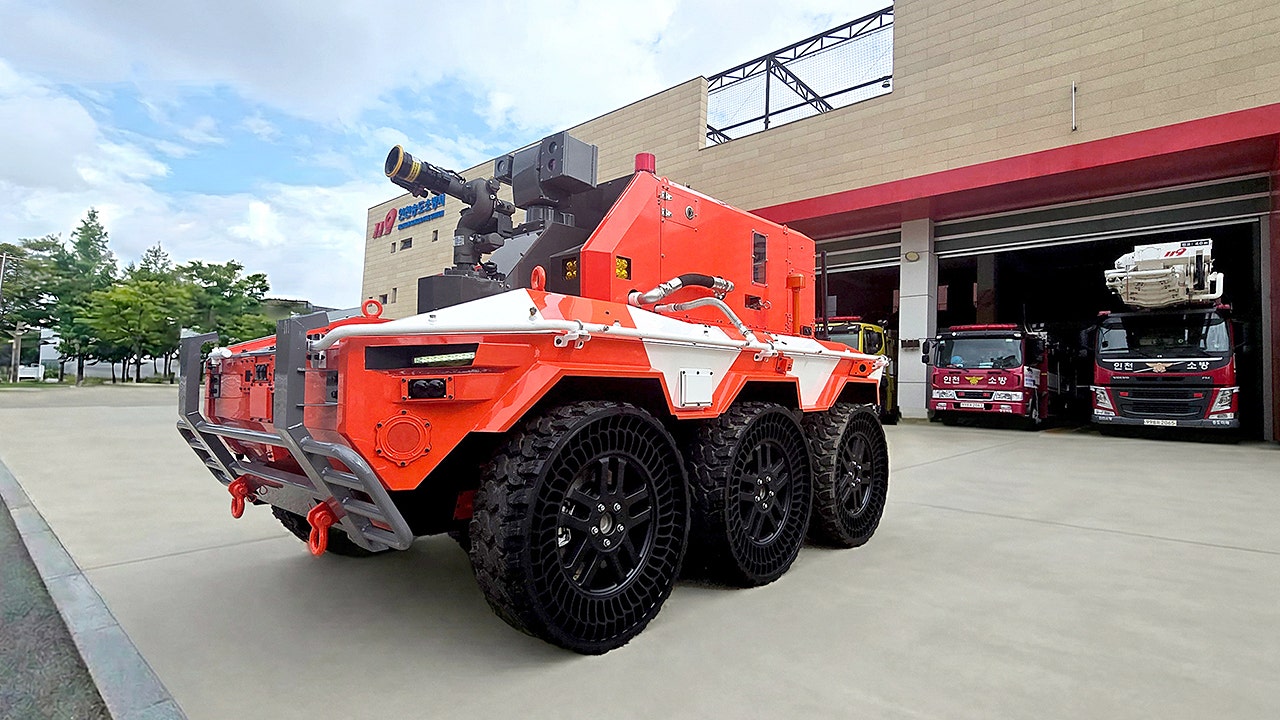
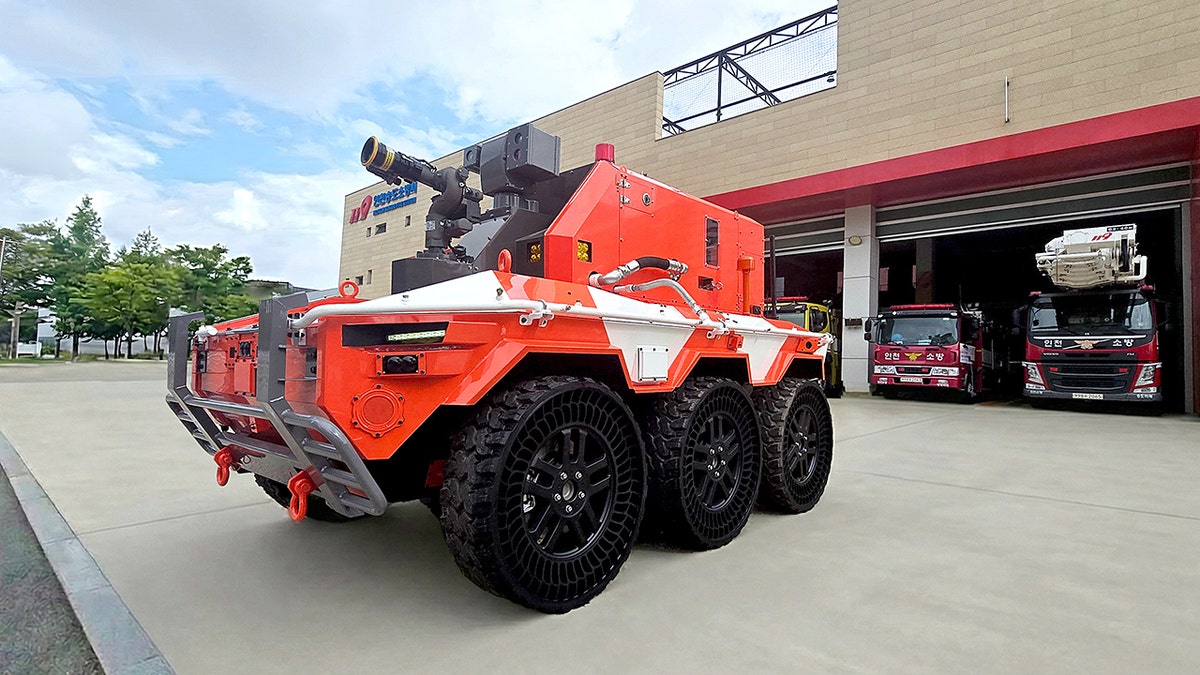
A firefighting robot built by Hyundai Motor Group can enter burning buildings before crews, using thermal cameras and real-time video to locate flames and hazards. (Hyundai Motor Group)

The robot is built to drive straight into the fire

This robotic firefighter is designed for environments where heat, smoke and collapsing structures make it dangerous for people. The vehicle carries a powerful water cannon that can fire a focused stream or a wide spray depending on the situation. Cameras that detect infrared heat allow it to see through thick smoke.

One of its most important features is a self-cooling system. The robot sprays a protective curtain of water around its body to prevent overheating. That system allows it to keep operating even when surrounding temperatures climb to nearly 1,500 degrees Fahrenheit. In conditions like that, most humans could not safely enter.

How the firefighting robot moves through dangerous spaces

Fire scenes are chaotic. Debris blocks hallways. Floors collapse. Visibility disappears. To handle those challenges, the robot uses six independently powered wheels. Each wheel has its own motor, which allows the vehicle to rotate in place and move through tight spaces.

It can climb steep ramps like those found in parking garages or warehouses. It can also roll over obstacles about a foot tall. An advanced driving system scans the terrain around the robot and helps guide it around hazards. At the same time, cameras send live video back to firefighters outside the building. Crews can see where flames are spreading and where survivors may be trapped. That information helps firefighters form a plan before they move in.

A glowing hose that helps firefighters navigate smoke

Another feature focuses on a very practical problem firefighters face during rescues. The robot carries a hose that glows in dark, smoky environments.

Firefighters often rely on hoses to find their way out of buildings when visibility drops close to zero. The glowing hose creates a visible path that helps rescuers navigate thick smoke and find their way back to safety. It may sound simple. In the middle of a fire, it could be life-saving.

CHINA’S COMPACT HUMANOID ROBOT SHOWS OFF BALANCE AND FLIPS
 

Hyundai unmanned firefighting robot

Hyundai unveiled an unmanned firefighting robot. (Hyundai Motor Group)

Why are firefighting robots starting to show up in disaster zones

Firefighting robots are part of a growing trend in emergency response. Across the world, machines are stepping into tasks that place humans at extreme risk. Autonomous mining trucks now work in remote mines. Robots clear landmines in former war zones. Some robotic dogs even carry water cannons to assist firefighters.

The idea is straightforward. Let machines handle the most dangerous early moments while human responders focus on rescue and strategy. Over time, these systems may become even smarter. Engineers are exploring ways artificial intelligence could analyze fire size, smoke patterns and heat levels to help guide firefighting decisions.

Where this firefighting robot is already being used

The robotic firefighter was developed by Hyundai Motor Group, working with South Korea’s National Fire Agency. The company recently donated several of the vehicles to fire stations in the country so crews can begin using them in real emergencies. Two robots have already been delivered, with additional units expected soon.

The technology has already seen its first real-world test during a factory fire in North Chungcheong Province. There is also a serious reason for the push toward safer tools. According to the Korea National Fire Agency, 1,788 firefighters have been injured or killed at fire scenes over the past decade. Robots that can enter dangerous environments first could help reduce that number. 

What this means to you

Most people will never see one of these machines rolling down their street. At least not yet. But firefighting technology often spreads quickly once departments see real benefits. U.S. fire agencies already use drones, thermal cameras and robotics in certain rescue situations. A robot that can scout a burning building before firefighters enter could eventually become another tool in that toolbox. For firefighters, it means better information and fewer blind entries into dangerous structures. For the rest of us, it could mean faster rescues and safer emergency response.

THE NEW ROBOT THAT COULD MAKE CHORES A THING OF THE PAST

A Hyundai firefighting robot rolls down a road.

Six independently powered wheels allow the firefighting robot to climb ramps, navigate debris and move through tight spaces inside damaged structures. (Hyundai Motor Group)

Take my quiz: How safe is your online security?

Think your devices and data are truly protected? Take this quick quiz to see where your digital habits stand. From passwords to Wi-Fi settings, you’ll get a personalized breakdown of what you’re doing right and what needs improvement. Take my Quiz here: Cyberguy.com.

Kurt’s key takeaways

Every firefighter knows the first moments inside a burning building are the most unpredictable. Smoke hides the layout. Heat builds rapidly. Structural damage can happen without warning. A robot that rolls in first could change that dynamic. It gives crews eyes inside the building before they commit to entry. Technology like this will never replace firefighters. However, it can give them something incredibly valuable. Better information when every second counts.

If your local fire department had a robot that could enter a burning building first, would you want them to use it? Let us know by writing to us at Cyberguy.com.

CLICK HERE TO DOWNLOAD THE FOX NEWS APP

Sign up for my FREE CyberGuy Report
Get my best tech tips, urgent security alerts and exclusive deals delivered straight to your inbox. Plus, you’ll get instant access to my Ultimate Scam Survival Guide – free when you join my CYBERGUY.COM newsletter.

Copyright 2026 CyberGuy.com. All rights reserved.


Source link

Adult ADHD stimulant prescriptions are surging, and doctors are raising concerns

0
Adult ADHD stimulant prescriptions are surging, and doctors are raising concerns


NEWYou can now listen to Fox News articles!

Adults are seeking ADHD treatment at record rates. 

A new Canadian study reveals that stimulant prescriptions have more than doubled since the start of the COVID-19 pandemic, a trend that mirrors similar surges in the U.S., Australia, the U.K. and Finland.

Many mental health professionals say the findings align with what they are seeing in their clinics. 

SIMPLE DAILY HABIT MAY HELP EASE DEPRESSION MORE THAN MEDICATION, RESEARCHERS SAY

The study, which analyzed data from January 2016 to June 2024, found that the demographics of those receiving stimulants have shifted significantly. 

Before the pandemic, 48% of new recipients were female; during the pandemic, that number jumped to 59%. The most significant growth occurred among adults aged 25 to 34.

The time between a patient’s first ADHD-related healthcare visit and their first prescription shortened during the pandemic, researchers noted. (iStock)

The researchers also noted that the time between a patient’s first ADHD-related healthcare visit and their first prescription shortened during the pandemic.

By June 2024, the monthly rate of adults being prescribed stimulants reached 10.4 per 1,000 people, a more than sevenfold rise since the start of the study period.

While this could signal more efficient care, it also raises questions about whether patients are receiving thorough evaluations, the study indicated. 

SINGLE DOSE OF POWERFUL PSYCHEDELIC CUTS DEPRESSION SYMPTOMS IN CLINICAL STUDY

Dr. Nissa Keyashian, a California-based board-certified psychiatrist and author of “Practicing Stillness,” said the spike was not a surprise.

“In my practice and that of many of my colleagues, many people, particularly women, have received a new diagnosis of ADHD, usually inattentive subtype, in adulthood,” Keyashian, who was not involved in the study, told Fox News Digital.

Many of these women had symptoms that were overlooked during childhood, the doctor said. 

Medium close-up of a mother holding medication for her daughter, the child is reaching out towards the hand to receive the medication. They are in the kitchen of their home located in Newcastle Upon Tyne.

“Many only begin to struggle when they move out, are on their own and have to provide that structure for themselves,” an expert noted. (iStock)

Unlike the hyperactive or impulsive behaviors often seen in boys, the “inattentive subtype” typically causes fewer disruptions at home or school. 

“Many only begin to struggle when they move out, are on their own and have to provide that structure for themselves,” Keyashian noted.

ALWAYS RUNNING LATE? THE REAL COST TO YOUR RELATIONSHIPS MAY SURPRISE YOU

Jonathan Alpert, a New York City psychotherapist and author of the new book “Therapy Nation,” said he sees many adult patients who are struggling with focus, productivity and mental overload in a “very demanding digital environment.”

TEST YOURSELF WITH OUR LATEST LIFESTYLE QUIZ

“Those challenges can resemble ADHD, but they don’t always reflect an actual diagnosis,” Alpert, who also wasn’t involved in the research, told Fox News Digital. “Not every attention problem is ADHD.”

“Not every attention problem is ADHD.”

“We’re living in a culture that increasingly pathologizes normal human difficulty, and that should be concerning to everyone,” said Alpert.

The study also highlighted a shift in who is writing these prescriptions. While the number of stimulants prescribed by psychiatrists remained relatively stable, there was a significant increase in prescriptions from primary care providers and nurse practitioners.

Doctors consulting patients with close-up hands patient sitting at the doctor's office, diagnosis, prevention, health care, medical services counseling or education healthy lifestyle concept

By June 2024, the monthly rate of adults dispensed stimulants reached 10.4 per 1,000 people, a more than sevenfold rise since the start of the study period in 2016. (iStock)

The rise of large telehealth companies during the pandemic could be a contributing factor, according to Keyashian, because there could have been an uptick in diagnoses for individuals who didn’t actually have ADHD.

CLICK HERE TO SIGN UP FOR OUR HEALTH NEWSLETTER

“Medication should treat a disorder, not become a performance enhancer,” Alpert noted. “Over time, that can lead to psychological reliance and reinforce the idea that normal struggles require medical solutions.”

CLICK HERE FOR MORE HEALTH STORIES

The researchers acknowledged some limitations of the study, including lack of access to detailed medical records and uncertainty regarding whether these findings apply to all geographic regions.

Some stimulants may have been prescribed off-label as an adjunctive treatment for depression or anxiety, which also surged during the pandemic, they noted.

“Many people, particularly women, have received a new diagnosis of ADHD … in adulthood.”

For those who suspect they may have ADHD, Keyashian recommends seeing a psychiatrist who is well-versed in that specific diagnosis. 

“It’s best to ask the physician you are seeing about their experience and expertise,” she advised.

CLICK HERE TO DOWNLOAD THE FOX NEWS APP

“Many people today feel mentally scattered,” added Alpert. “The challenge is figuring out whether we’re seeing more [of the] disorder — or simply the cognitive strain of a hyper-distracted world.”

The research was published in the Canadian Medical Association Journal.


Source link

Mayors to gain more spending power under Reeves tax plans

0
Mayors to gain more spending power under Reeves tax plans


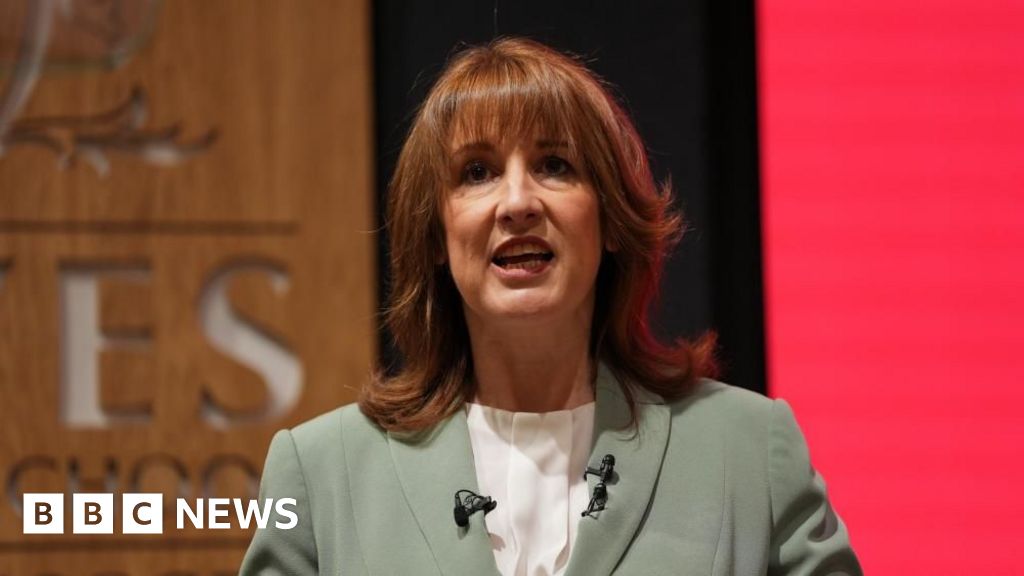
The chancellor sets out the government’s plan for economic growth, which also includes closer ties to the EU.


Source link

Diesel on ‘crash course’ to 170p a litre while petrol up 10p on pre-Iran war

0
Diesel on ‘crash course’ to 170p a litre while petrol up 10p on pre-Iran war


Petrol prices are now 10p higher than before the Iran war escalated, and diesel costs have shot up by 20p a litre, according to new figures.

The RAC said prices at the pump were “really starting to hurt drivers” as they continue to rise amid the conflict in the Middle East.

The average price of unleaded petrol at UK forecourts was 142.3p a litre on Tuesday, up 7.1% since February 28.

Average diesel prices had jumped by nearly 14% over the roughly two-week period to 162.1p per litre.

RAC head of policy Simon Williams said: “Petrol has now increased by 10p a litre since the start of the conflict in Iran and diesel by double that.

“This is really starting to hurt drivers who do a lot of miles, and especially for those with diesel vehicles.

“At 162p a litre they’re now paying £11 more than they were at end of February at £89 a tank.

“If oil stays around the 100 dollars a barrel mark, then the price of petrol should not go above 148p a litre.

“The outlook for diesel is worse as it appears to be on a crash course to an average price of 170p.”

Mr Williams said it was “more important than ever” to shop around for prices at different forecourts when people are filling up their cars.

Oil prices – which have a significant effect on the cost of wholesale fuel – have been hovering above 100 dollars a barrel in recent days, having exceeded the mark for the first time since 2022 last week.

Disruption to supply of the commodity because of Iran’s stranglehold on oil tankers passing through the Strait of Hormuz, a key international shipping route, has sent prices soaring.

Chancellor Rachel Reeves told petrol retailers last week they had a “shared obligation” to keep prices down for motorists.

And energy minister Michael Shanks said on Tuesday that the Government “stands ready to provide whatever support is needed to consumers” over energy bills, but asserted that there were “no concerns at all about fuel supply”.


Source link