

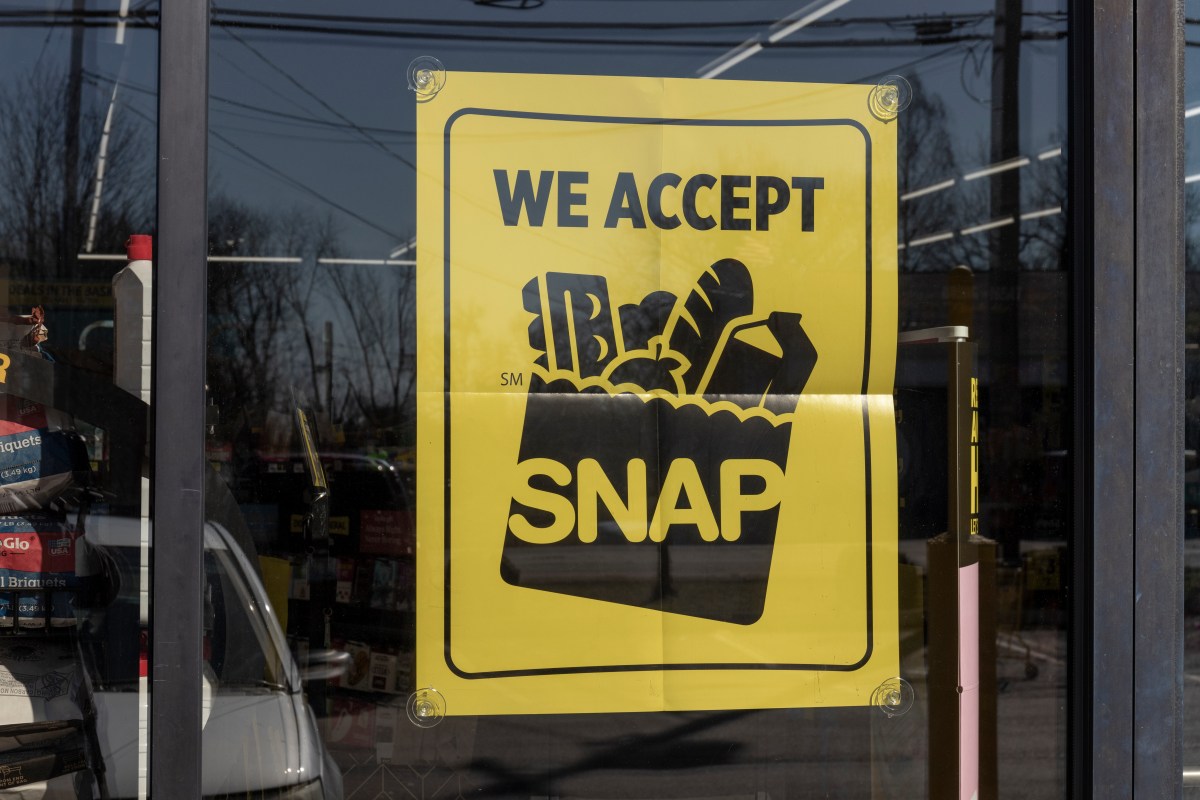

Florida lawmakers have agreed to include funding in the state budget for a new artificial intelligence-driven system designed to help reduce errors in the administration of Supplemental Nutrition Assistance Program (SNAP) benefits.
The proposal comes as new federal rules could force states with high payment error rates, including Florida, to begin covering part of SNAP benefit costs.
The proposal, which is part of the state’s pending budget legislation, still requires final approval by lawmakers before being sent to Governor Ron DeSantis later this week. Around 2.5 million people in Florida currently receive benefits through SNAP, commonly known as food stamps.
SNAP Reviews
Under the budget language agreed to by lawmakers, Florida’s Department of Children and Families would receive $4 million to “competitively procure a vendor to provide an electronic data analytics solution” for SNAP.
According to the budget text, the contractor would help the state lower its SNAP eligibility determination error rate “to a level that eliminates the state share of liability for such errors.”
The system would be expected to carry out “large-scale analyses of eligibility determinations using machine learning,” (a subset of artificial intelligence in which algorithms analyze data to learn patterns and make predictions) while also “identifying and correcting erroneous determinations, identifying root causes of erroneous determinations, and recommending operational improvements to avoid future errors.”
The budget language also states that the technology must comply with federal and state SNAP regulations and standards. Florida would need to complete procurement of the system by September 1.
SNAP Error Rates
The move comes as states face increasing financial pressure tied to payment accuracy in SNAP administration. Changes included in the federal One Big Beautiful Bill Act will require states with SNAP improper payment rates above 6 percent to begin covering a portion of benefit costs starting in fiscal year 2028.
Currently, the federal government pays the full cost of SNAP food benefits while administrative costs are shared with states.
Under the new rules, states with higher payment error rates could become responsible for between 5 percent and 15 percent of SNAP benefit costs.
Florida’s most recent payment error rate was 15.13 percent in 2024, according to the latest available data from the U.S. Department of Agriculture (USDA). Only eight states recorded rates below the 6 percent threshold: Idaho, Nebraska, Nevada, South Dakota, Utah, Vermont, Wisconsin and Wyoming. The potential financial impact has pushed states to look for new ways to improve administrative accuracy.
USDA Encourages AI Use
Last year, the USDA signaled support for states exploring artificial intelligence in SNAP operations. In a February 2025 letter to state agencies, the agency said AI “could be useful tools in assisting State agencies with workload and staffing challenges and improving customer service.”
The USDA added that it “encourages and supports State agencies’ use of advanced automation technologies to enhance the administration of SNAP and foster public trust.”
The letter also stated: “FNS encourages State agencies to explore opportunities to innovate and improve the delivery of SNAP benefits.”
States must notify the USDA when making major changes to SNAP administration systems.
Concerns About AI in Public Benefits
While AI can be a tool for improving efficiency and reducing costly errors, concerns have been raised about the risks of relying too heavily on automated systems in benefit programs.
A 2024 report from the Food Research & Action Center (FRAC) warned that AI systems “could present false or misleading information as fact.” The report said this could result in people being incorrectly directed toward or away from SNAP eligibility, particularly in complicated cases or for people with limited English proficiency.
FRAC also cautioned that biased or inaccurate training data could reinforce inequities related to race, gender, immigration status or other identity categories.
The report warned that “replacing merit staff in the guise that AI can perform their tasks will likely never be a reality,” adding that some claims about AI’s capabilities may be driven by “profit motives from private contractors.” Florida’s proposal does not make any mention of AI being used to replace human work.
At the same time, the organization said AI could still play a constructive role if used carefully.
“AI is one more tool in the toolbox of all those seeking to improve SNAP and end hunger,” the report said, adding that using the technology “thoughtfully and strategically” could help improve access to benefits and health outcomes.
What Happens Next
A vote on the budget is scheduled for Friday.