

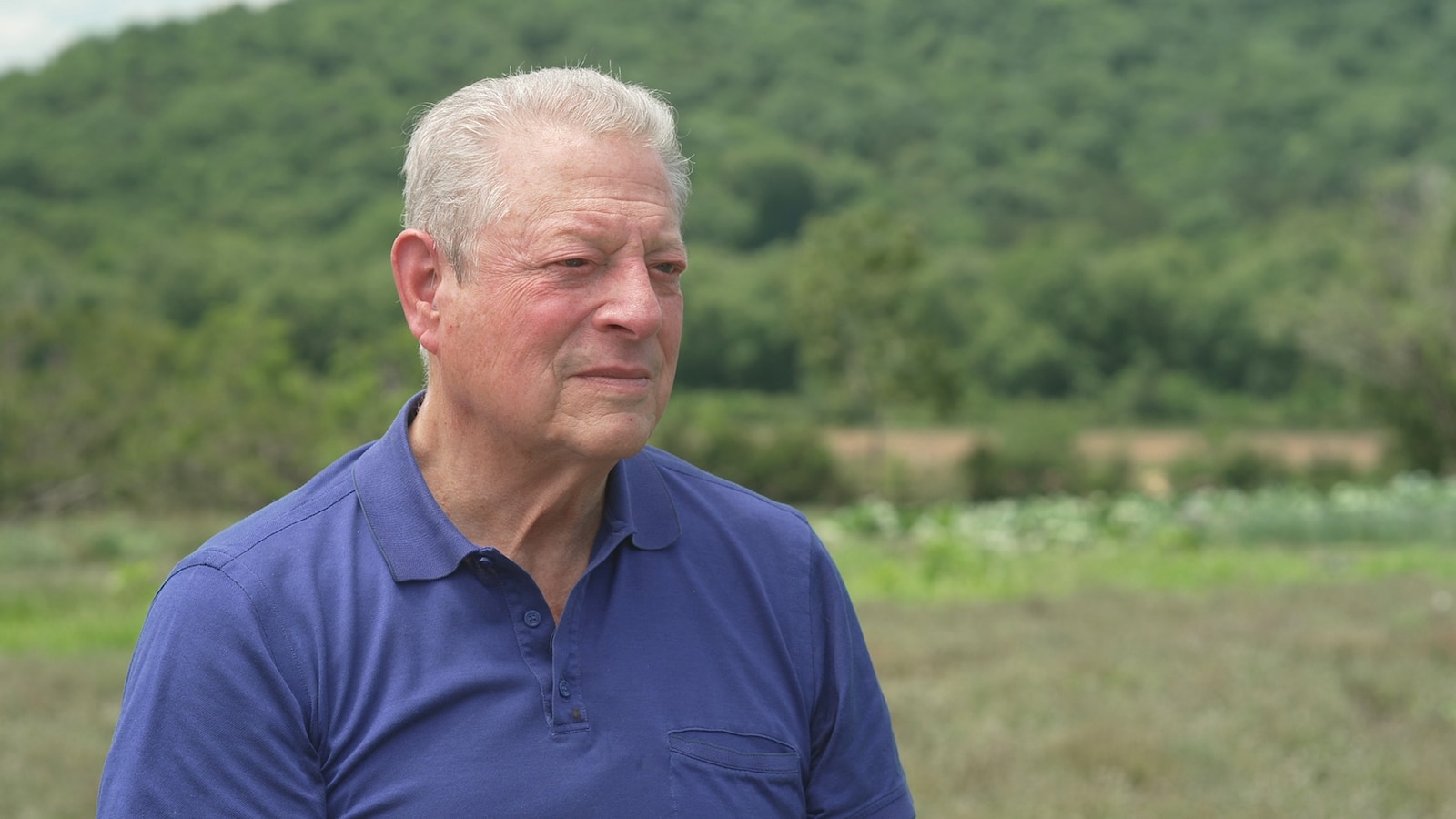

The scientists have been right about climate change all along, says former Vice President Al Gore on the 20th anniversary of the release of “An Inconvenient Truth,” the Oscar-winning documentary about Gore’s campaign to educate people about climate change.
When asked by ABC News chief meteorologist and chief climate correspondent Ginger Zee whether the film and its predictions on global warming hold up, Gore responded, “Unfortunately, yes.”
“The scientists were dead right on all the important elements of it, and it really is insane that we are continuing to use the sky as an open sewer and we’re trapping so much heat every day it’s equal to the amount that would be released by 800,000 Hiroshima-class atomic bombs exploding every day on the earth,” Gore said during an interview with ABC News at his family farm in Tennessee.
In a review of key claims by the documentary, ABC News found that the majority of the scientific observations made in “An Inconvenient Truth” have come to fruition or are on track to in the years to come. The last 11 years — from 2015 to 2025 — have been the hottest on record, according to scientific data from NOAA and the Copernicus Climate Change Service and summarized in a report released earlier this year by the World Meteorological Organization.
In the film, Gore also discussed how warming oceans would cause hurricanes to be more destructive. Climate scientists over the last decade have contributed to a growing body of evidence that human-amplified warming is leading to more intense storms and allowing for the rapid intensification of tropical cyclones as they approach land.
Former Vice President Al Gore speaks with ABC News’ Ginger Zee.
ABC News
Gore also explained in the film that carbon dioxide (CO2) emissions would rise to 500 parts per million (ppm) within 50 years. In 2006, CO2 emissions were about 380 ppm. Now, CO2 emissions are more than 430 ppm — more than 50% higher than pre-Industrial Revolution levels, according to NOAA.
The planet has not met the 500 ppm threshold because of the amount of new electricity generation that is coming from renewable energy, Gore said.
“That has changed what the economists are predicting about how much more fossil fuel use we will use in the years ahead, and that’s very good news,” Gore said.
In May, solar energy generated for more power in the U.S. than coal for the first time in history, according to a report by Ember, a think tank focused on the clean energy transition.
However, that does not mean the issue of CO2 emissions has been solved, Gore added.

Former vice president Al Gore attends the Japanese Premiere for the film based on his book “An Inconvenient Truth,” Jan. 15, 2007, in Tokyo.
Junko Kimura/Getty Images
The film won two Academy Awards in 2007: one for Best Documentary Feature and another for Best Original Song — for the track “I Need to Wake Up,” performed by American singer-songwriter Melissa Etheridge.
But the film received criticism in the aftermath of its release, with some naysayers accusing it of being alarmist or exaggerated.
When asked by Zee why so much focus was placed onto “what was wrong” in the film, Gore responded that the critics “cherry-picked” some of the facts, such as how many years before the Arctic would be ice-free. The film states that the Arctic, the fastest-warming region in the world, could be ice-free within five years. While there is still ice in the Arctic, sea ice cover has declined rapidly, and almost all of the “old” ice, the thickest sea ice, is almost gone, declining by more than 95% since the 1980s, according to the National Oceanic and Atmospheric Administration’s 2025 Arctic Report Card.
The current administration is setting the U.S. back in terms of decarbonizing the economy by cancelling “sensible programs,” eliminating regulations to reduce pollution and removing the U.S. from the Paris Agreement — the international treaty that aims to combat climate change by keeping global temperature rise to 1.5 degrees Celsius, Gore said.
When announcing its plan to withdraw from the Paris Agreement and other international environmental agreements, the Trump Administration said the agreements “do not reflect our country’s values or our contributions to the pursuit of economic and environmental objectives.” They added that the agreements don’t merit taxpayer money.
“The U.S. is hurting,” Gore said. “We are hurting ourselves by pretending that it’s not real and that we don’t need to do anything about it.”

Al Gore, Davis Guggenheim and producers accept the Best Documentary Feature award for “An Inconvenient Truth,” Feb. 25, 2007, at the Kodak Theatre in Hollywood.
Michael Caulfield/WireImage/Getty Images
However, the market is “talking,” Gore said. Renewable energy comprised about 90% of new electricity generation in 2025. In May 2026, solar power generated more energy than coal in the U.S. for the first time.
While the emergence of AI and the data centers that power it are “a cause for deep concern,” there is no need to panic, Gore said.
“All of the AI data centers put together in the world — their emissions are way less than the emissions from uncovered landfills,” Gore said. “If we want to reduce emissions, that’s an example of an easy place to start that’s bigger than the data centers.”
Gore also said that AI could be an opportunity to significantly reduce emissions by eliminating what he calls “inefficiencies that are invisible without AI.”
Gore, along with the Intergovernmental Panel on Climate Change (IPCC), were awarded the Nobel Peace Prize in October 2007 “for their efforts to build up and disseminate greater knowledge about man-made climate change, and to lay the foundations for the measures that are needed to counteract such change.”
In the film, Gore describes climate change as a moral and spiritual issue, rather than a political one. When asked by Zee if he still believes that, Gore responded, “Absolutely.”
“I put it in the context of all of the other morally based challenges that humanity has confronted: the abolition of slavery, the women’s rights and women’s suffrage,” Gore said.
ABC News’ Weather, Climate and Science Unit contributed to this report.