

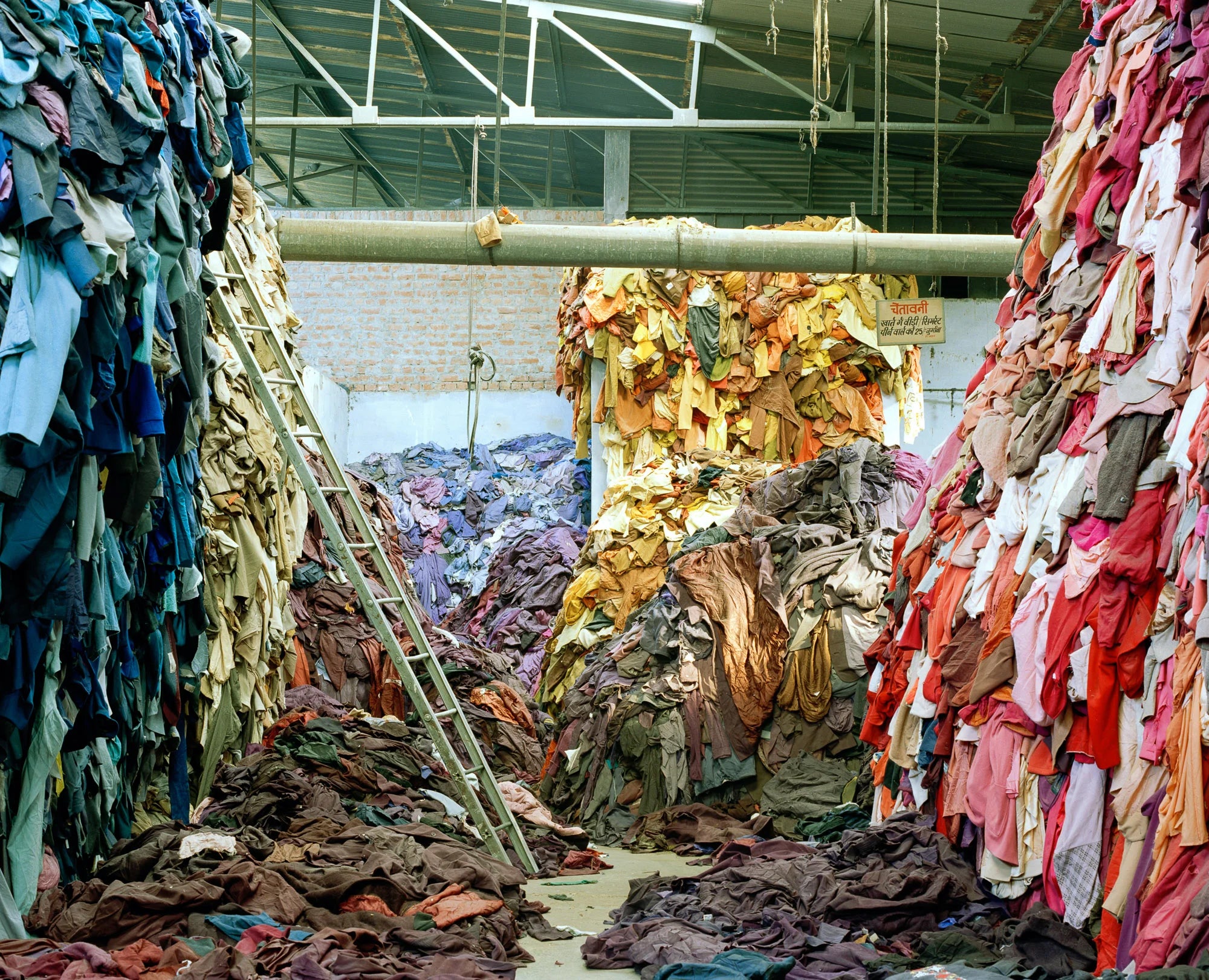
Fashion has become remarkably skilled at presenting small improvements as systemic change. A garment made with recycled fibres, a lower-impact collection or a resale scheme may suggest progress, yet the industry continues to manufacture clothes in quantities the planet cannot sustain.
For Safia Minney, the pioneering ethical fashion entrepreneur who founded People Tree and went on to establish Fashion Declares, and Indilisi incremental improvements are no longer enough. A genuine response to the climate crisis requires the industry to confront a far more difficult question: how can fashion produce dramatically fewer clothes without abandoning the millions of workers whose livelihoods depend upon making them?
“Science tells us that we should be cutting back production and consumption of new clothing by between 75 and 95 per cent,” Minney says. “That is a reduction of 75 to 95 per cent, not 5 or 25 per cent.”
Such a contraction would represent far more than a change in seasonal trends or consumer habits. It would fundamentally reshape a global industry built on speed, volume and cheap labour. Factories would receive fewer orders and jobs would disappear, many of them in countries where garment work provides a vital, if often precarious, source of income.
“Obviously, what that means is that a lot of people will lose their jobs in fashion supply chains,” Minney says.
It is a reality that can be obscured by the seemingly simple instruction to “buy less”. Reducing consumption is essential, but without a plan for the people making our clothes, environmental progress risks coming at the expense of those who have benefited least from fashion’s profits and suffered most from its inequities.
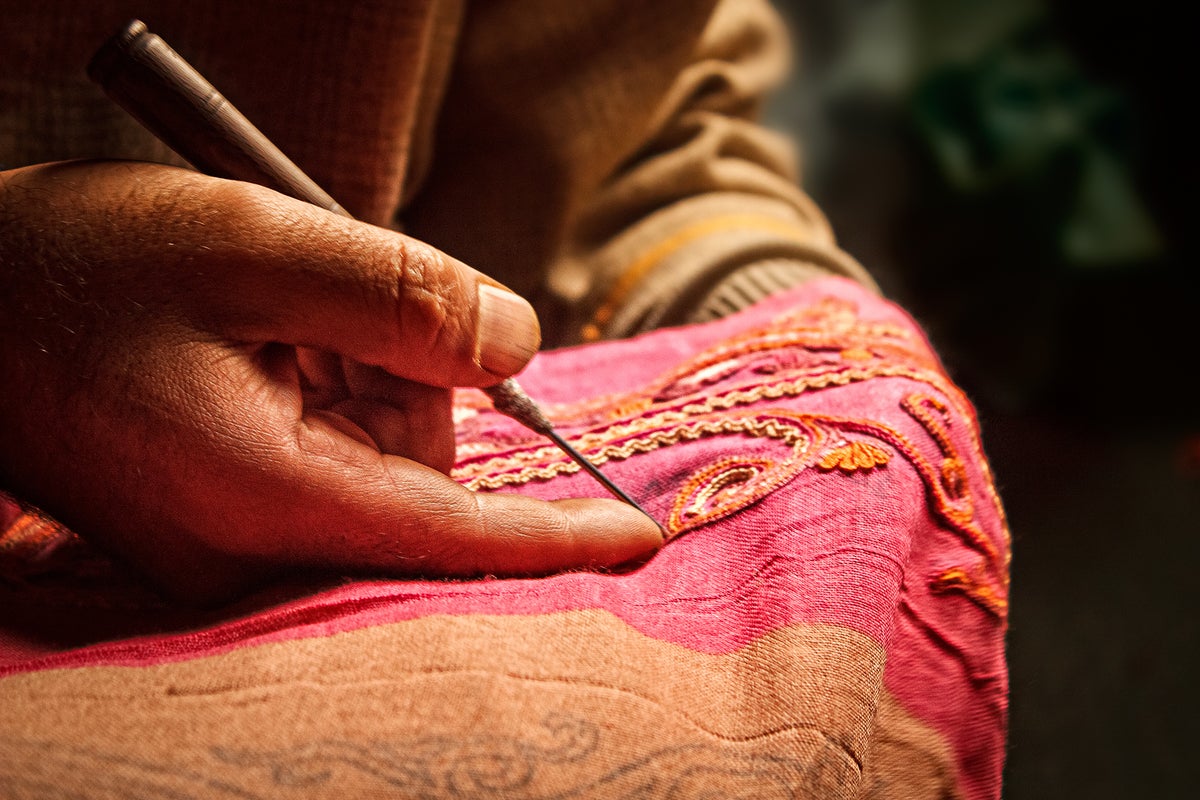
For Minney, the answer lies in replacing volume with value. Rather than continuing to rely on vast quantities of industrially produced clothing, fashion could redirect investment towards handweaving, traditional textile skills and regenerative agriculture, creating work that supports communities rather than extracting from them.
“There is now a global trend for craft, but at the moment it is considered to be high-end luxury,” she says. “It’s incorporating craft, handweaving and traditional hand-skilled techniques into mid-market fashion and above.”
.jpeg)
Craft is frequently celebrated on fashion’s most expensive runways, where evidence of the human hand helps justify the language and price of luxury. But Minney believes it should play a much broader role. If consumers bought fewer clothes, repaired what they owned and made greater use of resale and charity shops, they might also be able to spend more on an occasional handwoven garment.
“As consumers start to consume less and consume better and more consciously, there’s no reason at all why they wouldn’t be able to afford a handwoven shirt or dress or trousers,” she says. “We can buy second-hand very affordably through the various platforms or charity shops and, of course, we can repair clothes as well. We can keep things in circulation for longer.”
This is not simply about preserving beautiful techniques. Minney points to the millions of handweavers in India, Bangladesh and across Africa whose knowledge could form part of a lower-volume fashion economy. Investment in these skills could also create livelihoods outside the industrial centres to which many garment workers have migrated.
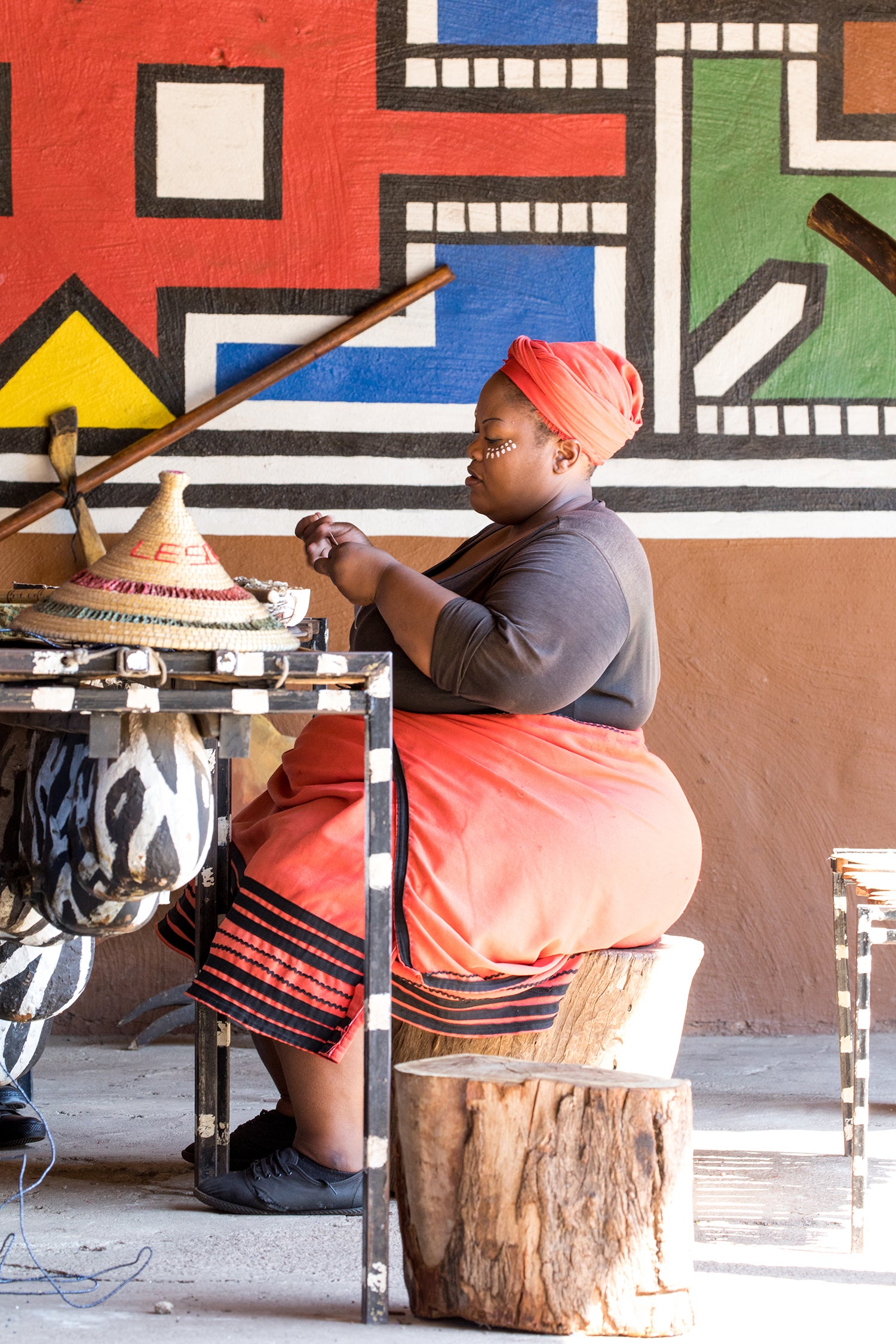
“Retraining people, providing livelihoods and opportunities in craft production in rural areas could actually make life much more comfortable for a lot of people who are living quite far away from their families, maybe only seeing their children a couple of times a year,” she says.
“There are some real advantages in creating craft livelihoods in rural areas, where people can live more affordably with their extended families and with their children.”
This is the social dimension of climate action that the language of lower-impact materials can miss. A just transition is not only concerned with how much carbon a garment produces, it asks who is being supported, who carries the risk and whether the new system gives people the means to build secure lives.
Minney describes conventional sustainability as an attempt to improve an existing model, protecting basic human rights, preventing excessive overtime and moving towards lower-impact materials or mono-fibre garments that are easier to recycle.
Important though those measures are, she argues that many should already constitute the basic conditions of doing business.
.jpeg)
“Sustainability should be ticking all the boxes in terms of better practice, looking at what should be illegal, not covering people’s basic human rights in the supply chain, whether it’s paying workers badly or excessive overtime,” she says. “Sustainable fashion has been an embracing of human rights and nature, but I think we needed to go beyond that.”
Regenerative fashion demands a deeper relationship with the landscapes and communities which clothing depends. It means working directly with farmers through organic and Fairtrade agriculture, investing in soil health and GMO-free seeds, and paying producers fairly for fibres such as organic cotton.
Craft belongs within that model because its value can extend beyond lower-impact production. “Craft does use low-impact materials. It does use traditional hand skills. It can pay people a living wage,” Minney says. “If we were to use craft, that would be highly regenerative in its practices.”
For designers, buyers and merchandisers, this requires more than adding an artisanal piece to a collection. Brands need to change their production calendars and allow time for garments and textiles to be made by hand.

“They can start to look at their critical path so that they can make allowances for hand production,” she says. “It’s not difficult. It’s perfectly doable. We did it at People Tree. We’re currently doing it at Indilisi.”
The guiding question, she suggests, should be: “How are you going to make products with as low an environmental impact as possible, but with as high a social impact as possible?”
Craft-based production cannot be expanded responsibly simply by placing larger orders. Brands must form close partnerships with craft organisations, learn what makers can produce and offer design input so that finished fabrics become high-quality garments people will want to keep.
Crucially, they must also reconsider when people are paid.
“Whilst working capital sounds really unsexy, it’s critical,” Minney says. A handwoven fabric can take three-and-a-half months to complete and sometimes as long as five. During that period, artisans still need to support themselves and their families.
“You need to be paying the handweaver, the hand-embroidery artisan or the hand-block printer as they’re finishing their work,” she says. “Every week or every month, not nine months, or three months after the product has arrived with you in the UK.”
Minney’s work in Bangladesh includes training in design, production and quality management, as well as the use of safe, GOTS-certified dyes and links to certified organic cotton. The aim is to make the journey of a garment traceable back to the people growing its fibres, while ensuring that respect for the farmer and the natural world is embedded in the product.
It is a slower system, but that is precisely the point. Craft cannot become another means of feeding fashion’s appetite for endless growth. The industry must reduce overall production while building strong networks that allow makers to work at a human pace.
After more than 30 years of campaigning, Minney’s vision extends beyond emissions reduction. Fashion companies must also prepare their supply chains for the climate disruption that is already unavoidable.
“We are not thinking about extreme heat and floods and how that’s going to impact the people within our supply chains,” she warns, “especially women who already carry the burden of making ends meet.”
Environmental, social and governance frameworks need to become more than corporate reporting exercises. They must help communities build resilience and adapt to increasingly dangerous conditions while recognising fashion’s dependence upon both people and nature.
The transition Minney describes is radical, but it is not a rejection of fashion. It is an argument for restoring value to it. Fewer garments, made with greater skill, from fibres grown in healthier soil, by people able to earn a dignified living close to their communities.
Buying less is only one part of that transformation. The greater challenge is ensuring that as fashion relinquishes its dependence on volume, it does not relinquish its responsibility to the people who have sustained it. A just transition cannot simply close the door on the old system. It must invest in what comes next.
Minney will continue this conversation at Craft, Clothing & Circularity: Out of Fashion at Conway Hall in London on Friday 11 September. Created in collaboration with Selvedge magazine, the event brings together makers, menders and campaigners for hands-on workshops in rag-rug making, quilting, visible darning and clothing care, followed by discussions exploring repair as activism and how craft and circularity could underpin a genuinely regenerative fashion system.
“Fashion needs a wake-up call,” Minney says. “If you’re a fashion practitioner or fashion lover, join our interactive discussion and create powerful action with us.”, for evening-only tickets book here.

