What a start to conference play! The SEC got off to a fast and hot start, with Arkansas taking its home series against Mississippi State in Fayetteville and Texas finally losing its first game of the season. And things continued to get worse for LSU as the Tigers dropped two games on the road to Vanderbilt.
In the ACC, Clemson lost its home series to Georgia Tech, and Wake Forest had a tough week overall, losing all four of its games — one to Coastal Carolina and three to Florida State. The series sweep for FSU helped the Seminoles jump nine spots in this week’s rankings.
Elsewhere in the top 25, UCLA is holding steady at No. 1, and the week’s biggest riser is crosstown rival USC, which rose up 12 spots. Virginia’s rise continues, too, with the Cavaliers finally breaking into the top 10.
This week’s newcomers to the rankings include West Virginia coming back in at No. 20, Oregon at No. 21 and Louisiana at No. 25 with TCU, UTSA and LSU — yep, the Tigers are officially unranked — dropping out.
Here are the entire top 25 rankings as of March 16, plus our favorite moments and what we’re watching in the week to come.
Top moments
Can we put in a late nomination for the Oscars? Because this ending to Georgia-Tennessee had everything you could want to see. A dramatic bat flip after what looked like a go-ahead home run for the Vols! But then enter Cole Johnson! And Johnson clearly wasn’t going to let this ball fly past him.
While Cincinnati has been pretty middle of the pack this season — the Bearcats are 15-6 and lost their first conference series to BYU — Coats has been dominant. The sophomore has hit 14 home runs and has a batting average of .418 to go along with 35 RBIs. With the way he has been hitting, the Big 12 will certainly be on watch.
Game 1: 6 p.m. on Friday (ACC Network Extra) Game 2: 2 p.m. on Saturday (ACC Network Extra) Game 3: 1 p.m. on Sunday (ACC Network Extra)
There are plenty of top-ranked SEC matchups this weekend, like Texas at Auburn, but we’re narrowing in on the ACC with NC State traveling to Tallahassee to face Florida State. NC State had a little bit of a rocky 2-2 week, dropping games to Elon and Boston College, but it did bounce back to eventually take the series against BC. Florida State meanwhile swept then-ranked No. 12 Wake Forest, though it did drop a game to Florida earlier in the week. Can the Wolfpack bounce back on the road? Or have the Seminoles found their groove?
Updated top 25
Here are D1baseball.com’s latest rankings, plus information on each team’s next game.
All times Eastern.
1. UCLA Bruins
Previous rank: 1 Record: 17-2 Next game: vs. Pepperdine, 9 p.m. on Tuesday
2. Texas Longhorns
Previous rank: 3 Record: 18-1 Next game: at Tarleton State, 7:30 p.m. on Tuesday (SEC Network+)
3. Georgia Tech Yellow Jackets
Previous rank: 4 Record: 17-3 Next game: at Auburn, 7 p.m. on Tuesday (SEC Network+)
4. Arkansas Razorbacks
Previous rank: 5 Record: 14-6 Next game: vs. Northern Colorado, 7 p.m. on Tuesday (SEC Network+)
5. Auburn Tigers
Previous rank: 6 Record: 17-2 Next game: vs. Georgia Tech, 7 p.m. on Tuesday (SEC Network+)
6. Mississippi State Bulldogs
Previous rank: 3 Record: 16-4 Next game: vs. Jackson State, 5 p.m. on Tuesday (SEC Network+)
7. Georgia Bulldogs
Previous rank: 8 Record: 17-4 Next game: vs. the Citadel, 3 p.m. on Tuesday (SEC Network+)
8. Oklahoma Sooners
Previous rank: 9 Record: 17-3 Next game: at Southeastern Louisiana, 7 p.m. on Tuesday (ESPN+)
9. Virginia Cavaliers
Previous rank: 14 Record: 16-4 Next game: vs. Georgetown, 4 p.m. on Tuesday (ESPN+)
10. NC State Wolfpack
Previous rank: 10 Record: 16-4 Next game: at UNC Wilmington, 6 p.m. on Tuesday (ACC Network Extra)
11. Florida State Seminoles
Previous rank: 20 Record: 16-3 Next game: vs. Bethune Cookman, 6 p.m. on Tuesday (ACC Network Extra)
12. Southern Miss Golden Eagles
Previous rank: 7 Record: 16-4 Next game: vs. Nicholls, 7 p.m. on Tuesday (ESPN+)
13. USC Trojans
Previous rank: 25 Record: 19-1 Next game: vs. San Diego State, 9:30 p.m. on Tuesday
14. North Carolina Tar Heels
Previous rank: 15 Record: 16-3-1 Next game: vs. UNC Greensboro 4 p.m. on Tuesday (ACC Network Extra)
15. Kentucky Wildcats
Previous rank: 21 Record: 18-2 Next game: vs. Marshall, 2 p.m. on Tuesday (SEC Network+)
16. Coastal Carolina Chanticleers
Previous rank: 16 Record: 13-6 Next game: at Campbell, 6 p.m. on Wednesday
17. Oregon State Beavers
Previous rank: 18 Record: 14-4 Next game: at Portland, 8:35 p.m. on Tuesday (ESPN+)
18. Florida Gators
Previous rank: 23 Record: 18-3 Next game: vs. Stetson, 6:30 p.m. on Tuesday (SEC Network+)
19. Clemson Tigers
Previous rank: 11 Record: 16-4 Next game: at College of Charleston, 6 p.m. on Tuesday
20. West Virginia Mountaineers
Previous rank: NR Record: 13-4 Next game: vs. Penn State, 6:30 p.m. on Tuesday (ESPN+)
21. Oregon Ducks
Previous rank: NR Record: 17-3 Next game: vs. Northwestern, 7:05 p.m. on Friday
22. Tennessee Volunteers
Previous rank: 19 Record: 14-6 Next game: vs. Eastern Kentucky, 6 p.m. on Tuesday (SEC Network+)
23. Texas A&M Aggies
Previous rank: 22 Record: 16-3 Next game: vs. Texas State, 7 p.m. on Tuesday (SEC Network+)
24. Wake Forest Demon Deacons
Previous rank: 12 Record: 15-5 Next game: vs. Liberty, 6 p.m. on Tuesday (ACC Network Extra)
25. Louisiana Ragin’ Cajuns
Previous rank: NR Record: 15-5 Next game: at Houston, 7 :30 p.m. on Tuesday (ESPN+)
The 2026 NCAA women’s Frozen Four is set, with the sport’s two most dominant teams lined up for a potential rematch for the national title.
No. 1 seed Ohio State and No. 2 Wisconsin won their regionals in impressive fashion — the Buckeyes beating Yale 6-1 and the Badgers blanking Quinnipiac 6-0. They will be joined by No. 3 Penn State, which shut out UConn 3-0, and No. 5 Northeastern, a 4-2 winner over Minnesota, in the national semifinals Friday at University Park, Pennsylvania.
The national championship game will be played Sunday at 4 p.m. ET and air on ESPNU. Every game of the tournament will be streamed live on the ESPN App.
Ohio State earned the top overall seed in the 11-team field after beating Wisconsin 2-1 for the WCHA tournament championship. The Badgers are the No. 2 seed, with Penn State of Atlantic Hockey America at No. 3. Minnesota (WCHA) and Northeastern (Hockey East) round out the top five seeds.
Wisconsin beat Ohio State 4-3 in overtime to win the 2025 national championship. Those teams have alternated as national champs over the last five seasons and have met in the title game the last three years, with Wisconsin winning in 2023 and Ohio State taking the crown in 2024.
Below is the schedule for the tournament and a look at every team in the field, including insight from ESPN college hockey analyst Paige Capistran. This page will be updated with results as the tournament progresses.
Schedule
All times Eastern. All games streamed on ESPN App.
REGIONALS
First round
Yale 1, Minnesota Duluth 0
UConn 4, Princeton 1
Quinnipiac 4, Franklin Pierce 0
Finals
No. 2 Wisconsin 6, Quinnipiac 0
No. 3 Penn State 3, UConn 0
No. 5 Northeastern 4, No. 4 Minnesota 2
No. 1 Ohio State 6, Yale 1
FROZEN FOUR at University Park, Pennsylvania
Semifinals, Friday
Ohio State vs. Northeastern, 4 p.m.
Wisconsin vs. Penn State, 7:30 p.m.
Final, March 22
4 p.m., ESPNU
Highlights
play
1:14
Quinnipiac Bobcats vs. Wisconsin Badgers Game Highlights
Quinnipiac Bobcats vs. Wisconsin Badgers Game Highlights
play
1:19
Uconn Huskies vs. Penn St. Nittany Lions Game Highlights
Uconn Huskies vs. Penn St. Nittany Lions Game Highlights
play
1:19
Northeastern Huskies vs. Minnesota Golden Gophers Game Highlights
Northeastern Huskies vs. Minnesota Golden Gophers Game Highlights
Field at a glance
Records, statistics entering NCAA tournament
Ohio State (33-4-0)
NPI ranking: 1
How the Buckeyes got in: WCHA tournament champion
NCAA history: Eighth appearance, seeking third national title
Numbers to know: The Buckeyes are 19-1 since the calendar flipped to 2026, with the one loss to Wisconsin on Feb. 8. They have allowed less than two goals in 15 of their last 20 games. … Hailey MacLeod blanked Minnesota in the WCHA semifinals for her fifth shutout of the season, then limited high-scoring Wisconsin to one goal with 28 saves in a 2-1 win in the final. … Ohio State can put the puck in the net, too, ranking third in the country with 4.42 goals per game. Joy Dunne of the US Olympic team leads the Buckeyes with 26 goals in 28 games. … Hilda Svensson, who played for Sweden in the Milan Olympics, is the top scoring freshman in the country with 1.67 points per game. She had a goal and a team-high eight shots on goal in the WCHA title win over the Badgers.
Paige Capistran’s take: The top seeded Buckeyes are peaking and coming together as a team at the right time. Coming into the tournament as the favorite, they won’t take their foot off the gas and will continue the blue-collar play that defines them.
Wisconsin (32-4-2)
NPI ranking: 2
How the Badgers got in: At-large berth (WCHA)
NCAA history: 20th appearance, seeking ninth title
Numbers to know: The Badgers split four games with Minnesota and were 3-2 against Ohio State, accounting for their four losses on the season. … Wisconsin leads the country in scoring (5.26 goals per game), is second in goals allowed per game (1.45) and is tops in power-play percentage (.357). … Seniors Caroline Harvey (2.03 points per game) and Lacey Eden (1.92) lead the high-powered attack. Six Badgers have more than 40 points on the season. … Ava McNaughton, who leads the NCAA with a 1.32 goals-against average, had a career-high 38 saves in the Badgers’ WCHA final loss to Ohio State. … Wisconsin coach Mark Johnson is one win away from becoming the first NCAA women’s hockey coach to reach 700 career victories.
Capistran’s take: The Badgers’ stacked roster includes four Olympians who won gold for Team USA: Kirsten Simms, Laila Edwards, McNaughton and Olympic MVP Harvey. Plus, Eden is a top-10 Patty Kazmaier finalist along with Edwards, Harvey and Simms. Johnson’s team certainly has the skill to go all the way.
Penn State (32-5-0)
NPI ranking: 3
How the Nittany Lions got in: Atlantic Hockey tournament champion
NCAA history: Fourth appearance, seeking first title
Numbers to know: Penn State claimed its fourth straight AHA title with a 3-2 win over Mercyhurst on Saturday. … Senior Katie DeSa is one of the best goaltenders in the country, allowing just 37 goals in 29 games this season. She has an NCAA-high 11 shutouts and a .935 save percentage. … The Nittany Lions lead the country in scoring defense (1.35 goals per game) and are fourth in scoring offense (4.3 goals per game). … US Olympian Tessa Janecke leads a balanced offense with 45 points (23 goals, 22 assists) in 29 games. Grace Outwater leads Penn State with 24 goals and 10 skaters have at least 20 points on the season.
Capistran’s take: Janecke is tough as nails and leads the Nittany Lions on and off the ice. Penn State will have home-ice advantage through the Frozen Four and has proven how hard it is to beat at home, going 17-1 at Pegula Ice Arena. Penn State wants to win its first national title in its own building.
Minnesota (26-11-1)
NPI ranking: 4
How the Golden Gophers got in: At-large berth (WCHA)
NCAA history: 23rd appearance, seeking seventh title
Numbers to know: Minnesota closed January with a 23-4 record, but struggled down the stretch with Abbey Murphy (Team USA) and Josefin Bouveng (Sweden) away for the Olympics, going 1-6-1 before winning two straight over St. Cloud State in the first round of the WCHA playoffs. The Gophers then lost 4-0 to Ohio State in the WCHA semifinals. … Murphy leads the country with 2.13 points per game (38 goals and 26 assists for 64 points in 30 games) and Bouveng is 10th at 1.40 (15 goals, 27 assists in 30 games). … Minnesota is second in the country with 171 goals and fourth in goal margin (plus-2.34).
Capistran’s take: Minnesota was playing its best hockey before the Olympics and wants to revive its offensive identity, playing with speed and pushing the pace. With a deep lineup, Brad Frost has the flexibility to roll three lines evenly. But Murphy, one of the most lethal players in the NCAA, will lead the way.
Northeastern (28-8-1)
NPI ranking: 5
How the Huskies got in: At-large berth (Hockey East)
NCAA history: Eighth appearance, seeking first title
Numbers to know: Northeastern won all three regular-season meetings with UConn, but lost a 2-1 double-overtime heartbreaker in the Hockey East final. Before that loss, the Huskies had been 12-1-1 in their previous 14 games. … Goaltender Lisa Jönsson has been rock solid for NU, allowing two or fewer goals in each of her last 12 games, including a 54-save effort in the loss to UConn. … Northeastern trails only Wisconsin in penalty-kill percentage (.895). … Stryker Zablocki (18 goals, 25 assists) became the first player to win Hockey East player of the year and freshman of the year since 2017-18. … The Huskies are back in the NCAA tournament after a two-year absence. They had been in the field six straight years before that.
Capistran’s take: The Huskies play shutdown defense in front of Jönsson, who has been outstanding in her sophomore campaign. Captain Lily Shannon has had a breakout senior season, playing a 200-foot game; she will be a key. Jules Constantinople is Northeastern’s go-to defender and brings great physicality.
UConn (27-8-2)
NPI ranking: 6
How the Huskies got in: Hockey East tournament champion
NCAA history: Second appearance, seeking first title
Numbers to know: Tia Chan made 57 saves, 33 after regulation, in UConn’s 2-1 double-overtime win over Northeastern in the Hockey East title game. A top-three finalist for national goalie of the year, she has the best save percentage (.950) of any netminder in the NCAA tournament and is sixth in the country with a 1.59 goals against average. … UConn blocked 39 shots against Northeastern. … The Huskies, who led Hockey East in both scoring (3.05) and defense (1.62), have won eight of their last nine games.
Capistran’s take: The Hockey East champions took their offense up a notch this season and continued to play the top-notch defense they have displayed in years past. While Chan is a force at the back end, forwards Julia Pellerin, Claire Murdoch and Kyla Josifovic have been key to the Huskies’ success this year.
Quinnipiac (28-8-3)
NPI ranking: 7
How the Bobcats got in: ECAC tournament champion
NCAA history: Fifth appearance, seeking first title
Numbers to know: Quinnipiac won its first ECAC title since 2016 with a 5-1 win over top seed Yale. … Goaltender Felicia Frank, a top-three finalist for national goalie of the year, was the tournament MVP with 61 saves and just two goals allowed over two games. The sophomore is first nationally with 28 wins, third in shutouts (nine) and fourth in goals against average (1.51). … Kahlen Lamarche keys the Bobcats offense, scoring better than a goal per game (42 goals in 39 games). She had seven goals in a three-game ECAC quarterfinal win over Brown.
Capistran’s take: Frank backboned the Bobcats this season and Lamarche, a top-10 Patty Kaz finalist, is an offensive threat whenever she hits the ice. Quinnipiac will want to build off its momentum from the ECAC tournament and will be a tough out.
Yale (25-9-0)
NPI ranking: 8
How the Bulldogs got in: At-large berth (ECAC)
NCAA history: Third appearance, seeking first title
Numbers to know: The Bulldogs’ loss to Quinnipiac in the ECAC final was just their second defeat in 2026 (16-2). … Senior Carina DiAntonio is fifth in the country with 26 goals, doubling her team-high total from last season. … Freshman defender Molly Boyle led the ECAC with 21 assists, while fellow first-year player Samson Frey has a 1.47 GAA in 17 games. … Yale is fifth in the country with 3.65 goals per game. … The Bulldogs have seven wins over teams ranked in the top 15 in NPI.
Capistran’s take: ECAC coach of the year Mark Bolding led his team to the conference title game in his seventh season behind the bench. The Bulldogs have a great shot-blocking mentality, and Boyle, who was named ECAC defender of the year, sets the tone.
Princeton (23-10-0)
NPI ranking: 9
How the Tigers got in: At-large berth (ECAC)
NCAA history: Fifth appearance, seeking first title
Numbers to know: Princeton fell to Quinnipiac 2-1 in overtime in the ECAC semifinals. … The Tigers are fourth in the country in scoring defense, allowing 1.41 goals per game. … Princeton was 3-3 against NCAA qualifiers Yale and Quinnipiac this season, with four of the six games going to overtime. … Issy Wunder has 27 goals, with eight of them game-winners, tied for most in the country.
Capistran’s take: Despite having a short bench this season, Princeton found success with the help of team captain Wunder. Her offensive ability and high hockey IQ define her game and will be key to the Tigers’ chances.
Minnesota Duluth (20-14-3)
NPI ranking: 10
How the Bulldogs got in: At-large berth (WCHA)
NCAA history: 17th appearance, seeking sixth title
Numbers to know: Eve Gascon, the third finalist for national goaltender of the year, led WCHA with a .943 save percentage and 10 shutouts, second nationally. She has averaged just shy of 30 saves per game this season. … The Bulldogs have shown they can win in hostile environments, posting a 13-4-1 record on the road. … After closing the regular season with six straight wins, UMD lost a tight best-of-three series with Minnesota State in the WCHA playoffs.
Capistran’s take: Gascon had another phenomenal season being a brick wall for the Bulldogs. She won WCHA goalie of the year for the second year in a row and will have to bring her A game for Minnesota Duluth to find success in this year’s tournament. Offensively the Bulldogs will turn to Caitlin Kraemer, who again leads the team in points (15 goals, 15 assists).
Franklin Pierce (23-11-2)
NPI ranking: 25
How the Ravens got in: NEWHA tournament champion
NCAA history: First appearance
Numbers to know: The Ravens are in the NCAA tournament for the first time as Jill Hertl made 41 saves for her 19th career shutout in Franklin Pierce’s 2-0 win over Saint Anselm in the NEWHA championship game. Hertl was the conference’s top goaltender, with a 1.63 GAA and .955 save percentage. … Franklin Pierce is third nationally with an .890 penalty-kill percentage. … Caleigh Murphy is the Ravens’ leading scorer (17 goals, 16 assists). … David Stockdale, the only coach in program history, is in his 14th season at the helm for Franklin Pierce. The team moved to Division I in 2019-20.
Capistran’s take: Franklin Pierce had its most exciting season yet and will look to build off its the NEWHA championship, but just taking this step is huge. The Ravens will depend on Hertl and will want to use physicality to slow down their opponent.
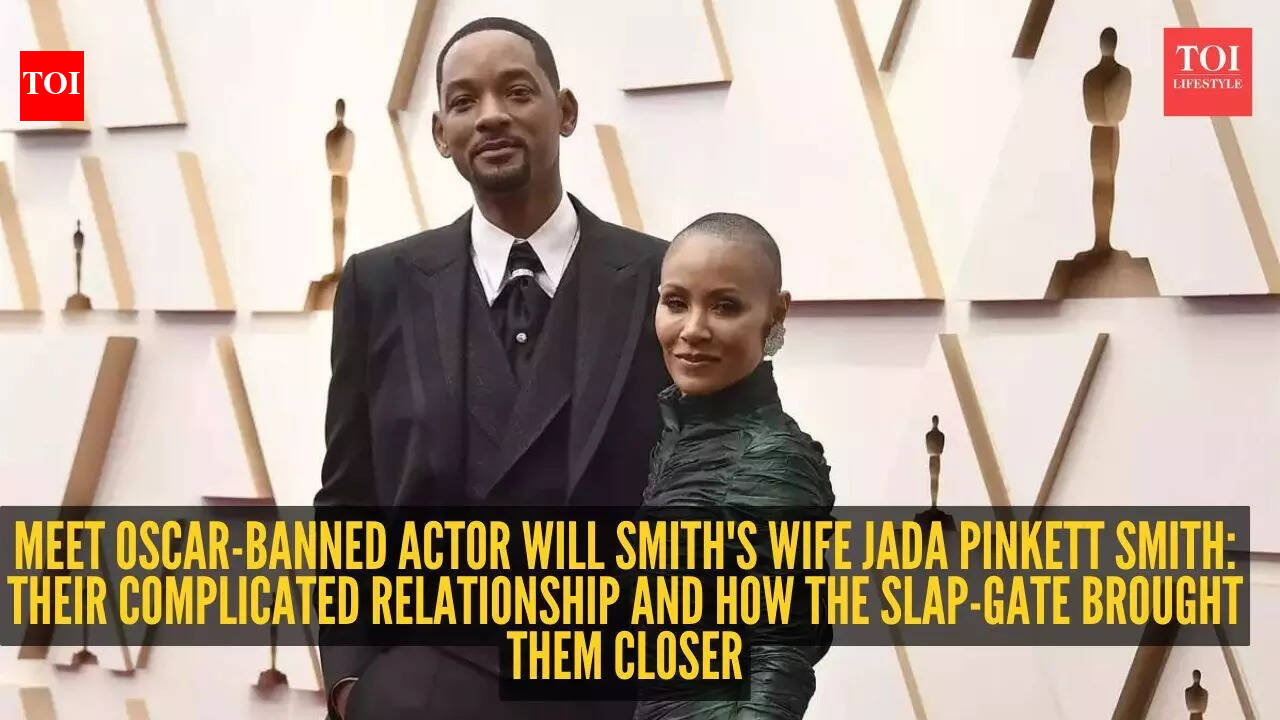
While the glamour of Oscars 2026 is the talk of the town right now, the one name that’s hitting the headlines yet again is Will Smith— the Hollywood actor who is banned until 2032 after he infamously slapped Chris Rock in 2022. The man who charmed us in Men in Black, Bad Boys, and clinched Best Actor for King Richard won’t be seen on the red carpet anytime soon. Amid the drama, eyes turn to his partner, Jada Pinkett Smith, whose life story—from Baltimore roots to Hollywood power couple—feels like a masterclass in resilience, love, and unfiltered truth.
Meet Jada Pinkett Smith
Born in 1971 in Baltimore, Maryland, to an African-American father and Afro-Caribbean mother, Jada burst made her screen debut in 1991’s A Different World. She skyrocketed with The Nutty Professor, then slayed in Menace II Society, Jason’s Lyric, Set It Off, and Scream 2. Beyond acting, she’s a Daytime Emmy winner for her raw talk show Red Table Talk, a businesswoman who launched fashion label Maja in 1994, and author of Girls Hold Up This World, dedicated to daughter Willow (shared with Will). Before Will, she was married briefly to Sheree Zampino; their paths crossed, parted, but Jada found enduring partnership with him—though not without twists.
The 2026 Oscars were full of glitz, glamour, and some truly unforgettable moments.
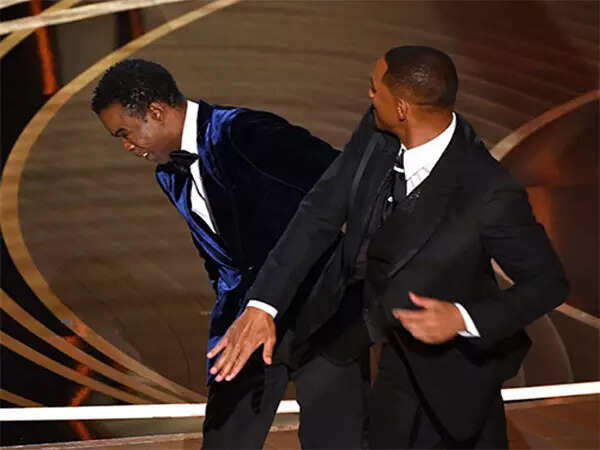
When Will Smith slapped Chris Rock for his wife Jada
Will Smith slapped Chris Rock during 2022 Oscar ceremony.
Take the slap: While the world gasped and the Academy issued a 10-year ban, Jada saw grace in chaos. In a 2023 Daily Mail interview, she dubbed it the “‘holy slap'” because “so many positive things came after it. That moment of the s— hitting the fan is when you see where you really are. After all those years trying to figure out if I would leave Will’s side, it took that slap for me to see I will never leave him.” Bold? Absolutely. Their “entanglement” era revealed they’d lived separately for seven years by 2016—exhausted from fixing things, but never divorcing. On the Today show, Jada explained: “It wasn’t a divorce on paper… I had made a promise to Will that we would never get divorced and would work out things, and I couldn’t break the promise.”
When Jada spoke about how motherhood changed her
Motherhood reshaped her too. In a 2020 E! News chat, she got real: “Motherhood will teach you everything about yourself… I went through this period where I was just like, ‘Oh my god! I’m sacrificing so much!’ A lot of times, our parenting choices aren’t easy…and a lot of times they have to be really selfless… every step of the way, my kids were giving me the opportunity to be the woman that I really wanted to be—not the fantasy, ideal Jada.“Jada’s not just Will’s wife; she’s a force—flawed, fierce, and faithful.What are your views on this power-couple? Tell us in the comments below.
Resident college basketball bracketologist for ESPN
Contributor to SportsCenter, ESPN Insider
Published first public bracket in 1995
Multiple Authors
Well, after 4½ months of play, the bracket for the 2026 men’s NCAA tournament is set with the 68 teams that will vie for the national title.
How do we feel about the way the seedings and pairings played out?
It’s hard to be critical of a 12-person selection committee that just made you look a whole lot smarter than you really are, so I won’t go there.
What I’ll do, instead, is offer a handful of “kudos” and “crank” that came to mind as the selection show unfolded:
Kudos: For swapping Arizona and Michigan as the respective No. 2 and No. 3 overall seeds. This was justified when Michigan lost the Big Ten championship game but something most past selectors would have ignored. (So much so that I forgot to do it myself!) It’s also a swap that has absolutely no impact on any team’s seeding or placement — but it will bring a smile to bracket nerds everywhere.
Kudos: For going beyond the numbers in the cases of 2-seed Purdue and 3-seed Virginia, with both landing in better spots than was the case just a week or two ago. Selfishly, I did the same thing but wasn’t at all sure of that decision. Also selfishly, I’m delighted to have UVA leading one of the two pods in Philadelphia, where I plan to spend the first weekend as a happy spectator. If you’re in the neighborhood, feel free to say hello.
Crank: For putting Miami (Ohio) in the First Four. We were all too close to a 31-1 team missing the tournament with this decision. I’m going to spare everyone the histrionics since that didn’t actually happen, but seriously? Selection committee chair Keith Gill did a nice job explaining that the RedHawks weren’t actually the last team selected, despite their ignominious place on the seed list.
Kudos: Three WCC teams, two Atlantic 10 teams and two MAC teams in the field makes me smile. It’s still not enough mid-major representation, but it’s a step in the right direction. Remember, over the past 20 years, high-end mid-majors win almost twice as often in the NCAA tournament as “middling” high-majors despite worse seeding and far fewer selections.
Crank:Utah State is the only team with an overt argument about its seeding. The Aggies could easily have been a 7-seed, and they probably deserved to be spared the assignment (and likely fate) of an 8-9 matchup.
Semi-crank: Speaking of seeds, I thought Vanderbilt more than earned a spot on the top four lines. As it is, the two SEC finalists were 16 and 17 overall on the seed list, so clearly, the Commodores and Arkansas were playing for the final 4-seed on Sunday. Me? I’d have had both on that line and bumped unpredictable Kansas.
Kudos: Across the past five tournaments, Saint Mary’s has been a 5-seed thrice and a 7-seed twice. That’s a remarkable run for any mid-major, especially one of the smallest schools in Division I.
Kudos: It doesn’t appear the committee had to apply any bracket gymnastics to accommodate the unique needs of BYU (which can’t play on Sundays) or Hawai’i (which must travel excessive distances). Both have been slated to open in Portland, Oregon, for a Thursday/Saturday subregional in the West.
Crank: I am officially not a fan of Selection Sunday being staged the same Sunday as the Oscars. Whoever came up with that should be sent to the NIT. For now, let me close by saying that the Oscars would be a whole lot more interesting — like pretty much everything else — with a bracket.
Mumbai: Walmart-backed PhonePe has paused its IPO amid volatility in the markets which have fallen by about 7% since the start of the West Asia conflict. In a statement on Monday, the fintech firm said that it will resume the listing process once there is some stability in global capital markets. “We sincerely hope for a swift return to peace in all the affected regions. We remain committed to a public listing in India,” said CEO Sameer Nigam. The delay of PhonePe’s targeted $1.3 billion IPO which was set to be the second biggest public issue to be floated by a startup after Paytm’s 2021 listing and a major liquidity event for its early backers probably underlines the broader risk of a temporary slowdown of the domestic IPO market which had been on a bull run last year. Many companies are pushing back fundraises amid the West Asia driven market volatility, TOI reported recently. PhonePe’s IPO is an offer for sale (OFS) issue; Tiger Global and Microsoft will completely exit the company while parent Walmart which holds about 72% stake in the firm is paring its stake by 10%. The first local business from Walmart’s stable to go public, PhonePe was initially planning an April listing on the bourses. PhonePe, last valued at $12 billion was understood to be eyeing a valuation of up to $15 billion in the IPO, a target which would have been difficult to achieve in the current market scenario. “Some near-term blips in primary market activity are natural given the volatility in secondary markets….companies are being more calibrated on timing but we are not seeing a structural pullback,” said Amit Ramchandani, MD & CEO, investment banking at Motilal Oswal Financial Services.
Watch scenes from the films nominated for the Oscar for best picture, as well as interviews with the filmmakers below. The 98th Academy Awards will be presented Sunday, March 15.
The nominees for best picture at this year’s Academy Awards: “Bugonia,” “F1,” “Frankenstein,” “Hamnet,” “Marty Supreme,” “One Battle After Another,” “The Secret Agent,” “Sentimental Value,” “Sinners,” and “Train Dreams.”
Focus Features; Apple Original Films; Netflix; A24; Warner Brothers; Neon
“Bugonia”
Inspired by a 2003 Korean movie called “Save the Green Planet!,” Yorgos Lanthimos’ “Bugonia” blends dark comedy, satire, and pointed social commentary about corporate greed, internet and social media propaganda, and how the plight of bees is a sign of the dangers confronting mankind in the face of climate change.
Best actress Oscar nominee Emma Stone plays Michelle Fuller, a Big Pharma corporate executive who is kidnapped by a pair of conspiracy theorists, Teddy and Don (Jesse Plemons and Aidan Delbis), who believe Michelle is key to an alien plot to take over the world.
Written by screenwriter Will Tracy, the film was originally developed for Ari Aster (“Midsommar”), before Lanthimos came on board. A master of the darkly comic, his previous films include “Dogtooth,” “The Lobster,” “The Favourite,” and “Poor Things.”
“I was immediately blown away,” he told The Hollywood Reporter about the script. “I felt it was so funny and entertaining but also extremely impactful and made you really think about things deeply.”
In a conversation at the BFI London Film Festival, Lanthimos talked about the ending of the film, which is both grand and intimate, and about people’s reactions: “Some of them are like, they see it as totally bleak and desperate, and others see it as hopeful. And I think that’s interesting, and that’s where we try to maintain some kind of ambiguity because it tells a lot about you – like, how you experience this and how you see the world. I love that to happen.”
At the Venice Film Festival, Stone said that the themes of “Bugonia” reflect our current reality: “There’s so much that’s happening that’s reflective of this time in our world and it’s told in a way that’s really fascinating and moving, funny and f***** up, and alive.”
In a conversation for the Dolby Creator Talks Podcast, Oscar-nominated composer Jerskin Fendrix described his unusual approach to writing the film’s score, which ranges from grandiose to sorrowful. Without having read the script, or watched any footage, he composed music following months of “esoteric” research he conducted based on just a few words given him by Lanthimos, which included bees, basements, and spaceships. “I was starting to get a bit paranoid,” he said, not being allowed into any discussions during pre-production. He then recorded about an hour of music — some purely orchestral, some for synthesizers, and some a mixture – that Lanthimos placed at specific points in the movie. “I think the reason that a lot of the music actually echoes the psychology — especially of Teddy, this kind of really frantic grandiosity, but paranoia, and so on — is because I was basically in the same position for at least a year, by virtue of Yorgos’ direction,” he said. [Listen to the track “Resurrectionem” from Fendrix’s “Bugonia” score.]
“Bugonia” has been nominated for four Academy Awards.
“F1”
Among the year’s top popcorn films was “F1,” starring Brad Pitt as a Formula 1 race driver who is brought out of retirement to help mentor a rising young star on the track. Despite the marquee names of Pitt, Javier Bardem, Kerry Condon, and Damson Idris as the hotshot driver, the main attraction was the visceral racing sequences, with the stars driving modified race cars fitted with fist-sized, remote controlled cameras.
Editor Stephen Mirrione said he did not know anything about Formula 1 racing before working on “F1,” for which he received his fourth Oscar nomination. (He’d won for the Steven Soderbergh film “Traffic.”) In an interview for Avid, Mirrione said he fought against the viewer feeling “race fatigue.”
Before filming, races were designed with storyboards and based on the contours of individual racetracks. Compiling footage from as many as 30 cameras shooting a single racing sequence, and using maps as a guide, Mirrione would review the footage for specific angles, to see if the storyboards worked or not, and to maintain continuity.
“You want to be sure that the racing sequences were not just about the excitement of watching a race, but that there was always storytelling and narrative information all the way through,” he said.
Director Joseph Kosinski filmed race footage over both the 2023 and 2024 seasons, shooting at the tracks between practice runs and qualifying races. Footage from actual F1 races, including crashes, was incorporated into the story, with drivers like Lewis Hamilton and George Russell factored in.
Production sound mixer Gareth John, of the film’s Oscar-nominated sound team, told Variety that during one sequence, Max Verstappen, driving for Red Bull, crashed into McLaren’s Oscar Piastri. “All the authentic chaos is happening in front of us in real time,” he said. “Many of the things that happen in this film have happened for real, and they’re pilfered from actual F1 events.”
The sound team strategically planted microphones throughout the cars driven by Pitt and Idris, as well as around the tracks, to get the sounds of engines, squealing tires and crowd noises. And while many of the races were mixed to include Hans Zimmer’s score, Silverstone was run without music. “It was trying to keep that energy up just with sound effects,” said re-recording mixer Juan Peralta.
Peralta, a longtime Formula 1 fan, told the Dolby Creator Talks Podcast, “In all my years of watching Formula 1, I’ve only ever watched it either live, which is really loud, or on TV. It’s been a broadcast. So, to put it in a theater with all these speakers and all this dynamic range, it was challenging. You know, I don’t want it to sound different than the actual cars, but I want it to be a cinematic experience. So it was like, you know, doing that little tightrope walk.”
“F1” is nominated for 4 Academy Awards, including best picture.
“Frankenstein”
Mary Shelley’s Gothic novel “Frankenstein, or the Modern Prometheus,” published in 1818, has been the basis of innumerable horror films, most famously James Whale’s 1931 version, starring Boris Karloff as the Creature imbued with life by a scientist daring to be God. That film, and Shelley’s text, have been lifelong obsessions for Mexican director Guillermo del Toro, whose horror and fantasy films (including the Oscar-winning “Pan’s Labyrinth” and “The Shape of Water”) have welcomed audiences into wondrous, tactile worlds of awe and danger.
Del Toro talked with “Sunday Morning” about Shelley, who was 19 when she penned the story, and why it had endured: “It was written by a teenager that was full of questions and rage and rebellion. You know, it’s the same questions we have now: What are we? Why am I human? Why am I here?” That questioning is dramatized by his Creature, played by best supporting actor nominee Jacob Elordi.
For del Toro, there is an appeal to monsters: “Monsters tell you, look, it’s okay to be you. It’s okay to be imperfect. … We are all creatures. I mean, we have a world that tells you you shouldn’t be a creature, but in reality we’re all weird in some way.”
Del Toro’s fascination with “Frankenstein” has fueled his love of cinema and literature since he was a child. “It’s in all of my movies,” he said. “All 13 movies have elements of the film. ‘Pinocchio’ is another prodigal father asking for forgiveness of his child. My first movie, ‘Cronus,’ deals with eternal life. ‘Shape of Water,’ certainly, the idea of the monster being of the same essence as the main female character, and the female character recognizing herself in it. … I mean, my first crush was Mary Shelley. I truly can tell you this, you are born to sing one or two songs in your lifetime. This is my song.”
Adapted from Maggie O’Farrell’s novel, “Hamnet” is a fictionalized tale about William Shakespeare’s family, imagining that the tragedy surrounding the death of his young son, Hamnet (played by Jacobi Jupe), inspired him to write his timeless work, “Hamlet.” Best actress Oscar nominee Jessie Buckley plays Agnes, William’s wife, and it is her emotional performance that both grounds the story, and elevates it to a universal tale of pain, grief and acceptance.
Buckley (who won the BAFTA, Golden Globe (Drama), Critics Choice and Screen Actors Guild Award for her performance) told “Sunday Morning” that when she started shooting the more difficult scenes, she told her husband she needed to go away for two weeks. So, Buckley went to Hampstead Heath, a vast green space in London, where she’d go swimming each morning. “I just need to be in nature and start my day and wake up that way, and then go to the set and see what came out,” she said.
What came out was a performance radiating fire and tenderness. She says director Chloé Zhao (an Oscar-winner for “Nomadland”) reminded her cinema is not just escapism. “Our jobs as actors and the storytellers are to touch the most heightened expressions that are too hard to hold on our own,” Buckley said. “I get to incubate the bits of us, myself, the shadow bits.”
Asked what are those “shadow bits” that came out for her role, she laughed, “I’m not telling you! You have to watch it and make up your own mind.”
The emotions in Buckley’s powerful performance, Zhao told the American Film Institute, were a collective grief shared by everyone on the set. “We also spoke very personally about loss in their own lives. I’ve said to everyone from the beginning that they should bring their own to set every day. Like, it’s not just preserved for the actors, the space. This is community spaceholding day after day after day. “
In an interview for Vanity Fair’s Notes on a Scene, Buckley, Zhao and Mescal described dramatizing Agnes’ emotions following the death of her son, when William announces he is leaving for London – abandoning her in her grief. He goes to kiss her goodbye; she moves to strike him. The physical violence wasn’t written in the script, but Buckley went for it.
“In moments like this, when the emotions are so charged, the camera will restrain itself from pushing for emotions, because the space is like a bomb about to explode,” said Zhao. “We actually wanna stand back because we want the audience to feel the impact of that shockwave. ‘Cause when you go in there, for some reason, you actually do the opposite. So we stayed wide.”
“But it also feels theatrical,” Mescal said. “It feels like in the world of Shakespeare, like you’re watching, kind of in a meta sense, you’re watching actors in a frame – not that you don’t see wide shots in films, but I feel like some of the more emotionally-charged moments that you would see people jump in on in different films, you don’t [here].”
“And also the unpredictability,” said Zhao, “’cause the camera isn’t there. They have all this space, and the wild animals come out of them!”
“I was so thrilled when that happened!” Mescal said.
“I didn’t even know it was gonna happen,” said Buckley. “And you get a shock when these things come up! Makes me scared watching it now!”
In the film’s climactic scene, when Agnes attends a Globe Theatre production of “Hamlet,” her emotional attachment to the actor playing the dying Hamlet is itself meta: he’s actor Noah Jupe, brother of Jacobi Jupe, who played her dying son. Noah told Time Magazine, “Two months into their shoot, I was shooting something in Greece, and I got a call from my mom and Chloé, and they’re very giddy and smiling. They say to me, ‘How would you feel about playing Hamlet?’ It was obviously something that you just cannot turn down.”
“Marty Supreme”
In director Josh Safdie’s comic-drama “Marty Supreme,” set in 1950s New York, shoe salesman Marty Mauser (best actor Oscar nominee Timothée Chalamet) is convinced he is the world’s greatest ping pong player – and by the looks of it, he is. A striver and a hustler, Marty will stop at nothing to achieve his dream of winning the world championship, even if it means being deceitful, disloyal or larcenous. And he’s not above dognapping.
In a featurette for Fandango, Safdie described the making of the semifinals scene, and how the perspective of Paltrow’s character is key:
“This scene in particular is the intoxication of Marty,” said Safdie. “This is how he infects other people. This is what makes Marty a beautiful person, is that burning desire and that passion inside of him can be infectious. And it’s about the glory of youth, the glory of stardom, the glory of theater, and the adoration that it can bring. And because this story is told through Kay’s point of view and she’s kind of awakening from a malaise – she’s a dormant person, she’s given up on her dream – and coming into this scene and seeing somebody who’s actively pursuing their dream in the most intense way. She’s coming in mid-movie to that dream. You know, it was very important to understand her point of view of this young man.”
Safdie continued: “That was something that I just told to both Géza (Röhrig) and Timmy. This is why you’re doing it. You’re doing it for the adoration. You’re doing it for the fun. You’re letting people know that you’re more than just an athlete. You know, you’re a dancer. You’re inspiring people. You’re making it fun. you’re making it entertaining. … So, there’s a moment in the scene after they do their exhibition point, after they put on this incredible display of talent, Géza lobs up the ball, to allow Marty to just end the game. And the way that you let out, it’s one of my favorite parts of the movie, the way that you let out a little laugh, like your boy is handing it to you and you’re gonna win the semi-finals and you let out a little and then you go in for the slam and then you guys embrace in a way that is so inspiring to me because that is what it’s all about, is moments where you realize you’re not in it alone, and I love that.”
“One Battle After Another”
Paul Thomas Anderson’s “One Battle After Another,” adapted from the Thomas Pynchon novel “Vineland,” is an absurdist comic thriller inspired by the revolutionary movements of the 1960s and ’70s, speaking with the immediacy of today’s headlines, wrapped around the story of a father desperately trying to connect with his daughter.
After launching the audience into the violence of a revolutionary group called the French 75 (and the government’s equally violent response to it), the film jumps ahead 16 years to where the former bombmaker, hiding out under the alias Bob (best actor Oscar nominee Leonardo DiCaprio), is trying to raise his daughter, Willa (Chase Infiniti), through a haze of inebriation and paranoia. It’s not for nothing that Willa finds herself parenting her parent.
The story, which involves a maniacal military officer, a martial arts instructor shepherding illegal immigrants, a cabal of White supremacists, hired assassins, and a network of cross-border revolutionaries who gain sanctuary at a convent, is one of the most brazen comedies in recent years. “One Battle After Another” was named best film by the New York and Los Angeles film critics, the National Board of Review, the BAFTAs, and the Critics Choice Awards, and won the Golden Globe for best film (comedy or musical). It also received top prize from the Directors Guild of America and the Producers Guild of America.
In a DGA conversation between Steven Spielberg and Paul Thomas Anderson, they discussed the film’s tone. Spielberg compared “One Battle” to “Dr. Strangelove” and how Stanley Kubrick handled comedy and a very serious subject, the end of the world. “This brings a kind of absurdist comedy taken very seriously,” said Spielberg, “because it’s so much a reflection of what’s happening today every day throughout this country. But it takes it to a point where you want to laugh because if you don’t laugh you’re going to start screaming, ‘This is too real.’ And so, you’ve got that outlet.”
The bravura chase sequence at the end, involving Willa, a killer (John Hoogenakker), and her dad, was filmed on a stretch of highway in California’s Anza-Borrego Desert State Park that they found by chance. Anderson told the DGA audience, “I have to admit that we went into this movie without that as our ending. We knew that all our participants were headed to the desert, and we knew we were going to have our man save the day in some way. And exactly how it was all going to go down was unclear to us. And in location scouting and driving, we drove on those what we call the ‘river of hills.’ It was just a stretch of road. And that sequence blossomed from the location scouts of driving down there, where you realized it’s very scary to drive those hills because you come up over those, you’re going 65, 70 miles an hour, there’s no one around, but it is blind. You’re blind coming up. … You’re like trusting that nothing’s there. You’re trusting that everybody’s going to keep moving.
“And I was just videoing with my phone and the more you were kind of static, the more you would lose the horizon line. And it became very, very scary. And then I found when I would zoom in on my phone, it was even scarier. Especially if something was there. Then we kind of ended up after these River of Hills at this massive thing that they call the Texas Dip. And it was one of those lucky moments where you’re sitting in a car for four hours going, ‘God, next time maybe I’ll never go on a location scout again.’ But then you come across this and you go, ‘This is why you get in a van and you location scout. because these discoveries are there if you’re patient and the movie gods are on your side.'” Shot in VistaVision by Oscar-nominated cinematographer Michael Bauman, edited by Oscar nominee Andy Jurgensen, and scored by Oscar nominee Jonny Greenwood, the three-car chase sequence is one of the most innovative ever filmed.
“One Battle After Another” is nominated for 13 Academy Awards, including best picture.
UPDATE: On Sunday, “One Battle After Another” won six Academy Awards, including best picture. Paul Thomas Anderson won three (for best director, best adapted screenplay, and best picture). They were his first Oscars, after having received 11 nominations for “Boogie Nights,” “Magnolia,” “There Will Be Blood,” “Inherent Vice,” “Phantom Thread,” and “Licorice Pizza.”
Accepting the screenplay award, Anderson said, “I wrote this movie for my kids to say sorry for the housekeeping mess that we left in this world we’re handing off to them. But also, with the encouragement that they will be the generation that hopefully brings us some common sense and decency.”
At a backstage press conference, Anderson was asked if he believes the film reflects where we are as a society, or where we are headed. “I think that our film obviously has a certain amount of parallels to what’s happening in the news every day. So, it obviously reflects what’s happening in the world. In terms of where it’s going, I don’t know. But I know that the end of our movie is our hero, Willa, heading off to continue to fight against evil forces, and, I think, like I said in my speech, bring at least common sense and decency back into fashion.”
“The Secret Agent”
A thriller set in 1970s Brazil during a period of dictatorship (what the film ironically refers to as a time of “great mischief”), “The Secret Agent” follows a stranger, going by the name Marcelo (best actor Oscar nominee Wagner Moura), as he arrives at an apartment building in Recife, which appears to be a haven for political refugees. We learn that just as Marcelo is on a search for information about his past, he is being sought out by hitmen.
For “The Secret Agent,” Brazilian director Kleber Mendonça Filho (whose films include the violent 2019 revenge pic “Bacurau”) blends genres – part political thriller, part family drama, part exploitation film, part ridiculous fantasy – that meld into a narrative that replicates the sinister paranoia of the era. On top of it all is Filho’s nostalgia for ’70s cinema (which he previously catalogued in his documentary “Pictures of Ghosts”), that is captured as much by the style of his film as by clips from period movies. In fact, much of “Secret Agent” takes place in a movie theater, a temple to dreams and escapism – a refuge.
“The Secret Agent” won the best actor and best director awards at the Cannes Film Festival. Moura also won the Golden Globe and the New York Film Critics Circle Award for his performance.
He told Vanity Fair that “The Secret Agent” had aided in his country reflecting back at its period of dictatorship: “We have in Brazil a horrible thing called the law of amnesty, where torturers and killers and everybody just got free from what they did. When Walter Salles makes a film about that (last year’s Oscar-winning “I’m Still Here”), and it’s seen by the amount of people that saw it, and with the amount of young people that went to the movies – and the amount of people that were rooting for Fernanda Torres at the Oscars and looking at her and saying, ‘That artist represents us. There is a Brazilian artist that represents us in Brazil’ – that is great. It says a lot about our country that is in this horrible, polarized moment. … The narrative that film brings matters to us, and beyond that, people are going, ‘Oh my God, so this really happened?'”
Moura likened Filho’s film to a stone creating ripples in the water. “I think it will have a political effect, but also an artistic effect. It’s as Brazilian as you can get. It’s a beautiful film.”
Filho, a former film critic, had met and interviewed Moura at Cannes 20 years ago when the actor was there to promote “Lower City.” At a Q&A at last year’s New York Film Festival, Filho said the two met again at a Brazilian festival after Filho had directed “Neighboring Sounds.” “We established the idea of working together sometime,” he said. “Sometimes you want to work with an actor, an actress, but you really have to find the right material. I mean, you can’t just go and improvise. So, years went by, and I finally decided to sit down and write a script very specifically tailored for Wagner.”
The son of a historian, Filho, who was a child in the mid ’70s, grew up seeing his mother come home with boxes of cassettes and a Panasonic tape recorder. “There is a lot of her work, or the logic of what she did, in the film, because a lot of important information in the film comes from tapes which are analyzed in the future. I mean, I look at you here and us and this is being recorded by many devices I can see, and also by the official camera from the New York Film Festival over there – Hi! – and we are here tonight. This is September 27th, 2025. But maybe if this footage survives in 37 years, or maybe 57 years or 62 years, this will be a document, and people in the future will try to understand what the hell we were talking about, what we were wearing, and I find this fascinating, and I really wanted this to be in the film. I wanted Wagner to play a character we would really empathize with, identify with, and then at some point we would realize that he’s just a life. It’s just a life that was lost many years ago. And that’s how history unfolds, you know? I find that this is something that moves me, and I really wanted to do the film using that idea, the idea of history.”
“The Secret Agent” is nominated for four Oscars, including best picture and best international feature film.
“Sentimental Value”
Joachim Trier, who shared an Oscar nomination for best original screenplay for his 2021 romantic comic-drama “The Worst Person in the World,” returned with that film’s breakout star, Renate Reinsve, for “Sentimental Value,” about the members of a broken family trying to mend chasms of mistrust. The film, which won the Grand Prize at the Cannes Film Festival, was nominated for nine Academy Awards; all four of the film’s leads – Reinsve, Stellan Skarsgård, Inga Ibsdotter Lilleaas and Elle Fanning – were nominated for their performances.
Trier’s film deals with memory, both actual and transformed through art into something representing memory, as Gustav (Skarsgård) seeks to make a film inspired by the life of his mother, who was tortured by the Nazis and later committed suicide. That trauma would affect Gustav, and be passed down, the ramifications of which now haunt everyone in his family, even if they are unaware of the cause.
In an interview for the Criterion Collection, Trier talked about time as an element of storytelling: “I didn’t grow up on a farm where seasons come and go and everything is circular. I very much felt that time was an arrow, you know, and I think that movies are great at portraying that, because, like memory, you film your friends on Super 8 or my skate movies on Hi8mm and all these formats, and I look back at them and they are – some of them are dead now, some of them are older, you know, the city changed, they changed. Cinema can deal with that. It’s very specific. So, I think it’s coming back to those existential themes of time and memory that I care about the most in my life really.”
Skarsgård, who won a Golden Globe for his performance, has many moments in the film where the camera simply observes him – saying little with dialogue, but a lot with his expression. “I love that stuff,” he told “Sunday Morning.” “Movies, real movies are not literature. Cinema to me is what happens in the image. Not what is said; what is not said.”
Reinsve told “CBS Saturday Morning” that playing all the different emotional layers of her characters was like a puzzle: “It’s always fun. Even though I’m playing grief or something, I try to find as many layers.”
“Sinners”
Michael B. Jordan first worked with Ryan Coogler in the 2013 drama “Fruitvale Station,” the tragic story of the victim of a police shooting. They reteamed for 2015’s “Creed,” a spin-off of the “Rocky” franchise, and the first two “Black Panther” films. In “Sinners,” Jordan plays twin brothers, Stack and Smoke, who open a backwoods juke joint in the segregated South. When Coogler shared the idea of him playing two different characters, Jordan told “Sunday Morning” his reaction was, “‘I’m a do what?’ I think it was a little bit of anxiety, I think. A little bit nerves. But then, equal amount of excitement.”
But there was more than just dual roles to explore; Coogler’s film is a blend of genres, mixing a drama set in the Jim Crow South with horror, where accomplished musicians belting out Delta blues become targets for vampires (who themselves are mighty talented with banjo picking).
“I describe the film as genre-fluid,” Coogler told “CBS Mornings.” “It’s a lot of genres at different times, and hopefully they sync up.”
Oscar-nominated cinematographer Autumn Durald Arkapaw told “CBS Mornings” she didn’t want audiences to necessarily notice her work: “You don’t want to feel the hand of the creator. You don’t want to feel the technical. You want to make it so good that it feels like a dream.” She is only the fourth woman ever nominated in this category.
Jordan, meanwhile, said that shooting the film’s most intense scenes – this is a bloody vampire film, after all – was surprisingly fun. “We were cracking up laughing, trying to keep a straight face sometimes, because these circumstances are so ridiculous,” he said.
Joran won the Screen Actors Guild’s Actor Award for his performance, as did the film’s ensemble cast.
“Train Dreams”
Based on a 2011 novella by Denis Johnson, “Train Dreams” is a meditative story of a life lived mostly in isolation, in which Robert, a logger in Idaho in the early 20th century (played by Joel Edgerton), suffers trauma and grief while working on the construction of railroads in the Pacific Northwest. He is an instrument of progress, even though he increasingly feels himself isolated and anachronistic. It is a character study of one whose connections to the Earth, to other people, and to himself are tested and slowly built, erased, and rebuilt.
Director Clint Bentley (who, with co-writer Greg Kwedar, is nominated for best adapted screenplay) has cited such directors as Terrence Malick, Andrei Tarkovsky and Francois Truffaut as influences on his work — not just in the impressionistic views of nature and of man’s place within it, but also in the presence of spirits, the haunting memories of the past, and the immutable nature of time. The film is both insular (narration is spoken by actor Will Patton) and expansive (in its rapturous, Oscar-nominated cinematography by Adolpho Veloso).
The images of the film are firmly planted in the beauty of the Northwest, and some sequences (as when Robert and his wife Gladys plot out land for their cabin with stones) depict a hope for the future. But there are also surreal, haunting touches – a pair of boots nailed to a tree; a dead man’s return; a hellish horizon in flames – that show the past’s grip on the imagination. Love and ache reside side-by-side in Robert’s soul.
In a Q&A at the American Film Institute, director Clint Bentley said he’d read Johnson’s novella when it first came out, but never imagined it as a film. And then the COVID-19 pandemic happened. Producers Marissa McMahon, Ashley Schlaifer and Will Janowitz, who held the rights to the book, watched Bentley’s “Jockey” at home (Sundance had transitioned to a virtual festival when the pandemic struck). They called and asked him to consider making “Train Dreams.”
“When I reread it, not only did I fall in love with this story of Robert Grainier and what this guy was going through, but I felt – even though it’s set in the past and it’s in this very specific time at the turn of the century and a logger, it’s about a logger in the Pacific Northwest – I felt like a lot was resonating in my life, and a lot felt very pertinent to today and what we’re going through. And I felt like, well, I’m sure other people will feel that way as well.”
In a world moving at an increasingly fast pace, the lead character’s existential question is, how do I fit in? “Or do you not fit in, and just retreat to your cabin out in the woods?” Bentley said.
In an interview for Variety’s Awards Circuit Podcast, Bentley said that the loss of both of his parents in quick succession as he began preparing the film affected his understanding of art and memory: “Right after they passed, I would have these dreams that didn’t feel like dreams at times,” he said. “They felt like visitations. I believe I dreamed them, but the things that happened in those dreams — they’ve become as distinct as memories from when my parents were alive.”
That effect is present in his film, as Robert engages with visions or imaginary visitations with those who have crossed his path. “I’d lost quite a few people in my life around that time and was still kind of reeling from it,” Bentley said. “At the same time, my wife and I were welcoming our first child. All these conflicting emotions — grief and joy, birth and death — just collided. The story felt so emotionally relevant to what I was going through.
“Our subconscious holds on to things — dreams, memories, people — long after we think we’ve let them go. ‘Train Dreams’ is my way of honoring that,” he said.
Watch scenes from the performances nominated for the Oscar for best actor, as well as interviews with the nominees below. The 98th Academy Awards will be presented Sunday, March 15.
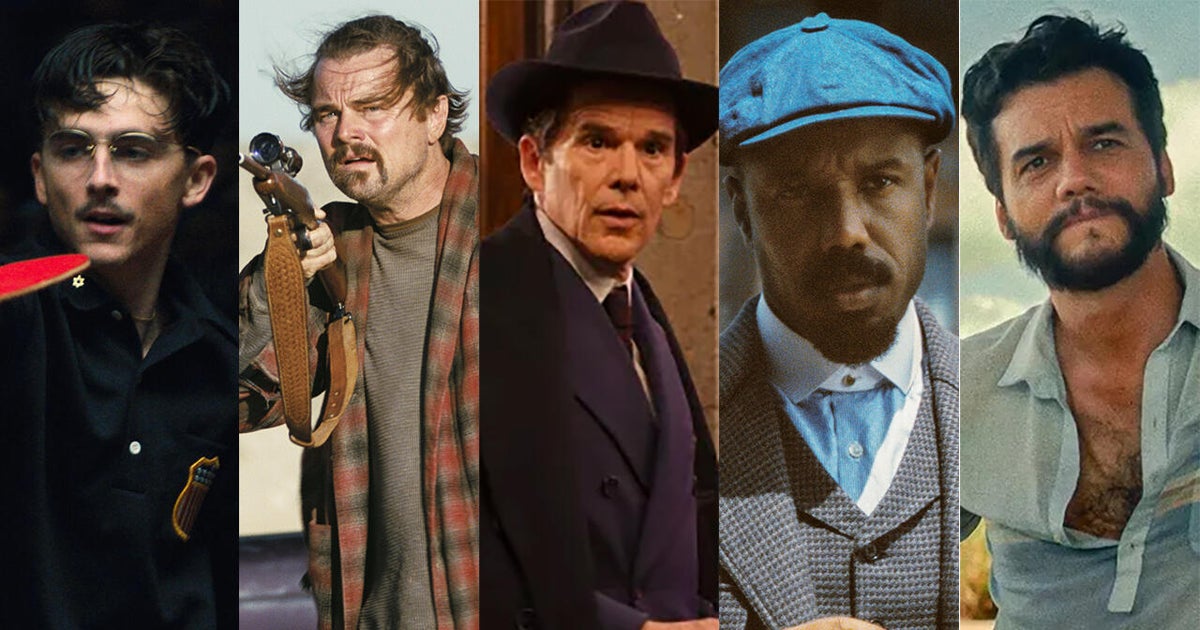
Nominees for the best actor Oscar this year are, from left: Timothée Chalamet (“Marty Supreme”), Leonardo DiCaprio (“One Battle After Another”), Ethan Hawke (“Blue Moon”), Michael B. Jordan (“Sinners”), and Wagner Moura (“The Secret Agent”).
A24; Warner Brothers; Sony Pictures Classics; Neon
Timothée Chalamet, “Marty Supreme”
The character of shoe salesman Marty Mauser (loosely based on the life of table tennis player Marty Reisman) is a classic example of a striver willing to subvert norms or personal codes of honor in order to achieve their vision of success. In the world of “Marty Supreme,” that character’s goal is mastery of a sports subculture – and in 1950s New York, there was perhaps no sports subculture more “sub” than table tennis, which makes director Josh Safdie’s period film both pertinent and quaint.
Marty (played by Oscar-nominee Timothée Chalamet) clearly has the chops, but what he needs in order to compete at the table tennis world championships is money, and he is desperate to get it. It becomes the basis of his manipulations of those around him, from hustling drunks, holding a mob figure’s dog for ransom, and bedding the wife of a potential sponsor.
Playing a striver was the attraction for Chalamet. “Knowing the grind as an actor and not being ignorant to it — my dream wasn’t a financial one like Marty Mauser’s, but it was also in pursuit of an ideal,” he told The Hollywood Reporter. “There’s this New York connection that I couldn’t even put into words and I’d fail trying to, but that’s just true to my spirit,” he said. “Having gone through a very similar struggle in New York and playing this guy’s struggle in New York, it was deeply resonant for me.”
Having first discussed the project with Safdie seven years ago, Chalamet decided to amp up his table tennis skills, practicing even as he was in production on other films. [Yes, there was a ping pong table on the set of “Dune”] The training was, he said, “somewhere between a marathon and a sprint — it’s really a tremendously athletic sport.”
In a Q&A with Ben Affleck at the American Cinematheque, Chalamet described the challenge of playing an often unlikable character – one who lies, cheats, and abandons friends and lovers, all while struggling for success in a sport few truly respected. One idea instilled by the director was for Chalamet not to be judgmental towards Marty, to take his point of view, as he was not limited by the strictures of playing a flawless hero or a horrible villain: “This guy’s messy and human and real. And I feel like we all know someone like Marty who’s equally at times, you know, inspiring, maybe believes in his dreams, as much as he is a scumbag, somebody who operates purely at self-interest.”
Chalamet is routinely reticent when discussing his work process. In a 2025 interview with “60 Minutes,” he said he wasn’t comfortable revealing the magic of his craft: “It’s nobody’s business how I go about these things. It’s within the law!” he laughed. “Otherwise, it might not be as interesting as people think. Or it could be a lot more interesting than people think. It might be more interesting than what I’m doing.”
At age 30, Chalamet became the youngest male to earn three best actor nominations (after “Call Me By Your Name” and “A Complete Unknown”), a title previously held by Marlon Brando.
“Marty Supreme” is nominated for nine Academy Awards, including best picture.
Leonardo DiCaprio, “One Battle After Another”
Loosely adapted from the 1990 Thomas Pynchon novel “Vineland,” Paul Thomas Anderson’s “One Battle After Another” is an absurdist take on the revolutionary movements of the 1960s and ’70s, wrapped around the story of a father desperately trying to connect with his daughter. Add a martial arts sensei who operates an underground railroad for undocumented immigrants, a vengeful military officer, and a secret cabal of White supremacists, and you have one of the most brazen comic thrillers of recent years.
Oscar-nominee Leonardo DiCaprio stars as Bob, who has been hiding from authorities for 16 years under an alias in a mountain community in California. He still lives by the precepts of a revolutionary, but it’s been years, and he’s smoked a lot of weed, so when he tries to contact the central command of his former comrades, the password he needs to remember to get through to his brethren is elusive.
Beyond his role as a lapsed revolutionary, Bob has a more important and immediate function, as a parent to Willa (Chase Infiniti). Inspired by Jeff Bridges’ performance in the Coen Brothers’ “The Big Lebowski,” DiCaprio spends much of the film disheveled, in a bathrobe, and drunk or stoned.
In a conversation at the British Film Institute, DiCaprio said his character developed much further once Infiniti was hired to play Willa, and the screenplay was workshopped. The tensions between father and daughter were accentuated, which only magnified a sense of role reversal between the two, underscoring Willa’s self-reliance and Bob’s lack of control.
One element was Bob’s paranoid prohibition against Willa having a cellphone. “I think Paul at one point maybe wanted to do some sort of hyper-realistic world where there were no phones, and she arrived, you know, basically saying, ‘Are you out of your mind? I’m going to have a phone. I don’t care if my father’s off the grid or if he’s paranoid, if he’s disconnected from reality, anti-government, I’m going to have that phone.’ And that became this kind of key moment that strung itself along in the movie and created moments of tension. …
“And a lot of those great workshops that we had, that tension arose between us of her almost playing the mother figure and me just desperately trying to connect with my daughter and doing it through anger and self-medicating myself with drugs. Those workshops, I think, were very key. When we landed on set, I think we were on firm footing of what that household dynamic was.”
That dynamic is evident in a scene in which Bob fails completely as a parental role model.
DiCaprio earned his eighth Academy Award nomination for “One Battle After Another.” (He’d previously won best actor for “The Revenant.”) Asked by Rolling Stone about his career, DiCaprio said that in the early years it felt like hitting the lottery: “It was very much like, ‘I can’t believe I’m working in this industry, and I’m getting to make decisions for myself.’ And there’s this frenetic pace that you have. But now, you know, I think as I’ve gotten older, I’ve just become even more … I don’t want to say selective, but all these different components have to come into play to make a movie and hope that it not only works but lasts, even if there are no guarantees of either of those things.”
“One Battle After Another” is nominated for 13 Academy Awards, including best picture.
Ethan Hawke, “Blue Moon”
The composing duo of Richard Rodgers and Lorenz Hart was responsible for many treasured classics in the Great American Songbook, from “My Funny Valentine,” to “The Lady Is a Tramp” and “Blue Moon.” But by the early 1940s, the partnership broke apart. Rodgers then teamed up with Oscar Hammerstein II, and their first collaboration would prove to be an enduring landmark of musical theater, “Oklahoma!” – a success greater than anything Rodgers and Hart had achieved.
Richard Linklater’s “Blue Moon” takes place on that show’s opening night, at a celebration being held in the famed Broadway watering hole Sardi’s, where Hart, a jumble of self-pity, jealousy, and ambition, horns his way in. As played by best actor nominee Ethan Hawke, Hart tries to ingratiate himself upon his former partner (Andrew Scott), but the room already reads Hart as a Tin Pan Alley dinosaur.
Hart tries to lay on the charm with a woman he adores, Elizabeth (played by Margaret Qualley). Never mind that Hart was gay; he is besotted, and moribund to hear of her attraction to a man who mistreats her. What is love, he says, but “madness.”
Hawke has been Oscar-nominated twice before for supporting roles (in “Training Day” and “Boyhood”), as well as sharing screenwriting nominations for Linklater’s “Before Sunset” and “Before Midnight.” But the role of the lyricist was something of a stretch: The real Lorenz Hart was less than five feet tall, so Linklater used camera tricks to make the nearly six-foot actor look much shorter. Hawke also wore fake teeth, and shaved the top of his head to affect a real combover.
He also learned a mountain of dialogue, as he becomes an effusive charmer desperate to impress others. “It’s definitely the most text I’ve ever had in a movie,” Hawke told “Sunday Morning.” “I remember calling my wife after the first day – I think I had more lines than I had in the previous five films.”
Working off a screenplay by the nominated Robert Kaplow, the film’s production process took about a decade, during which Linklater and Hawke workshopped the script. According to the director, that also allowed the actor to age into the role. And with that aging came a weariness to reflect Hart’s sense of increased obsolescence as he witnesses Rodgers’ success. [Hart would die of pneumonia later that year.]
After the acclaim of “Training Day,” Hawke starred in more films, TV and on Broadway, but he says there was a time he passed on more parts than he took – and the offers started drying up. “When you’re young,” he told “Sunday Morning,” “You don’t realize that this is a young person’s game, and those kinds of job offers, there’s a shelf life on that.”
And when did that “shelf life” notion hit him? “Around the same time gray starts appearing in your beard,” he replied.
“Blue Moon” is nominated for two Academy Awards, including best original screenplay.
Michael B. Jordan, “Sinners”
There have been several instances of actors being nominated for playing multiple characters in a film, from Charlie Chaplin in “The Great Dictator” and Peter Sellers in “Dr. Strangelove,” to Meryl Streep in “The French Lieutenant’s Woman” and Nicolas Cage in “Adaptation.” Lee Marvin actually won best actor for playing brothers in “Cat Ballou.”
For “Sinners,” Michael B. Jordan plays twins, Stack and Smoke, who open a backwoods juke joint in the segregated South. It appears at first to be a story about two ambitious men trying to make names for themselves under the cruel limitations of Jim Crow. But then the supernatural enters the picture, as vampires become an ever greater threat than the racist violence around them.
Jordan won the best actor award from the Screen Actors Guild.
He had first worked with director Ryan Coogler on 2013’s “Fruitvale Station,” and they teamed up again for “Creed,” “Black Panther,” and “Black Panther: Wakanda Forever.” When Coogler shared the idea of playing two different characters, Jordan told “Sunday Morning” his reaction was, “‘I’m a do what?’ I think it was a little bit of anxiety, I think. A little bit nerves. But then, equal amount of excitement.”
“It started to run through my head: Okay, how are we going to do this? And I think that’s something that Ryan also knew was going to be good for me, which is a challenge and to kind of push me out of my comfort zone. This was the hardest thing that I’ve ever done to date. And it allowed me to imagine the best version of it, but then also the excitement of figuring out, okay, how do we problem solve? How are we going to get this done? What’s the technicality? How are we going to get into it? I had all these questions. I had all these ideas, and we just kind of took a pause, took a moment and really got back into the foundation of like, who are these brothers, you know? What are the dynamics of an identical twin?
“That’s such a unique specific relationship that only exists between identical twins,” he said. “I had an opportunity to talk to a lot of identical twins, and it was very informative and they’re kind of like celebrities in their own right, you know? Like, no matter what town you go to or wherever the twins are from, they’re known as the twins. … So, there’s a little bit of that celebrity, I guess, that comes along with being identical twins that we wanted to tap into in this movie as well.”
In this video from the Academy of Motion Pictures Arts and Sciences, VFX supervisor Michael Ralla explains the techniques used to create multiple Michael B. Jordans – from split-screens that merge two filmed performances into a single shot, to using multiple cameras built into a halo rig to capture Jordan’s performance and then place his head onto the body of a stunt double. [Ralla’s effects team, as well as cinematographer Autumn Durald Arkapaw, were among the film’s record 16 Oscar nominations.]
“Sinners” is nominated for a record 16 Academy Awards.
UPDATE: On Sunday, Michael B. Jordan won the Academy Award for best actor for “Sinners.” It was his first Oscar. Accepting the award, he said, “Thank you, everybody in this room and everybody at home, for supporting me over my career. I feel it. I know you guys want me to do well. And I want to do that because you guys bet on me. So, thank you for keep betting on me. And I’m going to keep stepping up.”
At a press conference backstage, Jordan was asked about what went into creating two distinct characters. “Smoke is a bit more, he’s quiet, he’s a protector. And Stack is a little bit more light and buoyant, and a little bit of a slick talker and a troublemaker. So I try to just establish different perspectives. They have an outstanding relationship for their entire lives. So just imagine you being in a partnership for, like, 30-something years. How many times they would argue, how many times they would keep score on who’s right and who’s wrong. All these things I kind of just started to build up and so they can have a history between each other. And those are the things that hopefully came to light in-between the lines, those nuances between the two. That’s a little bit of the work.”
Wagner Moura, “The Secret Agent”
Wagner Moura won best actor at the Cannes Film Festival for his performance in Kleber Mendonça Filho’s political thriller “The Secret Agent.” Set in Brazil in the late 1970s, a period of dictatorship (what the film ironically refers to as a time of “great mischief”), the story opens with a stranger, Marcelo (Moura), arriving at an apartment complex in Recife, which appears to be a haven for political refugees.
Like the other residents who are vague about their pasts, Marcelo easily slips into the fabric of life there, as easily as he slips into his job as a functionary at the government office responsible for issuing ID cards. We discover that, just as he is on a search for information, there are also men being paid handsomely to try to find him.
Moura, who played drug lord Pablo Escobar in “Narcos,” had not starred in a Brazilian film in a decade. (He directed 2018’s “Marighella,” about a guerrilla fighter.)
He told Vanity Fair that “The Secret Agent,” which takes place around the time of his birth, is like a memory piece: “A lot of [the film] connects you to something where, even if you didn’t live it, you feel it,” he said. “My mind worked in that sense: I thought about the photos of my father. I have this video of my parents’ wedding, and it’s in that part of the country.”
“I love the Ibsen play called ‘An Enemy of the People,’ and I always think about that play when I think about ‘The Secret Agent’: Someone is punished for doing the right thing. It feels a little naïve, but it’s what happens when values are upside-down. … This film is a lot about how the values of a government can shape the minds of people in general – but the ones that are not in conformity with that idea really pay a price. I think here, Kleber is talking about himself and that specific time when we all lived in Brazil under Bolsonaro. We all paid a big price by not obeying or not agreeing with what was going on.”
At a Cannes Film Festival press conference last May, Moura, who had shot “Marighella” when Bolsonaro ruled, described the attitude of the filmmakers making “The Secret Agent”: “In a dystopia, you have to try to hold on to something, uphold the values of dignity, remain an upstanding person. A dictatorship is very difficult indeed because you’re under threat of death basically, and the threat concerns your values as well. You’re being threatened by the powers that be. And if you group together, I think that’s what’s most wonderful in times like that. Not only when there’s a dystopia but even in happy good times. It’s lucky we can set up groups of people in this manner when there is a dystopian period of time in a very authoritarian regime. …
“The film focuses a lot on values. Values that come from the powers that be are twisted, and most people seem to align with these values. It’s hard to remain who you are. It’s hard to remain loyal and faithful to the person you actually are. There are societies and countries where similar situations have occurred. In Brazil, to be gay, Black or a native Brazilian, life may become very complicated. So politically speaking, these are real issues we wanted to talk about.”
Spoiler alert: Like Michael B. Jordan, Moura plays two characters in the film. (But we won’t tell you who the other one is.)
“The Secret Agent” is nominated for four Academy Awards, including best picture.
Watch scenes from the performances nominated for the Oscar for best actress, as well as interviews with the nominees below. The 98th Academy Awards will be presented Sunday, March 15.
Nominees for the best actress Oscar this year are, from left: Jessie Buckley (“Hamnet”); Rose Byrne (“If I Had Legs I’d Kick You”); Kate Hudson (“Song Sung Blue”); Renate Reinsve (“Sentimental Value”); and Emma Stone (“Bugonia”).
Focus Features; A24; Neon
Jessie Buckley, “Hamnet”
Adapted from Maggie O’Farrell’s novel, “Hamnet” is a fictionalized tale about the death of William Shakespeare’s son, Hamnet. It imagines that the tragedy inspired him to write his timeless work, “Hamlet.” Oscar nominee Jessie Buckley plays Agnes, the wife of William Shakespeare (portrayed by fellow Irish actor Paul Mescal), and it is her emotional performance that both grounds the story and elevates it to a universal tale of pain, grief and acceptance.
Buckley (who was previously nominated for an Academy Award for “The Lost Daughter”) first gained attention on the British talent show, “I’d Do Anything,” singing in front of Andrew Lloyd Webber. He praised her, saying, “Jessie has the sacred flame of star quality.”
Theater roles followed, including Shakespeare performances. She also starred in the films “Wild Rose,” “I’m Thinking of Ending Things,” and “Women Talking,” and the TV series “Fargo.”
Buckley told “Sunday Morning” that performing the Bard changed everything for her: “I think before, I felt like music was the only way to contain what was kind of wanting to come out, and then Shakespeare’s words and his worlds were so titanic that it just made me realize how powerful words could be,” she said.
For “Hamnet,” she said that when she started shooting the more difficult scenes, like the death of her child, she told her husband she needed to go away for two weeks. So, Buckley went to Hampstead Heath, a vast green space in London, where she’d go swimming each morning. “I just need to be in nature and start my day and wake up that way, and then go to the set and see what came out,” she said. What came out was a performance radiating fire and tenderness.
She says director Chloé Zhao (an Oscar-winner for “Nomadland”) reminded her cinema is not just escapism. “Our jobs as actors and the storytellers are to touch the most heightened expressions that are too hard to hold on our own,” Buckley said. “I get to incubate the bits of us, myself, the shadow bits.”
“Hamnet” is nominated for 8 Academy Awards, including best picture.
UPDATE: On Sunday, Jessie Buckley won the Academy Award for best actress for “Hamnet.” It was her first Oscar. Accepting her award, she noted that it was Mother’s Day in the U.K.: “So, I would like to dedicate this to the beautiful chaos of a mother’s heart. We all come from a lineage of women who continue to create against all odds.”
At a backstage press conference, Buckley was asked how she thought the role of Agnes might stay with her. “I think all my roles stay with me,” she replied. “I don’t ever want to let go of the incredible women that have really given me an education that I’ve been looking for as a woman. But I think this role cracked a kind of tenderness in me … Sometimes if you’re a strong woman, you’re perceived as just being strong, but actually tenderness is as vibrant and strong as strength. And to know that through this woman where she was able to hold the capacity of strength and vulnerability and tenderness and grief and love in all its epic colors, I mean, why would you ever want to let that go? It’s something I want to hold on for the rest of my life.”
Rose Byrne, “If I Had Legs I’d Kick You”
Rose Byrne, whose career has included memorable comedic performances in such films as “Bridesmaids” and “Spy,” delivers a devastating dramatic performance as a woman at the end of her rope in writer-director Mary Bronstein’s “If I Had Legs I’d Kick You.”
Byrne plays Linda, a working mother dealing with increasingly taxing hardships – from a very sick child with a feeding tube in her stomach, to a plumbing disaster that’s left a hole in her apartment ceiling, forcing her into a sketchy motel – all while her husband is out of town. Even her therapist (played by Conan O’Brien) isn’t willing to cut her any slack.
In an extended conversation with “Sunday Morning,” Byrne said that Bronstein’s script was like nothing she’d read before. “My gut reaction, I still remember, like, what I read really reflected the film you see in that it’s, like, disorienting. You’re like, where am I? What’s happening? Who’s this character? And slowly more information comes in and so it’s compelling. I was intrigued. And then there was a lot of horror in there too, but then there was very dark comedy – like I could find places to laugh.”
Byrne said she and Bronstein spent several weeks in rehearsal: “I would just go over to her house and we sat at her kitchen table for three days a week and we just combed through the screenplay from the very first word to the end. She shared stories. She was very candid with me about her experience. And I had a million and one questions about this character and who was she before? We don’t know anything about her. And how I respond to a crisis is very different to how she responds. The character has a lot of hostility, and why? And where is that coming from? Why is that her default? And so it was fun.”
Byrne received her first Oscar nomination for her performance, and won the Golden Globe. Talking of the awards season, she said, “I can’t have expectations around anything, because it’s so out of my control. All I can control is what I did between action and cut. And I can put effort into other stuff, but that’s what I love, and that’s the moment that I love the most. And it’s mine, you know?”
Kate Hudson may have had “CBS Sunday Morning” to thank for her role in the musical biopic “Song Sung Blue,” the story of musical impersonators Mike and Claire Sardina, who teamed up to form a Neil Diamond tribute act by the name of Lightning & Thunder.
In April 2024, the show aired a profile of Hudson and her blossoming music career, including the release of her album “Glorious.” In an interview with “Sunday Morning,” Hugh Jackman, who had been working with writer-director Craig Brewer on developing “Song Sung Blue,” saw the story, and texted Brewer: “Kate Hudson is Claire. Claire is Kate.” Brewer’s response: “Oh my God, perfect.”
In an extended conversation with “Sunday Morning,” Hudson said the script for “Song Sung Blue” read like an epic: “One that’s reminiscent of movies that we love,” she said. “It had so many themes about love. Great love story, but it’s also a love story to family, and to music, and to fandom. And then, inside of this big love story is just, like, these people who have so much resilience and grit. And I was like, I don’t get to see these very often.”
Hudson, who was nominated for playing a rock groupie (sorry, a “band aide”) in Cameron Crowe’s “Almost Famous,” said getting this type of script was rare: “I think that the second I became famous as the Andie Anderson ‘How to…’ girl and rom-com kind of success, getting out of how people want to see you in that light – especially as a woman – is really hard, is very challenging.”
Regarding her singing, as Claire and as the musical artists Claire impersonates, Hudson said, “I don’t see my voice as like the greatest technical instrument, but in terms of performance, I can change my voice. I can change it to what the character is demanding of my voice, and try to lean into more Patsy Cline sound. The hardest thing for me was finding my own voice. Because I’ve done so much singing in other things – whether it be in school and theater or singing other people’s music – finding your own instrument that is connected to, like, your soul, it was a much harder thing for me than finding out how to use the instrument to get certain sounds for Patsy.
“I love singing as Patsy. I wish I had, like, two more Patsy Cline songs!”
Norwegian actress Renate Reinsve became an international star in 2021 with her title role in Joachim Trier’s aching romantic comic-drama “The Worst Person in the World.” For “Sentimental Value,” she earned her first Academy Award nomination.
A self-described “nerdy girl,” who grew up in a rural town in Norway, Reinsve enrolled in the Oslo National Academy of the Arts in 2011. As a student, she made her movie debut in Trier’s “Oslo, August 31st.”
She told “CBS Saturday Morning” that movies helped her understand her life. “I remember the first time I saw Isabelle Huppert, the French actress. I just couldn’t understand how it was possible to be that out of control and in control at the same time.”
While she found steady work on stage, she struggled to get other film jobs. Then, a decade after her screen debut, Trier reached out again, just in time, with a part he’d written especially for her. “Yeah, I had given up. I was like, ‘Okay, I’m done. I’m going to do something else,'” Reinsve said. “And then he called me like the next day. Really weird!” Her performance in “The Worst Person in the World” won her the best actress award at the Cannes Film Festival.
She’s now reunited with Trier for “Sentimental Value.” Reinsve plays Nora, an emotionally fragile actress, who is estranged from her father, Gustav (best supporting actor nominee Stellan Skarsgård), who’d abandoned his family when Nora was a child. Their reunion, following the death of Nora’s mother, stirs up the family’s complicated history.
Trier said of his 38-year-old star, “The camera can read her mind.”
Reinsve told “CBS Saturday Morning” that allowing the camera to see that is “a lot of work.” “I have all these layers that I want to play up against each other, and for me it’s like a puzzle. It’s always fun. Even though I’m playing grief or something, I try to find as many layers.”
In a Q&A held at last fall’s New York Film Festival, where “Sentimental Value” had its New York premiere, Reinsve said the film grew out of her collaboration with Trier on their previous film “The Worst Person in the World.” Reinsve said there was a big difference between Julie, her character in “The Worst Person in the World,” and Nora: “Julie was very naive and open and free and in an environment that that was a lot freer. This is more contained, and Nora carries a lot more emotional weight.”
In an interview for The Playlist, Reinsve described the attraction of playing an actress who is unsure of herself to a startling degree. “I think what is kind of circling around is how I enjoyed playing with what she knew about herself and what she didn’t know about herself. And I think you’d see that in the first beat of the movie or the introduction of her character, where she goes on stage and she is carrying so much emotional weight that she doesn’t know how to process it. She doesn’t know everything that’s going on inside of her.”
But she doesn’t see Nora’s problems with stage fright as her own: “I really know how to facilitate my fear,” she said. “My fear is my friend. I have it, I have a lot of fear, but I feel I can kind of delegate it into the character and know how to use it. But I have seen someone next to me go into that panic. So, I was kind of inspired by someone. I’ve seen that almost exact thing happening, and it’s, of course, tragic when it happens, but it is a lot of fun, and I personally love playing panic scenes. And finally, to get to do something that had humor in it was really great. I did like a lot of humor when I worked in the theater, but I worked on a lot of heavy roles, dramatic roles, after I started doing movies five years ago.”
“Sentimental Value” is nominated for nine Academy Awards, including best picture and best international feature film.
Emma Stone, “Bugonia”
For Emma Stone, Greek writer-director Yorgos Lanthimos has become an impassioned collaborator. Following their 2018 film “The Favourite,” an 18th century drama in which Stone played a servant in the court of Britain’s Queen Anne, Stone starred in “Poor Things” (winning her second Academy Award), and “Kinds of Kindness,” as well as an experimental short film, “Bleat,” and a music video. Their latest film is “Bugonia,” a black comedy about a kidnapping victim engaged in a battle of wills with her two not-very-bright captors.
Stone plays Michelle Fuller, a Big Pharma corporate executive, who becomes the target for a pair of conspiracy theorists (Jesse Plemons and Aidan Delbis) convinced not only that her company is despoiling the Earth, but that Michelle herself is an alien engaged in a global plot to end the world.
Stone had worked before with many on the “Bugonia” team as well. “What it ends up feeling like is a really comforting and safe environment to explore and feel as free as possible, because you know these people. I know everybody says that ‘we’re a family’ thing, but it really does feel like that.”
In an interview with Plemons on Entertainment Tonight, Stone described how the character of Michelle sees herself as a hero: “I think that Michelle’s modus operandi is to improve upon civilization through science. So obviously, in the pharmaceutical world, in many ways, in our real world, this has been done, and also can be incredibly challenging, tricky, and have negative effects. But I think that her belief is that she is contributing to the greater good of humanity, and helping, or at least attempting, to help save lives.”
She talked with The Associated Press about playing a ruthless corporate executive – one who makes pronouncements that the staff should feel free to leave the office by 5:30 p.m. (unless they have work to do). “Speaking these sorts of corporate-trained platitudes was really fascinating, to learn how to sort of give the illusion of humanity and connection, but done in a way that’s obviously allowed through HR,” Stone said.
“Bugonia” is nominated for four Academy Awards, including best picture.
Watch scenes from the performances nominated for the Oscar for best supporting actor, as well as interviews with the nominees below. The 98th Academy Awards will be presented Sunday, March 15.
Nominees for the best supporting actor Oscar this year are, from left: Benicio Del Toro (“One Battle After Another”), Jacob Elordi (“Frankenstein”), Delroy Lindo (“Sinners”), Sean Penn (“One Battle After Another”), and Stellan Skarsgård (“Sentimental Value”).
Warner Brothers; Netflix; Neon
Benicio Del Toro, “One Battle After Another”
Benicio Del Toro, who won an Academy Award for best supporting actor for “Traffic” (2000), and was nominated for “21 Grams” (2003), earned his third Oscar nomination for “One Battle After Another.”
In Paul Thomas Anderson’s darkly comic thriller, Del Toro plays Sergio St. Carlos, a martial arts sensei and overseer of an underground railroad for undocumented immigrants. His association with revolutionaries requires him to bring his strategic and focused attention to whatever situation washes up at his door, including Bob (best actor nominee Leonardo DiCaprio), a lapsed revolutionary figure who is on the run after military forces have attacked his cabin. Sergio tries to give the kind of help the desperate Bob doesn’t know he needs.
In a conversation recorded for the SAG-AFTRA Foundation, Del Toro said that when Anderson approached him about the role, he first sent a picture of a poster depicting a tiger dressed in a judo kimono. “I said, ‘Okay, send me the script when you can.’ And he sent me this picture. And I was like, Huh? And then I read the script and I kind of, like, understood. There’s like a strength in there. I thought it was cool. There’s a strength, and the kimono gives him some kind of, like, sense of honor.”
There were many changes to the script done on the fly, to suit the characters, or to take advantage of found locations. Del Toro, who had a short window in joining “One Battle” following filming of “The Phoenician Scheme,” said it was originally intended that Bob and Sergio would kill police officers, but it soon devolved into a discussion of where. Thinking ahead, Del Toro said doing so would mean having to clean up the mess.
“The drafts did change,” Del Toro said. “In the draft that we were about to shoot, there was, I believe, Bob killed one of the officers and then I killed the other one. It was pretty intense. I just said, ‘Well, if we’re gonna kill him in my dojo, we’re gonna have to clean it up. And then after that, Leo is on his own.’ All these conversations happened between Leo, Paul and myself, and little by little we started getting to what you see now. I can’t take the credit of that. Leo had great ideas in there, too, and so did Paul. But I think I was the one who instigated the thing about, Wow, we’re going to kill him in my place. And then, you know, there was talk about we’ll burn the place down. And then I go, ‘We got to get some good insurance here. I ain’t going to burn all those trophies, you know?’ But that’s how the dialogue came, and Paul was just very light on his feet to change.
“Every movie has ‘movie moments.’ And I think you can have a movie and have three movie moments, but if you have a movie that deals with killing and you have too many movie moments, we’re going to check out. It’s just logic, and working with people that are seeing the same story, the same idea of logic. We showed up, we were ready to kill people. You know, I was just practicing the choke and all that stuff on the floor and rolling around, and [Paul] showed up and said, ‘We’re not killing anyone.’ ‘Okay. Well, what do we do then?’ There’s a seriousness and a motivation and an understanding of the story. I was very clear of what the purpose of my character was: I’m to take Leo from point A to point B. That’s it. And so, I knew that. And then how do we do? How do we do it in the most convincing and realistic way? And it went in the direction that it did.”
“One Battle After Another” is nominated for 13 Academy Awards, including best picture.
Jacob Elordi, “Frankenstein”
Guillermo del Toro’s lifelong fascination with Mary Shelley’s “Frankenstein” has afforded moviegoers with a gift they didn’t know they needed: a new interpretation of the often-filmed gothic novel about a crazed scientist who creates life from the remains of the dead. Not only is del Toro’s “Frankenstein” one of the most opulent renditions ever made; it is also one of the most emotional, in its telling of the respective stories of scientist Victor Frankenstein (Oscar Isaac), and the Creature he births (Oscar-nominee Jacob Elordi).
As the Creature befriends a blind man (David Bradley), who has shared his love of books, Elordi’s character explores his sense of self, and his sense of purpose, and seeks answers – in literature, and in his own fragmented memories.
Some of the most indelible performances of Frankenstein’s Creature, such as Boris Karloff’s, were pantomimic – a man struggling to communicate, whose physicality could be brutal but also childlike. Del Toro’s creature is capable of speech, empathy, and a desire to connect, but much of the time he struggles as he takes in the world around him.
In an extended conversation with “Sunday Morning,” Elordi (who had previously played Elvis Presley in Sofia Coppola’s “Priscilla,” and starred in “Saltburn” and the HBO series “Euphoria”) talked about the process of becoming the Creature, and his communication with the director:
“I remember, there became a point in filming where I would just stare at him, ’cause I was pretty non-verbal the whole time we were filming, and Guillermo and I, we would stay on set the whole time. So, if there was a lunch break or something, the pair of us would be on set, and I would just stare at him. And he looked back at me one time and he’s like, ‘I’ll let you know when you can break.’ And it actually, it was like a pat on the back. I knew that I was submitting myself to him and I could trust him, and he did. And it was when the film was over, you know, but it was a great thing to hear.”
Was he in the Creature’s mindset that whole time? “Well, for me, when I’m shooting a movie, this whole sort of idea of Method and the conversation around it, I think, is so skewed and butchered, because if you’re making a film, for me, the way that I create, your 24 hours of your day is about the film. Everything you do is about the film. You eat for the film, you sleep for the film, you talk about the film, you dream about the film, you take in media that has to do with the film or music or art. For me, filmmaking and acting is an all-consuming process. You know, you can’t, like, moonlight in the movie. You don’t turn it off, and nor would I want to, because you have six months to play with one of the greatest artists of the last century. Six months to play Frankenstein’s Creature. Six months to be around castles and fire and monsters and beauty and pain and all these things. I mean, that’s the world that I want to live in.”
His performance was enhanced by the Oscar-nominated makeup and prosthetics he wore. Asked how long it took to apply, Elordi said, “It would depend; when he was freshly minted and newborn, you know, head-to-toe sort of sculpture, it was 10 or 11 hours depending on how much we were moving or whatnot. And then when he’s in his coat and you can sort of just see this section of his body, it’s about 5 to 6 hours. Which was a treat. That was like, ‘Okay, thank God it’s a short day!'”
“Frankenstein,” a Netflix release, is nominated for nine Academy Awards, including best picture.
Delroy Lindo, “Sinners”
With more than 75 film and TV credits to his name, including “Malcolm X,” “Crooklyn,” “Get Shorty,” “Heist,” “The Last Castle,” and “Da 5 Bloods,” and a Tony Award nomination for “Joe Turner’s Come and Gone,” Delroy Lindo has been a steady presence for more than five decades. He brings that gravitas to Ryan Coogler’s conflagration of genres, “Sinners,” in which a music-filled story of Black entrepreneurs in the Jim Crow South becomes swarmed with vampires.
Lindo plays Delta Slim, a blues musician recruited by twin brothers Smoke and Stack (best actor nominee Michael B. Jordan) to play in their new juke joint. Stack finds the musician to be a hard fish to reel in.
“Sinners” represents Lindo’s first Oscar nomination.
He told “CBS Mornings” that development of the character of Delta Slim started with Coogler sending him two books: “Deep Blues” by Robert Palmer, and “Blues People” by LeRoi Jones (a.k.a. Amiri Baraka). “I read those two books, I then exposed myself to a lot of music specific to the Delta – Delta Blues musicians Howland Wolf, Sunhouse, Muddy Waters, Ike Turner,” he said. “I looked at a lot of documentary film that centered on people living in the region. So, I was just soaking up as much data, information as I could, and then filtering it through my own process to come up with Delta Slim.” He also got lessons to play the piano and harmonica.
The backstories of blues artists fueled Lindo’s delivery when Slim tells of the experience he and a fellow player had when they showed up in the wrong Southern town one day. In an early cut of “Sinners,” Coogler had deleted the chain-gang scene containing Slim’s three-page monologue; Lindo fought to reinsert it, and the director relented. “Not in its entirety, but enough was there that it kind of restored the overall spirit of what he had written originally,” Lindo said.
Lindo said that receiving his first Oscar nomination was a big deal. “Part of the reason that it’s a big deal is because of how people are responding in my behalf. It’s a big deal to a lot of people, therefore it enhances how I’m thinking about the whole experience,” he said.
“Sinners,” is nominated for 16 Academy Awards, including best picture.
Sean Penn, “One Battle After Another”
A two-time best actor Oscar winner (for “Mystic River” and “Milk”), Sean Penn gave one of his most intense performances in “One Battle After Another,” playing a maniacal military officer, with a piercing gaze and a ridiculous haircut.
As the white supremacist Col. Steven J. Lockjaw, Penn is in pursuit of a Black revolutionary, Perfidia (best supporting actress Oscar nominee Teyana Taylor), but his pursuit of her becomes carnal, and ultimately vengeful when – years later – he searches for the young woman he believes may be his daughter.
Lockjaw detains Willa (Chase Infiniti) and administers a DNA test. It is to find out whether she is the product of Lockjaw’s assignation with her mother 16 years earlier – and her life rides on the result.
Penn had first met Paul Thomas Anderson when Anderson was directing his debut feature, “Hard Eight.” (Sean’s brother, Michael, composed music for that film.] In a Variety conversation with Julia Roberts, Penn remembered a piece of advice he’s given the young director – “A go-to quote I had at the time, which was, ‘Always consider the possibility that everyone else is wrong.’ And he’s stuck to it.”
Penn later crossed paths with Anderson during post-production of their respective films (“Into the Wild” and “There Will Be Blood”) at Skywalker Ranch. Penn finally acted in an Anderson film, in “Licorice Pizza.” And then came “One Battle After Another.”
“There are great, great directors, of course, who aren’t writers,” said Penn. “But when a great director is also a great writer, then the first thing he did is when he gave you the script, and you’re having that experience. With him it’s always gonna be so fresh. I had no idea what he was taking on.”
W Magazine asked Penn about any special preparation he may have done for the role of Col. Lockjaw. “Because of other aspects of my life, I’ve spent a lot of time around that culture,” he replied. “As for any preparation, this one felt like, ‘Shut up, Sean. Stay out of their way.'”
“One Battle After Another” is nominated for 13 Academy Awards, including best picture.
Beginning as a teenager on Swedish television, Stellan Skarsgård has accrued more than 150 film and TV credits, from European dramas (“The Unbearable Lightness of Being,” “Breaking the Waves”), to Hollywood hits (“The Hunt for Red October,” “Good Will Hunting,” “Mamma Mia!,” the “Pirates of the Caribbean” and “Dune” franchises), and even a galaxy far, far away (“Andor”). In “Sentimental Value,” for which he received his first Academy Award nomination, he plays Gustav, a once-successful filmmaker who tries to enlist his estranged daughter, Nora (best actress nominee Renate Reinsve), to take on the lead role in his latest film.
But she refuses to even read the script, and it becomes evident that there is a lot of unspoken, buried tension between her and the father who abandoned his family when she was a child. It turns out that the script Gustav has written – based on the life of his own mother (Nora’s grandmother), who was tortured by the Nazis during World War II – reveals as much as it obscures when it comes to the fractured family history. Gustav is confronted by Nora about the example he set as a parent. What is unearthed is not just the tension between father and daughter, but also between Nora and her sister, Agnes (best supporting actress nominee Inga Ibsdotter Lilleaas).
Though dialogue in “Sentimental Value” is in both Norwegian and English, there are also many moments in the film when Skarsgård holds the screen without talking, saying a lot with his expressions. “I love that stuff,” he told “Sunday Morning.” “Movies, real movies are not literature. Cinema to me is what happens in the image. Not what is said; what is not said.”
Skarsgård suffered a stroke in 2022, and since then he has worn an earpiece while filming to help with lines. “It’s actually more complicated than learning the lines, because the prompter has to say their line while the other actor is talking,” he said.
In discussing “Sentimental Value,” a film about the pull between career and family, Skarsgård reflected on having eight children, many of whom are actors (including Alexander Skarsgård), which he credits with inspiring him. “I stole things from them. Like, expressions and the sort of naive attitude towards everything,” he said. “Just watching them is fantastic.”



 2. Texas Longhorns
 3. Georgia Tech Yellow Jackets
 4. Arkansas Razorbacks
 5. Auburn Tigers
 6. Mississippi State Bulldogs
 7. Georgia Bulldogs

 10. NC State Wolfpack
 11. Florida State Seminoles
 12. Southern Miss Golden Eagles
 13. USC Trojans
 14. North Carolina Tar Heels
 15. Kentucky Wildcats
 16. Coastal Carolina Chanticleers
 17. Oregon State Beavers
 18. Florida Gators
 19. Clemson Tigers
 20. West Virginia Mountaineers
 22. Tennessee Volunteers
 23. Texas A&M Aggies
 24. Wake Forest Demon Deacons