Home Blog Page 156

Will Burnham cut stamp duty? Here’s what new PM could change to property taxes

0
Will Burnham cut stamp duty? Here’s what new PM could change to property taxes


Andy Burnham was made Labour leader on Friday as he prepares to enter No 10 and become the new prime minister.

As yet, there are few clear details of what will change as Mr Burnham laid out a “ten-year mission” to raise living standards.

But, his stance on property tax reform in particular is well-documented and, given time, Brits could see one of the biggest changes in generations across this area of their financial lives.

Stamp duty, council tax and wider costs around owning properties or land could all be changed. Here The Independent looks at what those changes might be.

Stamp duty or LVT?

One of the biggest talking points will quickly become whether a Burnham government will really abolish stamp duty – a painful extra cost for homebuyers, as well as an irritating additional expense for investors buying British shares.

Economists have long criticised stamp duty for discouraging people from moving home. Speculation has grown that a future government could consider replacing it with some form of annual property or, as Mr Burnham has spoken about before, a Land Value Tax (LVT) – an annual payment based on how much the land is worth.

Burnham previously described LVT as a “very productive form of taxation because you make sure land is used for good, productive purposes, and if people are sitting on it and hoarding it, they get taxed and that money can come back and be redistributed.”

(Reuters)

Peter Stimson, director of mortgages at lender MPowered, believes few would shed tears if stamp duty disappeared. “No-one would mourn the passing of stamp duty,” he saod. “It’s a crude and hated tax that needlessly distorts the property market.”

Trading 212 logo

Get a free fractional share worth up to £100.
Capital at risk.

Terms and conditions apply.

Go to website

ADVERTISEMENT

Trading 212 logo

Get a free fractional share worth up to £100.
Capital at risk.

Terms and conditions apply.

Go to website

ADVERTISEMENT

He argues the tax penalises workers moving for better jobs and discourages older homeowners from downsizing. Its absence would “make it easier and cheaper […] to move to somewhere better suited to their needs,” he adds.

According to Stimson, abolishing stamp duty could trigger a surge in market activity as one of the biggest barriers to moving is removed. However, replacing it with a Land Value Tax would create a new set of winners and losers.

“If the replacement is a Land Value Tax, mortgage lenders will need to completely rework their affordability criteria,” he said, because the charge would become a permanent household expense rather than a one-off cost.

Joseph Lane, founder of Mortgage Lane, noted that these proposals – and others made by Burnham in Manchester on Monday – were considerations rather than something to plan around for homebuyers or movers right now. “A serious focus on building is one of the few things that genuinely helps affordability over time, and any move to reform or scrap stamp duty would lower the upfront cost of getting on the ladder. But these are long-term possibilities, not changes you can plan a 2026 purchase around,” he said.

The biggest divide around LTV could be geographical. Areas with lower property values, including much of northern England, could end up paying less than they do under the current council tax system. Homeowners in London and the South East may face significantly higher bills.

“There’s every chance it will be great news in the north but painful for the south,” Mr Stimson says.

He adds that for “the King of the North to rain goodies on his northern powerbase while his southern subjects pick up the tab would not be a good look”.

The ‘Fairer share’ property tax

Elsewhere, Mr Burnham has previously expressed interest in the idea put forward by Fairer Share campaigners that council tax could be replaced by a property tax based on the value of said property, equivalent to 0.48 per cent annually.

Some experts have previously suggested that could lead to rental properties being sold – reducing supply and pushing up prices – especially in areas where rental margins are weak.
(Joe Giddens/PA Wire)

However, Nicholas Smith, head of tax at Duncan and Toplis, said there were real barriers to such reform, with regional differences again visible.

“Andy Burnham’s historical backing of the Fairer Share campaign is an ambitious concept, but the practical hurdles are significant,” he said. “One of the key challenges is that regular, accurate property valuations across the entire UK are difficult to assess.

“Furthermore, the regional impact would be heavily skewed. For instance, under a 0.48 per cent proposal, a £1m property would face an annual charge of £4,800 – which is significantly higher than the average current council tax bill. This would hit the south east of England hardest, potentially encouraging migration away from the region to other parts of the country, or even overseas, while causing some families to struggle with additional costs without the funds available to pay the proposed tax.

“The broader net economic effect of these property tax shifts remains unclear and could give rise to unintended consequences.”

On a wider lens, Antonia Medlicott, founder of financial education firm Investing Insiders, pointed out there could be changes to make property taxed more in line with other incomes and wealth.

She said: “Burnham has spoken about his belief that land and property are undertaxed relative to earned income, pointing toward greater taxation of assets over time.

“He has also mentioned the possibility of reintroducing the 50p income tax rate on income above £125,140, floated replacing inheritance tax entirely with a care levy to fund social care.”



Source link

Landslide in southwest China traps people, rescue efforts underway

0
Landslide in southwest China traps people, rescue efforts underway


BEIJING — A landslide Friday in the southwestern Chinese city of Chongqing buried some residential buildings, trapping an undetermined number of people, state media reported.

State broadcaster CCTV said at least eight people were rescued from the debris, and that search and rescue operations were ongoing.

CCTV said the landslide occurred at around 9:08 a.m. in Chongqing’s Pengshui county.

Images by the broadcaster showed part of a mountainside collapsing onto a residential area. Several buildings were located next to the collapse site, while rescue crews were seen searching through the debris.

Pengshui County is located in the southeast part of Chongqing, bordering the provinces of Hubei and Guizhou.


Source link

Newborn babies in England to be tested for SMA

0
Newborn babies in England to be tested for SMA


All newborn babies in England will be tested for the genetic disease spinal muscular atrophy (SMA), as part of a major study.


Source link

Trump says documents show voting vulnerabilities, China meddling and fraud

0
Trump says documents show voting vulnerabilities, China meddling and fraud


President Donald Trump, in a primetime address on Thursday, announced he has declassified a slew of documents he claims reveal vulnerabilities in America’s elections systems, election fraud and interference in elections by China, and ordered the Department of Justice to prosecute those believed to be involved. 

“America is back and doing really well, but we still have a major challenge that must be urgently addressed because no country can be great without fair and honest elections, you have to trust your country,” Trump said. “Because if there can be no trust, there can be no greatness, and that’s very simple: no trust, no greatness.”

But throughout the more than 20-minute speech, the president did not provide specific evidence that the election outcome, or any votes, were altered in the 2020 election, despite his repeated claims that the election was “stolen” or “rigged.” 

President Donald Trump addresses the nation from the East Room of the White House in Washington, July 16, 2026.

Saul Loeb/AFP via Getty Images

Trump has long pushed debunked conspiracy theories to claim that his 2020 election loss was fraudulent.

The president’s speech led to his main argument: he wants Congress to pass the SAVE America Act, his sweeping elections reform bill that Senate Majority Leader John Thune has repeatedly said does not have enough Republican votes to pass.   

In his remarks, the president said that he would immediately declassify the release of “critical intelligence, revealing shocking vulnerabilities in our election infrastructure.” 

According to the president, the documents focus on what he said were a number of areas of concern, including claims that China “compromised” election data during the 2020 election, and attempts to downplay the extent of China’s efforts.

Trump argued that the intelligence community suppressed information about China accessing 220 million voter files and trying to turn American opinion against him in the run-up to the 2020 election.

The president also accused the “deep-state” of keeping information about election meddling from him. 

Trump claimed that U.S. intelligence agencies learned that tens of millions of voters’ data in 18 states had been “bought, stolen, or hacked” by China, and that the intelligence community deliberately kept this information from him while he was president. 

Trump’s remarks asserting that the Chinese undertook a far more ambitious role in attempting to dictate the outcome of the 2020 election goes beyond what U.S. intelligence community has previously assessed.

In March 2021, two months into the Biden administration, a declassified “Intelligence Community Assessment” (ICA)  that was produced at the end of Trump’s first term publicly acknowledged the belief among some intelligence officials that “China took at least some steps to undermine former President Trump’s reelection chances.” But the ICA said any such actions were “primarily through social media and official public statements and media,” not through interference with “election processes.”

Further, the ICA said that while China was “probably” trying “to gather information on U.S. voters and public opinion; political parties, candidates and their staffs; and senior government officials,” the more reliable intelligence indicated that such efforts were not actually intended to undermine Trump but instead to “predict electoral outcomes and to inform its efforts to influence US policy toward China under either election outcome.”

The heavily redacted documents released by the White House on Thursday do not appear to back up Trump’s assertions, instead containing scattershot intelligence that descries efforts to obtain — but not alter — voter records and to conduct social media activity to sow social discord.

One heavily-redacted document titled “200M Voter Records Compromised. repeatedly references personally identifiable information being compromised. This information includes names, phone numbers and addresses — which can also be found from many other sources.

In another series of near-completely redacted memos, words such as “state voter registration data” and “personal identifiable information” appear between large blocks of black redaction markings. It is impossible to surmise the meaning of these records without context, but they appear to point to some Chinese efforts to gather American voter data, much of which is publicly available.

Notably, these memos document Chinese activities ahead of both the 2020 and 2024 presidential elections.

Elsewhere in his remarks, Trump alleged that former Justice Department officials slow-walked an investigation in Michigan that involved the submission of voter registration applications that had forged signatures and other indications of fraudulent applications. Trump called on FBI Director Kash Patel to look into whether any charges can still be brought.

Local media at the time said that a state-level investigation was halted so the FBI could continue with a related investigation. It’s unclear why no federal charges were ever brought or if federal charges were warranted.

At the time, state officials said that the fact that the fraudulent applications were detected shows that the system worked.

The president also said the documents released Thursday include a Department of Homeland Security report he called “stunning,” alleging approximately 278,000 non-citizens were included on voter rolls.

In the documents released by the White House, the DHS report that alleged 250,000 noncitizen voters on the rolls came from a review of “public voter files” that appear to have come from four states: California, New Jersey, Pennsylvania and Nevada. DHS did not provide any methodology about how it reached that number, nor does it specify what “public voter files” it reviewed.

DHS acknowledged it did not have access to those states’ voter rolls, and alleges that in the 10 states that provided the federal government access to their rolls, the agency found 28,000 noncitizen voters.  

Findings from the conservative-leaning Heritage Foundation have found only around 100 verified instances of non-citizen voting going back two decades.

-ABC News’ Lucien Bruggeman and Mike Levine contributed to this report.


Source link

Asian nation with 1,500-year-old imperial line insists only men can become emperor in policy revision

0
Asian nation with 1,500-year-old imperial line insists only men can become emperor in policy revision


NEWYou can now listen to Fox News articles!

Japan’s Parliament voted Friday to enshrine male-only succession for the imperial throne, part of a monarchy that traces its origins back roughly 1,500 years.

Lawmakers did so by revising an Imperial House Law dating back to the 1800s, despite warnings from experts that limiting succession to men in the paternal line will hasten the decline of Japan’s shrinking and aging imperial family, according to the Associated Press.

To address the dwindling number of eligible heirs, the revisions allow distant male relatives to be adopted into the imperial family to father future successors. However, strict rules remain in place limiting the throne to men with royal blood. The changes also allow princesses to retain their royal status after marrying commoners.

The new rules passed by Parliament come as many Japanese had been calling for Princess Aiko, Emperor Naruhito’s 24-year-old daughter, to be allowed to succeed him — now an impossibility.

Japan’s Princess Aiko, left, the daughter of Emperor Naruhito and Empress Masako, arrives to mark the 110th anniversary of the death of the wife of former emperor Meiji at Meiji Shrine in Tokyo, on April 10, 2024. (Kazuhiro Nogi/Pool Photo via AP)

IN ATTEMPT TO CONNECT WITH YOUNG PEOPLE, JAPAN’S ROYAL FAMILY DEBUTS ON INSTAGRAM

“The emperor is a symbolic figure, and I don’t see why women cannot serve in the role,” Junichiro Tsujimaru, a 78-year-old sushi chain founder, told the AP.

Under current law, the 66-year-old emperor’s younger brother is next in line. After that, his 19-year-old nephew, Prince Hisahito, will inherit the throne, and then the emperor’s 90-year-old uncle.

Hisahito is the only boy to be born in four decades, and only five of the 16 adults in the imperial family are men.

Prime Minister Sanae Takaichi and other conservatives say the male bloodline is the source of the emperor’s authority and legitimacy.

Japan's Prime Minister Sanae Takaichi

Japan’s Prime Minister Sanae Takaichi speaks during a news conference at the prime minister’s office in Tokyo, Oct. 21, 2025. (Eugene Hoshiko)

SHINZO ABE POSTHUMOUSLY GIFTED HONORS, NOBILITY BY IMPERIAL FAMILY HE DEVOUTLY SUPPORTED

“It’s a declaration to prevent female monarchs … and to defend the male-lineage at all costs,” Hideya Kawanishi, a Nagoya University expert on monarchy, told the AP. “They cannot say it’s male chauvinism, so they call it tradition.”

Chizuko Ueno, a prominent feminist and sociologist, recently suggested it was ironic that Japan’s first female prime minister was the one to ensure male-only succession.

Ueno said the new rules “treat male royals as stallions and put female royals under pressure as ‘childbearing machines’ to produce male offspring.”

Japan has had eight empresses descended from the male line in its centuries-long history as a hereditary monarchy. The last woman to reign was Empress Go-Sakuramachi, who sat on the throne from 1762 until 1771, when she abdicated in favor of her nephew.

Japan's Prince Hisahito

Japan’s Prince Hisahito, right, attends his coming-of-age rituals on his 19th birthday at the Imperial Palace in Tokyo, on Sept. 6, 2025. (Japan Pool/Kyodo News via AP)

CLICK HERE TO DOWNLOAD THE FOX NEWS APP

Female eligibility for the throne was first eliminated in 1890 under the original Imperial House Law.

That change was carried over into the modern Imperial House Law, enacted in 1947, the same year Japan’s new constitution stripped the emperor of governing authority after the country’s defeat in World War II.

Like Britain’s royal family, Japan’s imperial family remains an important national symbol.

The Associated Press contributed to this report.


Source link

What Shabana Mahmood as chancellor could mean for your money and taxes

0
What Shabana Mahmood as chancellor could mean for your money and taxes


Andy Burnham’s cabinet is starting to become a little clearer, with one key position – chancellor – now widely expected to be filled by Shabana Mahmood.

While the current home secretary has previously held the role of shadow chief secretary to the Treasury, she does not have an economics background, and there is a lack of certainty over her economic leanings and preferences.

It remains to be seen how her economic policies align with Mr Burnham’s own, but so far, the UK bond markets appear to have been reassured by the prospect of her taking on the role, in favour of the other rumoured option, Ed Miliband.

“The market trusts Mahmood to take a sensible approach to economic policy, and to tackle the hard questions of welfare spending,” said Kathleen Brooks, research director at online investment firm XTB.

Previous positions on tax changes and economic policy don’t necessarily dictate what Ms Mahmood will attempt to pursue once formally in the position, but it could give an indication as to potential future changes from No 11 Downing Street.

Here’s what we know about her fiscal ideas so far – and how they might affect Britons if implemented.

Income tax top rate

Mr Burnham has suggested he “may have to ask for a little more” when it comes to taxes, despite a plethora of increases for workers and businesses already brought about by current chancellor Rachel Reeves.

The Labour manifesto pledged not to raise basic, higher, or additional rates of income tax, but Ms Mahmood has previously stated that the additional rate should be returned to 50p, from its current 45p level.

Get a free fractional share worth up to £100.
Capital at risk.

Terms and conditions apply.

Go to website

ADVERTISEMENT

Trading 212 logo

Get a free fractional share worth up to £100.
Capital at risk.

Terms and conditions apply.

Go to website

ADVERTISEMENT

As a reminder, someone earning £150,000 pays income tax of 20 per cent on the first £50,270, 40 per cent from that level to £125,140 and 45 per cent on the remainder. The personal allowance of no tax up to £12,570 begins to taper away by £1 for every £2 earned over £100,000, so is wiped out entirely for additional rate taxpayers.

In the event the additional rate is raised from 45 per cent back to 50 per cent, where it was from 2010 to 2013, the tax, not including National Insurance, paid on that £150,000 income would move from £51,189 to £52,432 – an increase of just over £1,240.

Ms Mahmood has argued that “it cannot be right to cut the top rate of tax” when public debt is high and said in 2014 that “the next Labour government will put that rate back to 50p while we get the deficit down”.

Capital gains tax and windfall taxes

Another area which has been suggested as a potential target for Ms Mahmood is capital gains tax (CGT) – the tax applied when assets are sold for profit, such as shares not held in ISAs, additional properties beyond a main residence, some personal high-value possessions and so on.

Ms Mahmood criticised the decision made by George Osborne in 2016 to cut CGT from 28 to 20 per cent, while Mr Burnham has reportedly considered exploring raising it to the same level as income tax. Ms Reeves has brought CGT back up to 24 per cent.

Shabana Mahmood has previously held the role of shadow chief secretary to the Treasury
Shabana Mahmood has previously held the role of shadow chief secretary to the Treasury (PA)

Some political factions believe it should be increased considerably more, as it typically targets wealthier earners who own more assets. But most economic experts agree that raising CGT simply makes people change behaviour – either selling the assets before the tax rise comes into play, or else not selling at all, letting the assets appreciate further over time until another downward move in tax levels.

Official models forecast that raising CGT will cost the Treasury money, not earn it more.

While not specifically targeting individuals, raising windfall taxes on big firms bringing in profits, such as banking sector companies or energy giants, has also been suggested as a route Ms Mahmood could take.

“Finding the right mix of spending, borrowing and taxation is a kind of alchemy that often feels elusive, and decisions made by Rachel Reeves and Keir Starmer have been blamed for undermining business confidence and impacting hiring, especially of younger workers,” said Danni Hewson, AJ Bell’s head of financial analysis.

“Making the right choices is particularly important as technology advances to ensure people aren’t left behind in the race for productivity gains, but cost savings must be factored into government decisions.”

Changing tax bands and fiscal drag

While raising the additional tax rate is one option, another is to alter the levels at which people move into different tax bands, or increase the threshold freeze.

The latter has seen the number of higher and additional rate taxpayers in the UK increase by more than a third (35 per cent) over just the past three years.

This is because, as salaries rise but tax bands stay frozen, people naturally climb the earnings and tax ladder – but do not necessarily get any benefit from it because inflation rising at the same time as salaries means you can buy less with the same amount of money.

Altering tax bands themselves could be a very unpopular move, but letting time do the hard work while stating no tax rises have been put in place is a half-truth that plenty of politicians have opted to lean on.

“A closer look at [Burnham’s] long-standing views on property taxation, wealth, inheritance and the role of the state suggest that affluent households could face significant financial headwinds under [his] government,” said Alex Pugh, a chartered financial planner at wealth management firm Saltus.

“The real test will come when the government starts making difficult decisions on tax, spending and borrowing,” added Angeline Ong, senior investments analyst at IG. “Until then, ‘Shabanomics’ is more a story of confidence than conviction – markets are trading on expectations, not economics.”


Source link

What Burnham as PM might mean for your taxes, mortgage and money

0
What Burnham as PM might mean for your taxes, mortgage and money


Andy Burnham is set to become prime minister, following being crowned as the new Labour leader and saying he is “ready” to lead the nation.

Brits will want to know what is in store for them as the government leadership faces yet another change, with still some uncertainty over his policies and in particular his ideas for economic direction, with Shabana Mahmood set to be appointed chancellor.

We’ve all seen politicians say they plan to do one thing, and ultimately be incapable or unwilling to make it happen – so it remains to be seen if Mr Burnham in No 10 would be able to replicate the success he has seen as mayor of Greater Manchester.

Europe: The Way Back

We’re campaigning to rebuild Britain’s future in Europe


Here, The Independent takes a look at how your pocket might be affected once Mr Burnham becomes prime minister, based on what he previously spoken of and what he addressed in a speech at the People’s History Museum in Manchester.

Mortgages

The first thing to understand, or at least accept, is that money markets are a minefield of cause and effect.

So here’s an example: in September last year, Mr Burnham said: “We’ve got to get beyond this thing of being in hock to the bond markets.”

What does that mean? Well, it might run something like this: gilts, also called UK government bonds, are sold off if the markets don’t like a new economic plan (or lack thereof), which lowers the price but raises the yield. That yield is effectively the cost for the government to borrow money and spend on things like infrastructure and public services, so the amount the government must pay in interest is increased.

If it also sees overseas investors lose faith, the value of the pound could fall (as has slightly occurred since Friday, down 1.5 per cent), making imports more expensive and having an inflationary effect – or, if a Burnham government rapidly increases public spending and causes a surge in demand for products and services, that can also be inflationary.

Get a free fractional share worth up to £100.
Capital at risk.

Terms and conditions apply.

Go to website

ADVERTISEMENT

Trading 212 logo

Get a free fractional share worth up to £100.
Capital at risk.

Terms and conditions apply.

Go to website

ADVERTISEMENT

When prices are rising too fast (high inflation), the Bank of England (BoE) can step in to consider raising interest rates, and if the market smells that, it will far more quickly send swap rates up – they are basically future expectations of interest rate movements, and the tool which lenders base the price of their mortgage products on, even if the BoE base rate doesn’t move.

When swap rates rise, so do the headline interest rate figures on mortgages, as evidenced during the Iran war.

Chancellor choice counts for much

The choice of chancellor will also have an impact on how the bond markets react, including any promises to stick to the current fiscal plan, which Mr Burnham has previously stated he will.

Current chancellor Rachel Reeves is seen as stable, consistent and predictable – all things the market likes.

Ed Miliband was not favoured by markets but Ms Mahmood is seen as more credible and likely to stick to the current fiscal policy, which has calmed matters.

“Burnham’s choice of chancellor if he becomes prime minister could have a major impact on bond markets,” said Dan Coatsworth, head of markets at AJ Bell.

The market likes Rachel Reeves, who is seen as a stable figure on the economy
The market likes Rachel Reeves, who is seen as a stable figure on the economy (Getty)

“Bond investors like boring and dull – they want someone who has a plan where the maths stacks up and they stick to it.”

Oxford Economics senior economist Edward Allenby pointed out that the speed of change might mean Mr Burnham has little choice other than to run with what is already planned.

“There’s little to suggest Burnham’s team has a detailed policy package already in the works,” he said. “Developing that package in time for the autumn Budget will be made even harder if Burnham has to win a prolonged leadership contest first.”

Sign up to the award-winning Independent Money newsletter here and get practical advice on making your money work harder

Property costs

Mr Burnham has previously suggested stamp duty and council tax should be reformed, with a land value tax (LVT) replacing stamp duty on property sales – something he wrote about in The Guardian back in 2010.

The idea is it makes buying more accessible for those with lower financial backing to get on the ladder, while it’s also harder to evade paying later on.

“It won’t be a top priority but a move to tax the asset rather than the transaction appears to be on Burnham’s radar,” said Tom Bill, head of UK residential research at estate agents Knight Frank.

“He supports a proposal by campaign group Fairer Share, which wants to replace stamp duty and council tax with a levy equivalent to 0.48 per cent of a property’s value.

“The simplicity of the proposal is commendable and scrapping stamp duty make sense given how it hinders social and economic mobility, but the proposal in question feels too overtly political. Shouldn’t the sole aim be to maximise tax revenue?”

It won’t be popular with everyone, obviously.

Andy Burnham is favourite to become the Labour Party’s next leader (Yui Mok/PA)
Andy Burnham is favourite to become the Labour Party’s next leader (Yui Mok/PA) (PA Wire)

“Under the plan, landlords, developers, overseas buyers and second-home owners would pay more,” said Mr Bill.

“A similar approach with stamp duty since 2014 has curbed activity in exactly the sort of high-value locations where most revenue is presumably being targeted. A regular flow of tax receipts has obvious benefits for the Chancellor, but politicising the housing market feels like an approach that’s been tried and failed.”

The process could also lead to higher rents through lower numbers of properties being available, Mr Bill adds, while there are also implementation costs to consider.

Tim Stovold, head of tax at accountancy firm Moore Kingston Smith, told the Financial Times: “A tax of this type will reduce property values when introduced.”

Income, council and inheritance tax

Three taxes to mention around Mr Burnham are income tax, inheritance tax (IHT), and council tax.

For the first, the current threshold at which an earner becomes a basic-rate taxpayer is £12,570. He has spoken about raising that personal allowance, which has been frozen for more than five years. That move would put more money in the pockets of low earners and basic rate taxpayers, while recent lifts to the state pension has put retirees on the verge of paying tax even if they don’t have any other income.

At the other end of the scale, he has suggested there’s “definitely a case” to reintroduce the 50p top rate of income tax; it is currently 45 per cent on income above £125,140.

Inheritance tax would be abolished under one bold idea he has, and replaced with a social care levy on inherited assets. It is set to soon incorporate unused pensions, which it hasn’t previously, and which will make succession planning far more important and tricky for families.

One notable change made in Manchester was was halving bus fares after bringing the transport network into the public control setup. Usage rose accordingly, but council taxes were raised to subsidise the move.

Share prices in FTSE 100 water firms Severn Trent and United Utilities were both down 1.5 per cent on Friday, as investors showed early caution over the potential for nationalisation, though with those firms in particular it’s a markedly different conversation to Thames Water, which has been in financial difficulty for some time.

“Public ownership is absolutely an option. I would say for Thames Water, that is what should be done,” said Burnham at the start of June – but that’s about a private firm tens of billions in debt which serves a quarter of the UK population, not a profitable public-listed firm.

Mr Burnham also told The Guardian earlier this month: “If you look at water as an industry as a whole, it’s run predominantly in the private interest rather than the public interest, or in other words, it’s an industry where the shareholders can never lose and the bill payers never win.”

When investing, your capital is at risk and you may get back less than invested. Past performance doesn’t guarantee future results.


Source link

Pete Wicks confirms Olivia Attwood romance with cosy photos from Ibiza

0
Pete Wicks confirms Olivia Attwood romance with cosy photos from Ibiza


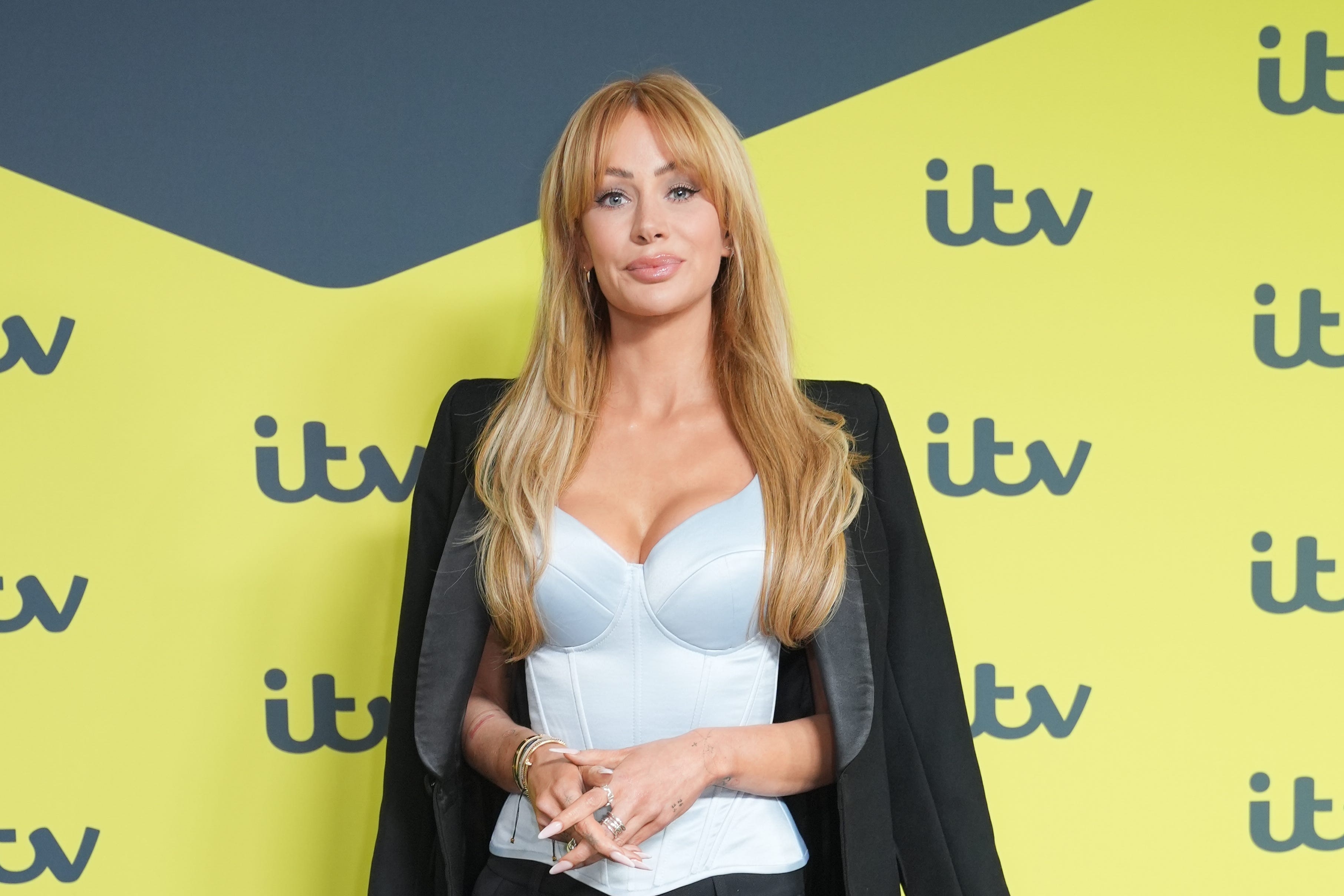
Reality TV stars Pete Wicks and Olivia Attwood have “hard launched” their relationship on Instagram.

It is the first time that Wicks, 37, has acknowledged the relationship on social media, following months of speculation.

The former The Only Way Is Essex (Towie) star shared a number of black-and-white photos of himself and Attwood, which were taken on a recent trip to the party island of Ibiza, with his 2.1 million Instagram followers.

They included a photo of the pair sunbathing on a boat and one of them snuggled up together on a beach.

There were also group photos with their friends and a short video of Wicks backflipping off a boat and into the ocean.

In the caption, Wicks wrote “I guess someone has to go first”, referencing the fact that he made their relationship Instagram official before Attwood did.

Pete Wicks shared a series of black-and-white photographs of himself and Attwood (@p_wicks01/instagram)

Attwood, a former star of Love Island, wrote: “oh so you DO listen to my podcast”, followed by an eyes emoji.

The 35-year-old is believed to be referencing a recent episode of her Olivia’s House podcast, in which she spoke about not “hard launching” a relationship first.

Gogglebox star Scarlett Moffatt wrote: “awww bloody love this”.

Former Made In Chelsea star Sam Thompson, who co-hosts the Staying Relevant podcast with Wicks, wrote: “Never thought I’d see the day YOU hard launch!! Couldn’t be happier for you brother.”

Olivia Attwood was previously married to footballer Bradley Drack
Olivia Attwood was previously married to footballer Bradley Drack (PA Wire)

Wicks and Attwood co-host the Kiss radio show The Sunday Roast, and have been subject to relationship rumours since images surfaced of the two together earlier this year.

After leaving Towie in 2022, Wicks has carved out a successful career as a TV personality, podcaster and author.

He was previously romantically linked to Love Island’s Maura Higgins and his Strictly Come Dancing partner Jowita Przystal.

Attwood appeared on Love Island in 2017 and also appeared in Towie as a regular cast member from 2019 to 2021.

She has since featured in a string of ITV shows and joined the talk show Loose Women in 2023.

She married footballer Bradley Drack in the same year, with their wedding covered in the ITV series Olivia Marries Her Match, but she confirmed in March this year that the pair had split.


Source link

What is a SIPP, where do I get one and how does it help my retirement savings?

0
What is a SIPP, where do I get one and how does it help my retirement savings?


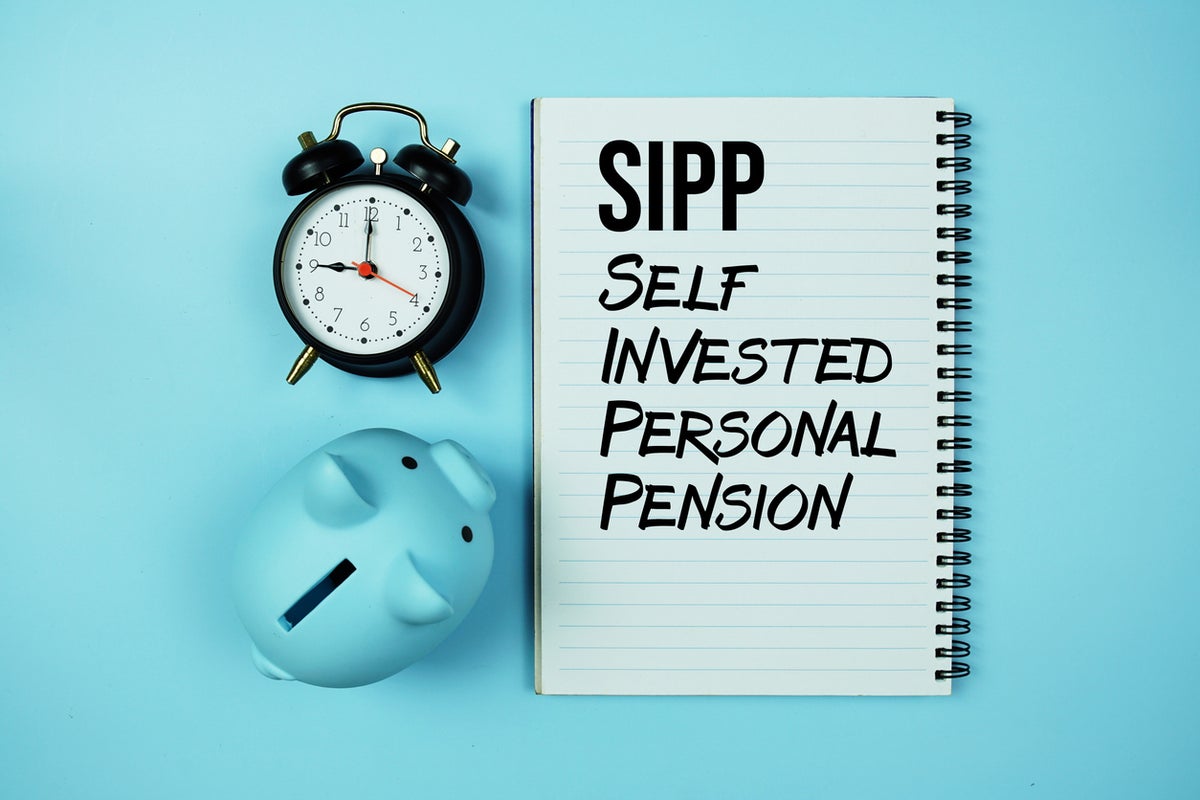
A Self-Invested Personal Pension (SIPP) is one of the best options available for a lot of people in terms of achieving long term financial security.

With the state pension offering a very modest income, question marks over the future of the triple lock and the age at which it is provided moving up, it is not wise to pin your hopes of a comfortable retirement on it.

Some people are in the fortunate position of having substantial work-based pensions coming their way, either through corporate or public sector schemes.

For everyone else a SIPP is a must-have, if it is at all viable. Those with good pensions already in place may still appreciate the added flexibility of having a SIPP – while for self-employed people who have no access to a workplace pension, a SIPP can be a crucial addition to retirement savings planning.

What is a SIPP and how does it work?

A SIPP is a tax-free pension plan that you manage yourself. An investment platform or app will hold the money for you and offer access to a wide range of investment options to select from.

The options include UK stocks, international stocks, bonds, open-ended funds, exchange-traded funds (ETFs) and investment trusts, all similar to what you can invest in within a stocks and shares ISA.

You have full freedom over how your money is invested and your returns will depend on how good your decisions are – in other words how the various assets perform over time. The size and timing of your contributions to a SIPP is also up to you.

(Getty Images)

With this being the case, it is crucial you do plenty of research or seek financial advice before choosing the investments for a SIPP.

For those not comfortable choosing all their own investments, you can still have a SIPP, but you will need to find a provider that offers “ready-made” or managed SIPPs. These only require you to decide between a small number of broad options, such as your risk tolerance, and the provider takes care of the rest.

Trading 212 logo

Get a free fractional share worth up to £100.
Capital at risk.

Terms and conditions apply.

Go to website

ADVERTISEMENT

Trading 212 logo

Get a free fractional share worth up to £100.
Capital at risk.

Terms and conditions apply.

Go to website

ADVERTISEMENT

Extra tax advantages of SIPPs

The key advantages of a SIPP over a standard investment account are that your payments into it, or contributions, benefit from income tax relief at your marginal rate (basic 20 per cent, higher 40 per cent, or additional 45 per cent), and also that any capital gains or yield generated by the investments is free from tax.

You can add up to 100 per cent of your income each year, up to a £60,000 cap.

One other benefit worth mentioning is a SIPP gives you the option to consolidate multiple pension pots related to different jobs you have had into one place.

At age 55 onwards (57 from 2028) you can get access to the money, and at that point tax comes into the picture.

There are multiple options available.

Up to 25 per cent of the money can be withdrawn as cash tax-free, but it is capped at £268,275. Cash taken out above that sum is taxed. You can also choose to leave some or all of the money invested in the SIPP, to continue building your position up over time.

The other main option is to use the money to buy an annuity. This means a provider will take your cash and reinvest it themselves. In return, they will guarantee to give you a set income for the rest of your life.

How to open a SIPP

SIPPs are widely available via UK investment platforms. Both the long-standing platforms and some of the newer investment apps offer SIPP accounts alongside individual savings accounts (ISAs) and general investment accounts.

You can only have one SIPP account with any individual provider, but you can have as many SIPPs as you like via different platforms or apps – though you must keep total annual contributions across them all within the £60,000 limit.

(Getty Images/iStockphoto)

Having multiple SIPPs will increase the management demands on you though, so you should consider the implications fully before opening more than one.

Another downside of having more than one is that you will pay fees on each of them. If the fees are all very similar and purely a percentage of your funds, then it will all balance out to the same amount, but if you are paying a flat fee you will be adding to your costs by having more than one SIPP.

Why is a SIPP important for my retirement?

Having a SIPP is crucial to your prospects for a comfortable retirement, unless you have a sufficient corporate pension plan, a public sector pension, or significant sums of money already available to you.

Even if you have plenty of cash, using your SIPP allowance will save you a lot in tax, and for those with decent pensions via their jobs it could still be worthwhile having a SIPP to boost your position.

The state pension provides a safety net but is unlikely to facilitate a comfortable lifestyle on its own, particularly with question marks over its continued affordability for the government as the population gets older on average.

The age at which the state pension is available of 67 is higher than many people would like to retire, and it is expected to move up further over time.

Inflation will raise the cost of living over time, often by more than cash saving rates or pay rises can counterbalance, so investing your money in sound assets is always a wise decision. If it can be done tax-free that is a big bonus.

To ensure financial security in retirement you should start building up your pension as early as you can. Compounding means the returns you make lead to bigger returns as time goes on, like a snowball rolling down a snow-covered slope, so beginning at a young age is very powerful.

When investing, your capital is at risk and you may get back less than invested. Past performance doesn’t guarantee future results.


Source link

What type of procrastinator are you – and how to fix it now (not later)

0
What type of procrastinator are you – and how to fix it now (not later)


The cause can be hidden or buried, says Dr Itamar Shatz, a lecturer at Cambridge University who is publishing a book on the subject this week.

Understanding what procrastinator you are can really help, he says.

According to Shatz, people can be any of nine types, external, sometimes simultaneously.

Dreamers, for example, fantasise about the future too much, while rebels feel a lack of control and so procrastinate in protest.

Hedonists care too much about immediate pleasure, thrill-seekers enjoy a deadline at their own peril and zigzaggers switch too often between tasks.

The other types also embody their names – worriers, pessimists, perfectionists and burnouts who are tired from working too hard.

Workplace psychologist Ian MacRae, from the British Psychological Society, says labels are fine, as long as people understand these are not permanent character traits.

“I would recommend people think more in terms of ‘oh, I’m acting like a perfectionist today’ instead of thinking ‘I am a perfectionist’.

Prof Fuschia Sirois, a renowned expert in the field at Durham University, rejects categories, and says the main reason for procrastinating is usually the same – to dodge bad feelings.

“We are not procrastinating the task, we are avoiding the unpleasant emotions associated with it,” Sirois explains.

Brain activity studies with procrastinators reveal noticeable differences in areas involved with emotion regulation, she says.

“As soon as we sense a threat the amygdala gets activated, and that threat-sensor is faster than the response time to the rational part of our brain – the prefrontal cortex – that tells us it won’t be so bad.”


Source link