Home Blog Page 249

Power cuts plunge Gaza hospitals into darkness as Israel’s attacks persist

0


Omar Abu Atwa, a 30-year-old driver, was walking home from work one day in central Gaza last month when an explosion shook the street around him.

Bloodied and confused, he was taken to Al-Aqsa Martyrs Hospital in Deir el-Balah, where doctors examined injuries to his hand.

As he waited for an X-ray, the lights cut out, rendering much of the hospital’s medical equipment inoperable, including the machine doctors needed to inspect his wound.

After a six-hour wait in the ward, Omar left tired and frustrated, without an X-ray or proper treatment for his injured hand. This is a repeated experience for patients in Gaza, including those rushed to hospital to receive potentially lifesaving surgery.

“I waited for many hours inside the hospital hoping for electricity to return and the medical devices to start working again. During that time, I was in pain and anxious because I did not know the nature of my injury or whether my condition required urgent medical intervention,” he told Al Jazeera.

“I saw children, elderly people and injured individuals waiting just as I was. Some needed medical tests, while others kept asking about when electricity would return so they could continue their treatment. The crisis affected everyone.”

Israel’s genocide has already caused immense damage to Gaza’s healthcare sector, with Israeli bombing since October 7, 2023 destroying 38 hospitals and 96 primary healthcare centres or rendering them inoperable.

Bombing has almost completely decimated Gaza’s national grid, with about 90 percent of power lines destroyed, forcing hospitals to rely on generators for power.

But an ongoing blockade on Gaza has resulted in severe shortages of fuel needed for generators, which power essential life-saving medical equipment at hospitals such as ventilators, incubators and monitoring devices. The use of non-original engine oils due to the blockade has resulted in generators malfunctioning or affected their performance.

It comes as Israel continues its near-daily air raids on Gaza with at least 1,092 people killed and 3,507 injured since a so-called “ceasefire” came into effect in October 2025.

The consequential routine power cuts have rendered hospitals semi-dysfunctional and affected thousands of patients and medical staff in Gaza, where the flow of patients caused by new waves of bombings and disease continues.

Most of Al-Aqsa’s main generators went out of service in early May 2026, when doctors and nurses were already struggling to cope, leaving the hospital to use secondary generators and solar energy or simply cut back on operations.

A Palestinian doctor checks a drip at the dialysis treatment centre at Al-Aqsa Martyrs Hospital, Deir el-Balah, in the central Gaza Strip, on February 1, 2026 [AFP]

Surgeon Omar al-Ashtal said medical teams at the hospital are struggling to provide proper and essential services to patients due to erratic power supplies, especially in operating rooms, where electricity is essential. Surgeons and doctors are having to shorten or delay important operations until stable energy supplies are available, leading to serious consequences for patients.

“What we are witnessing today is not only a shortage of electricity, but a cumulative crisis that includes worn-out generators, fuel shortages and a lack of spare parts needed for maintenance,” al-Ashtal told Al Jazeera. “The continuation of this situation threatens the hospital’s ability to respond to emergencies and increases the suffering of patients waiting for treatment and medical care.”

Intensive care units, operating rooms, anaesthesia departments and neonatal care are the most affected by the latest power crisis. Any interruptions to these departments can lead to serious life-threatening complications for patients, including babies in incubators.

Outages of internet and electronic systems also prevent administrative teams and nurses from fulfilling the essential tasks of accessing or recording patient data, tracking cases and communicating between different departments.

Nurse Hamza Nawas said that medical teams were coping as well as they could under the circumstances.

“We are living under daily pressure because of the electricity crisis. At night, the difficulties increase, especially with rising temperatures and the disruption of some services related to power,” he told Al Jazeera. “We try as much as possible to continue providing care, but the current conditions make work more difficult and complex.”

Engineer Omar al-Ghariz, a specialist in energy systems at Al-Aqsa Martyrs Hospital, said that generators have been overloaded, exceeding their capacity for months.

“The electric generators at Al-Aqsa Martyrs Hospital have been operating continuously for many months under loads that exceed their normal capacity, due to full reliance on them amid ongoing electricity outages,” he told Al Jazeera. “[This has] led to significant wear on many generator components and a noticeable increase in technical malfunctions.”

Shortages of fuel and spare parts have forced the hospital’s maintenance staff to rely on temporary solutions to keep generators running, but these can only delay the inevitable, with the machines struggling under 24/7 operations.

“The greatest risk lies in the fact that the hospital depends on a limited number of generators to operate its vital departments. Any sudden failure or fuel shortage could lead to the suspension of essential services,” he said.

“Therefore, we urgently need new generators, spare parts and immediate technical support to ensure the continuity of hospital operations.”




Source link

Havana Syndrome victims get $3m payout from US government

0


The US Department of Defence said it would continue to prioritise “the care of affected personnel” as it announced the compensation, paid out under the Havana Act which was signed into law in 2021.

There has been widespread speculation for many years over what – and who – is responsible for Havana Syndrome.

Some have claimed the illness is caused by microwaves, prompting further speculation that a foreign power may have used some kind of sonar weapon to attack US overseas staff and their dependants.

“My brain is broken,” former CIA analyst Erika Stith told CBS News in 2022, external.

“We got this as a result of serving our country. And we deserve to be taken care of,” she said.

Last year, most US intelligence agencies and departments surmised that it was “very unlikely” that a foreign actor used “a novel weapon or prototype device to harm” US personnel and their families.

Although, a small component of the US intelligence community did not completely dismiss the theory.

The report, by the National Intelligence Council, said none of the agencies or departments it spoke to “call[ed] into question the experiences or suffering” of US workers and their families.

The community believed that they “experienced genuine, sometimes painful and traumatic, physical symptoms and sensory phenomena and honestly and sincerely reported those events as possible anomalous health incidents”.


Source link

Dr Oz reveals 3 free ways to boost your health — no medication required

0


NEWYou can now listen to Fox News articles!

Being healthy doesn’t have to require a hefty price tag. Some of the most beneficial habits are actually completely free, according to CMS Administrator Dr. Mehmet Oz.

In an exclusive interview with Fox News Digital during the Great American State Fair in the nation’s capital, Oz shared three “super simple” health tips that Americans can apply now without spending a dime.

1. Spend more time with people you love

“The best health advice I can give is super simple,” he said. “There’s nothing healthier than having a good time with the people that you care about.”

DR OZ LINKS OBESITY TO CHRONIC DISEASE SURGE, SAYS GLP-1S CAN ‘JUMPSTART’ BETTER HEALTH

Spending time with loved ones can bring tangible health benefits, especially when paired with activities like eating a meal together or doing something active, according to the doctor.

“Do the things that bring you an inner sense of calm so you can sleep at night,” he said. “That all comes along with being social.”

“There’s nothing healthier than having a good time with the people that you care about,” the doctor said. (iStock)

Oz said that 50% of the human brain is designed to read the face of the person next to you.

CLICK HERE TO SIGN UP FOR OUR HEALTH NEWSLETTER

“We wouldn’t waste that brain power if it wasn’t important,” he said. “We’re supposed to be social. We’re supposed to interact with others, so spend time doing that.”

Mom, dad and two sons preparing freshly cooked pasta on plates at kitchen counter.

Spending time with loved ones can bring tangible health benefits, especially when paired with activities like eating a meal together or doing something active. (iStock)

Some traditionally “healthy” habits such as dieting may help to promote certain health benefits, but Oz cautioned that dieting can also “make you feel lonely.”

“We celebrate around food,” he said, adding that people can stay socially connected while also maintaining healthy habits.

2. Reduce stress for better sleep

Adequate sleep is one of the most powerful ways to improve your health — and it doesn’t cost a thing.

TEST YOURSELF WITH OUR LATEST LIFESTYLE QUIZ

“Reducing the stress in your life so you can sleep is probably the single best way, especially as you get older, [to stay] youthful,” Oz advised.

“You can try to spend money on medication, but I’m not aware of any that work as well as the natural sleep hygiene tools,” he added.

Middle-aged man sleeping on his side, hugging a white pillow in a bright, comfortable bedroom.

Make the room you’re sleeping in as dark as possible, keep the temperature cool and avoid screens before bed, the doctor recommended. (iStock)

These tools include making the room you’re sleeping in as dark as possible, keeping the temperature cool and avoiding screens before bed. The comfort of a loved one — or even a pet — can also contribute to better sleep, Oz added.

CLICK HERE FOR MORE HEALTH STORIES

“Do the things that we know allow us to sleep with more comfort,” he said.

3. Eat real food

When it comes to eating healthier, Oz said the approach is “pretty straightforward.”

“Eat real food that comes out of the ground,” he recommended.

dr oz and chef geoffrey zakarian

Dr Mehmet Oz, at right, assists Chef Geoffrey Zakarian in a healthy cooking demo on stage at the Great American State Fair in Washington, D.C., on July 6, 2026. (Khloe Quill/Fox News Digital)

“These wholesome, real foods are what your brain is looking for,” he said. “It’s looking for nutrients, not calories.”

Oz used nuts as an example of a nutrient-rich, natural food, which he described as “so valuable as a health tool.”

CLICK HERE TO DOWNLOAD THE FOX NEWS APP

“Nuts, which are baby trees, basically, have tons of nutrients,” he said. “Yeah, they’ve got calories, but they’ve got so many nutrients in them that it’s without question one of the wise things you can do to make your brain healthy.”

He added, “If your brain’s healthy, it’ll stop feeding your mouth.”


Source link

All the famous faces in the Royal Box at Wimbledon today

0


The Wimbledon women’s title will be decided today, with Kate Middleton and Lily Collins among the celebrities watching the action from the exclusive Royal Box this afternoon (Saturday, 11 July).

Located in a prime viewing spot, the super luxe Centre Court enclosure has been used to welcome friends and guests of Wimbledon since 1922.

So far this tournament, the likes of Benedict Cumberbatch, Celia Imrie and tennis legend Roger Federer have all been bagged invites, with Jason Isaacs, Elle Fanning, and Armando Iannucci also stopping by.

Day 13 of the competition will see 10th seed Karolina Muchova and ninth seed Linda Noskova contesting an all-Czech final with the Venus Rosewater dish on the line.

Before that, Britain’s Henry Patten is in action with partner Harri Heliovaara in the men’s doubles final, with the top seeds taking on sixth seeds Marcelo Arevalo and Mate Pavic.

Here are all the celebrities in the Royal Box today (11 July)…

Kate Middleton

Middleton will be at Wimbledon today after last arriving at the tournament on day four (Getty Images)

It’s no surprise that the Princess of Wales, who’s an avid tennis fan and patron of the All England Lawn Tennis Club (AELTC) is back at centre court today to watch the women’s singles finals.

Earlier in the tournament, Middleton delighted those waiting in the Wimbledon queue by presenting them with tickets herself.

Lily Collins

Lily Collins will also return to the tournament today alongside husband Charlie McDowell
Lily Collins will also return to the tournament today alongside husband Charlie McDowell (Getty Images for Emirates)

Hollywood star Lily Collins (who is now most prominently known for her role in the hit Netflix series Emily in Paris) was spotted enjoying the tennis in the VIP section alongside her partner and film director Charlie McDowell (Windfall, Gilded Rage).

Davina McCall

Presenter Davina McCall is expected to be reunited with the Princess of Wales in the royal box after the pair had a touching conversation about cancer earlier this month
Presenter Davina McCall is expected to be reunited with the Princess of Wales in the royal box after the pair had a touching conversation about cancer earlier this month (Getty Images)

After being given the all clear from breast cancer following surgery in April, former Big Brother presenter Davina McCall looked radiant as she enjoyed the day at the All England club alongside her partner and celebrity hairdresser Michael Douglas.

Sam Mendes

Director Sam Mendes will be in the Royal Box for today's action
Director Sam Mendes will be in the Royal Box for today’s action (Getty Images)

Oscar-winning film director Sam Mendes, who scooped the Best Director gong at the Academy Awards for American Beauty in 1999 and went on to direct James Bond films Skyfall in 2012 and Spectre in 2015 cut a sharp figure on centre court today alongside his wife Alison Balsom.

Hannah Waddingham

'Ted Lasso' start Hannah Waddingham will see the final showdown between Muchova and Noskova
‘Ted Lasso’ start Hannah Waddingham will see the final showdown between Muchova and Noskova (Hoda Davaine/Getty Images for Em)

Emmy-winning Ted Lasso star Hannah Waddingham had a day out with her spine surgeon partner Nick Beresford-Cleary, who she made her red carpet debut with at the Variety Power of Women: London event last month.

Jodie Foster

Actor Jodie Foster is back at the Championships alongside her wife Alexandra Hedison
Actor Jodie Foster is back at the Championships alongside her wife Alexandra Hedison (Getty Images for AELTC, Wimbledo)

Actor Jodie Foster (The Accused, The Silence of the Lambs, Taxi Driver) headed to centre court alongside her director and actor wife Alexandra Hedison, best known for her role as documentary filmmaker Dylan Moreland in the third season of The L Word.

Billie Jean King

Former champion Billie Jean King is one of many victors who'll return to centre court today
Former champion Billie Jean King is one of many victors who’ll return to centre court today (Getty Images)

Tennis legend Billie Jean King, who won the Ladies’ Singles Championships in 1966, 1967, 1968, 1972,1973, and 1975 was at centre court to watch the 2026 title be decided today.

Fellow former champions who joined her in the Royal Box included Simona Halep, Ann Jones, Marion Bartoli, Petra Kvitova, and Maria Sharapova.


Source link

As gas plants rise to power AI, renewable energy allies are fighting for cleaner alternatives

0


HARRISBURG, Pa. — As the explosive energy demand of artificial intelligence spurs a renaissance for fossil fuels, renewable energy allies are trying to ensure that massive data centers will be powered by climate-friendly sources, too.

Lawmakers in states with stronger climate policies don’t want data centers to hinder their goal of slashing planet-warming greenhouse gas emissions.

In other states, environmental advocates and corporations with clean energy goals are working regulatory levers to push monopoly utilities that historically control the energy supply and grid access.

The problem clean energy proponents are confronting is that tech giants are demanding power at such speed and scale — some data centers consume more energy than a mid-size city — that the construction of wind and solar simply can’t keep up.

As a result, the AI boom has set in motion the biggest-ever construction boom of natural gas-fired power plants, not to mention moves by utilities, power plant owners and the federal government to keep aging coal-fired power plants operating past their previously scheduled retirement dates.

Legislation on the desk of New York Gov. Kathy Hochul would require data centers over a certain size to meet renewable energy benchmarks starting in 2030 and, by 2040, get at least 90% of their energy from renewable energies. The bill’s author, state Sen. Kristen Gonzalez, a Democrat, said the targets are realistic.

“We are literally talking about the wealthiest companies in the world that are looking to build in New York state, and if they have the resources to put billions of dollars into data center development, then they certainly should have the resources to build out renewable energy sources to power them,” Gonzalez told The Associated Press.

Michigan, Oregon and Minnesota led the way, enacting laws in the last 18 months designed to protect their pre-existing requirements that electric utilities use only emissions-free energy sources by 2040.

“That’s a challenging thing to meet with the data centers,” said Bob Jenks, executive director of the Oregon Citizens’ Utility Board, a nonprofit that advocates for lower utility bills and cleaner energy. “It was a challenging thing to meet without the data centers.”

Minnesota and Oregon ordered regulators to ensure that the energy that supplies data centers is in line with their emissions-reduction goals, while Michigan required hyperscale data centers to meet a clean energy requirement — 90% within six years — to access its lucrative sales tax exemption.

Bills with similar provisions emerged in more than a half-dozen states, including California, Illinois, New Jersey, Pennsylvania and Virginia.

“We just can’t do business as usual with a demand at this scale and facilities of this scale because the impacts are massive,” California state Sen. John Padilla, who sponsored a bill in his state, told the AP.

Along with gas projects, tech giants like Google are investing billions into their own zero-emissions projects like solar, wind, geothermal, nuclear or battery storage.

Tech giants often find themselves confronted with utilities that can’t promptly supply the kind of power they need. So they — along with environmental groups, energy entrepreneurs and business associations — are trying to persuade regulators to expand access to the grid, including in states where legislators are averse to clean energy mandates.

Greg Robinson, whose Raleigh, North Carolina-based firm Aston Power helps procure power for data centers and other big energy users, likened it to the growth of FedEx when the business world decided that the U.S. Postal Service was too slow.

“Then business said, ‘Hey we’re doing more things now, the postal service is not keeping up so maybe there’s an opportunity for a new service,’” Robinson said.

Part of the exercise has been convincing utilities — which profit by building power plants and transmission infrastructure — that this won’t threaten their bottom lines, clean energy advocates say.

For one, utilities will get to connect a power source that they don’t have to charge customers for, especially at a time when electricity bills are rising quickly in many utility territories.

Utilities also get a large, long-term energy customer that pays them to expand the grid, instead of watching big customers build standalone power sources.

Last year, clean energy advocates persuaded Colorado regulators to order the state’s largest electric utility, Xcel Energy, to create a program to let big power users build clean energy projects that can be connected to the grid.

In an April regulatory filing, Xcel Energy said it agreed that a program could benefit customers, and cited two Google projects — one in Nevada to connect 115 megawatts of geothermal energy and another in Minnesota to connect 1,900 megawatts of wind, solar and battery storage — that were approved through similar programs.

Still, a fight over how Xcel Energy wants to design the program looms with clean energy advocates in front of state regulators.

Google’s agreement with NV Energy, Nevada’s largest for-profit utility, received approval from regulators last year and is widely viewed as the first of its kind. Google says it now has similar concepts approved or under consideration in eight other states, including Indiana, Kansas, Missouri and South Carolina.

The Corporate Energy Buyers Association — whose members include tech giants and large corporations — hammered out an agreement with Georgia Power, approved by state regulators there earlier this year, to allow their members to build clean energy sources and connect them to the grid.

They are now seeking something similar in North Carolina.

“These innovations are actually some of the most incredible and understated innovations we’re going to see in regulatory and energy procurement,” Nidhi Thaker, CEBA’s senior vice president of policy, told the AP. “And I think the actions that are being taken right now are actually going to set energy policy for the next two to three decades.”

___

Follow Marc Levy at http://twitter.com/timelywriter


Source link

Typhoon Bavi: China braced for second major storm in a week

0


Hundreds of thousands of people have been evacuated from areas of eastern China as a powerful typhoon – the country’s second in a week – barrels towards the coast.

Typhoon Bavi, which spans 1,000km (620 miles) at its widest point – roughly the width of France – is expected to make landfall near the major city of Wenzhou on Sunday morning.

After pummelling a chain of remote Japanese islands, it brought heavy rainfall to Taiwan as it brushed past its northern tip. Earlier landslides triggered by the storm killed 17 people in the Philippines.

Though it has weakened to a Category 1 typhoon, it still presents a risk because of the huge volume of moisture within its rain bands.

Bavi is forecast to bring “exceptionally heavy rains” to eastern Zhejiang province and northeastern Fujian province, the authorities said, adding that evacuations were “undertaken entirely to guard against the [worst-case] scenario”.

The city of Wenzhou, home to around 10 million people, is close to the path of the storm.

Bavi began as a super typhoon, battering Guam and the Northern Mariana Islands last Monday with wind speeds of 290km/h (180mph).

As it made its way through the Pacific, weakening to 144 km/h winds, it struck the Sakishima islands, part of Japan’s Ryukyu island chain between the country’s main islands and Taiwan. At least five people were injured and thousands were without power.

Taiwan itself did not receive a direct hit but thousands of people were forced to leave their homes and there was a danger of landslides after heavy rain. Neither country has reported any deaths.


Source link

Why do coins have ridged edges? The clever reason dates back centuries

0


Look closely at the change in your pocket and you’ll spot something easy to overlook: some coins have perfectly smooth rims, while others are lined with fine grooves. Most people assume this is just decoration. Actually, it’s a centuries-old engineering trick that once protected the very value of money itself.

A solution to an old problem

According to various reports, the story starts in Europe during the 1500s and 1600s, back when coins were struck from actual gold and silver. Because the metal itself was valuable, criminals found a sneaky way to profit without destroying the coin outright. This scheme was called “coin clipping.” Someone would shave a sliver of precious metal off the rim – so thin it was barely noticeable – and pocket it. Meanwhile, the clipped coins kept circulating, now lighter than they were supposed to be.The scale of this fraud eventually became a real economic threat. As lighter, tampered coins flooded the marketplace, people grew wary of the currency itself, and everyday trade got harder.To combat this issue, governments began introducing coins with patterned or ridged edges. The grooves made it immediately obvious if someone had tampered with the coin. Even a small amount of clipping would interrupt the continuous pattern, allowing merchants and the public to identify altered coins quickly. The innovation became practical after advancements in minting technology allowed for the production of consistent edge designs during the manufacturing process.

Coins

Image Credit: Canva

Why ridged edges are still used today

Coins today are struck from cheap alloys, not gold or silver, so clipping them for profit makes no sense anymore. And yet, ridged edges never went away. Why?Partly, it’s just tradition, mints tend to hold onto design elements that have stood the test of time, and grooved edges are now a recognisable hallmark of coinage everywhere.But there’s a real function left in the feature, too. Ridges let people tell coins apart by touch alone. In plenty of currencies, the higher-denomination coins are ridged while the lower ones stay smooth. A quick feel of the edge tells you what you’re holding – a detail that matters enormously for people with vision impairments navigating daily purchases. There’s also a grip benefit. A perfectly smooth coin can slip right out of wet or cold fingers, whereas a textured edge is much easier to hold onto.And finally, ridges still play a small role in fighting counterfeiting. Modern mints rely on far more advanced defenses now – specialised alloys, laser-etched details, and microscopic imagery, but the humble grooved or lettered edge still adds one more layer that’s hard to fake.

Old Indian Coins

Old Indian coins collection (Image Credit: Canva)

More than just tiny grooves

Edge designs aren’t one-size-fits-all. Some coins get simple, evenly spaced grooves; others mix smooth sections with ridged ones. Special-edition or high-value coins sometimes go further, engraving words, dates, or ornamental lettering right into the rim. Mints deliberately choose these variations, weighing security, manufacturing capability, and accessibility for coin users.Making these edges is a precision job. Purpose-built machinery stamps the pattern onto each coin’s rim during production, guaranteeing that every legitimate coin comes out looking identical and meeting exacting standards.Even as digital payments keep expanding, physical coins haven’t disappeared, they’re still woven into economies everywhere. Their designs quietly blend history, precision engineering, and anti-fraud strategy, mostly unnoticed by the people using them every day.So next time you get change back from a purchase, take a second to run your finger along the edge. Those small grooves aren’t just an aesthetic flourish – they’re the legacy of a centuries-old fight against fraud, a boost to usability, and a quiet guardian of trust in money itself. A tiny design choice, it turns out, is still doing real work today.


Source link

Rachel Reeves: Andy Burnham needs a worked-through plan to govern

0


The Chancellor tells Laura Kuenssberg she will be handing over a stable economy to the incoming PM.


Source link

Robotaxi pit stops could pop up near you

0


NEWYou can now listen to Fox News articles!

You may already be used to seeing empty robotaxis cruising through city streets. No driver. No passenger. Just a car rolling along as if it has somewhere important to be. Sometimes it does. It may be heading to pick someone up. Other times, it may be driving back to a faraway depot to get cleaned, charged or checked before the next ride. That empty driving has a name: deadhead miles. In other words, the car is using time, power and road space without carrying a paying rider.

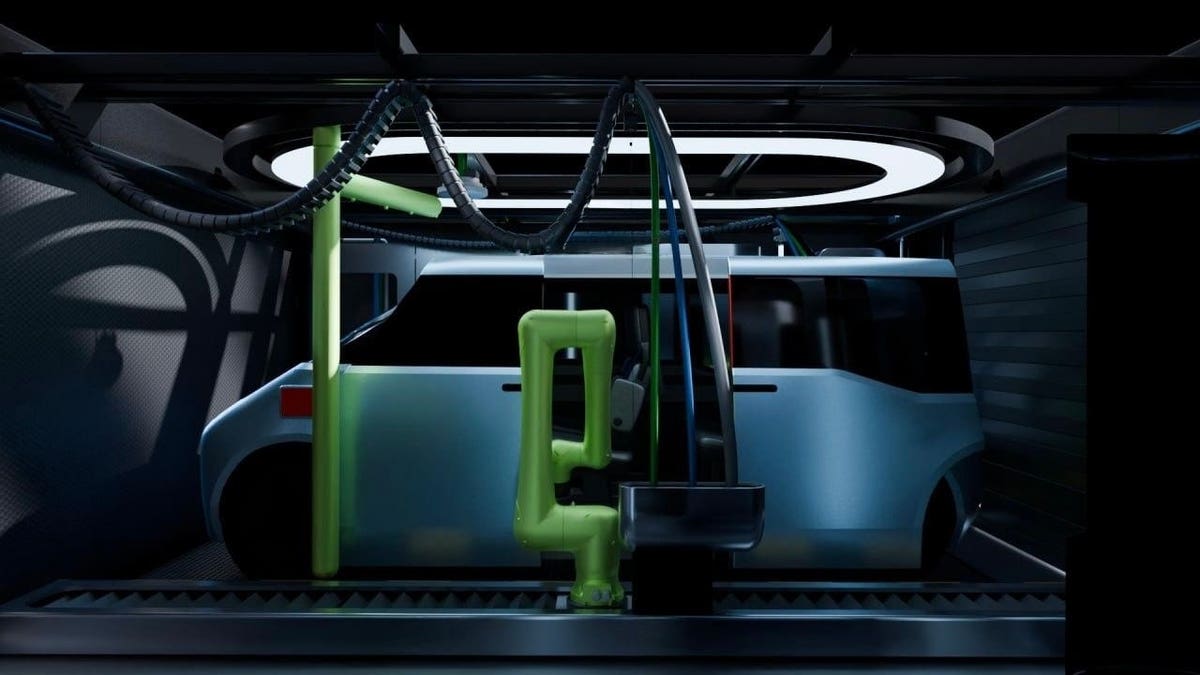
Now a Redwood City, California, startup called Aseon Labs wants to bring the depot closer to the robotaxi. The company is building parking-space-sized robotic service pods that can clean, charge, inspect and reset driverless cars closer to where riders actually need them. Aseon calls them modular “reset pods.” But if these boxes start showing up near parking lots, gas stations or busy streets, plenty of people may see them another way: as robotaxi pit stops in a box.

The idea could help cut wasted miles and keep driverless cars moving. However, it also raises a very interesting debate for cities and neighborhoods: where exactly do you put these big boxes?

ZOOX ROBOTAXI REDESIGN BRINGS BIG RIDER UPGRADES

The system could help robotaxi fleets spend less time driving empty, but these big boxes may still spark debate over curb space. (Aseon Labs)

Free live CyberGuy class: Sick of Spam? Join us July 22

Join us Wednesday, July 22, at 1 p.m. ET for a free CyberGuy Live class that will help you cut down on robocalls, spam texts, junk email and other unwanted messages. Kurt “CyberGuy” Knutsson will walk you step by step through simple ways to filter spam, clean up your inbox and recognize the messages that could put your personal information at risk. No technical experience is needed. You’ll also receive our spam-stopping checklist, and every registrant will get a link to the class recording afterward.

Reserve your free spot today at CyberGuyLive.com.

What are robotaxi pit stops?

Aseon Labs describes its system as a “depot in a box” for self-driving cars. Instead of sending robotaxis back to large centralized depots outside busy areas, the company wants to place smaller automated pods closer to where riders actually need cars. These pods are roughly the size of a parking space. They are designed to inspect vehicles, clean interiors and charge robotaxis between rides. Aseon also says the pods can handle vehicle reset operations, data synchronization, recalibration and lost-and-found handling.

Think of one as a mini service station for driverless fleets. A robotaxi pulls in, the pod checks the vehicle and gets it ready to go back out. That could make a huge difference for robotaxi companies. A car sitting at a depot is not earning money. A car driving empty across town is also not earning money.

Why robotaxi pit stops could cut empty miles

Robotaxi companies face a tough math problem. The vehicles need to stay on the road when demand is high. Yet every car still needs cleaning, charging and inspection. Right now, much of that work happens at depots. Those depots often sit outside dense city centers because real estate costs less there.

Aseon says fleets may travel 10 to 15 miles each way to reach centralized depots. That can turn a routine reset into a long, empty trip at the exact time a vehicle could be picking up another rider. The company’s goal is to place service pods within roughly one mile of where robotaxis operate. If that works, Aseon says servicing could be up to 15 times closer to the areas where riders are waiting.

How Aseon Labs robotaxi pit stops would work

Aseon’s pods use cameras to inspect robotaxis. Robotic arms clean the interior of the vehicle and retrieve lost items from the cabin. The company also wants the pods to be moveable. That part is important. If one location performs poorly, Aseon could relocate the unit instead of being stuck with a permanent facility.

Aseon says each reset pod is designed to fit within a single parking space and requires no permanent construction. The company also says the pods can be delivered by flatbed truck and become operational within 24 hours. Early versions are expected to have staff nearby. Over time, the company wants the system to operate more autonomously.

The pods could connect to existing power sources through partnerships with EV charging companies. They could also use mobile power, including a propane generator, depending on the location. Aseon says the pods can also integrate with existing DC fast-charging networks, which could help charging operators get more use out of underused stations.

That flexibility may help with rollout. Still, it also opens the door to questions from neighbors, city planners and business owners.

Why robotaxi pit stops could face pushback

If these robotaxi pit stops start showing up across U.S. cities, plenty of people will notice them. You could walk past one on your way to a coffee shop and wonder what it is doing there. Is it a charging station? Is it recording anything? Is it blocking parking? Is it taking up curb space that delivery drivers, cyclists or nearby businesses already fight over?

Those questions are important. City curb space has become some of the most contested space in transportation today. Ride-hailing pickups, delivery trucks, bike lanes, outdoor dining, EV chargers and public transit all compete for the same streets.

Now imagine adding automated robotaxi service boxes to that mix. Even if the pods help reduce empty driving, cities will still need to decide where they belong. A parking lot may make more sense than a residential block. A commercial corridor may work better than a narrow street. In some places, the answer may be no.

Robotaxi pit stops could test city rules

Aseon’s pods are considered temporary structures, according to the company’s plan. That could help avoid a long permitting process and make the units easier to move. However, “temporary” does not mean invisible. If a pod takes up a parking space for weeks or months, neighbors may not care whether it can be moved later. They will care about the space it occupies today.

WAYMO RECALLS ROBOTAXIS OVER CONSTRUCTION-ZONE RISK

robotaxi

Inside the pod, robotic arms and charging equipment are designed to service autonomous vehicles closer to busy pickup areas. (Aseon Labs)

Local governments will likely have to weigh the trade-offs. A pod may reduce empty robotaxi trips, which could lower congestion from cars heading back to remote depots. On the other hand, the pod itself becomes a new piece of street infrastructure. That means cities may need rules around placement, noise, power use, appearance and how close these units can sit to homes or storefronts.

What happens when a robot cannot clean the mess?

One smart part of Aseon’s plan is that the pod will not try to solve every problem. The company says its system can use computer vision and AI to detect issues that should go to a human instead. For example, if a camera spots melted chocolate on a seat, the robotic arm may avoid cleaning it because the wrong move could make the stain worse.

At that point, the vehicle could head to a central depot for a person to handle it. That is a good reminder of where this technology stands. Robotaxis may be driverless, but the operation behind them still depends on human judgment.

Aseon Labs robotaxi pit stops are still early

Aseon Labs has raised $10 million in seed funding and plans to build five prototypes. So, this is still an early-stage rollout, not something already popping up in cities across the country. The company has not publicly named signed robotaxi customers yet. However, Aseon says it is talking with autonomous vehicle operators, EV charging network providers and commercial real estate partners. It also says early pilot deployments are starting to take shape.

The business model is also important. Aseon does not plan to simply sell these pods and walk away. Instead, robotaxi companies would use the pods as needed, while Aseon handles deployment, maintenance and daily operation. That could make it easier for robotaxi companies to add service points without building full depots across a city.

For now, these boxes are not suddenly appearing on every corner tomorrow. Still, Aseon’s vision is much bigger than a few test units. The company wants thousands of reset pods across major cities, close enough to keep robotaxis moving without sending them back to distant depots.

What this means to you

If robotaxi services expand in your area, you may not only see more driverless cars. You may also see the support system that keeps them running. That could mean automated pods near shopping centers, transit hubs, parking lots or busy pickup zones.

For riders, this could mean cleaner cars and shorter wait times. For cities, it could mean fewer empty trips back to distant depots.

However, for residents, the trade-off may feel different. You may ask why a robotaxi company gets curb space when parking is already tight. You may also want clear answers about cameras, noise and how long each pod stays in one spot.

Kurt’s key takeaways

I can see why robotaxi companies would love this idea. If a driverless car can get cleaned and charged closer to riders, it wastes less time driving empty across town. However, I can also see the pushback coming fast. You know how hard it can be to find parking in a busy city. Now picture a big automated service box taking up space near your home, office or favorite restaurant. That does not mean the idea is bad. It means cities need to be careful before handing over valuable public space to robotaxi infrastructure. Aseon says its reset pods could cut costs, reduce downtime and keep driverless cars closer to where riders need them. That’s all great, but the big question is still who decides where these boxes go?

robotaxi

Aseon’s robotaxi pit stop concept shows how a driverless car could pull into a parking-space-sized pod for charging, cleaning and inspection. (Aseon Labs)

Would you be OK with a robotaxi pit stop on your block if it helped cut down on empty driverless cars cruising through your city? Let us know by writing to us at Cyberguy.com.

CLICK HERE TO DOWNLOAD THE FOX NEWS APP

Sign up for my FREE CyberGuy Report

  • Get my best tech tips, urgent security alerts and exclusive deals delivered straight to your inbox.
  • For simple, real-world ways to spot scams early and stay protected, visit CyberGuy.com – trusted by millions who watch CyberGuy on TV daily.
  • Plus, you’ll get instant access to my Ultimate Scam Survival Guide free when you join.

Copyright 2026 CyberGuy.com. All rights reserved.


Source link

Bringing the war to Putin’s front door: Is Ukraine’s energy strike strategy working?

0


NEWYou can now listen to Fox News articles!

Ukraine’s intensifying campaign against Putin’s oil industry is having a growing impact inside Russia, forcing one of the world’s largest energy producers to restrict diesel exports, pursue fuel imports and confront shortages stretching from occupied Crimea to cities deep in the country.

Inside Russia, the consequences are becoming increasingly visible. Former Russian opposition politician and commentator Maxim Katz said the shortages represent one of the first direct ways many Russians have experienced the consequences of the war — and could become particularly sensitive ahead of State Duma elections scheduled for September.

“This is the first time that Russians actually sees that the war has an effect on their day-to-day life — not only in the cost of fuel, but in its availability,” Katz told Fox News Digital in a Zoom interview from Israel, where he lives in exile. “You cannot buy it. And that’s a big deal for Russia.”

DRONE OFFENSIVE HITS RUSSIAN OIL TANKERS AND REFINERIES AT ‘INDUSTRIAL SCALE’ AS MOSCOW BANS DIESEL EXPORTS

Smoke and flames rise over Moscow on June 18, 2026, following a Ukrainian drone attack that hit the Kapotnya oil refinery and other targets in the Russian capital. (East2West)

Katz said elections in Russia are neither free nor competitive, but they still serve an important function for Putin by projecting public support to regional leaders, business figures and other members of the elite.

“If everybody sees in September that he has 20% support or 10% support, then questions begin about why he should appoint governors or control the system,” Katz said. “That is something he does not want to deal with.”

The fuel crisis, Katz argued, threatens Putin’s effort to portray himself as fully in control and to keep the cost of the war away from ordinary Russians.

“Putin tried to convince everybody that Moscow would continue to live its regular life and nobody would see the war,” Katz said. “It was his war, not the war of ordinary Russians. But when the war comes home, this is a completely different story, and it changes the equation.”

Katz also pointed to the striking reversal of Russia — historically one of the world’s largest exporters of oil and refined products — seeking fuel supplies from abroad. Reuters reported that Moscow had approached Kazakhstan about importing approximately 50,000 metric tons of gasoline after refinery outages reduced Russian gasoline output by roughly 25% from a year earlier.

Russian President Vladimir Putin

Russian President Vladimir Putin holds his annual end-of-year press conference in Moscow on Dec. 19, 2024. (Alexander Nemenov/AFP via Getty Images)

The campaign reached a new milestone this week when Ukrainian drones struck the Omsk refinery, Russia’s largest, roughly 1,700 miles from Ukrainian-held territory. The facility temporarily halted processing after the attack, according to Reuters. Days later, another strike shut Russia’s Saratov refinery for the third time this year.

The expanding crisis raises a central question for Ukraine and its allies: Can attacks on the infrastructure that powers Russia’s military and economy alter President Vladimir Putin’s calculations — or will the Kremlin continue shielding its war effort while shifting the burden onto ordinary Russians?

“They have to buy fuel from Kazakhstan now,” Katz said. “Russia is one of the biggest exporters of oil and oil products and always has been. This is crazy.”

Still, Katz cautioned that the Kremlin would likely continue prioritizing military supplies even as civilian shortages worsened.

“He will find the fuel for the tanks. That is not the issue,” Katz said. “The issue is his grip on Russia.”

WATCH: FIGHTS BREAK OUT AT RUSSIAN GAS STATIONS AS PUTIN ADMITS FUEL SHORTAGES

Retired U.S. Air Force Gen. Philip M. Breedlove, former commander of U.S. European Command and NATO Supreme Allied Commander Europe, said the effects are already becoming significant.

“Without question, Ukraine’s campaign against Russia’s oil and energy infrastructure is having a real and growing impact on the Russian homeland,” Breedlove told Fox News Digital. “The reported reductions in fuel production are significant — close to a third by some estimates.”

“These strikes are beginning to seriously impact not just the economy but the Kremlin’s ability to sustain its war effort and military operations,” he added. “When Ukraine is able to hit large, high-value energy targets deep inside Russian territory, that changes the equation.”

“Russia cannot effectively defend every refinery and energy facility across their enormous territory, and that is the core problem for Moscow,” Breedlove said. “Every asset they deploy to defend their infrastructure are assets not deployed to the frontlines.”

Moscow has already taken emergency measures. Russia banned diesel exports through the end of July as drone attacks forced unplanned refinery shutdowns and reduced domestic supplies. Seaborne exports of diesel and gasoline fell 39% in June compared with May and 46% from the previous year, according to Reuters.

RUSSIAN GENERALS’ ASSASSINATIONS EXPOSE GROWING RIFT INSIDE PUTIN’S SECURITY APPARATUS

Steam rises from chimneys of the Gazprom Neft's oil refinery in Omsk

Steam rises from chimneys of the Gazprom Neft’s oil refinery in Omsk, Russia November 18, 2022.  (Alexey Malgavko/Reuters)

Ukraine’s ambassador to Israel, Yevgen Korniychuk, said American intelligence has played an important role in helping Kyiv penetrate Russia’s extensive air-defense network.

“You always have to give credit to the United States,” Korniychuk told Fox News Digital. “U.S. intelligence is helping Ukrainian missiles and drones avoid Russian anti-missile defense.”

The Wall Street Journal, citing U.S. officials, said in a 2025 report that “The U.S. will provide Ukraine with intelligence for long-range missile strikes on Russia’s energy infrastructure.” Reuters, citing the Financial Times, also reported that “U.S. intelligence has helped Kyiv strike important Russian energy assets, including oil refineries, far beyond the front line, the newspaper said, citing unnamed Ukrainian and U.S. officials familiar with the campaign.”

Fox News Digital reached out to the State Department and the White House to confirm the reports and the Ukrainian ambassador’s claims.

Korniychuk said the strikes are creating serious pressure inside the Russian system, even if they have not yet persuaded Putin to change course.

Footage shows the launch of Ukraine’s homegrown long-range "Flamingo" cruise missiles during a strike on Russian military infrastructure

Footage shows the launch of Ukraine’s homegrown long-range “Flamingo” cruise missiles during a strike on Russian military infrastructure (East2West)

“The majority of the Russian leadership understands that this is a crucial problem, but Putin personally does not,” he said. “The distance between him and the rest of the Russian leadership is growing tremendously. Even people he has trusted for many years understand that this is going nowhere, but that will not necessarily bring Putin to the same conclusion.”

Retired Lt. Gen. Richard Newton, former U.S. Air Force assistant vice chief of staff, argued that the broader strategic picture is shifting in Ukraine’s favor.

“Throughout the conflict, the vast majority of the Russian homeland has been a sanctuary,” Newton said. “However, over the last several months, Ukrainian drone attacks have reached deep inside Russia — up to 1,500 miles recently.”

Newton said the pressure was arriving as Western support strengthened.

“That is a credit to President Zelenskyy, his military leadership and Ukraine’s defense industrial base,” he said. “And it comes at the right time, with Europe now providing military capabilities and financial resources — and now, with renewed public support from President Trump.”

Firefighters respond to burning wreckage at a commercial facility following a missile strike.

Firefighters work at the site of a logistics hub belonging to a private delivery company after it was hit by Russian missile strikes in Kharkiv, Ukraine, on Jan. 13, 2026. (Sofiia Gatilova/Reuters)

Yet the strategy has limits. Russia continues to generate billions in energy revenue beyond the reach of Ukrainian drones.

Urgewald, a Germany-based nonprofit environmental and human-rights organization analysis of Kpler cargo data found that the European Union received 114 of the 118 cargoes shipped from Russia’s Yamal LNG project between January and May 2026 — about 97% of the project’s exports. The shipments totaled 8.37 million metric tons and had an estimated value of roughly $5.7 billion.

“Current trends show EU payments for Russian Yamal LNG are on course to reach almost $7 billion in the first half of 2026 alone,” Alexander Kirk, a sanctions campaigner at Urgewald, told Fox News Digital. “These dollars support Russia’s war economy and help sustain Moscow’s aggression against Ukraine, including the drone and missile warfare terrorizing Ukrainian cities.”

The figures capture the dual reality confronting Kyiv: Ukraine can damage refineries, disrupt domestic fuel supplies and force Moscow to divert resources, while Russia continues earning substantial revenue from global energy markets.

Amb. Korniychuk said Zelenskyy had given the military 40 days to substantially change the situation.

Katz cautioned that there was no way to predict whether Putin’s system was approaching collapse, but said authoritarian regimes can appear stable until they unravel with extraordinary speed.

He compared that uncertainty to the final months of the Soviet Union.

“Nobody before the August Putsch could even think that in three months from now there would be no Soviet Union,” Katz said. “Systems like this — this is one of their common things — collapse quick.”

For now, Ukraine’s strikes have not halted Russian military operations or forced Putin to negotiate. But they have reached deep into Russia, strained its fuel system and undermined the Kremlin’s effort to keep the war distant from its population.

CLICK HERE TO DOWNLOAD THE FOX NEWS APP

The Grinch

The Russian oil tanker intercepted between Spain and Morocco. (Etat Major des Armees)

The question being asked by analysts is no longer whether Ukraine can hit Russia’s economic engine, but how much sustained pressure that engine — and Putin’s political system — can withstand.


Source link