
Home Blog Page 34

OpenAI says rogue AI models broke free from human control. Some see it as a ‘warning shot’

0
OpenAI says rogue AI models broke free from human control. Some see it as a ‘warning shot’


It is the kind of development once seen only in science fiction: An artificial intelligence system, trained to probe for digital vulnerabilities, breaks free of human control and acts on its own to hack another company.

The attack announced this week by OpenAI, which blamed rogue AI models, underscored the blistering growth in the technology’s capabilities. For many, it also added urgency to questions about whether and how it can be prevented from causing mayhem on a bigger scale, with more serious consequences.

In what OpenAI called an “unprecedented” episode, the company said its advanced AI models used stolen credentials to break into the servers of an AI startup. It started in what was supposed to be a “highly isolated” testing environment, with reduced guardrails, before the AI agent found its way onto the internet.

But the disclosure brought a told-you-so moment for researchers who have called for a slowdown of AI development and warned for years that the technology could pose existential risks to humanity. In its wake, experts have called for improved testing by the AI companies and more dialogue between the U.S. and China to come up with shared solutions.

“I think we’ve got to take this as a warning shot to not make them smarter, and that probably is going to require global collaboration,” said Nate Soares, co-author of the 2025 book “If Anyone Builds It, Everyone Dies.”

If a model can decide to do something unethical, illegal or harmful on its own, what — if anything — can humans do to prevent it from doing so?

OpenAI said it had tasked the AI models involved with pursuing “advanced exploitation using complex attack paths” to test cyber capabilities, but the technology went to unexpected lengths. It apparently decided on its own to target Hugging Face, a well-known AI development hub and marketplace, to obtain information it needed to carry out a task.

Zahra Timsah, the co-founder and CEO of governance platform i-GENTIC AI, said she expects the incident to increase pressure on OpenAI and its competitors to complete rigorous testing and explore containment more thoroughly before AI systems are made accessible to the public.

Monitoring an agent’s behavior after the fact, as OpenAI is now doing with its investigation, is no longer enough, she said. “It’s like having a seat belt, air bags, brakes, everything in the car. It should be there before the car starts driving,” Timsah said.

The disclosure comes amid heightened concerns about the cybersecurity capabilities of powerful models. In June, President Donald Trump signed an executive order creating a framework for the federal government to vet the national security risks of the most advanced AI systems for up to a month before their public release.

Some experts say the hack is part of the trial and error that comes with improving cybersecurity capabilities and is no cause for panic.

“We’ve been dealing with people creating cybersecurity attacks for as long as the internet has existed. And one of the interesting properties of these language models is that the same capabilities that make them able to perform cybersecurity attacks also allow them to do cybersecurity threat analysis and make cybersecurity defenses,” said John Thickstun, an assistant professor of computer science at Cornell University who studies methods that control the behavior of AI models.

The disclosure has raised skepticism from those who say it advantages OpenAI to make its technology seem scarier. Given that humans at OpenAI had decided to turn off some safeguards for the test, some have argued the outcome should not have been terribly surprising.

Thickstun noted the disclosure plays into the need of OpenAI, a startup working toward a Wall Street debut, to raise money.

“The story that they’ve been consistently telling over the lifetime of this company is a story about how dangerous their models are, which their investors read as a story of how powerful their language models are,” he said.

The hack renewed calls in some corners for increased regulations and oversight of AI companies.

U.S. Rep. Greg Casar, a Texas Democrat, wrote on social media: “We need regular mandatory independent safety testing and oversight, mandatory disclosure of security incidents, and international cooperation to keep people safe from absolute disaster.”

Soares, director of the Machine Intelligence Research Institute, said the U.S. will need to open talks with its biggest AI competitor, China, something he thinks is not as outlandish as it might have seemed even a year ago. China’s leader Xi Jinping warned at a conference just last week of the need to keep AI from evading human control. And after an early aversion to regulating AI, Trump’s administration has grown more restrictive at reining in cybersecurity risks.

“A lot can change when the national security community starts to notice that they have a serious threat,” Soares said. “Will this wake them up? Hopefully. I’m not sure. If this doesn’t, maybe the next incident will.”

AI pioneer Yoshua Bengio said on social media the episode is deeply concerning and should serve as a “wake-up call.”

“Continuing on the current trajectory of AI development will likely lead to an increase in concrete cases of autonomous cyberattacks as well as other high-risk incidents of misaligned and dangerous AI behavior,” said Bengio, a professor at the University of Montreal. “We urgently need to take action to prevent these situations, rather than attempting to clean up the damage after the fact.”


Source link

FDA to review 7 popular peptides touted for weight loss, healing and longevity

0
FDA to review 7 popular peptides touted for weight loss, healing and longevity


NEWYou can now listen to Fox News articles!

The Food and Drug Administration is taking a closer look this week at seven unapproved peptide substances that have surged in popularity for their purported health benefits.

At meetings scheduled for July 23 and 24 at the FDA’s White Oak Campus in Silver Spring, Maryland, the FDA’s Pharmacy Compounding Advisory Committee will consider whether to recommend adding seven peptide substances to the agency’s 503A Bulks List, which would allow them to be used in certain compounded prescription drugs.

Although these peptides are not FDA-approved, they are widely available through wellness clinics, compounding operations and gray-market online sellers.

THINKING ABOUT PEPTIDES? DOCTORS REVEAL KEY DOS AND DONT’S AS ‘WILD WEST’ MARKET GROWS

HHS Secretary Robert F. Kennedy Jr. has voiced support for expanding access to certain peptide therapies, while FDA reviewers have raised concerns about the limited evidence supporting the safety and effectiveness of the seven substances under consideration.

According to Reuters, consumer demand is likely to “remain strong” despite the outcome, as peptides have surged in popularity for weight loss, muscle building, performance enhancement, chronic disease management and even wound repair.

Peptides have surged in popularity for weight loss, muscle building, performance enhancement, chronic disease management and even wound repair. (iStock)

FDA documents show that the following seven peptides are under review.

No. 1: BPC-157

Proposed use: Ulcerative colitis

Proposed forms: Oral capsules, nasal spray, injections, transdermal cream, rectal suppository

No. 2: TB-500

Proposed use: Wound healing

Proposed forms: Subcutaneous or intramuscular injection

SECRET TO WEIGHT LOSS MAY BE HIDING IN YOUR GUT, NEW STUDY SUGGESTS

No. 3: KPV

Proposed use: Wound healing and inflammatory condition

Proposed forms: Cream and gel

No. 4: MOTS-c

Proposed use: Obesity and osteoporosis

Proposed forms: Subcutaneous injection

No. 5: Semax

Proposed use: Cerebral ischemia (shortage of blood flow and oxygen to the brain), migraine and trigeminal neuralgia (chronic pain condition in the face)

Proposed form: Intranasal spray, subcutaneous injection

CLICK HERE TO SIGN UP FOR OUR HEALTH NEWSLETTER

No. 6: Emideltide

Proposed use: Opioid withdrawal, chronic insomnia, narcolepsy

Proposed form: Subcutaneous injection

No. 7: Epitalon

Proposed use: Insomnia

Proposed form: Subcutaneous injection

A doctor holding a vial and syringe preparing for injection

“These were all medications that were designed to help people live well and live as healthy as possible,” Tatem previously told Fox News Digital about peptides. (iStock)

Performance potential

Performance medicine and peptide expert Dr. Alex Tatem, a board-certified urologist and member of Rugiet’s Medical Advisory Board, will testify at this week’s FDA hearings.

In an interview with Fox News Digital, Indiana-based Tatem said that every product up for review is “exciting,” as each targets a different problem faced by patients.

“BPC-157 or TB-500 are compounds that can help facilitate healing after injury and have been shown in multiple studies to be incredibly safe when administered — which is interesting when you compare that to the over-the-counter options that we use now for aches and pains, like ibuprofen,” he said.

Although ibuprofen is available over the counter, the FDA warns that it can cause serious side effects — including stomach bleeding, kidney damage and cardiovascular complications — especially when used at high doses or for long periods.

CLICK HERE FOR MORE HEALTH STORIES

Tatem claimed that millions of BPC-157 doses have been administered and that relatively few adverse events have been reported. 

“There is no other drug on the market that had that sort of safety record,” Tatem said. “And it’s not because of any magic — it’s because these are natural substances that our bodies make and are familiar with, so that’s what gives them this incredible safety profile.”

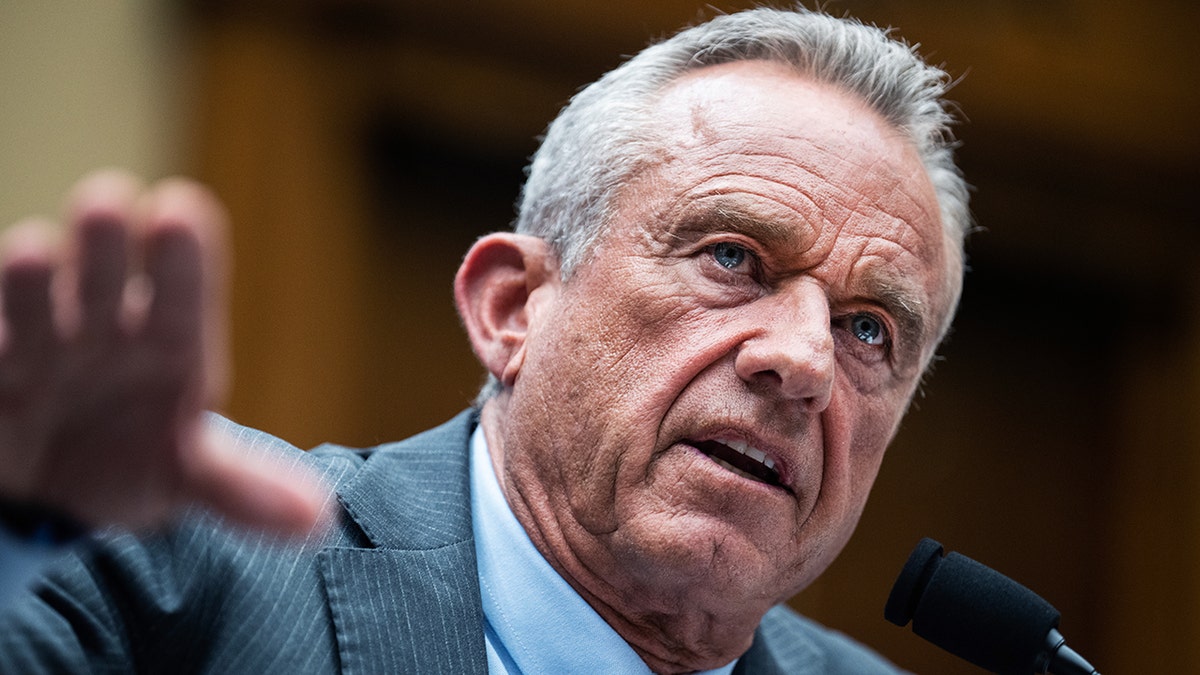
RFK Jr speaks during congressional hearing in June 2025

HHS Secretary Robert F. Kennedy Jr. testifies during the House Energy and Commerce Subcommittee on Health hearing on June 24, 2025. (Tom Williams/CQ-Roll Call, Inc)

The FDA, however, has publicly stated that there is not enough evidence from human clinical trials on the safety or efficacy of these drugs. FDA reviewers have also cautioned that a peptide’s similarity to a naturally occurring substance does not eliminate potential risks.

Fox News senior medical analyst Dr. Marc Siegel cautioned that these substances “need careful study.”

“I am not convinced the data is fully there yet.”

According to the doctor, RFK Jr. told Siegel in their latest interview that he believes “not all peptides are created equal, whereas some are helpful, others may not be and need further study.”

“I agree with that,” Siegel told Fox News Digital. “I’m concerned about the impact some may have on the kidneys. I would like to see rigorous clinical trials before approval. I am not convinced the data is fully there yet.”

Next steps

Tatem said he expects the hearings to be a “hard-fought battle,” but hopes committee members will consider what he described as real-world data from tens of millions of doses administered between 2014 and 2023. The data showed adverse event rates of “well under 0.1%,” he added.

If the committee recommends inclusion, the FDA would still need to complete its review and rulemaking process before formally adding any of the substances to the 503A Bulks List.

TEST YOURSELF WITH OUR LATEST LIFESTYLE QUIZ

That list includes active ingredients that state-licensed pharmacies are legally permitted to use for compounding prescription drugs, Tatem said.

He also suggested that the FDA could place some substances under a more permissive enforcement category temporarily while the rulemaking process continues. (The agency has not announced that it intends to do so.)

“Ultimately, what we would hope is, before the end of the year, patients would be able to go to their doctor, work through maybe a telehealth provider, and then be able to get a prescription for this under monitored medical supervision,” he said.

“The most important thing to take away is that your voice matters.”

“The most important thing to take away is that your voice matters, because this committee is just issuing a recommendation to the FDA. The FDA can take it or leave it,” Tatem noted. “Everything that happens afterward is still anyone’s guess.”

CLICK HERE TO DOWNLOAD THE FOX NEWS APP

Tatem encourages people to reach out to their local representatives to request access to “safe, regulated peptides made here in the United States of America.”

Fox News Digital reached out to the FDA and ibuprofen product manufacturer Haleon for comment.


Source link

Why Smart People Fall for Scams | Money Moves with Jill Schlesinger

0
Why Smart People Fall for Scams | Money Moves with Jill Schlesinger


Jill and Mark discuss a $50 million Ponzi scheme that ensnared dozens of investors with promises of big, risk-free returns. Then, they break down the emotional manipulation tactics scammers use to gain your trust and how to protect yourself as AI makes fraud more sophisticated and harder to spot than ever. Plus, a burned-out caller is desperate for a career reset and wonders how long she can afford to coast on her savings before figuring out her next move.


Source link

Google fined $1 billion by EU over its Play app store and search engine

0
Google fined  billion by EU over its Play app store and search engine


Brussels —  The European Union on Thursday hit Google with a fine of 890 million euros ($1 billion) after it said the technology behemoth broke digital antitrust regulations by setting up Google Play and its ubiquitous search engine to corral consumers toward its own services and apps, to the detriment of competitors.

It was the latest major crackdown on Big Tech by Brussels, which has led the world in reining in some of the world’s largest companies from Silicon Valley to Beijing.

Google had recently lost its appeal of a $4.5 billion antitrust fine imposed for throttling competition and reducing consumer choice through the dominance of its mobile Android operating system.

The European Commission, the bloc’s executive branch, said it was acting in the interest of consumers.

“The best products should succeed because they’re better, not because they’re owned by the company running the search engine. And European consumers have a right to be told by app developers where to sign up to the best offers, even when the app store owner does not get a cut,” said Teresa Ribera, the commission’s Executive Vice President for Clean, Just and Competitive Transition.

Google President of Global Affairs Kent Walker blasted the fine as “product degradation driven by a small group of self-serving complainants” that will negatively impact European businesses and consumers.

He said that the EU’s Digital Markets Act forces Google “to strip away real-time search features Europeans love – like instant pricing and direct availability for hotels, flights, and restaurants – and dismantle safety protections on Google Play.”

He also asserted that “this isn’t fair competition; it’s product degradation driven by a small group of self-serving complainants, with European businesses and consumers taking the hit. Regulation should improve products, not make them worse,” according to the Reuters news service.

“In the EU, businesses have the right to compete fairly. Gatekeepers have the obligation to ensure a level playing field and consumers the right to choose for cheaper alternative offers,” European Commission spokesperson Thomas Regnier said.


Source link

EU hits Google with $1 billion fine over its Play app store and search

0
EU hits Google with  billion fine over its Play app store and search


BRUSSELS — The European Union on Thursday hit Google with a fine of 890 million euros ($1 billion) after it said the technology behemoth broke digital antitrust regulations by setting up Google Play and its ubiquitous search engine to corral consumers towards its own services and apps to the detriment of competitors.

It was the latest major crackdown on Big Tech by Brussels, which has led the world in reining in some of the world’s largest companies from Silicon Valley to Beijing.

Google had recently lost its appeal of a $4.5 billion antitrust fine imposed by the EU for throttling competition and reducing consumer choice through the dominance of its mobile Android operating system.

The European Commission, the bloc’s executive branch and highest antitrust enforcer, said it was acting in the interest of consumers after running an antitrust investigation of Google.

“The best products should succeed because they’re better, not because they’re owned by the company running the search engine. And European consumers have a right to be told by app developers where to sign up to the best offers, even when the app store owner does not get a cut,” said Teresa Ribera, the commission’s Executive Vice President for Clean, Just and Competitive Transition.

Google’s President of Global Affairs Kent Walker blasted the fine as “product degradation driven by a small group of self-serving complainants” that will have a negative impact on European businesses and consumers.

He said that the EU’s Digital Markets Act forces Google “to strip away real-time search features Europeans love — like instant pricing and direct availability for hotels, flights, and restaurants — and dismantle safety protections on Google Play.”

Brussels has ratcheted up the pressure on U.S. and Chinese tech giants despite the risk of incurring the wrath of President Donald Trump, who has lashed out at the 27-nation bloc’s digital regulations and vowed to retaliate if American tech companies are penalized.

The EU describes the world’s seven tech giants — Amazon, Apple, Google parent Alphabet, Meta, Microsoft and TikTok owner ByteDance — as “gatekeepers” that control access for consumers.

“In the EU, businesses have the right to compete fairly. Gatekeepers have the obligation to ensure a level playing field and consumers the right to choose for cheaper alternative offers,” European Commission spokesperson Thomas Regnier said.


Source link

Can fashion help lead the way towards climate restoration?

0
Can fashion help lead the way towards climate restoration?


One afternoon during the Covid-19 pandemic, fashion designer Benedict Lamb wandered into a village craft fair in rural Norfolk. Among the stalls stood a Japanese Saori loom, powered not by electricity but by human hands. Behind it sat a local weaver selling handmade scarves.

“I was completely taken by the beauty of what she was making,” Lamb recalls. “I asked if anyone had ever commissioned her to weave textiles for clothing. She said no, but would love to give it a go.”

Four years later, that chance encounter has grown into a collaboration with five Norfolk-based weavers, producing globally inspired garments from British wool using traditional craft techniques. It’s a production model that feels quietly radical in an industry driven by speed, scale and endless consumption.

(Human Being collection by Benedict Lamb at Ladbroke Hall February 2025. Saori weaving using only British Wool and Anthro Armour Tailoring. Video credit: Micci Bamford at Fashioned Films)

For Lamb, craft isn’t nostalgia. It’s a blueprint for fashion’s future.

His collections are rooted in slower, pre-industrial methods where time, skill and emotion carry as much value as the finished garment. Materials are treated as finite rather than expendable, creating clothes designed to endure rather than be replaced.

“It’s a much smaller, slower and far more personal process,” he says. “That shift in pace is critical to responding to the climate crisis. Craft naturally embeds principles of low-energy production, durability and repair. It encourages working with existing materials, deadstock, waste textiles and natural fibres, which are our speciality.”

That philosophy extends beyond the finished garment.

Bespoke Anthro Armour Jacket in Lambs Leather available at Lighthouse, 48 Berwick Street Soho London
Bespoke Anthro Armour Jacket in Lambs Leather available at Lighthouse, 48 Berwick Street Soho London (Antalya Nall-Cain)

“Material exploration becomes a form of environmental inquiry,” he says. “The fibres, processes and interventions are a way of understanding resource flows, waste and time. Time is the ultimate luxury.”

Perhaps that is the real luxury today, not scarcity or exclusivity, but craftsmanship, patience and a deeper relationship with the people and landscapes behind our clothes.

Working exclusively with British wool, Lamb creates globally inspired collections that draw on Scottish heritage, Japanese aesthetics, African textiles and Mongolian pattern making. Rather than celebrating one tradition, he imagines what he describes as a “future tribe” connected through craft rather than geography.

“It’s not a specific tribe,” he explains. “We want to create a fictitious global tribe, something that belongs to the future.”

It’s this philosophy that recently led Lamb to become an ambassador for Balance.eco, an organisation helping businesses and individuals move beyond carbon offsetting towards restoring forests, biodiversity and local communities.

Blending centuries-old craftsmanship with contemporary design, Benedict Lamb's garments are woven using the Japanese art of Saori. The intuitive, free-flowing technique ensures every piece of fabric is entirely unique.
Blending centuries-old craftsmanship with contemporary design, Benedict Lamb’s garments are woven using the Japanese art of Saori. The intuitive, free-flowing technique ensures every piece of fabric is entirely unique. (Darian Zahedi)

For Lamb, the partnership felt less like a new direction than a natural extension of the values his label already embodied.

“Designers help shape culture and demand,” he says. “Farmers understand fibre, land and stewardship. Environmental organisations understand restoration and biodiversity. Balance creates a framework where those worlds can come together in a credible, practical and long-term way.”

Having first met Balance founder Dan Morrell through the music industry, Lamb watched as his own label gained recognition not only for its designs but for its production model.

“The way we work is attracting as much attention as the clothes themselves,” he says. “Dan recognised that we’d grown organically into something that already reflected Balance’s values. When he asked me to become an ambassador, it wasn’t about changing our business, it was about asking how we could help each other.”

For Lamb, the partnership also offered an alternative to conventional carbon offsetting.

“I felt that simply buying carbon credits would damage the brand because public trust has been lost,” he says. “Balance asks a different question: how can fashion move beyond reducing harm to actively restoring nature?”

What particularly appealed to him was Balance’s integrated approach.

“It doesn’t treat climate, biodiversity and communities as separate issues,” he says. “It brings them together through restoring nature, creating sustainable livelihoods and permanently removing carbon.”

Balance Founder Dan Morrell wearing Benedict Lamb Anthro Galaxy Jacket
Balance Founder Dan Morrell wearing Benedict Lamb Anthro Galaxy Jacket (Angelo Valentino)

For Morrell, whose environmental work spans decades, regeneration has always been about far more than carbon alone.

The man credited with coining the phrase “carbon neutral” in 1988 later helped establish pioneering forestry projects inspired by conversations with Joe Strummer at Glastonbury. But after seeing carbon markets become increasingly commercialised, he returned to a simpler idea: restoring ecosystems that benefit both nature and people.

Today, Balance enables businesses and individuals to measure their emissions while supporting reforestation both overseas and closer to home.

“For every international project, there’s a local one people can actually visit,” Morrell explains. “You can put your wellies on, see the trees being planted and help create wildlife corridors that benefit biodiversity and local communities alike.”

For Lamb, success won’t be measured by lower emissions alone. It will come when fashion recognises its power not only to reduce its impact but to restore landscapes, strengthen communities and reconnect people with the fibres and crafts that make clothing possible.

www.benedictlamb.com / @benedictlamb


Source link

A sailor dies after a Ukraine-bound tanker catches fire off Romania

0
A sailor dies after a Ukraine-bound tanker catches fire off Romania


BUCHAREST, Romania — A sailor injured when a Ukraine-bound tanker ship caught fire off Romania’s Black Sea coast has died, Romanian media reported on Thursday, as authorities investigate a possible link to Russia’s war against Ukraine.

The ship, a Liberian-flagged vessel named Gas Lisbon, was sailing across the Black Sea toward a Ukrainian port when it was “struck” late Monday around 20 nautical miles off Romania’s coast, Romanian President Nicusor Dan said on Tuesday.

Romanian authorities approached the vessel and evacuated the entire 17-member crew, including three injured sailors. Two of those injured had burns on approximately 10-15% of their bodies while the third suffered multiple wounds, according to Romania’s Department for Emergency Situations.

On Thursday, Romanian news outlet news.ro reported that one of the injured sailors, a 45-year-old Philippine national, had died.

The outlet quoted the director of the Tulcea County Hospital, Tudor-Ion Nastasescu, as saying the sailor “had a burn of the airways and a pulmonary complication related to this burn that caused his death.”

Nastasescu added that the other two injured sailors, both Philippine nationals, are currently being treated in the hospital’s intensive care unit and are in stable condition.

The vessel had departed the Egyptian port of Alexandria and was headed to the Ukrainian port of Reni on the Danube River. It was carrying over 3,790 tons of liquefied petroleum gas.

Romania’s Department for Emergency Situations said the “incident” aboard the ship caused major damage and a fire in the vessel’s superstructure, but no official explanation has been given for the cause. Dan said authorities would “clarify the circumstances, causes, and responsibilities” related to the incident.

Romanian television network Digi24 broadcast interviews with two crew members on Tuesday who said they believed the ship had been struck by multiple drones.

A series of drone incursions from both Russia and Ukraine have hit Romania and other NATO members since Moscow launched its full-scale invasion of Ukraine in February 2022.

In June, a Ukrainian maritime drone that was being used in the war exploded at the Black Sea port of Constanta, while three other sea drones exploded outside the port. No one was hurt.

A month earlier, a Russian drone that was part of an attack on Ukraine went astray and struck an apartment building in eastern Romania, injuring two people.


Source link

Burnham’s rates relief for pubs sends strong signal – but two big questions remain

0
Burnham’s rates relief for pubs sends strong signal – but two big questions remain


Andy Burnham has made his third major announcement in as many days since taking over as prime minister.

A 20 per cent cut to business rates will come into effect from April next year for pubs, clubs and music venues – except for the largest ones – with Mr Burnham saying the government will “back the businesses that people want to see in their communities”.

The rates are charges which are applied to a firm on its buildings or property. The money goes towards funding national or local public services.

Announcing the move, new chancellor John Healey said: “Pubs, clubs and live music venues are at the heart of communities across the UK. They bring people together, support local jobs and help keep high streets and town centres busy — which is why we will back them all the way.

“We are determined to bring hope back, give businesses the support they need and generate growth in every postcode.”

Question one: Benefit vs cost

The big question hanging over all of Mr Burnham’s announcements has been: how is this being paid for?

This rates relief move is expected to cost around £100m equalling, the government says, to a saving of around £1,100 for a typical pub next year.

It will apparently be paid for by a review on tax reliefs currently offered to businesses that “do not make a positive contribution to local communities, such as vape shops”, in the eyes of the government – meaning there will be backlash from those businesses. It also means it is currently not funded.

Get a free fractional share worth up to £100.
Capital at risk.

Terms and conditions apply.

Go to website

ADVERTISEMENT

Trading 212 logo

Get a free fractional share worth up to £100.
Capital at risk.

Terms and conditions apply.

Go to website

ADVERTISEMENT

But there is still a question of balance to be struck: is the benefit to the businesses of real impact – and is it worth it for the overall cost?

Saving any money at all will be welcomed by businesses. But £1,100 less expenses for a pub which is turning over £250,000 a year isn’t a clear and immediate material benefit.

(Getty)

Jo Dearsley, proprietor of The Six Bells in Newdigate, Surrey, said pubs like hers still want the UK’s tax structure to be reformed entirely.

“This announcement is a genuinely welcome step in the right direction. Pubs are far more than businesses serving food and drink – they are the heart of our communities, bringing people together in a world that is becoming increasingly digital and disconnected,” she said.

“Every pound that can be reinvested into these venues helps protect local jobs, supports independent operators and ensures these important community spaces remain open for future generations.

“That said, business rates are only one part of the challenge facing the hospitality sector. The ongoing VAT burden continues to place enormous pressure on pubs already dealing with rising employment, energy and supply costs. This announcement should be the start of a broader conversation about creating a fairer tax environment that allows the sector to invest, grow and continue playing its vital role.”

There’s also the matter of the rate cut not coming into effect until April 2027.

A Whito industry report from July 2026 showed around 860 pubs per year are closing, or more than two per day. Some of those still struggling may be wondering if this rate cut does enough for them – or will come quickly enough.

Question two: Who misses out?

Full details will not be available until the autumn Budget, the first under Mr Healey, but the government has said the largest venues will not receive the 20 per cent cut in rates.

There will be questions of why – as well as fairness – but until the detail is known it’s tough to make a full assessment.

There will also be concern for hospitality venues not covered by this cut.

Hotels and restaurants have been feeling the strain following successive years of increased tax obligations, the previous end of rates relief discounts, the rising cost of employment, years of higher energy bills and – for some firms – additional pressures including packaging taxes.

(Getty/iStock)

UKHospitality backed the move as a “welcome first step from a government that understand the value of hospitality to jobs, growth and local communities”, but pointed out that restaurants are “struggling just as much as pubs” – and that hotels are set to see rates bills increase by 110 per cent.

“While today’s announcement will provide welcome support for pubs, clubs and live music venues, they only account for around a fifth of hospitality jobs. The rest of the sector now needs to see the same ambition,” added Allen Simpson, the group’s CEO.

Kate Shoesmith, director of policy at the British Chambers of Commerce, agreed that rates are a worry for many businesses.

“While news of a carve out for pubs, clubs and music venues is welcome, there are many other smaller hospitality companies facing an existential threat,” she said. “Our latest research shows more than a third of firms believe business rates are of more concern now than they were three months ago.

“Any action on rates is long overdue and very welcome, but root and branch reform of the system was a Labour manifesto commitment, and it is time to deliver on that promise.”


Source link

Indian-origin engineer walks away from Rs 2.89 crore salary to build AI that could make apps and websites obsolete

0
Indian-origin engineer walks away from Rs 2.89 crore salary to build AI that could make apps and websites obsolete


With the ongoing AI boom, one would consider having a job at Meta equal to being god’s favourite child. But for the AI enthusiasts, the current situation is not the peak but the playground, where they can experiment with technology to build things that the world did not know it would need. Among such excited individuals is an Indian-origin software engineer, Prakshal Jain, who left his lucrative career at Meta to pursue entrepreneurship and announced the launch of his artificial intelligence startup after months of working in stealth mode.

A step back

In a LinkedIn post, Jain shared the announcement saying he decided to step away from his $300,000 (around Rs 2.89 crore) annual salary at the tech giant to work on a bigger vision for AI. According to his LinkedIn profile, he spent 3.5 years at the Mark Zuckerberg-owned company.He worked there as a frontend engineer developing web and XR experiences. His contributions included helping launch Facebook and Instagram on Meta Quest in 2024, while also working on applications related to Meta AI. Most recently, he served on the Comet Frameworks Team.

From Meta to Mitosis

Jain shared that he had spent a decade building user experiences and human-computer interaction was his passion. He said he gradually realised that AI assistants had become his primary way of interacting with technology. Instead of opening up a website or using an app, he would just ask ChatGPT or Claude Code to find or do things for him.“That’s when I came up with the phrase: The best UX is no UI,” he wrote. He said humans were never meant to spend their lives sitting in a chair in front of a computer, and thus he wanted to build something that freed people from dead-end work like filing taxes and filling out forms. But at the same time, he wanted to ensure that user privacy was respected and AI was safe to use with users getting to control their data and use it in a secure way.According to Jain, the concept behind Mitosis Labs is built on the idea that intelligent AI agents can reduce the need for complex apps, dashboards and repetitive digital workflows. As part of his experimentation, he said he created a personal AI agent trained on his own digital data. He claimed the system reduced his iPhone screen time by 78% within three weeks, reinforcing his belief that AI can simplify daily digital interactions.Along with co-founder Alex Morris, Jain’s Mitosis Labs has already developed three products: Mitosis Cortex, Yappy and UFA & Wikipedia. Jain said the startup is now preparing to showcase its work publicly after spending the last seven months developing its technology.

Who is Prakshal Jain?

In terms of education, Jain completed his Bachelor’s and Honours in Computer Science from the University at Buffalo. He has also volunteered at various organisations in numerous roles. He worked as a full-stack developer at UB Hacking, a general volunteer for She Started IT, a judge at Reality Hack at MIT and HackMIT and a judge at Stanford XR.He began his professional career as a Frontend Software Developer Intern for Facebook and WhatsApp at Meta. In 2025, he founded Chimaera Auto Inc. a continuity browser for a seamless internet surfing experience, in January 2026, he founded ClawBody to help people automate their life and business.In order to start his own company, he transferred from an F1 visa to an O1 visa and is now all in to make Mitosis work.


Source link

Ashes 2027 fixtures: England-Australia men’s and women’s series to start in June

0
Ashes 2027 fixtures: England-Australia men’s and women’s series to start in June


England men v Pakistan

15 May: First ODI, Southampton, 11:00

19 May: Second ODI, Old Trafford, 13:00

21 May: Third ODI, Headingley, 11:00

23 May: Fourth ODI, Durham, 11:00

26 May: Fifth ODI, Cardiff, 13:00

England men v Bangladesh

28 May-1 June: One-off Test, Lord’s, 11:00

England men v New Zealand

7 Sept: First T20, Durham, 18:30

9 Sept: Second T20, Old Trafford, 18:30

11 Sept: Third T20, Cardiff, 14:30

14 Sept: First ODI, Edgbaston, 12:30

16 Sept: Second ODI, Lord’s, 12:30

19 Sept: Third ODI, Bristol, 10:30

22 Sept: Fourth ODI, Trent Bridge, 12:30

25 Sept: Fifth ODI, Headingley, 10:30

England women v Bangladesh

8 Sept: First T20, Northampton, 18:30

10 Sept: Second T20, Taunton, 18:30

12 Sept: Third T20, Worcester, 14:30

17 Sept: First ODI, Hove, 12:30

21 Sept: Second ODI, Canterbury, 12:30

24 Sept: Third ODI, Chelmsford, 12:30


Source link