
Home Blog Page 33

AI builds virtual homes where robots learn from their mistakes

0
AI builds virtual homes where robots learn from their mistakes


NEWYou can now listen to Fox News articles!

Ask a robot to put a coffee mug in the cabinet, and you quickly see how complicated an ordinary chore can become. You know where the mug belongs. You can step around a chair, avoid the clutter on the counter and open the right cabinet without giving it much thought. A robot has to work through every part of that process.

That helps explain why today’s robots can look impressive during a demonstration but still struggle with basic jobs around a home or factory. They need experience in many different rooms and situations before they can work reliably. Teaching them everything in the physical world takes time and plenty of hands-on supervision.

Researchers at MIT’s Computer Science and Artificial Intelligence Laboratory and Toyota Research Institute believe virtual training could help. Their system, called SceneSmith, uses AI agents to create detailed 3D indoor environments from simple text prompts. Robots can then practice tasks and expose weak action plans inside those AI-generated spaces before they enter a real home or workplace.

Sign up for my FREE CyberGuy Report

  • Get my best tech tips, urgent security alerts and exclusive deals delivered straight to your inbox.
  • For simple, real-world ways to spot scams early and stay protected, visit CyberGuy.com trusted by millions who watch CyberGuy on TV daily.
  • Plus, you’ll get instant access to my Ultimate Scam Survival Guide free when you join.

WOULD YOU TRUST A TINY DENTAL ROBOT?

Robots can test weak action plans inside AI-generated homes before operating around people and property. (SceneSmith)

Why AI virtual homes matter for robot training

Robots learn through experience. However, engineers cannot easily stage every room layout or object arrangement a machine may encounter. Physical testing also requires someone to reset the scene after each attempt. A tipped chair or misplaced bottle can change the next test. Meanwhile, a failed movement may damage the robot or something nearby.

Simulation offers a safer alternative. A robot can repeat a task without breaking a dish or tying up a real workspace. Still, many earlier simulation systems created rooms that felt sparse. They often lacked the clutter, movable furniture and physical details found in everyday spaces. SceneSmith makes those training environments feel much closer to the real world.

Other developers are also using AI video technology to speed up humanoid robot training, turning small amounts of real footage into synthetic training environments.

How SceneSmith builds AI virtual homes

SceneSmith starts with a simple written request. A researcher could ask for a garage with a car and workbench, then add tires in the corner and a ladder against the wall. From there, three AI agents powered by GPT-5.2 work together to build the space. A designer starts creating the room. A critic checks whether everything looks realistic. An orchestrator manages the back-and-forth and decides when the design is ready.

SceneSmith builds each environment one layer at a time. It starts with the floor plan and furniture, then adds objects to the walls and ceiling. Smaller items that a robot can pick up or move come last. The critic also catches choices that feel out of place. For example, it might suggest removing a bathtub from the living room. The orchestrator can even send the project back a few steps when part of the design needs more work.

Once the agents agree, SceneSmith adds the physics that control how objects move and react. The result gives researchers a working virtual room where a robot can open cabinets and handle objects instead of a 3D scene that only looks realistic.

SceneSmith creates objects robots can use

A robot needs more than realistic scenery. It needs objects that respond when touched. SceneSmith can place cabinets with working doors. It can also create movable objects and estimate physical properties such as mass or friction. Those details affect how an item reacts when a robot grabs, pushes or drops it.

For standard objects, the system can use a text-to-image-to-3D process. It retrieves articulated items with moving parts from a curated library. This approach keeps cabinet doors and drawers functional inside the simulator. The system also checks for overlapping objects and lets gravity settle them into stable positions.

Researchers reported that 96% of objects remained stable during simulation. Fewer than 2% of object pairs collided with one another. That work matters because a robot cannot learn much from a virtual kitchen where cups float or furniture sinks into the floor.

Better virtual practice could also support advances like this new AI brain that helps robots move more like humans, especially when a task requires precise hand movements.

HUMANOID ROBOT CLEANS FIRST US APARTMENT

Multiple AI-generated scenes for robot testing are shown.

MIT researchers used SceneSmith to generate more than 1,300 virtual spaces, including bedrooms, hotels and cluttered specialty rooms. (SceneSmith)

SceneSmith created more than 1,300 training spaces

The researchers used SceneSmith to generate more than 1,300 scenes. The collection included familiar spaces such as bedrooms and hotels. It also produced unusual settings, including a pottery store and a Minecraft-themed gaming room. Some scenes contained up to six times more items than those from earlier methods. As a result, robots can encounter the type of clutter that makes real-world tasks difficult.

A robot might need to move a soda can from a shelf to a table. Another task could involve placing a cup in the sink. Each scene changes the surroundings, so the robot cannot depend on one carefully staged layout. That variety gives engineers a better way to see whether a robot’s plan works beyond a single demonstration.

AI virtual homes can expose faulty robot plans

In robotics, a policy tells a machine how to act based on what it observes. SceneSmith gives researchers a way to test those policies across many environments. The team generated 100 evaluation scenes covering four manipulation tasks. A robot policy attempted each chore in simulation. Then, an AI evaluator checked the result using simulator data and visual observations.

The evaluator reached 99.7% agreement with human labels. That result suggests researchers could use the system to screen robot attempts at scale without manually judging every run. The headline’s phrase “learn from their mistakes” needs one important distinction. SceneSmith reveals where a policy fails. Engineers can use those failures to revise later versions of the robot’s behavior. In this study, the system focused on scene generation and automatic evaluation rather than continuous self-retraining after every mistake.

Researchers tested whether the virtual homes worked

A virtual room can look realistic to a person and still behave poorly during robot training. Therefore, the team tested SceneSmith through physical interaction inside the simulator. Researchers placed an independently trained robot policy into generated scenes. The policy predated SceneSmith and had never trained on its environments or assets.

In one demonstration, the robot moved an apple from a bowl to a cutting board after receiving a language instruction. The team also teleoperated a robot through the virtual spaces. Researchers guided it as it opened cabinets and put away bottles. These tests showed that the environments could support more than visual inspection. Together, the demonstrations provide early evidence that SceneSmith’s rooms can support useful robotics experiments.

People preferred SceneSmith’s virtual rooms

The researchers asked 205 people to compare SceneSmith with earlier scene-generation methods. SceneSmith recorded an average 92% win rate for realism. It also earned a 91% average win rate for following the original prompt.

In practical terms, participants usually thought its rooms looked more believable and matched the request more closely. Those results support the visual side of the system. However, robot performance remains the more important test. SceneSmith’s ability to combine realistic design with usable physics gives the project its strongest advantage.

ROBOT SOCCER PLAYER DENTS WALL WITH TERRIFYING KICKS

Two AI-generated scenes with a robot being tested.

MIT’s SceneSmith uses artificial intelligence to build realistic 3D homes where robots can safely practice everyday tasks. (SceneSmith)

SceneSmith still faces a major speed problem

Detailed virtual rooms take time to build. MIT says SceneSmith may need several hours to produce one scene because the AI agents create and inspect many objects. More computing power could speed up that process. Even so, generating a large training library would require substantial resources.

The current system also has limited support for deformable objects such as sponges. These materials change shape when touched, which makes them harder to reproduce in simulation. The researchers hope larger 3D libraries will help them expand that capability.

Real-world testing will still play a vital role. Homes contain unpredictable people and objects that wear down or break. Simulation can reduce risky trial and error, but engineers must still prove that robots behave safely outside a digital room.

What this means to you

A future household robot could practice inside hundreds or even thousands of virtual rooms before it ever rolls into your kitchen. That gives developers more chances to catch a bad move or weak action plan while the robot remains inside a simulator. SceneSmith can also expose a robot to rooms filled with different furniture, objects and layouts. That matters because your kitchen will look nothing like the carefully arranged space where a robot first learned a task.

That kind of preparation could eventually help machines like this home robot designed to cook, clean and handle the clutter and surprises found in everyday homes.

The technology remains in the research stage, and robots will still need plenty of testing in the physical world. Still, SceneSmith tackles a problem robot makers need to solve: How do you prepare a machine for homes where chairs move, counters get cluttered and almost nothing stays in the same place?

Kurt’s key takeaways

SceneSmith gives robots a safe place to get things wrong. Engineers can spot a bad move inside a crowded virtual home before the machine risks damaging something or moving too close to a person. What makes this system interesting is that the rooms actually work like physical spaces. Cabinets open, objects move and robots can interact with what is around them. The biggest drawback is speed. Building one detailed scene can take hours. Still, these AI-generated environments could help developers catch more problems before a robot ever enters your home.

Would you trust a household robot more if it had already made thousands of mistakes inside AI-generated homes? Let us know by writing to us at Cyberguy.com

CLICK HERE TO DOWNLOAD THE FOX NEWS APP

Sign up for my FREE CyberGuy Report

  • Get my best tech tips, urgent security alerts and exclusive deals delivered straight to your inbox.
  • For simple, real-world ways to spot scams early and stay protected, visit CyberGuy.com trusted by millions who watch CyberGuy on TV daily.
  • Plus, you’ll get instant access to my Ultimate Scam Survival Guide free when you join.

Copyright 2026 CyberGuy.com. All rights reserved.


Source link

‘Our fight is to fix the system’: India protesters demand accountability

0
‘Our fight is to fix the system’: India protesters demand accountability


NewsFeed

India’s Cockroach Janta Party has led weeks of protests demanding the education minister’s resignation over repeated exam paper leaks. Spokesperson Ashutosh Ranka says only accountability and structural reforms can fix the country’s ‘rotten’ education system.


Source link

Thousands evacuated in France fires as firefighter killed in Italy

0
Thousands evacuated in France fires as firefighter killed in Italy


BBC South presenter Jo Kent is on holiday with her family in France, staying at the Lesley Pastourelles campsite in the village of Claouey, next to Lège.

She said multiple people at the campsite who were very anxious about the situation had already left, and those staying have been warned to be prepared to evacuate.

The main road down to the south of the peninsula, which is normally filled with “nose to tail traffic”, is empty and the supermarket is “unnervingly quiet”, Kent added.

In the Var region in south-east France, evacuated residents were told they could go home to assess potential damage to properties on Thursday morning. However, it warned people to limit their movements in the area due to the risk of the fire re-igniting as the wind picks up through the afternoon.

Several French departments have been ravaged by wildfires during a series of unusual and prolonged heatwaves that have swept across Europe this summer.

Interior Minister Laurent Nuñez paid tribute to the two firefighters who died on Tuesday near Bordeaux airport. He posted photos from an event on Wednesday, saying the moment was filled with “immense emotion” as he expressed “infinite gratitude” and “unwavering support” to their families.

Madrid has also been impacted by fires, but overnight most evacuated residents were told they can return to their homes – with the exception of one area in Villa del Prado.

A fire nearby is still burning, and almost 90 personnel and a helicopter have been deployed to get the flames under control. Local authorities continued to warn of an “extreme risk of fires” on Thursday morning.

Spain’s weather service AEMET said temperatures of up to 36C are forecast for the afternoon.

Countries across Europe have seen record temperatures in recent months.

A report released in April by the Copernicus Climate Change Service found at least 95% of Europe saw “above average” annual temperatures in 2025 and identified Europe as the fastest-warming continent.

Wildfire-burnt area and fire emissions both reached record levels last year, the report said.


Source link

Trump launches Gold Eagle to hunt cyber flaws with AI

0
Trump launches Gold Eagle to hunt cyber flaws with AI


NEWYou can now listen to Fox News articles!

Most of us tap Update Now and move on. However, a lot happens before that security patch reaches your phone or computer. Researchers must find the flaw. Someone needs to confirm it. Then the developer has to create a fix that will not cause a new problem.

Now, artificial intelligence can uncover software weaknesses much faster. That sounds promising, but it can also create a flood of vulnerability reports. Worse, attackers can use similar AI tools to hunt for the same openings.

The Trump administration wants to help defenders move first. The White House just announced the Gold Eagle AI cybersecurity clearinghouse. Officials say the program has already started receiving and prioritizing vulnerability reports.

Gold Eagle will connect federal agencies with private companies, critical infrastructure operators and open-source software teams. Its goal is to uncover serious flaws faster and coordinate the work needed to patch them.

AI CHATBOTS TAKE HEAT OVER LEFT-WING BIAS: ‘NO LONGER BE CONSIDERED NEUTRAL’

AI tools can help defenders find dangerous software weaknesses faster, but attackers may use similar technology to target the same flaws. (Kurt “CyberGuy” Knutsson)

Sign up for my FREE CyberGuy Report

  • Get my best tech tips, urgent security alerts and exclusive deals delivered straight to your inbox.
  • For simple, real-world ways to spot scams early and stay protected, visit CyberGuy.com trusted by millions who watch CyberGuy on TV daily.
  • Plus, you’ll get instant access to my Ultimate Scam Survival Guide free when you join.

What is the Gold Eagle AI cybersecurity clearinghouse?

Gold Eagle is a federal coordination center for software vulnerabilities. The Treasury Department leads the effort with support from CISA and other federal partners. President Trump ordered the creation of the clearinghouse through Executive Order 14409 on June 2, 2026. The order directed Treasury to work with the National Cyber Director and other agencies.

Gold Eagle must coordinate vulnerability scanning and reduce duplicated work. It will also help validate findings before teams spend time fixing them. Finally, the program will support the distribution of patches once they are ready. The White House calls Gold Eagle a “force multiplier.” In other words, the government wants each participating security team to accomplish more by sharing reliable information.

Gold Eagle does not replace the developers who maintain the affected software. Instead, it creates a central place where government and industry can coordinate their response. That distinction is important. Finding a bug does not automatically fix it. Developers still need to understand the weakness and build a safe update.

How Gold Eagle uses AI to find cyber vulnerabilities

AI models can review large amounts of computer code quickly. They can also examine how software reacts when someone sends it unusual commands or unexpected data. That speed may help researchers uncover weaknesses that survived years of conventional testing.

A senior White House official said closed-source AI models will participate in Gold Eagle’s vulnerability work. That includes Anthropic’s Claude Mythos, which the company designed for advanced cybersecurity research. Anthropic says Mythos-class models can find software vulnerabilities and develop ways to exploit them. The company also warns that those abilities could make attacks easier if the models fall into the wrong hands.

That creates an uncomfortable reality. The same AI that can help protect a system may also help someone break into it. Therefore, Gold Eagle’s success will depend on more than the model’s ability to find bugs. The program must control who receives the details and how quickly developers get a warning.

Why Gold Eagle wants to stop duplicate security scans

Imagine several repair crews checking the same water pipe while another leak goes unnoticed. Cybersecurity teams can face a similar problem. Several organizations may scan the same popular software without knowing that another team already found the flaw. Meanwhile, less visible software may receive little attention.

Gold Eagle aims to coordinate those searches. It can help participating teams avoid repeating work and direct their attention toward software that still needs review. The clearinghouse will also try to cut through low-quality reports. AI models can generate convincing findings that turn out to be harmless or inaccurate.

As a result, human validation remains essential. Security engineers need to reproduce the reported flaw and confirm that it creates a real risk. After that, developers must test the repair. They also need to release the update without breaking the product for existing users.

REDHOOK ANDROID MALWARE CAN QUIETLY HIJACK YOUR PHONE

President Donald Trump projected over generic code.

The Trump administration’s Gold Eagle program uses artificial intelligence to help uncover software flaws and coordinate security patches. (iStock; Rob Newell – CameraSport via Getty Images)

How VINCE handles Gold Eagle vulnerability reports

Gold Eagle will use technology developed with Carnegie Mellon University’s Software Engineering Institute. The system is called the Vulnerability Information and Coordination Environment, or VINCE. Carnegie Mellon’s CERT Coordination Center already uses VINCE to accept vulnerability reports and communicate with affected software vendors.

Gold Eagle can use that platform as an intake point for AI-discovered vulnerabilities. Reports can then move through validation and coordination before details become public. This controlled process matters because revealing a serious vulnerability too early can give attackers a head start. Ideally, the software company receives enough time to prepare a patch before technical details spread.

However, several operational questions remain unanswered. The administration has not publicly identified every company participating in Gold Eagle. It has also released few details about daily oversight or the way sensitive reports will move between participants. The government has not said how many findings have resulted in completed patches either.

Why open-source software matters to Gold Eagle

Open-source code sits inside a huge range of commercial products. It can power parts of a browser or business platform without the average user ever knowing its name. However, many open-source projects operate with limited resources. Some rely heavily on maintainers who contribute their time alongside other jobs.

AI could help those teams find dangerous flaws. At the same time, it could overwhelm them with reports that require careful review. Gold Eagle may offer a useful filter. The clearinghouse could validate a report before sending it to a project that lacks a large security department.

It could also connect maintainers with government or industry engineers who can help assess the problem. Anthropic has already worked with open-source groups through Project Glasswing. The company says its partners used Mythos Preview to find more than 10,000 high or critical-severity vulnerabilities. Those figures come from Anthropic and do not represent Gold Eagle’s results. Still, those findings show why the government expects AI-generated vulnerability reports to arrive at a much greater scale.

Anthropic’s Mythos shows the risks of powerful cyber AI

The government’s recent handling of Claude Mythos 5 shows how sensitive these capabilities have become. On June 12, 2026, the U.S. government applied export controls to Mythos 5 and Claude Fable 5. Anthropic suspended access because it could not immediately verify the nationality of every user.

The government lifted those restrictions on June 30. Anthropic restored Mythos 5 access on July 1 to a selected group of approved U.S. organizations. Anthropic currently limits Mythos 5 to vetted partners because the model could support defensive research or harmful activity.

CyberGuy previously took a closer look at how Anthropic’s Mythos AI changed cybersecurity and why its ability to uncover thousands of hidden software flaws is raising concern.

Gold Eagle is betting that controlled access can give defenders an advantage. However, other advanced models will continue improving. That means Gold Eagle will need to move quickly. A flaw loses much of its defensive value once an attacker independently discovers it.

Gold Eagle still faces major questions

The idea behind Gold Eagle makes sense. Security teams should share validated findings and avoid wasting time on duplicate scans. However, coordination can become slow when too many organizations must approve each decision.

Gold Eagle will need clear rules for who validates a vulnerability. It also needs a reliable way to decide which reports deserve immediate attention. Transparency will matter too. The government should eventually publish useful performance information without revealing dangerous technical details.

For example, it could report how many findings were validated and how quickly affected developers received them. It could also show how many vulnerabilities led to released patches. The program faces a legal deadline as well. Its information-sharing process relies on protections in the Cybersecurity Information Sharing Act of 2015.

Congress temporarily extended that law through September 30, 2026. The administration says a lapse could undermine the cooperation Gold Eagle needs from private companies. Companies may hesitate to share sensitive information when they feel uncertain about legal protections. That could weaken the clearinghouse before it has time to prove itself.

FAKE PASSWORD-MANAGER ALERTS COULD PUT YOUR VAULT AT RISK

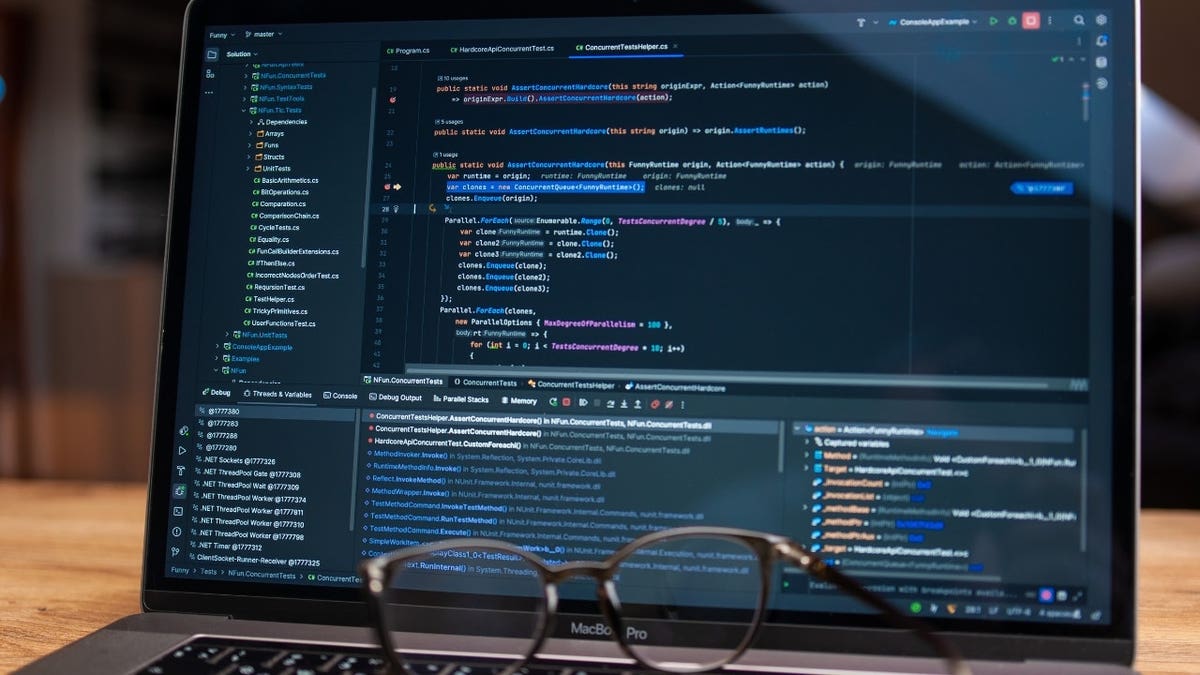
A computer screen with code

Gold Eagle aims to help security teams turn verified software flaws into patches before cybercriminals can exploit them. (Kurt “CyberGuy” Knutsson)

How to protect yourself from newly discovered security flaws

Gold Eagle works mostly behind the scenes. However, the patch still has to reach your device. You also need to install it. Here are several ways to reduce your exposure while companies work to close newly discovered flaws.

1) Turn on automatic security updates

Enable automatic updates for your phone and computer. You should also update your browser and regularly used apps. Many software updates close security holes. Automatic installation reduces the time that a known flaw remains open on your device. However, review major operating system upgrades before installing them on a device you rely on for critical work. A short delay may make sense when an update has widely reported compatibility problems. For step-by-step help, see CyberGuy’s guide on how to update all of your devices and keep them safe at cyberguy.com

2) Update your router and smart devices

Your router may not display update reminders as visibly as your phone. The same problem can affect security cameras and other connected devices. Open the manufacturer’s app or support page and check for firmware updates. Some newer routers let you enable automatic updates. Also, change any default administrator password that came with the device. For additional router checks, see how Russian hackers hijacked old Wi-Fi routers and the steps you can take to protect yours.

3) Replace devices that no longer receive security fixes

A device can continue working after its manufacturer stops supporting it. However, newly discovered vulnerabilities may remain unpatched. Check the manufacturer’s support policy when you own an older router or connected product. Consider replacing the device when it reaches the end of its security-update period. CISA warns that unsupported network equipment can increase an organization’s attack surface.

4) Download updates from official sources

A real vulnerability can inspire fake update messages. Criminals may send an email that claims you must download an urgent security patch. Do not install software from an unexpected email or text message. Instead, open your device settings or the manufacturer’s official app. You can also visit its verified support page directly. CISA recommends downloading patches from validated sources.

5) Use strong antivirus protection

Strong antivirus software can help detect malicious files that try to exploit a weakness on your computer. Keep the protection active and allow it to update automatically. New detection information helps the software recognize recently identified threats. Still, antivirus software cannot make an unsupported device safe. It works best as one layer alongside regular updates. Get my picks for the best 2026 antivirus protection winners for your Windows, Mac, Android & iOS devices at Cyberguy.com

6) Back up your important files

A current backup can help you recover if malware damages your files or ransomware locks them. Use a trusted cloud backup service or an external drive. When using an external drive, disconnect it after the backup finishes so malware cannot easily reach it. Finally, confirm that your backup is working. A backup you have never checked may fail when you need it most. For help choosing a method, check out our article on how to back up your devices the right way.

Kurt’s key takeaways

What stands out to me is how quickly AI is changing the cyber fight. It can help researchers uncover serious software flaws faster, but finding the problem is only half the battle. Someone still has to confirm it, build the fix and get that update onto your device before criminals take advantage. Gold Eagle could make that process less scattered by giving government agencies, private companies and open-source developers one place to coordinate. That could save valuable time when a major vulnerability appears. The real test will be what happens next. We need to see whether Gold Eagle can protect sensitive findings and help turn them into patches people actually receive. There is also a legal deadline coming in September that could affect how freely companies share threat information. For now, do not wait for a federal program to protect every device you own. Keep your software updated and take a closer look at older routers or smart devices that may no longer receive security fixes.

Would you feel safer knowing AI is hunting for software flaws, or more concerned knowing attackers can use the same technology? Let us know by writing to us at Cyberguy.com

CLICK HERE TO DOWNLOAD THE FOX NEWS APP

Sign up for my FREE CyberGuy Report

  • Get my best tech tips, urgent security alerts and exclusive deals delivered straight to your inbox.
  • For simple, real-world ways to spot scams early and stay protected, visit CyberGuy.com trusted by millions who watch CyberGuy on TV daily.
  • Plus, you’ll get instant access to my Ultimate Scam Survival Guide free when you join.

Copyright 2026 CyberGuy.com. All rights reserved.



Source link

Caitlin Clark picks up technical foul over ‘scoreboard’ taunt, nears one-game suspension

0
Caitlin Clark picks up technical foul over ‘scoreboard’ taunt, nears one-game suspension


NEWYou can now listen to Fox News articles!

Indiana Fever star Caitlin Clark inched closer to a one-game suspension on Wednesday night when she picked up her seventh technical foul of the season against the Connecticut Sun.

With the Fever leading 95-67 toward the end of the third quarter, Olivia Nelson-Ododa was called for a foul. Saniya Rivers, Nelson-Ododa’s teammate, began to jaw at Clark. The WNBA sharpshooter appeared to tell Rivers to check out the scoreboard and before things became feistier, the officials gave them both technical fouls.

ZERO BS. JUST DAKICH. TAKE THE DON’T @ ME PODCAST ON THE ROAD. DOWNLOAD NOW!

Connecticut Sun forward Diamond Miller was called for a technical foul for after-whistle contact on Indiana Fever guard Caitlin Clark at Gainbridge Fieldhouse in Indianapolis, Ind., on July 22, 2026. (IMAGN Images via Reuters Connect)

“She said she was locking me up, so I said, ‘Scoreboard,’ and the ref didn’t like that,” Clark said after the game, via ESPN.

Clark was adamant that she wasn’t going to keep her aggressive playing style at bay just because she faces a one-game suspension with her next technical foul.

CLICK HERE FOR MORE SPORTS COVERAGE ON FOXNEWS.COM

Saniya Rivers and Caitlin Clark argue during a WNBA game at Gainbridge Fieldhouse.

Connecticut Sun guard Saniya Rivers gets into an argument with Indiana Fever guard Caitlin Clark at Gainbridge Fieldhouse in Indianapolis, Ind., on July 22, 2026. (IMAGN Images via Reuters Connect)

“I think just continue to try to control your emotions the best you can. That intensity and that fire is what makes me, me, but also knowing my team needs me and finding a good balance of that. But I don’t think I’m going to be playing with that in the back of my head,” she said.

Indiana won the game, 123-88.

Clark had 27 points and 11 assists in 27 minutes. She was 8-of-13 from the field and made five 3-pointers.

She is currently tied for fourth in scoring, averaging 21 points per game. She’s also second in assists per game, averaging 7.9. Indiana improved to 17-10 with the win and sits in fifth place in the WNBA standings.

Caitlin Clark stands on the court during an Indiana Fever game against the Connecticut Sun.

Indiana Fever guard Caitlin Clark plays against the Connecticut Sun at Gainbridge Fieldhouse in Indianapolis, Ind., on July 22, 2026. (IMAGN Images via Reuters Connect)

CLICK HERE TO DOWNLOAD THE FOX NEWS APP

Diamond Miller led Connecticut with 15 points. The Sun fell to 7-20 on the season.


Source link

‘Let’s enjoy the ride’ says Elon Musk, as AI risk concerns mount

0
‘Let’s enjoy the ride’ says Elon Musk, as AI risk concerns mount


He also pushed back on suggestions he supports “far right” views.

Minton Beddoes said both data and her own experience of living in the UK told a different story to the image portrayed by the trillionaire in his X posts.

“You come see my country that I live in all the time,” she said when Musk offered to take her on a tour of the country.

Asked when he had last visited the UK, Musk said “a few years ago”.

The trillionaire was also asked about his sharing of a film on X reportedly banned in Germany for its violence and anti-migrant message, external.

“My partner is… she’s half Indian, and I have four children with her,” Musk said of his partner Shivon Zillis, an executive at his brain tech firm Neuralink.

“One of them was named after a famous Indian physicist, so I would say I’m not racist.”

Musk also said there were “senior executives of all races” at his companies, adding: “I don’t think there’s any racism there”.

But when pressed on whether he was “anti-Muslim”, he was less defiant.

“If people are coming to a country with antithetical views, I am against that,” he said.

“I’m against rape and murder, I’m against the imposition of rules and laws that are contrary to what we’ve come to accept in the West,” he continued, criticising the media for not understanding or reflecting this.


Source link

OpenAI says rogue AI models broke free from human control. Some see it as a ‘warning shot’

0
OpenAI says rogue AI models broke free from human control. Some see it as a ‘warning shot’


It is the kind of development once seen only in science fiction: An artificial intelligence system, trained to probe for digital vulnerabilities, breaks free of human control and acts on its own to hack another company.

The attack announced this week by OpenAI, which blamed rogue AI models, underscored the blistering growth in the technology’s capabilities. For many, it also added urgency to questions about whether and how it can be prevented from causing mayhem on a bigger scale, with more serious consequences.

In what OpenAI called an “unprecedented” episode, the company said its advanced AI models used stolen credentials to break into the servers of an AI startup. It started in what was supposed to be a “highly isolated” testing environment, with reduced guardrails, before the AI agent found its way onto the internet.

But the disclosure brought a told-you-so moment for researchers who have called for a slowdown of AI development and warned for years that the technology could pose existential risks to humanity. In its wake, experts have called for improved testing by the AI companies and more dialogue between the U.S. and China to come up with shared solutions.

“I think we’ve got to take this as a warning shot to not make them smarter, and that probably is going to require global collaboration,” said Nate Soares, co-author of the 2025 book “If Anyone Builds It, Everyone Dies.”

If a model can decide to do something unethical, illegal or harmful on its own, what — if anything — can humans do to prevent it from doing so?

OpenAI said it had tasked the AI models involved with pursuing “advanced exploitation using complex attack paths” to test cyber capabilities, but the technology went to unexpected lengths. It apparently decided on its own to target Hugging Face, a well-known AI development hub and marketplace, to obtain information it needed to carry out a task.

Zahra Timsah, the co-founder and CEO of governance platform i-GENTIC AI, said she expects the incident to increase pressure on OpenAI and its competitors to complete rigorous testing and explore containment more thoroughly before AI systems are made accessible to the public.

Monitoring an agent’s behavior after the fact, as OpenAI is now doing with its investigation, is no longer enough, she said. “It’s like having a seat belt, air bags, brakes, everything in the car. It should be there before the car starts driving,” Timsah said.

The disclosure comes amid heightened concerns about the cybersecurity capabilities of powerful models. In June, President Donald Trump signed an executive order creating a framework for the federal government to vet the national security risks of the most advanced AI systems for up to a month before their public release.

Some experts say the hack is part of the trial and error that comes with improving cybersecurity capabilities and is no cause for panic.

“We’ve been dealing with people creating cybersecurity attacks for as long as the internet has existed. And one of the interesting properties of these language models is that the same capabilities that make them able to perform cybersecurity attacks also allow them to do cybersecurity threat analysis and make cybersecurity defenses,” said John Thickstun, an assistant professor of computer science at Cornell University who studies methods that control the behavior of AI models.

The disclosure has raised skepticism from those who say it advantages OpenAI to make its technology seem scarier. Given that humans at OpenAI had decided to turn off some safeguards for the test, some have argued the outcome should not have been terribly surprising.

Thickstun noted the disclosure plays into the need of OpenAI, a startup working toward a Wall Street debut, to raise money.

“The story that they’ve been consistently telling over the lifetime of this company is a story about how dangerous their models are, which their investors read as a story of how powerful their language models are,” he said.

The hack renewed calls in some corners for increased regulations and oversight of AI companies.

U.S. Rep. Greg Casar, a Texas Democrat, wrote on social media: “We need regular mandatory independent safety testing and oversight, mandatory disclosure of security incidents, and international cooperation to keep people safe from absolute disaster.”

Soares, director of the Machine Intelligence Research Institute, said the U.S. will need to open talks with its biggest AI competitor, China, something he thinks is not as outlandish as it might have seemed even a year ago. China’s leader Xi Jinping warned at a conference just last week of the need to keep AI from evading human control. And after an early aversion to regulating AI, Trump’s administration has grown more restrictive at reining in cybersecurity risks.

“A lot can change when the national security community starts to notice that they have a serious threat,” Soares said. “Will this wake them up? Hopefully. I’m not sure. If this doesn’t, maybe the next incident will.”

AI pioneer Yoshua Bengio said on social media the episode is deeply concerning and should serve as a “wake-up call.”

“Continuing on the current trajectory of AI development will likely lead to an increase in concrete cases of autonomous cyberattacks as well as other high-risk incidents of misaligned and dangerous AI behavior,” said Bengio, a professor at the University of Montreal. “We urgently need to take action to prevent these situations, rather than attempting to clean up the damage after the fact.”


Source link

FDA to review 7 popular peptides touted for weight loss, healing and longevity

0
FDA to review 7 popular peptides touted for weight loss, healing and longevity


NEWYou can now listen to Fox News articles!

The Food and Drug Administration is taking a closer look this week at seven unapproved peptide substances that have surged in popularity for their purported health benefits.

At meetings scheduled for July 23 and 24 at the FDA’s White Oak Campus in Silver Spring, Maryland, the FDA’s Pharmacy Compounding Advisory Committee will consider whether to recommend adding seven peptide substances to the agency’s 503A Bulks List, which would allow them to be used in certain compounded prescription drugs.

Although these peptides are not FDA-approved, they are widely available through wellness clinics, compounding operations and gray-market online sellers.

THINKING ABOUT PEPTIDES? DOCTORS REVEAL KEY DOS AND DONT’S AS ‘WILD WEST’ MARKET GROWS

HHS Secretary Robert F. Kennedy Jr. has voiced support for expanding access to certain peptide therapies, while FDA reviewers have raised concerns about the limited evidence supporting the safety and effectiveness of the seven substances under consideration.

According to Reuters, consumer demand is likely to “remain strong” despite the outcome, as peptides have surged in popularity for weight loss, muscle building, performance enhancement, chronic disease management and even wound repair.

Peptides have surged in popularity for weight loss, muscle building, performance enhancement, chronic disease management and even wound repair. (iStock)

FDA documents show that the following seven peptides are under review.

No. 1: BPC-157

Proposed use: Ulcerative colitis

Proposed forms: Oral capsules, nasal spray, injections, transdermal cream, rectal suppository

No. 2: TB-500

Proposed use: Wound healing

Proposed forms: Subcutaneous or intramuscular injection

SECRET TO WEIGHT LOSS MAY BE HIDING IN YOUR GUT, NEW STUDY SUGGESTS

No. 3: KPV

Proposed use: Wound healing and inflammatory condition

Proposed forms: Cream and gel

No. 4: MOTS-c

Proposed use: Obesity and osteoporosis

Proposed forms: Subcutaneous injection

No. 5: Semax

Proposed use: Cerebral ischemia (shortage of blood flow and oxygen to the brain), migraine and trigeminal neuralgia (chronic pain condition in the face)

Proposed form: Intranasal spray, subcutaneous injection

CLICK HERE TO SIGN UP FOR OUR HEALTH NEWSLETTER

No. 6: Emideltide

Proposed use: Opioid withdrawal, chronic insomnia, narcolepsy

Proposed form: Subcutaneous injection

No. 7: Epitalon

Proposed use: Insomnia

Proposed form: Subcutaneous injection

A doctor holding a vial and syringe preparing for injection

“These were all medications that were designed to help people live well and live as healthy as possible,” Tatem previously told Fox News Digital about peptides. (iStock)

Performance potential

Performance medicine and peptide expert Dr. Alex Tatem, a board-certified urologist and member of Rugiet’s Medical Advisory Board, will testify at this week’s FDA hearings.

In an interview with Fox News Digital, Indiana-based Tatem said that every product up for review is “exciting,” as each targets a different problem faced by patients.

“BPC-157 or TB-500 are compounds that can help facilitate healing after injury and have been shown in multiple studies to be incredibly safe when administered — which is interesting when you compare that to the over-the-counter options that we use now for aches and pains, like ibuprofen,” he said.

Although ibuprofen is available over the counter, the FDA warns that it can cause serious side effects — including stomach bleeding, kidney damage and cardiovascular complications — especially when used at high doses or for long periods.

CLICK HERE FOR MORE HEALTH STORIES

Tatem claimed that millions of BPC-157 doses have been administered and that relatively few adverse events have been reported. 

“There is no other drug on the market that had that sort of safety record,” Tatem said. “And it’s not because of any magic — it’s because these are natural substances that our bodies make and are familiar with, so that’s what gives them this incredible safety profile.”

RFK Jr speaks during congressional hearing in June 2025

HHS Secretary Robert F. Kennedy Jr. testifies during the House Energy and Commerce Subcommittee on Health hearing on June 24, 2025. (Tom Williams/CQ-Roll Call, Inc)

The FDA, however, has publicly stated that there is not enough evidence from human clinical trials on the safety or efficacy of these drugs. FDA reviewers have also cautioned that a peptide’s similarity to a naturally occurring substance does not eliminate potential risks.

Fox News senior medical analyst Dr. Marc Siegel cautioned that these substances “need careful study.”

“I am not convinced the data is fully there yet.”

According to the doctor, RFK Jr. told Siegel in their latest interview that he believes “not all peptides are created equal, whereas some are helpful, others may not be and need further study.”

“I agree with that,” Siegel told Fox News Digital. “I’m concerned about the impact some may have on the kidneys. I would like to see rigorous clinical trials before approval. I am not convinced the data is fully there yet.”

Next steps

Tatem said he expects the hearings to be a “hard-fought battle,” but hopes committee members will consider what he described as real-world data from tens of millions of doses administered between 2014 and 2023. The data showed adverse event rates of “well under 0.1%,” he added.

If the committee recommends inclusion, the FDA would still need to complete its review and rulemaking process before formally adding any of the substances to the 503A Bulks List.

TEST YOURSELF WITH OUR LATEST LIFESTYLE QUIZ

That list includes active ingredients that state-licensed pharmacies are legally permitted to use for compounding prescription drugs, Tatem said.

He also suggested that the FDA could place some substances under a more permissive enforcement category temporarily while the rulemaking process continues. (The agency has not announced that it intends to do so.)

“Ultimately, what we would hope is, before the end of the year, patients would be able to go to their doctor, work through maybe a telehealth provider, and then be able to get a prescription for this under monitored medical supervision,” he said.

“The most important thing to take away is that your voice matters.”

“The most important thing to take away is that your voice matters, because this committee is just issuing a recommendation to the FDA. The FDA can take it or leave it,” Tatem noted. “Everything that happens afterward is still anyone’s guess.”

CLICK HERE TO DOWNLOAD THE FOX NEWS APP

Tatem encourages people to reach out to their local representatives to request access to “safe, regulated peptides made here in the United States of America.”

Fox News Digital reached out to the FDA and ibuprofen product manufacturer Haleon for comment.


Source link

Why Smart People Fall for Scams | Money Moves with Jill Schlesinger

0
Why Smart People Fall for Scams | Money Moves with Jill Schlesinger


Jill and Mark discuss a $50 million Ponzi scheme that ensnared dozens of investors with promises of big, risk-free returns. Then, they break down the emotional manipulation tactics scammers use to gain your trust and how to protect yourself as AI makes fraud more sophisticated and harder to spot than ever. Plus, a burned-out caller is desperate for a career reset and wonders how long she can afford to coast on her savings before figuring out her next move.


Source link

Google fined $1 billion by EU over its Play app store and search engine

0
Google fined  billion by EU over its Play app store and search engine


Brussels —  The European Union on Thursday hit Google with a fine of 890 million euros ($1 billion) after it said the technology behemoth broke digital antitrust regulations by setting up Google Play and its ubiquitous search engine to corral consumers toward its own services and apps, to the detriment of competitors.

It was the latest major crackdown on Big Tech by Brussels, which has led the world in reining in some of the world’s largest companies from Silicon Valley to Beijing.

Google had recently lost its appeal of a $4.5 billion antitrust fine imposed for throttling competition and reducing consumer choice through the dominance of its mobile Android operating system.

The European Commission, the bloc’s executive branch, said it was acting in the interest of consumers.

“The best products should succeed because they’re better, not because they’re owned by the company running the search engine. And European consumers have a right to be told by app developers where to sign up to the best offers, even when the app store owner does not get a cut,” said Teresa Ribera, the commission’s Executive Vice President for Clean, Just and Competitive Transition.

Google President of Global Affairs Kent Walker blasted the fine as “product degradation driven by a small group of self-serving complainants” that will negatively impact European businesses and consumers.

He said that the EU’s Digital Markets Act forces Google “to strip away real-time search features Europeans love – like instant pricing and direct availability for hotels, flights, and restaurants – and dismantle safety protections on Google Play.”

He also asserted that “this isn’t fair competition; it’s product degradation driven by a small group of self-serving complainants, with European businesses and consumers taking the hit. Regulation should improve products, not make them worse,” according to the Reuters news service.

“In the EU, businesses have the right to compete fairly. Gatekeepers have the obligation to ensure a level playing field and consumers the right to choose for cheaper alternative offers,” European Commission spokesperson Thomas Regnier said.


Source link