Home Blog Page 46

The eight best tips to get rid of spiders and flies from your home

0
The eight best tips to get rid of spiders and flies from your home


Homes across the UK are seeing an increase in creepy crawlies as the hot weather sees many people leaving their windows open throughout the day.

Some people won’t mind but many are not keen to share their homes with spiders and flies.

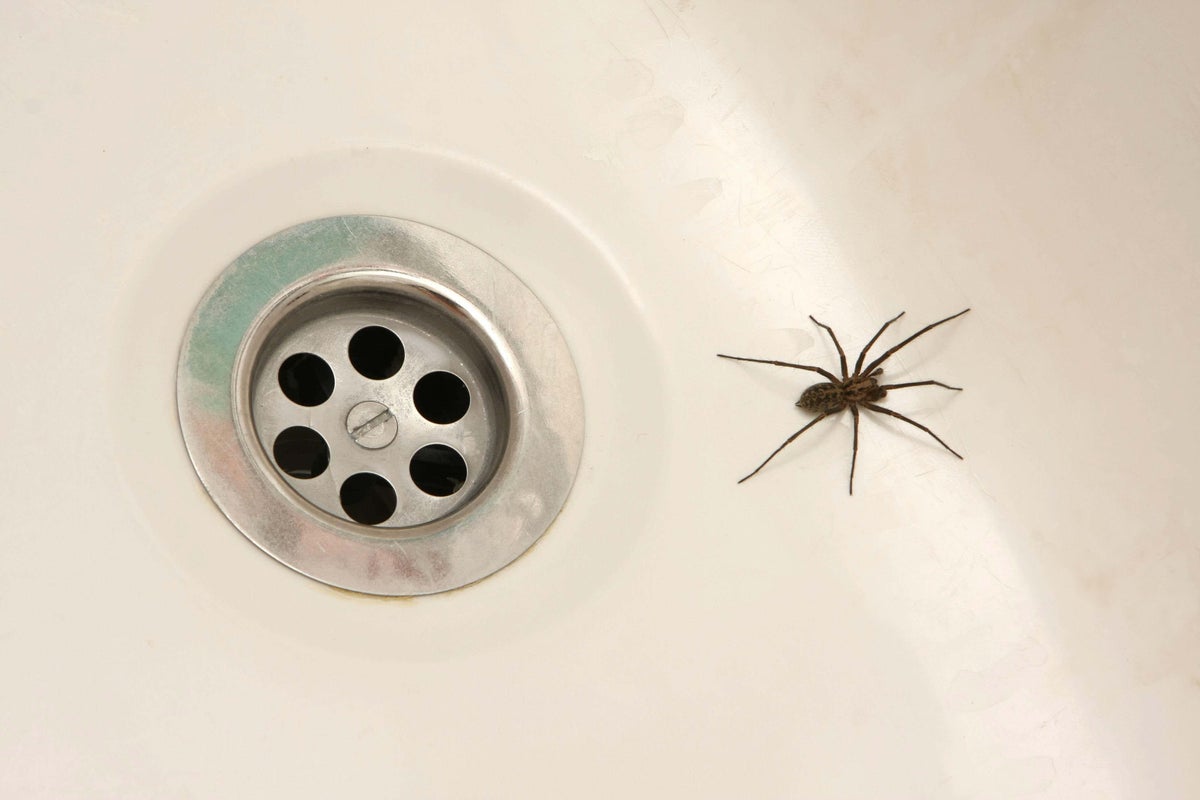
Spiders in homes will commonly be found in rooms with a water source, because they need water and so does their prey.

“You’re most likely to find spiders in your bathroom or kitchen, because their food is attracted to dark, moist areas”, explains Alex Woods from Victorian Plumbing.

“Spiders are attracted to the warmth of a home, particularly when the weather is cold or wet, which we know all too well can be the reality of a British summer. Female spiders tend to stay in the same position for their whole lives, so it may be that there are still spiders in your home who have been hiding away since last autumn.”

False widow, Steatoda nobilis, spider, resting on wooden slats (Getty/iStock)

But although they might be great mini-pest controllers, most people would rather not house-share with spiders. So what can you do to get rid of them, or stop them coming in your home in the first place?

1.  Vacuum regularly

Typically, spiders can be found in dark, quiet, secluded areas in homes and gardens, says Blackhurst, and most of spiders in this country produce webs, which is of course a key way to identify if they’re living in your home.

“Vacuum regularly, high and low,” he advises, “including hidden spots like under furniture, particularly sheltered spots such as beneath worktops, backs of cupboards, and under or behind large furniture. Remove spider webs, especially in corners and on ceilings.”

2.  Seal cracks and openings around windows and doors

Seal gaps in walls, pipes, and doors to discourage entry, advises Blackhurst, and Woods adds: “Spiders have to get in our homes some way, so starting by sealing any cracks or openings around your windows and doors will reduce the chances of an initial invasion.”

3.  Reduce outdoor lighting

Outdoor lights can attract insects that may become spider prey, warns Blackhurst.

4.  Make a natural spider-repellent using essential oils

Home-made spider repellent may help keep spiders away, says Woods. “A drop of essential oil is enough to deter a spider,” she promises.

She suggests mixing around 20 drops of essential oils such as tea tree, lavender, peppermint, citrus or cinnamon with water in a spray bottle. “Spray corners of your bathroom or any moist areas that are likely to attract the insects,” she advises.

5.  Use spider-repellent scents

As well as using the repellent to target specific spider-prone areas, you can use an air freshener or a candle that contains citronella to target the whole room, Woods suggests.

6.  Rub lemon peel over the windowsills

“This is a favourite trick of mine,”  says Woods. “Rub lemon peels all over the windowsills or anywhere spiders may try and perch like behind the toilet or cabinets. The citrus will repel them and will give your room a nice scent.”

7.  Add spider-repelling plants to your rooms

Woods says plants like mint, lemongrass or eucalyptus will not only make your rooms look nicer “but they will help warn off spiders as they hate these kinds of aromas.”

8.   Reduce spider food sources

Keep firewood, garden bags and compost heaps away from the home, as they’ll attract insects and spiders, says Blackhurst. “The most effective way to control spiders is to limit their food source,” he explains. “This should include clearing away dead flies, woodlice, millipedes, centipedes, and other crawling insects.”


Source link

Rubio says US remains open to Iran talks but warns there ‘will be consequences’

0
Rubio says US remains open to Iran talks but warns there ‘will be consequences’


NEWYou can now listen to Fox News articles!

Secretary of State Marco Rubio said Wednesday that the United States remains willing to negotiate with Iran but warned there “will be consequences” if Tehran continues to violate its commitments.

Speaking at the ASEAN Summit in the Philippines, hours after U.S. forces completed their 11th consecutive night of strikes against Iranian military targets, Rubio said Washington remains open to diplomacy but questioned whether Iran is negotiating in good faith.

“The problem we’re having right now is they’re not serious about talks. If they’re serious, we’re serious,” Rubio said. “If they’re not, then we will do what is necessary to protect our interests and also the interests of our allies.”

STEVE FORBES URGES TRUMP TO KEEP THE STRAIT OF HORMUZ OPEN AT ALL COSTS

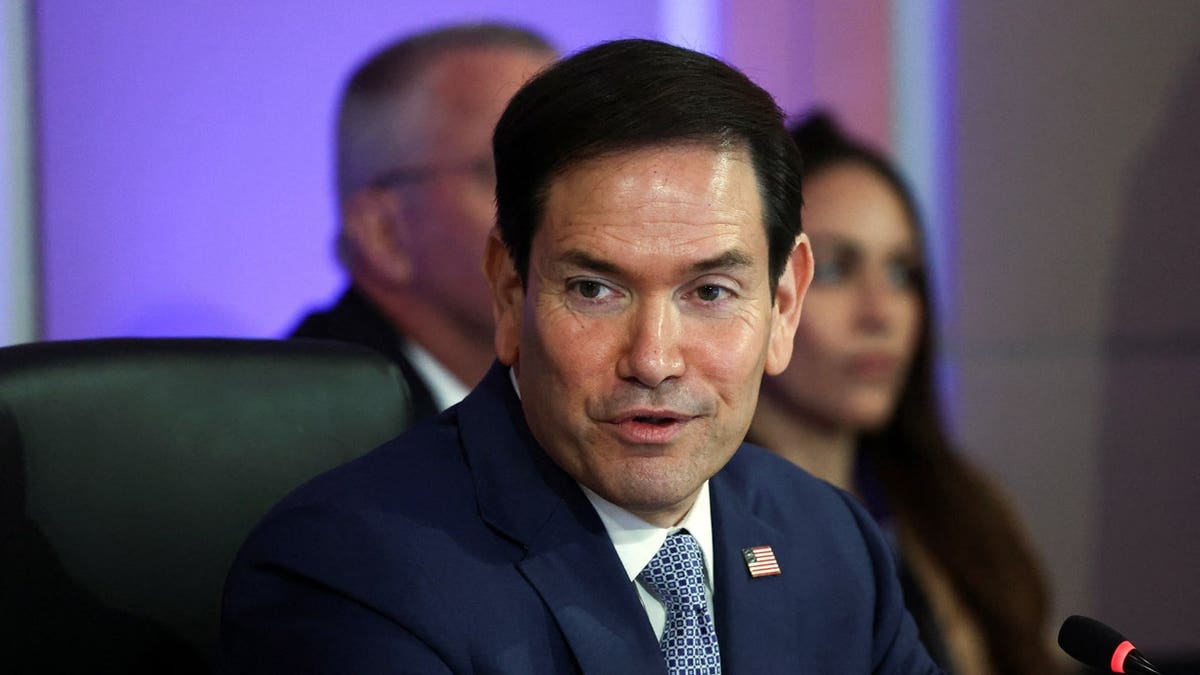
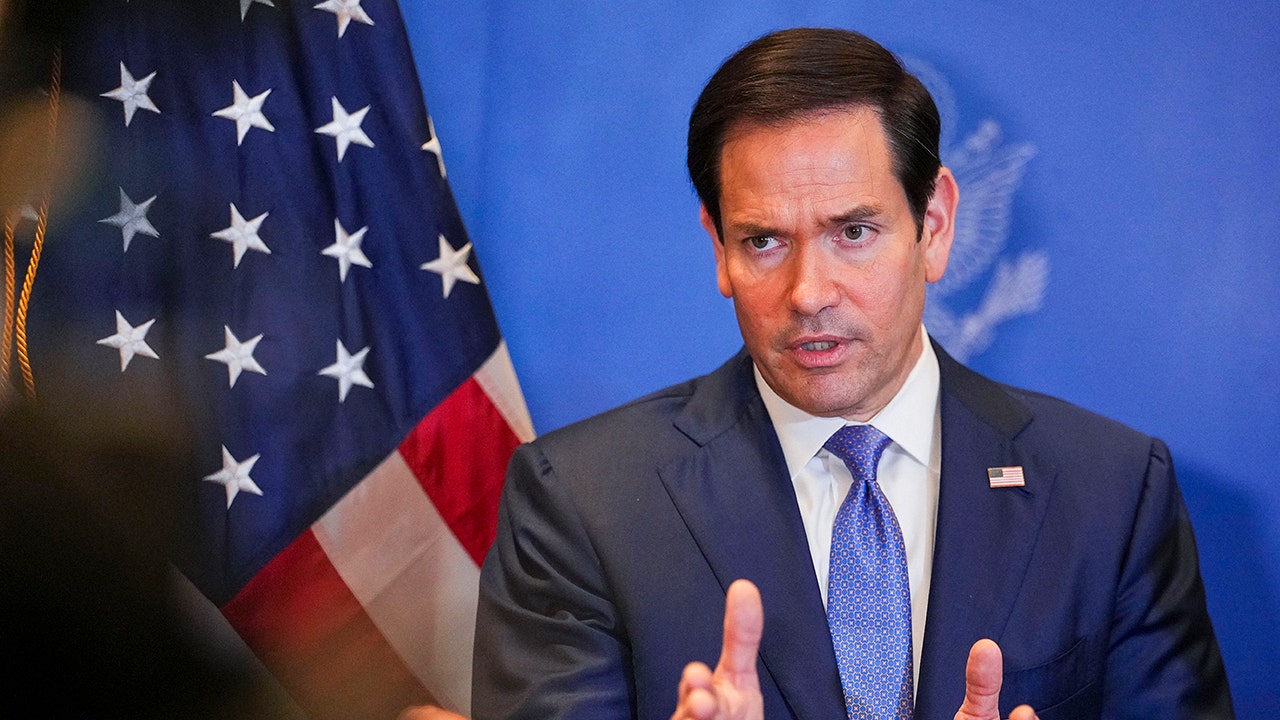
Secretary of State Marco Rubio said the United States remains open to negotiations with Iran but warned there “will be consequences” if Tehran fails to honor its commitments. (REUTERS/Eloisa Lopez/Pool)

Rubio said Iran has demanded the right to control shipping through the Strait of Hormuz, arguing Tehran has no legal authority to do so and warning that allowing it would set a dangerous international precedent.

“If we create a precedent in the Middle East where a nation-state can decide that they are going to control an international waterway and, if you don’t pay them, blow up your ships, we have created a very dangerous precedent, which will repeat itself in other parts of the world, including in this region,” Rubio said.

Rubio argued the “fundamental principle of freedom of navigation” is at stake.

US CLAWS BACK KEY CONCESSION TO IRAN AFTER FRESH ATTACKS ON COMMERCIAL SHIPS IN STRAIT OF HORMUZ

Strait of Hormuz june 17

A container ship, right, and a cargo vessel are seen in the Strait of Hormuz off Bandar Abbas, Iran, Wednesday, June 17, 2026. (Amirhosein Khorgooi/ISNA via AP)

“If that is threatened, then I think the global economy is threatened, and the rules which have underpinned 150 years of international trade and commerce are also threatened, and that cannot be allowed to happen,” he said.

Rubio’s comments came after the U.S. and Iran passed the halfway point of the 60-day negotiating window established under a June 17 memorandum of understanding covering Iran’s nuclear and missile programs, sanctions and freedom of navigation through the Strait of Hormuz.

Despite the agreement, the two countries have appeared closer to a broader conflict than a diplomatic breakthrough, with Iran repeatedly attacking commercial vessels in the strait while U.S. forces continue striking Iranian military targets across the region.

TRUMP’S 60-DAY IRAN DEAL REACHES HALFWAY MARK AS CEASEFIRE COLLAPSES INTO ESCALATING WAR

Secretary of State Marco Rubio spoke during the ASEAN Summit in the Philippines

Secretary of State Marco Rubio spoke during the ASEAN Summit in the Philippines, where he said the U.S. remained willing to negotiate with Iran while warning of consequences if diplomacy failed. (REUTERS/Eloisa Lopez/Pool)

While President Donald Trump has declared the ceasefire “over,” he said Tuesday that Iran wants to “desperately meet.”

Rubio echoed the president’s remarks, saying Washington remains prepared to negotiate while making clear military force remains an option.

“The United States remains open and willing to engage in positive negotiations and talks so long as the commitments that are made are kept,” he said. “When those commitments are not kept, which is what’s happened in this particular case, then there will be consequences. And that has to happen.”

Rubio said maintaining the threat of military action is necessary to prevent Iran from disrupting one of the world’s most important shipping lanes.

CLICK HERE TO DOWNLOAD THE FOX NEWS APP

Secretary of State Marco Rubio

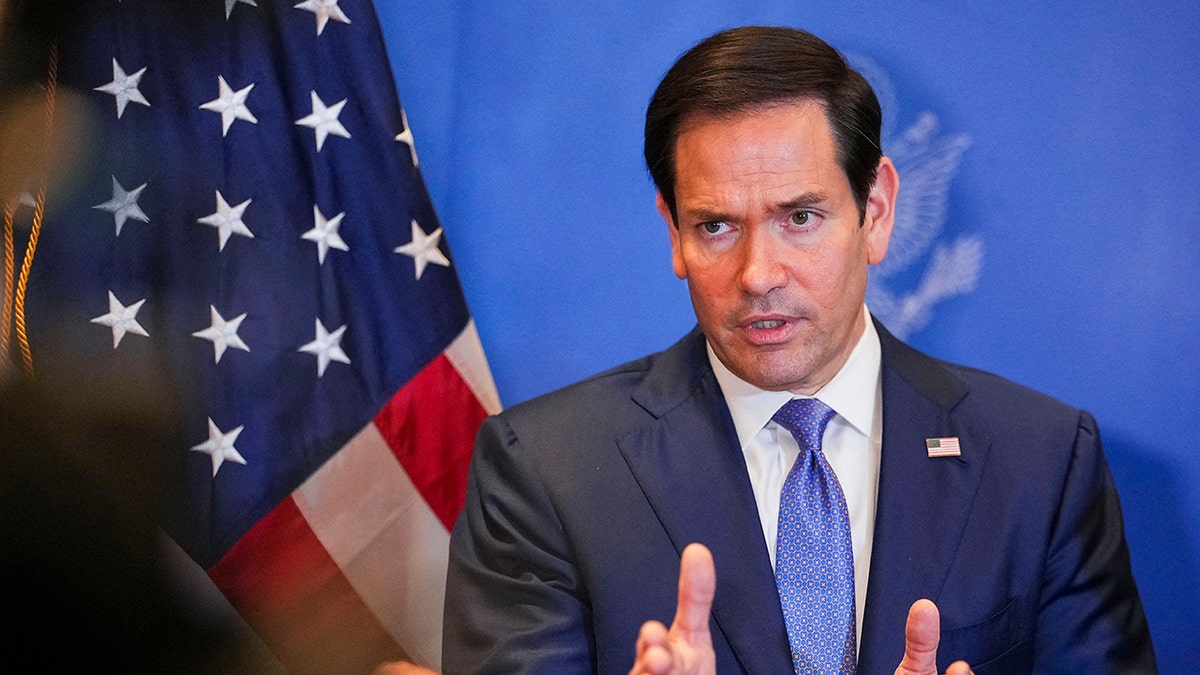
Secretary of State Marco Rubio said Iran has no legal authority to control shipping through the Strait of Hormuz and warned the U.S. would defend freedom of navigation. (Eric Lee / POOL / AFP via Getty Images)

“If these consequences didn’t exist, then today we would be living in a world where a significant percentage of the energy supply in this region and 20% of the world’s energy supply is being held hostage by a rogue regime,” Rubio said.

Fox News Digital’s Morgan Phillips contributed to this report.


Source link

Why Joe Marler turned to cycling to help his mental health

0
Why Joe Marler turned to cycling to help his mental health


Joe Marler tells BBC Sport’s Alex Fletcher about the benefits of cycling.


Source link

All-Ireland football final: All you need to know

0
All-Ireland football final: All you need to know


Kerry are laden with potential match-winners with Sean O’Shea’s return from injury bolstering the attack against Dublin in the semi-final, kicking four points and winning an early penalty.

Joe O’Connor was key to their win in last year’s final, while Paudie Clifford pulls the strings from centre-forward.

Dylan Geaney has enjoyed a strong campaign but David Clifford remains the fulcrum of their attack.

Even in what was considered a quiet day in the semi-final, the Fossa man still ended up with 1-5 to his name and six goals throughout the championship have helped him to the top of the scoring charts entering Sunday’s final.

Mayo’s Ryan O’Donoghue is just five points behind Clifford and he is a key component of the attack for Andy Moran’s side.

O’Donoghue hit 1-11 in the semi-final win over Louth, but Mayo are not solely reliant on the Belmullet man.

Darragh Beirne has impressed this season, but perhaps one of the stories of the championship is another of the teenage stars from the west, Kobe McDonald.

Son of Ciaran, who played in three All-Ireland finals during his own career – all against Kerry – the 18-year-old has burst on to the scene with some outstanding performances, yet Sunday could be a final time in county colours as he is set to depart for an AFL career with St Kilda.


Source link

MrBeast finds MrsBeast: Jimmy Donaldson weds Thea Booysen, shares wedding pictures

0
MrBeast finds MrsBeast: Jimmy Donaldson weds Thea Booysen, shares wedding pictures


For years, the internet has known Jimmy Donaldson as MrBeast.

The name is synonymous with YouTube success, wild challenges and enormous projects.

But now, there’s another name that has entered his story.

MrsBeast.

And while the nickname is playful, the sentiment behind Jimmy’s announcement was anything but.

His wedding pictures didn’t show off a new achievement or another record-breaking project.

They showed the person he had chosen to spend his life with.

Thea, meanwhile, has stepped into this new chapter as Thea Donaldson, while continuing to have an identity and career of her own.

For a couple who could easily have turned their wedding into the biggest content event of the year, they chose something much simpler: a celebration surrounded by people they love, followed by a few photographs shared with the world.

And perhaps that tells us something about what they value.

The internet can have MrBeast.

But Jimmy Donaldson belongs to Thea.

And if his wedding announcement is anything to go by, that’s exactly how he wants it.

The world’s biggest YouTube creator may have spent years giving the internet bigger and bigger reasons to watch him.

But when it came to the most personal chapter of his life, he didn’t need a challenge, a competition or a million-dollar prize.

He simply found the person he wanted beside him.

MrBeast found his MrsBeast. And, by the sound of it, he couldn’t be happier.


Source link

Inflation falls slightly to 2.6%

0
Inflation falls slightly to 2.6%


The UK rate of inflation has slowed to 2.6% in the year to June, driven down by lower fuel prices, according to new figures.

The June rate of inflation fell from the 2.8% recorded for the year to May, the Office for National Statistics (ONS) said.

Food prices also fell, driven by products such as chocolate, beef and margarine.

ONS chief economist Grant Fitzner said: “A fall in motor fuel prices, particularly diesel, helped ease inflation in June.”


Source link

Removing tax from sanitary products ‘pointless’, senator says

0
Removing tax from sanitary products ‘pointless’, senator says


The government began its free product scheme in October 2022, providing sanitary items in a range of locations including public toilets and government buildings.

In exchange, it reversed its decision to remove the GST.

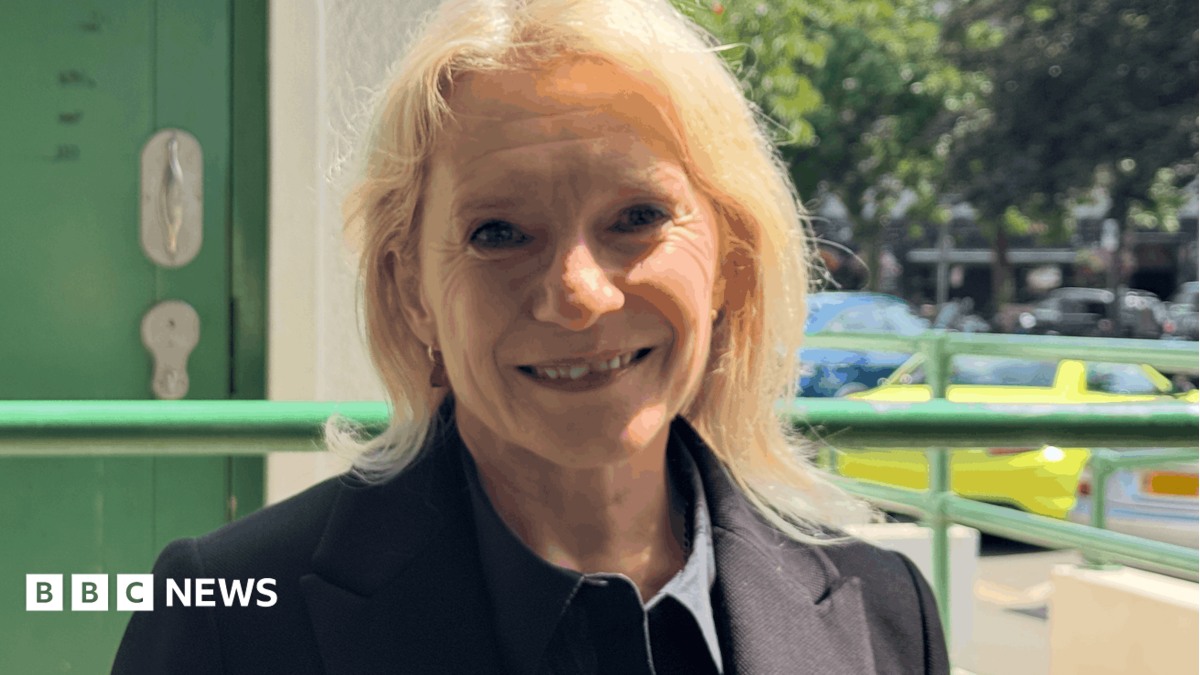
Millar said there was no need to remove tax from products in the shops as people could get them for free instead.

She said: “If you look at simple facts, simple maths, if you’re spending £5 a month on sanitary products, taking GST off, if the saving was passed on, would save you 25 pence.

“With free products, you’re saving £5 because you’re getting the entire product free.

“I don’t think it would be effective and, if people have issue with affordability and accessibility, we have resolved that by the free product scheme.”

The only goods and services which are exempt from GST are: financial services, insurance, postal services, medical supplies, medicines on prescription, supplies by charities, registered child​care, some burial and cremation services, and school fees.


Source link

Andy Biggs wins GOP nomination to challenge Democrat Katie Hobbs for Arizona governor

0
Andy Biggs wins GOP nomination to challenge Democrat Katie Hobbs for Arizona governor


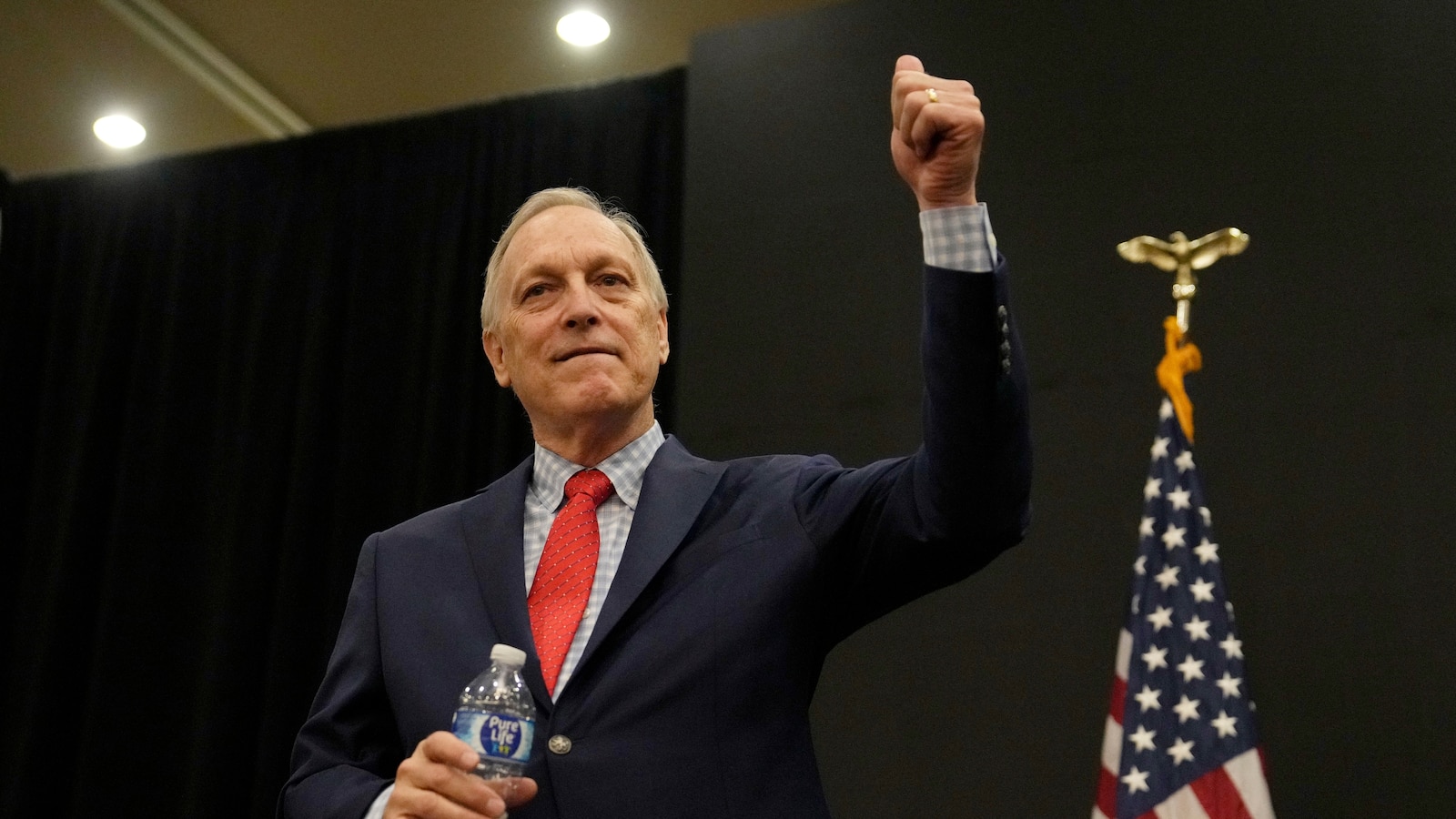
PHOENIX — U.S. Rep. Andy Biggs, a fierce ally of President Donald Trump and former head of the House Freedom Caucus, won the Republican nomination for Arizona governor Tuesday.

Biggs overwhelmingly defeated fellow U.S. Rep. David Schweikert in the primary and will face Democratic Gov. Katie Hobbs in what could be one of the closest governor races in November.

By choosing Biggs, who supported Trump’s failed attempt to block certification of his 2020 election loss, Republican voters risk nominating another conservative warrior who excites the party base but fails to win a general election by turning off independents. Although Republicans once dominated Arizona, Democrats now hold both U.S. Senate seats and the top three state offices.

Schweikert argued during the campaign that Biggs would continue a decade of Republican backsliding. However he struggled to raise money and did not even return to Arizona for Election Day, remaining in Washington as the House passed a government funding bill.

Biggs, who had Trump’s endorsement and support from the grassroots organization Turning Point Action, said he can unite Republicans going into the general election.

“Everyone I have talked to is really conservative around here,” said Ray Roberts, a 33-year-old Republican who works as a processing engineer and knocked on doors for Biggs. “We all have mostly conservative values. I think Arizona is a red state. I think Andy will be the winner in November.”

Meanwhile both parties had hotly contested primaries to replace Schweikert in the highly competitive 1st Congressional District. Trump-backed Jay Feely won for the Republicans.

On the Democratic side, emergency physician Amish Shah faced off with Marlene Galán-Woods, a former television news anchor who used to be a Republican. She was backed by the Democratic Congressional Campaign Committee.

Linda Bandler, a 65-year-old independent who volunteered on the Galán-Woods campaign, said the party will be in good shape regardless of who wins the primary.

“There still is some sanity,” said Bandler, who like Galán-Woods is a former Republican. “I do think that the Democrats will take over the House and the Senate.”

Alexander Kolodin, a state lawmaker and lawyer who wants vast changes to Arizona election law, won the Republican nomination for secretary of state. Republicans were also picking a nominee for attorney general.

Biggs built a national profile as chair of the House Freedom Caucus from 2019 to 2022 and as a staunch defender of Trump. He assisted the president’s attempt to block the certification of his loss in the 2020 election, voting against accepting Electoral College votes from Arizona and other battleground states after the Jan. 6, 2021, riot.

He has always represented safe Republican seats and is a veteran of factional brawls within the GOP. Before going to Congress, he nearly lost his post as state Senate president during a confrontation with then-Gov. Jan Brewer, also a Republican, over her push to expand Medicaid.

“I want the border secured. I want the police and more money spent in the right places like education,” said Kate Rouleau, a 67-year-old Republican who voted for Biggs. “Biggs has the same quality as President Trump.”

Schweikert walked a tightrope with Trump, carefully keeping his distance without antagonizing him. That helped him win a string of tough races in a competitive House district but left him isolated from Trump’s “ Make America Great Again ” base.

Democrats focused their attacks on Biggs, whom they plan to portray as an extremist focused on helping Trump and not Arizonans.

In a statement Tuesday night, Hobbs said: “The more Arizonans learn about Biggs, the more they’ll realize he’s one big problem they can’t afford.”

Schweikert’s 1st District is a top battleground in the fight for a congressional majority. Anchored in Scottsdale, it is home to many of the white, highly educated and affluent voters who have soured on the GOP under Trump.

Feely, a former Arizona Cardinals kicker, won Tuesday’s GOP primary over Joseph Chaplik, a former state legislator popular with many of the GOP’s grassroots activists, and businessperson John Trobough.

Feely had Trump’s endorsement but has been dogged by criticism for living outside the district.

The Democratic Congressional Campaign Committee controversially threw its support behind Galán-Woods. Her late husband, Grant Woods, was the Republican attorney general in the 1990s and later became a vocal Trump critic.

Galán-Woods’ chief opponent, Shah, is also a former state legislator who was the nominee in 2024 but lost narrowly to Schweikert.

Republicans hold a voter registration advantage in the affluent district, which includes northeast Phoenix, Scottsdale, Fountain Hills and Paradise Valley.

But it started to trend toward the center after Trump’s 2016 victory. Redistricting accelerated the trend, fueling Democratic hopes that the seat could be flipped.

In Tucson, retired Marine drill instructor JoAnna Mendoza ran unopposed for the Democratic nomination to challenge second-term Republican Rep. Juan Ciscomani, who also had no primary opponent. The seat is perennially competitive in general elections and is a top pickup target for Democrats in November.

Meanwhile, Pinal County Sheriff Mark Lamb won the GOP primary for the safe Republican seat Biggs is vacating. The race turned salacious as Lamb, who was endorsed by Trump, came under scrutiny for alleged sexual misconduct and abuse of power.

The county attorney cleared him of criminal wrongdoing, and Trump reiterated his endorsement this month. Lamb dismissed the allegations as “slander and lies.”

___

Associated Press writer Josh Kelety contributed.

___

This story has been updated to correct the spelling of Feely.


Source link

$290M cocaine haul found ‘skillfully concealed’ in massive banana shipment

0
0M cocaine haul found ‘skillfully concealed’ in massive banana shipment


NEWYou can now listen to Fox News articles!

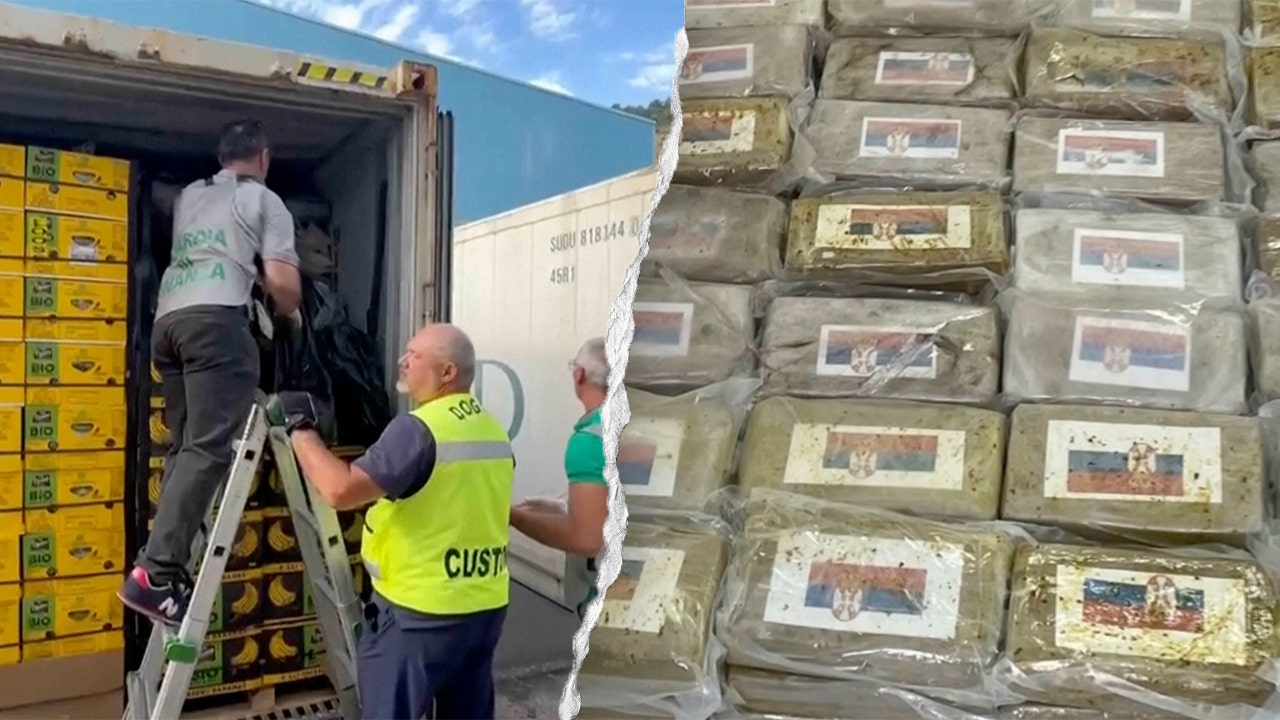
Italian authorities seized roughly 1,700 pounds of cocaine hidden among pallets of bananas at a major port, officials said Tuesday.

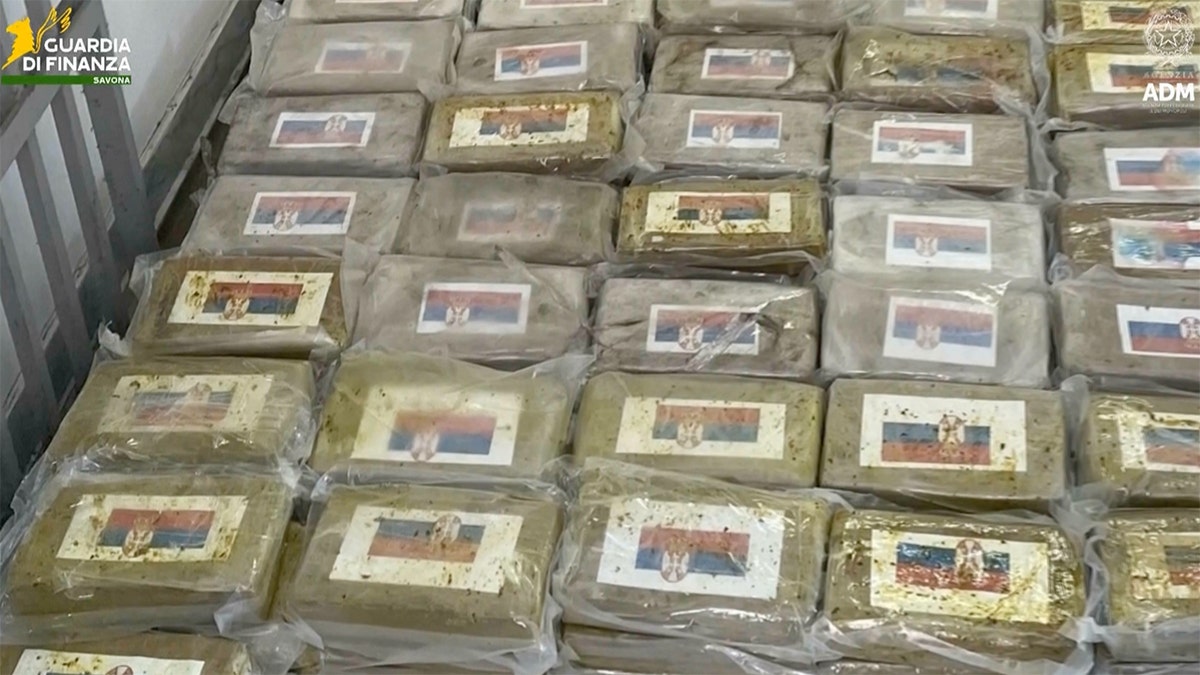
The drugs were divided into 650 packages and “skillfully concealed” inside a refrigerated shipping container that arrived at the port of Vado Ligure from one of Ecuador’s main ports, according to Italy’s Guardia di Finanza.

A field test conducted during the inspection determined the substance was “extremely pure cocaine,” officials said.

BORDER OFFICERS CRACK OPEN CABBAGE SHIPMENT HIDING MULTIMILLION-DOLLAR SECRET AT TEXAS BORDER

The drugs were divided into 650 packages and “skillfully concealed” inside a refrigerated shipping container. (Italy Border Police / AP)

Authorities said the bust was one of the largest anti-drug operations carried out at the port in recent years. 

The shipment could have generated an estimated 250 million euros, or nearly $290 million, if it had reached the street market.

MASSIVE MEXICO-CALIFORNIA BORDER BUSTS UNCOVER EYE-POPPING AMOUNT OF DRUGS: ‘REMAIN VIGILANT’

Italian authorities seized roughly 1,700 pounds of cocaine hidden among pallets of bananas at a major port, officials said Tuesday.

Authorities said the bust was one of the largest anti-drug operations carried out at the port in recent years.  (Italy Border Police / AP)

The seizure followed an extensive analysis of commercial shipping routes linking South America with Vado Ligure, an important gateway for goods entering Europe — and an “attractive” target for international drug traffickers, according to officials.

“The operation forms part of an ongoing and targeted effort to combat the international trafficking of narcotics, including efforts to protect the most vulnerable segments of the population, who are often exposed to the harmful effects of this type of criminal activity,” Guardia di Finanza said.

JEANINE PIRRO CALLS OUT ‘DIRTBAGS’ AFTER 14 CHARGED IN ALLEGED COCAINE RING OPERATING FEET FROM A SCHOOLYARD

Italian authorities seized roughly 1,700 pounds of cocaine hidden among pallets of bananas at a major port, officials said Tuesday.

The shipment could have generated an estimated 250 million euros, or roughly $290 million, if it had reached the street market. (Italy Border Police / AP)

The seizure comes weeks after U.S. Customs and Border Protection (CBP) officers discovered more than 1,100 pounds of cocaine hidden in a commercial tractor-trailer carrying cabbage at the Pharr Port of Entry in Texas.

CLICK HERE TO DOWNLOAD THE FOX NEWS APP

A canine inspection and nonintrusive imaging scan alerted officers to the concealed load, CBP said. A physical search of the trailer uncovered 477 packages containing 1,173 pounds of cocaine with an estimated street value of nearly $10.8 million.

Fox News Digital’s Leo Briceno contributed to this report.


Source link

Palestine weekly: Ahead of elections, Israel doubles down on attacks

0
Palestine weekly: Ahead of elections, Israel doubles down on attacks


On July 17, hours after Israel’s parliament formally dissolved itself and set an October 27 election date, an Israeli drone struck a funeral procession outside Ahmad Yassin Mosque in the Nuseirat refugee camp, killing at least eight mourners as they buried a man killed hours earlier.

The UN human rights office said Israeli attacks have killed at least 57 Palestinians, including six children and eight women, between July 13 and 20, warning that the pattern “raises concerns of continuing violations of international humanitarian law, war crimes and other possible atrocity crimes in Gaza”.

Recommended Stories

list of 3 itemsend of list

In the same week, Israel’s military carried out daily killings, ministers raced to pass legislation before parliament dissolved, the Civil Administration issued demolition and land-seizure orders, and settlers attacked Palestinians with near-total impunity.

All of this points towards an unrelenting few months of violence and dispossession before elections take place.

A mass-casualty week in Gaza

Beyond the Nuseirat funeral strike, the week’s Gaza toll included a string of air attacks on homes and displaced families.

On July 15, an Israeli helicopter attack killed Omar Sami Abu Qassem, his wife Asmaa Ghazi and their six-year-old daughter Habiba in Deir el-Balah; their three-year-old son was the only survivor. On July 18, an Israeli warplane struck a residential building in Gaza City’s Nassr neighbourhood without warning, killing Adham Nasman, his wife Marwa and three of their children; a third child survived only because he was not home. Israel claimed that Nasman was a Hamas commander – the group has not issued a statement confirming that.

A day later, Rida Abu Asr was killed by Israeli artillery shelling in Zeitoun, one of several people killed in the neighbourhood that day as tanks advanced towards Dawla Junction, according to the Palestinian news agency Wafa. Israeli strikes also killed seven police officers, including the director of Jabalia’s police station, in an attack on a checkpoint on July 14, and repeatedly hit tents sheltering displaced families in al-Mawasi throughout the week, according to Wafa.

Then, an overnight Israeli air attack on July 21 killed Firas al-Masri, his wife Salsabeel and their four children as they slept in Gaza City, according to medical officials.

Amid this string of mass-casualty attacks, Israel’s Defence Minister Israel Katz told Channel 14, while touring northern Gaza, he felt satisfaction from the scenes of destruction, which he said resulted from a deliberate Israeli policy. He added that Israel was studying the establishment of three military-style settlement outposts in northern Gaza.

Katz’s statements coincided with a march on Sunday by the Nachala settler movement to the Gaza border fence, in which right-wing Israelis – accompanied by more than a dozen ministers and legislators, including National Security Minister Itamar Ben-Gvir and Finance Minister Bezalel Smotrich, and endorsed by Prime Minister Benjamin Netanyahu’s Likud party – called for the re-establishment of settlements inside Gaza.

On the other side of the fence, the Israeli-controlled “Yellow Line” has continued expanding westward, with new blocks placed near al-Qarara and reaching the Abu Miri roundabout east of Deir el-Balah, forcing hundreds more families to flee Israel’s advance, according to local sources.

Amid such developments, the humanitarian picture in Gaza, laid out in the United Nations Office for the Coordination of Humanitarian Affairs’ (OCHA) July 16 situation report, continues to deteriorate.

Sixty-three percent of households in Gaza now access less than six litres of drinking water a day, while 60 percent live within 10 metres of exposed sewage. Livestock feed imports have been blocked for more than a month, the UN’s Food and Agriculture Organization (FAO) confirmed, tripling barley prices and threatening a die-off in August that would reverse the modest herd recovery recorded between October 2025 and May 2026.

Israeli settler roads open – and Palestinian gates close

The escalation in Gaza parallelled a sharpening campaign to create “facts on the ground” across the occupied West Bank. This past week, the Israeli security cabinet approved 1.3 billion shekels ($426.3m) to establish 34 new illegal settlements. On July 15, it approved an additional 1.075 billion shekels ($352.5m) for settler road infrastructure, Wafa reported, which will support much of the new settlements and outposts reaching far-flung areas of the West Bank. Smotrich called the decision a “settlement and security revolution”, aiming to establish more than 100 settlements and 160 agricultural and pastoral outposts.

That funding framework provided the context for this week’s wave of demolitions, whose stated purpose has moved beyond permit enforcement to clearing land for the proliferating settlement infrastructure campaign.

Israel’s Crimson Thread barrier project continued with the systematic destruction of Palestinian water infrastructure in the northern Jordan Valley, with Israeli forces and settlers destroying three artesian wells near Atuf, confiscating pumps and generators, and severing roughly 800 metres of pipeline serving 4,500 dunams (4.5 square kilometres) of farmland, according to the Atuf Village Council.

In Masafer Yatta, the Wall and Settlement Resistance Commission has tied a wave of demolition and stop-work orders in Ad-Deirat and Ar Rifaiyya directly to a planned settlement road to run alongside Route 356 – a project that puts three of five local schools serving 700 children at risk, including Ar Rifaiyya’s, which lost a court appeal against demolition on July 8.

Israeli authorities also issued a military order seizing land in Jaba, north of occupied East Jerusalem, for what Palestinian officials say is another settlement road linking Route 60 to the Nabi Yaqub settlement – the latest in a string of military seizure orders used to facilitate settlement infrastructure.

The same infrastructure drive has increasingly shaped the geography of violence in the occupied West Bank, including in al-Mughayyir, northeast of Ramallah, where 17-year-old national youth football player Fadi al-Naasan died on July 18 of wounds from a settler-and-army raid on July 11 – the seventh al-Mughayyir resident killed since October 2023, including four minors. Israeli activist Jonathan Pollack has tied the repeated killings there to a deliberate campaign to carve a settlement corridor linking the Shilo bloc to the Jordan Valley.

Likewise, the West Bank saw a number of entire towns sealed behind military gates. Sinjil, north of Ramallah, bore the full brunt of this campaign. Israeli forces sealed Sinjil’s entrances with earth mounds and a barbed-wire fence that has swallowed farmland, and then raided the town nightly, according to Wafa and local activist Ayed Jafry. On the night of July 16, more than 100 armed settlers attacked the town’s outskirts; residents confronted them at close range and forced them to flee amid what Jafry described as gunfire “from every direction”. Settlers returned at dawn under army protection to burn crops.

In addition, Israeli forces sealed the western entrance to Bethlehem’s countryside with a new iron gate at al-Shouli, cutting off Husan, Battir, Nahhalin and Wadi Fukin; closed the Atara and Ein Siniya checkpoints – the latter one of the last reliable open routes for Ramallah residents – simultaneously for hours; and reinforced a three-year-old gate closure at Idhna, west of Hebron, with concrete blocks, according to Wafa.

Deir Jarir, east of Ramallah, saw its own lethal raid the night of July 19, when a large military raid combined with an attempted settler theft of roughly 70 sheep left two men, Ahmad Abu Makhou, 26, and Odeh Farakhna, 53, dead from gunshot wounds; Pollack said witnesses gave conflicting accounts of whether soldiers or settlers fired the fatal shots.

Livestock theft under military escort recurred so often this week, including the seizure of more than 180 sheep from a single family in Khirbet Emneizal and repeated raids on flocks in nearby Wadi al-Rakheem, that it has become an expected condition of life in Masafer Yatta, in the words of local activist Osama Makhamreh.

In at-Tawani, also in Masafer Yatta, settlers burned the village mosque, with one assailant boasting in graffiti that “I’m under house arrest”, two homes and a dairy factory on July 18 and 19, according to Makhamreh, Murad Samara and Wafa.

Red meat for the base

Meanwhile, on July 20, Hamas elected Khalil al-Hayya as head of its political bureau, ending nearly two years of collective leadership following Yahya Sinwar’s killing.

In its final hours before the Israeli government’s dissolution, Netanyahu’s outgoing coalition pushed through a legislative blitz, including a Communications Law handing the government control over broadcast media and protections shielding ultra-Orthodox men from conscription.

And during the same week, ministers joined activists calling to resettle Gaza, Environment Minister Idit Silman reclassified the Nile crocodile as a “tended” species, a legal category for wild species bred and managed in captivity for commercial purposes. That clears a legal path for Ben-Gvir’s proposal to surround detention facilities for Palestinians with the reptiles – starting with Ktziot Prison, where imprisoned Gaza doctors, among others, are held without charge.

Source link