Home Blog Page 796

CPI report shows inflation surged in March as Iran war drove up energy costs

0
CPI report shows inflation surged in March as Iran war drove up energy costs


A global energy shock triggered by the Iran war sent U.S. inflation soaring in March, with the Consumer Price Index rising at a 3.3% annual rate, the highest reading in nearly two years.

By the numbers

Economists had predicted inflation would jump nearly an entire percentage point from 2.4% in February to 3.3% in March on an annual basis, according to the average of six separate forecasts reviewed by CBS News. The last time inflation was this high was in May 2024.

The CPI, a basket of goods and services typically bought by consumers, tracks changes in prices over time.

Inflation ran hot in March due to higher energy costs tied to the Iran war, which has constrained the flow of crude through the Strait of Hormuz, a critical chokepoint for global oil supply. The CPI data shows energy prices, driven by a spike in gasoline costs, rose 10.9% from the month prior.

Brent crude, which was trading at $73 a barrel before the war started on Feb. 28, traded at $95.88 as of Friday morning, while the U.S. benchmark hovered around $97.

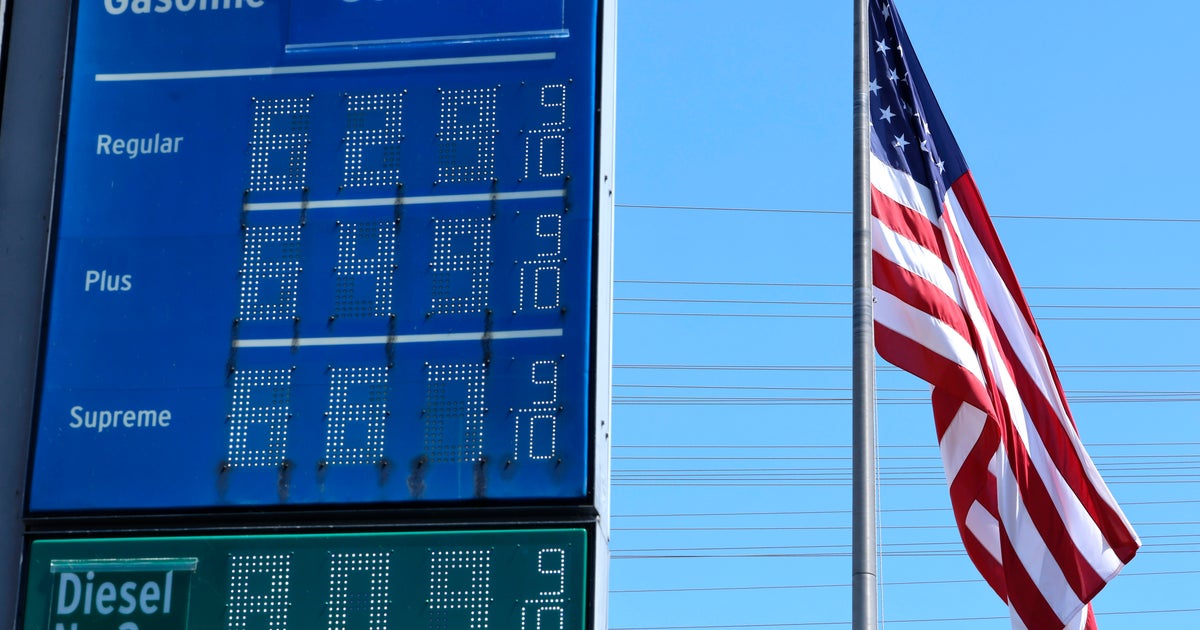
Consumers got hit with higher prices at the pump last month, with gas prices rising 21.2% from February, according to the Bureau of Labor Statistics data. The agency said the jump represents the largest monthly increase since 1967.

U.S. gas prices have soared nearly 40% since the conflict erupted, with the national average at $4.15 a gallon on Friday, according to AAA. 
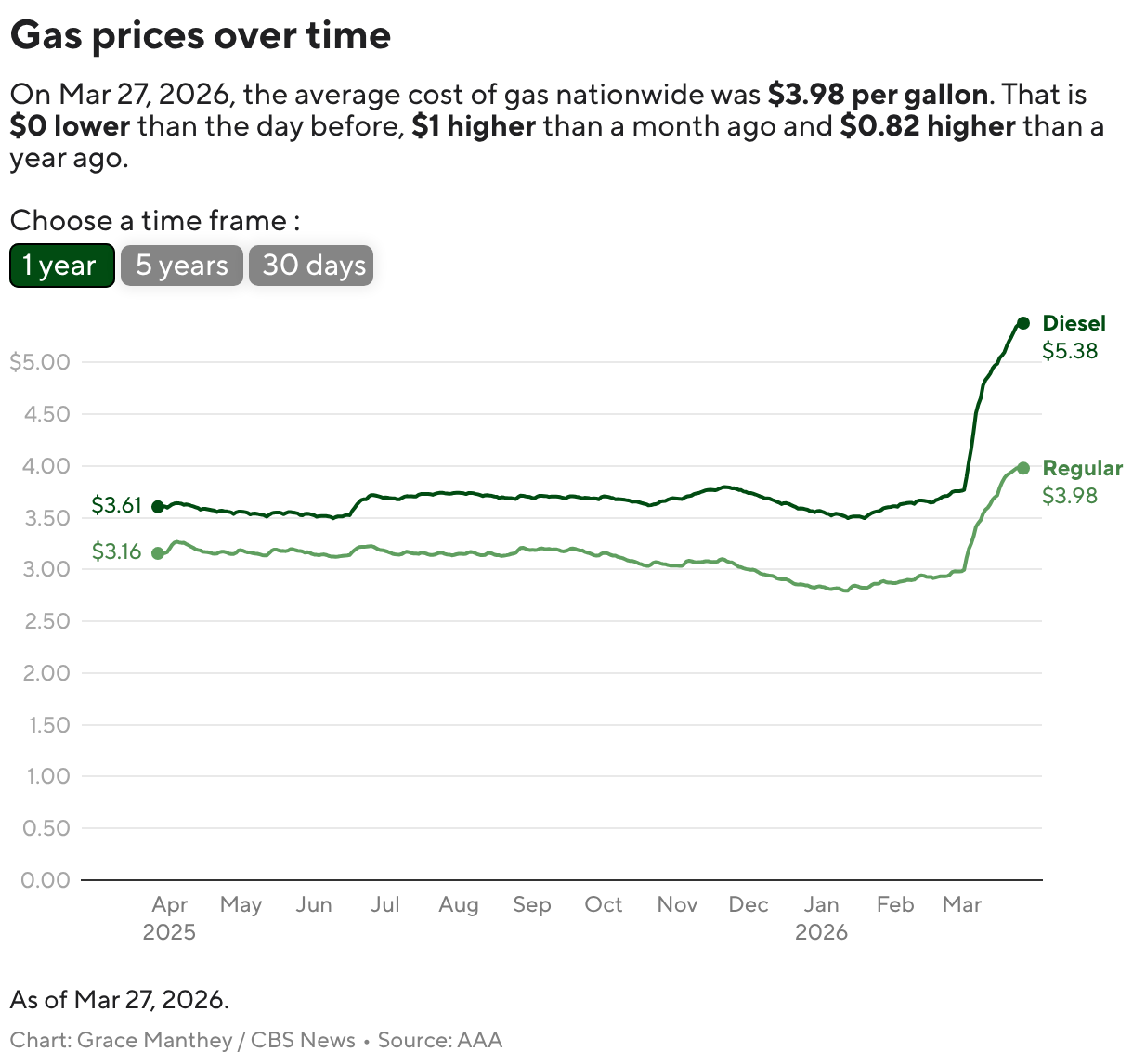
A two-week ceasefire between the U.S. and Iran announced on Tuesday could ease gas prices if it holds, but energy experts said it will likely take weeks to recede below $4 a gallon.

Core inflation, which strips out volatile energy and gas prices, rose 0.2% on a monthly basis and 2.6% from a year earlier, lower than economists expected. Chris Zaccarelli, chief investment officer for Northlight Asset Management, said in an email that this should “give the economy some room to absorb the higher energy price shock.”

The CPI reading follows the release of another key inflation gauge known as the Personal Consumption Expenditures (PCE) price index on Thursday, which showed costs were elevated even before the war erupted. PCE rose 2.8% on an annual basis in February, the same as January, but stubbornly above the Federal Reserve’s 2% annual target.  

What the experts say

Economists told CBS News that higher energy costs could continue to push up other prices this year, such as apparel and food, in part because a sharp spike in diesel prices is raising transportation costs.

“This is only the beginning. Food prices, travel and shipping costs are all going up in April and will exacerbate the pain,” said Heather Long, chief economist at Navy Federal Credit Union, in an email.

Airlines are already offsetting higher fuel costs by raising airfares and, in some cases, introducing checked bag fees. Airline fares rose 14.9% on an annual basis in March, according to the CPI data. 

Investors have assumed that geopolitical tensions will eventually fade and markets will rebound. However, Ed Yardeni of Yardeni Research warned in a note before the CPI release that inflation was heating up just before the war and could continue to rise through the end of this year.

In an email following the release of the report, Bernard Yaros, lead U.S. economist at Oxford Economics, said the April CPI reading will be “uncomfortably strong” as higher gas prices and a statistical quirk from the government shutdown, which disrupted data collection, add upward pressure to inflation.

“A key wildcard in the outlook for both inflation and monetary policy is the duration and intensity of the Iran war, which still hasn’t been resolved by the tenuous ceasefire,” he said.

While the jump in inflation may be worrisome, Yaros said the U.S. is in a different situation than in 2022, when economic pressures from the pandemic and Russia’s invasion of Ukraine pushed inflation to a 9.1% peak in June of that year. 

Measures of global supply-chain stress “aren’t flashing red,” Yaros said, adding that the labor market hasn’t created additional inflationary pressure, as was the case in 2022. In the wake of higher gasoline prices, households will eventually have to cut back on non-discretionary expenses, which could be a source of disinflation, he added.

What does this mean for interest rates?

Analysts believe the Federal Reserve will continue to hold rates steady in the near-term as it assesses the inflationary impact of the Iran war. They pointed to the lower-than-expected core inflation reading, which does not reflect energy or food costs, as a sign that higher energy prices have not yet trickled into other categories.

“As long as the increase in gasoline prices is not translating into an increase in the core measures of inflation, then the Fed is probably not going to react to the noise in the headline measures of inflation,” Raymond James chief economist Eugenio Aleman said in an email.

The Fed is scheduled to meet from April 28 to 29.

In its last meeting in March, the central bank maintained the federal funds rate at its current range of 3.5% to 3.75%. It also pencilled in one rate cut for 2026. However, minutes released from the Fed’s March meeting this week signal that some members of the central bank’s 19-member interest-rate setting panel may be open to raising rates “if inflation were to remain at above-target levels,” the minutes said.



Source link

The springtime pastime that can keep your brain and body healthy

0
The springtime pastime that can keep your brain and body healthy


It’s the spring growing season once again and millions of Americans are planting strawberries, carrots, leafy greens and other fruits and vegetables in their home gardens to enjoy later in the year.

One in three U.S. adults is a gardener, according to Penn State Extension service. But many may not know that the spring pastime can provide more benefits than just a full pantry.

Experts say gardening helps to improve physical health, as well as our cognitive abilities – helping to fight the effects of dementia in patients with Alzheimer’s disease and burn calories to maintain a healthy body weight.

Spending just 30-45 minutes in a garden a day may burn up to 300 calories, according to the Detroit Medical Center.

“These forms of gardening can actually improve muscle tone and strength, if done regularly,” the center said. “Even the less strenuous forms of garden upkeep – weeding, trimming and raking – can burn off about 300 calories an hour.”

It’s the spring growing season once again – but experts say gardening can do more for you than just stock your pantry (Getty Images)

That can be incredibly beneficial for people with mobility problems, offering a way to sweat and move while seated. That’s why experts say people of nearly any age can garden, with the exception of young children who might be hurt by tools.

“Gardening offers many benefits for everyone, including older adults and those with mobility issues,” said David Hillock, a horticulturist at Oklahoma State University Extension service.

But beyond the physical boost, gardening also helps to support a healthy brain, according to researchers. It provides mental stimulation, as gardeners have to plan, problem solve and recall plants they’ve cared for, Smita Patel, an integrative neurologist at the Illinois hospital group Endeavor Health, told The Washington Post.

There is research showing the hobby can lower inflammation tied to developing dementia and increase levels of proteins that improve the brain’s ability to take in new information and respond to challenges.

Another study that tracked participants throughout their lives found that frequent gardeners had better thinking and memory than people who never gardened.

Although any level of physical activity may improve brain health, according to public health officials.

Gardening is a soothing activity that lowers levels of the stress hormone cortisol
Gardening is a soothing activity that lowers levels of the stress hormone cortisol (Getty Images)

Still, the physical benefits of gardening on the brain may also be the result of its majorly positive effects on mental health. Gardening reduces levels of the stress-driving hormone cortisol, Georgia’s Emory University says, which is tied to developing dementia.

A study in Norway showed that gardening improved the severity of depression after 12 weeks.

It also boosts mood and improves self-esteem, researchers at Michigan State University found in a study of members of a community garden in 2024.

“We saw that many individuals found joy, purpose and meaning in their work, and their confidence and self-esteem was boosted, which helped them deal with mental health challenges such as depression, anxiety and stress,” Eva Coringrato, one of the study’s authors, explained.

You don’t need to garden for that long to improve your mental health, either. Just 10-20 minutes spent in nature can do the trick, Cornell University researchers said.


Source link

Inflation rises to its highest mark in nearly 2 years, fueled by Iran war

0
Inflation rises to its highest mark in nearly 2 years, fueled by Iran war


Inflation rose by 3.3% in March compared to one year ago, the Labor Department reported Friday, the highest such increase since May 2024. That rise was driven by a 21% spike in gas prices in March from the previous month. Jo Ling Kent has details.


Source link

Video: What the Cease-Fire Means for Iran

0
Video: What the Cease-Fire Means for Iran


new video loaded: What the Cease-Fire Means for Iran

Emerging from weeks of U.S. and Israeli airstrikes, an emboldened Iran has 10 demands for talks during the tenuous cease-fire, according to Iranian state media. Our reporter Erika Solomon assesses Iran’s position.

By Erika Solomon, Christina Thornell, David Seekamp and Joey Sendaydiego

April 10, 2026


Source link

Grand National 2026 runners: Pinstickers’ guide to Aintree race horses

0
Grand National 2026 runners: Pinstickers’ guide to Aintree race horses


Trainer: Gordon Elliott (IRE) Jockey: Jordan Gainford

Form: 82127 Age: 9 Weight: 11-0

John: A second attempt at National glory for this guy, also trained by Elliott, who in addition to his two wins with Tiger Roll also triumphed in the race with Silver Birch in 2007.

Last year, he was right up with the pace before slowly but surely weakening away into 11th place.

Despite a fine run when second to Panic Attack in the Coral Gold Cup in November, he simply doesn’t look well enough handicapped to win.

If you have drawn him in the sweepstake, you have a Pair rather than a Prial, which is the highest hand in three card brag. You may still win, but it’s unlikely.

Rating: 5/10 Odds: 50-1


Source link

Hezbollah rocket attack damages 1,500-year-old Israeli church

0
Hezbollah rocket attack damages 1,500-year-old Israeli church


NewsFeed

Hezbollah fired a barrage of rockets at northern Israel, damaging a 1,500-year-old Byzantine church in Nahariya. The attack comes after weeks of heavy Israeli bombardment across Lebanon.


Source link

Lexie Hull reveals most rewarding part about playing for Fever during Caitlin Clark era

0
Lexie Hull reveals most rewarding part about playing for Fever during Caitlin Clark era


NEWYou can now listen to Fox News articles!

Lexie Hull led the Indiana Fever to the brink of the WNBA Finals last season. 

She did it without Caitlin Clark on the floor after the superstar was injured.

Now, with Clark returning in 2026, Hull believes and expects they can win a championship and promote the game for the next generation of fans and aspiring players.

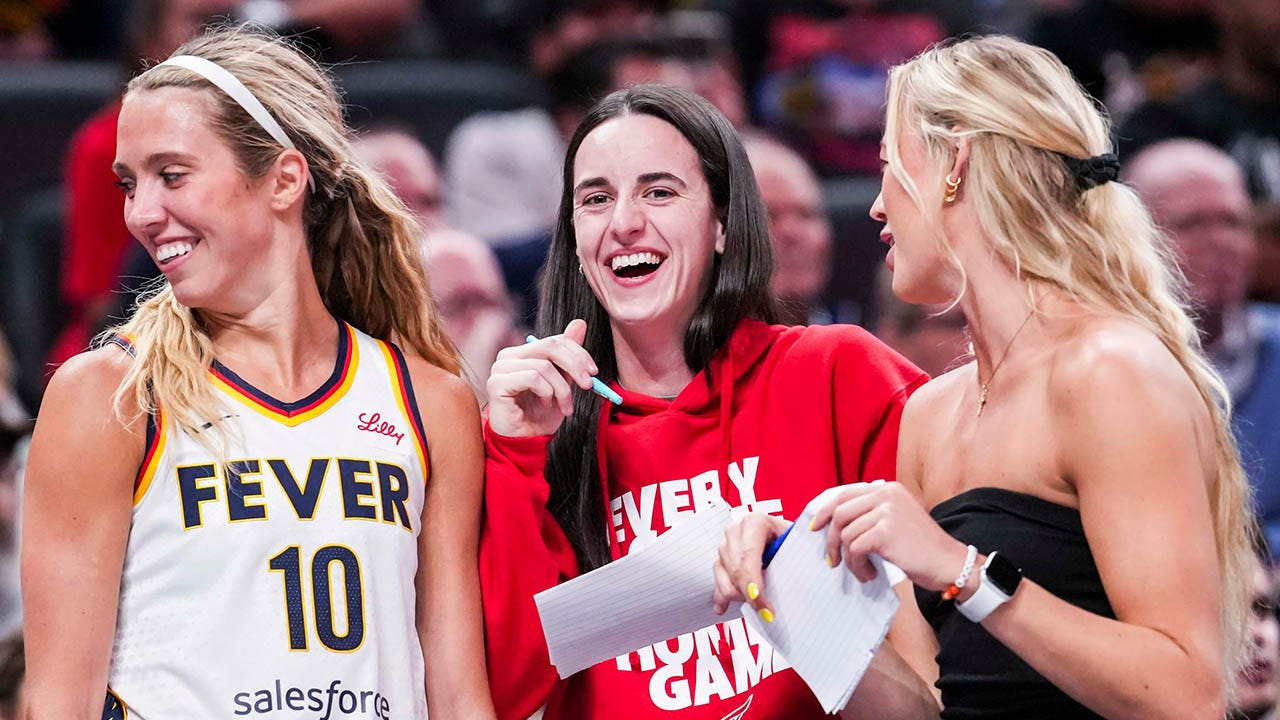
Indiana Fever guard Lexie Hull (10), guard Caitlin Clark (22) and guard Sophie Cunningham (8) laugh near the team bench June 3, 2025, during a game against the Washington Mystics at Gainbridge Fieldhouse in Indianapolis. (IMAGN)

“Seeing girls, seeing boys show up every day and being able to give them aspirations and show them what they can do and show them the possibilities,” Hull told Fox News Digital of the rewards of playing in the WNBA.

“Growing up, I didn’t necessarily watch the WNBA as much, didn’t have dreams of playing in the league at a young age. And now girls have the ability to watch us, see us, dream about being professional athletes. And that’s what’s been the most rewarding part about it.

CLICK HERE FOR MORE SPORTS COVERAGE ON FOXNEWS.COM

“I love the game, and I love when [the fans] show up. And that’s part of the reason why I love doing what I do, is to see fans in the stands, see little girls and being able to be a role model for them on and off the court. I think that’s really what drives me and fuels me.”

Hull, who was drafted by the Fever in 2022, played her first two WNBA seasons without the massive spotlight that Clark brought in 2024.

They got the Fever to the playoffs together for the first time since 2016 that year before Hull led the team on a playoff run while Clark and teammate Sophie Cunningham were on the bench with injuries in 2026.

In a career-best year in 2025, Hull averaged career highs in points (7.2), rebounds (4.3) and assists (1.8) while shooting 36.7% from 3-point range and appearing in all 44 games.

FEVER’S LEXIE HULL SPEAKS OUT AGAINST ATTACKS ON PLAYERS AS TEAM’S POPULARITY GROWS DURING CAITLIN CLARK ERA

Lexie Hull wearing Indiana Fever uniform looking on during WNBA game at CFG Bank in Baltimore

Lexie Hull of the Indiana Fever during a game against the Washington Mystics at CFG Bank in Baltimore Sept. 7, 2025. (Mitchell Layton/Getty Images)

In the playoffs, she averaged 10.3 points, five rebounds and two assists in eight games. It all came to an end in a 107-98 overtime loss to the Las Vegas Aces in Game 5 of the WNBA semifinals.

But Hull says she believes the 2026 team, in year three of the Clark era, will be a different show and one that is gunning for the title.

“I think it’s because we made it where we made it last year without some of our key pieces, and with a lot of injuries, and a lot of, like, this adversity. … Our bench was longer than every other bench. We had more people in the training room getting treatment than any other team, and we still almost made it to the Finals,” Hull said.

“Tasting that and being so close and feeling like we have so much more to give, I think that just changes our mindset a little bit. And it’s not necessarily overconfident, but confident in the fact that we really do have a chance. And we should be playing like every game matters, and we’re preparing for that last one.

CLICK HERE TO DOWNLOAD THE FOX NEWS APP

Lexie Hull, Caitlin Clark, and Sophie Cunningham watching Golden State Valkyries celebrate at Chase Center

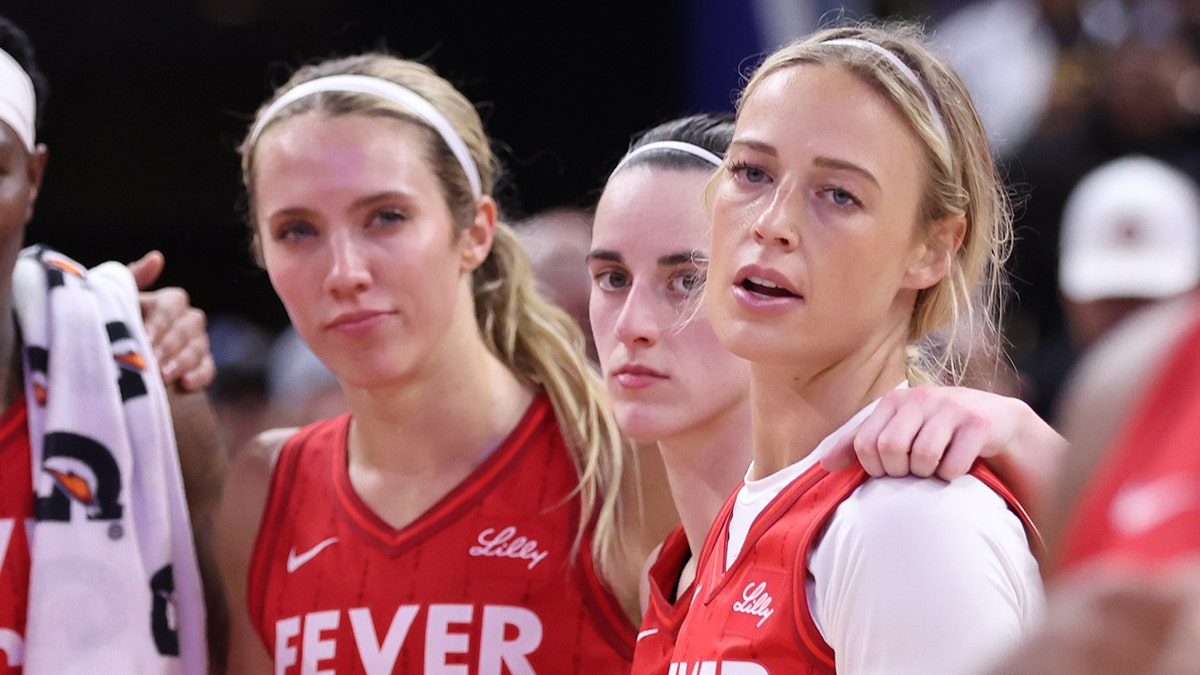
The Indiana Fevers’ Lexie Hull, Caitlin Clark and Sophie Cunningham watch as the Golden State Valkyries celebrate their 88-77 win in a WNBA game at Chase Center in San Francisco June 19, 2025. (Scott Strazzante/San Francisco Chronicle via Getty Images)

“I think it’s very achievable with what we’re going to be able to do with free agency.”

Follow Fox News Digital’s sports coverage on X and subscribe to the Fox News Sports Huddle newsletter.


Source link

The hidden digital leak: How to stop WhatsApp from draining your home data budget | – The Times of India

0
The hidden digital leak: How to stop WhatsApp from draining your home data budget | – The Times of India


DIY enthusiasts often face a silent drain on their mobile data through automatic WhatsApp media downloads. Image Credit: Google Gemini

In modern times, there is no shortage of smartphones lying alongside hammers and spades in our house, as they are just as important as these tools for us. Be it for checking tutorials on how to repair the leaking tap or uploading high-quality pictures of a newly bloomed rose to your gardening community, our digital activities are well integrated into our real-life chores.However, there is a quiet drain happening in the pockets of many DIY enthusiasts. While we focus on fixing leaks in our pipes, a digital leak in the form of WhatsApp media downloads is often silently exhausting mobile data plans.For all those working on their homes, communication is very important, but it may have some hidden costs. The WhatsApp group that we use as our central hub for all conversations about projects is designed for efficient sharing.By default, the app is programmed to download all media files that are received. While this works fine when there is a reliable Wi-Fi connection at home, it quickly turns out to be wasteful of mobile data whenever one finds oneself out in public using it.Selecting downloadsThis problem can be solved by accessing a setting that most people fail to notice. According to the WhatsApp FAQ guide, the solution can be found in a specific setting known as Storage and Data, where you can select which types of media are to be downloaded while using mobile data and which ones are not.When you disable automatic downloads, media files appear as blurred previews with a download icon. This means that a three-minute video of a neighbour’s patio renovation won’t eat up your data unless you specifically choose to watch it.Research published in the journal Nature Communications titled The environmental sustainability of digital content consumption highlights the impact of our online habits. The study found that global average consumption of social media and video streaming accounts for a significant portion of a person’s individual carbon budget.For a DIYer, ensuring that data is reserved for looking up critical assembly instructions rather than redundant videos is a step toward both financial and environmental sustainability.This manual approach fits perfectly into a mindful lifestyle. Just as we choose the best materials for a renovation to avoid waste, we should be selective about the digital packets we consume.A research paper from the University of Chicago called Brain Drain: The Mere Presence of One’s Own Smartphone Reduces Available Cognitive Capacity suggests that even inactive smartphones take a toll on cognitive resources. With manual downloading, you save yourself from having to handle notifications in real time, which will enable you to concentrate more on the tasks at hand, whether they be painting fences or planting hedges.

Whatsapp 2

By disabling this feature in Storage and Data settings, users can manually choose which files to download, saving data for essential project information. This mindful digital consumption aligns with sustainable practices and conserves cognitive resources. Image Credit: Google Gemini

Strategic connectivity for the modern homeownerManaging data is not only a responsibility that lies within one application; rather, it is a broader concept of managing home digitally. To ensure that homes function properly, more and more people are resorting to applications that allow monitoring through their smartphone software.Research by the National Center for Biotechnology Information (NCBI), titled Generation WhatsApp: inter-brain synchrony during face-to-face and texting communication, suggests that while messaging apps allow us to synchronise from afar, the volume of information exchanged can be overwhelming. By pairing in-app restrictions with device-level data savers, you create a layered defence against high monthly bills.In the context of community gardening, the stakes are surprisingly high. Gardening groups are notoriously high-traffic, filled with high-resolution photos of pests and plant diseases. While these images are helpful, having dozens of them download automatically while you are at the nursery can be a disaster for your data limit.By utilising the manual download setting, you can wait until you are back on your home network to review the community’s progress. This practice ensures that your data is used intentionally rather than being a “silent drain” on your resources.According to a Pew Research Center report onInternet usage and smartphone ownership, there is an ever-increasing number of adults who are connected almost all day long. This constant connection will surely tire you out digitally. In addition to the small savings in cost, going the manual route means that you are less exposed to the overwhelming visual stimuli. The information you have in your phone is limited to what is relevant for your garden projects or building plans.DIY ultimately entails improving home living by making smart decisions. The same logic applies when it comes to the usage of digital gadgets. A simple examination of your WhatsApp settings and some discipline in media consumption will ensure that your mobile plan matches the duration of your project.In essence, DIY involves ensuring that technology does not drain your budget but rather improves your home. A couple of changes in your approach will allow you to remain in contact with your community and resources without having to worry about a sudden data bill.


Source link

Real Madrid slam Kylian Mbappé penalty denial in costly draw

0
Real Madrid slam Kylian Mbappé penalty denial in costly draw


MADRID — Álvaro Arbeloa said Real Madrid should have been awarded what might have been a decisive penalty in their 1-1 draw with Girona — a result which saw the team whistled by fans at the Bernabéu, and was another blow in the team’s hopes of challenging for the LaLiga title.

Midfielder Federico Valverde put Madrid ahead from distance in the 51st minute, before Thomas Lemar responded with a stunning strike for Girona 11 minutes later.

However the biggest post-match talking point came in the 87th minute, when Kylian Mbappé appeared to be caught in the face by defender Vitor Reis inside the box, in a challenge which referee Javier Alberola did not deem to be a foul, and the VAR did not intervene.

Madrid are now six points behind leaders Barcelona at the top, with Barça having played a game fewer, ahead of their derby with Espanyol on Saturday.

“For me it’s a penalty from here to the moon,” Arbeloa said in his post-match news conference. “I don’t understand it, and I don’t think anybody does … You know my opinion [about referees], and the facts maintain it.

play

2:02

Are Real Madrid officially out of the LaLiga title race?

The ‘FC TV’ crew react to Real Madrid’s 1-1 draw with Girona in LaLiga.

“It’s an action which is very clear for me. There’ve been a lot of these for us, with referees like this one, and also last week in Mallorca. It’s the same as always.”

Madrid have now gone three games without a win this month, after they lost 2-1 to Mallorca on April 4, and were then beaten 2-1 by Bayern Munich in their Champions League quarterfinal first leg on Tuesday.

“To win we have to give 200%. We can’t win at 90%, or at least not always,” Arbeloa said. “If you want to have more security against teams you’re superior to, you have to give 200%, otherwise accidents like this can happen.

“Until [the title] is lost, we’ll keep fighting.”

Arbeloa denied he was concerned about the goalscoring form of Mbappé or Vinícius Júnior, and praised Jude Bellingham, who made his first start against Girona since recovering from injury.

“I can’t worry about players with the figures [Mbappé and Vini] have,” Arbeloa said. “They’re two of the four or five best players in the world … We have to improve a lot of things collectively, especially with teams that sit back.

“Bellingham looked good, agile and confident. It’s normal that he’s tired after so long out. It’s the first game he’s started. But it’s been good for him to find his rhythm.”

Madrid travel to Munich next week to play Bayern in the quarterfinal second leg on Wednesday.


Source link

Anthropic’s Mythos AI can spot flaws in almost every computer on earth. Uh-oh.

0
Anthropic’s Mythos AI can spot flaws in almost every computer on earth. Uh-oh.


Anthropic’s latest AI technology, called Mythos, is so powerful at revealing software vulnerabilities that the company is afraid to release the model publicly lest it fall into the hands of bad actors.

The company, the developer behind the Claude AI chatbot, said in a post on its website this week that the new tool has already uncovered thousands of weak points in “every major operating system and web browser.” That is stirring concern that hackers could exploit Mythos to attack banks, hospitals, government systems and other critical infrastructure.

Preparing for the “storm”

Rather than releasing Mythos to the public, Anthropic is sharing the tech with a select group of major companies, including Amazon, Apple, Cisco, JPMorgan Chase and Nvidia, so they can test the model and strengthen their own systems against cyberattacks. Called Project Glasswing, the effort is aimed at helping key companies harden their defenses before hackers get access to Mythos or similar AI models, according to Anthropic. 

“What we need to do is look at this as a wake-up call to say, the storm isn’t coming — the storm is here,” Alissa Valentina Knight, CEO of cybersecurity AI company Assail, told CBS News. “We need to prepare ourselves, because we couldn’t keep up with the bad guys when it was humans hacking into our networks. We certainly can’t keep up now if they’re using AI because it’s so much devastatingly faster and more capable.”

Mythos’ capabilities are also sparking concern among federal officials. Treasury Secretary Scott Bessent and Federal Reserve Chair Jerome Powell met with top bank CEOs in a closed-door meeting on Tuesday to discuss Mythos and other emerging cybersecurity risks stemming from AI. Anthropic also briefed senior U.S. government officials and key industry stakeholders on Mythos’s capabilities, CBS News has learned.

Separately, IMF Managing Director Kristalina Georgieva said in an interview set to air Sunday on “Face the Nation with Margaret Brennan” that the world does not have the ability “to protect the international monetary system against massive cyber risks.” 

“The risks have been growing exponentially,” Georgieva said. “Yes, we are concerned. We are very keen to see more attention to the guardrails that are necessary to protect financial stability in the world of AI.” 

Anthropic didn’t return a request for comment. In its post, however, the company underscored the risks of misusing tools like Mythos. “The fallout — for economies, public safety, and national security — could be severe,” the company said. 

The weakest link 

Such stark warnings mask another troubling reality: Hackers already have access to advanced AI models and are using them for a range of malign purposes, including to create autonomous “agents” capable of carrying out attacks without human intervention.

Such attacks range from spreading malware and executing identity theft scams to producing deepfake videos and launching ransomware attacks, according to cybersecurity experts.

“AI-enabled tooling has empowered even low-skilled threat actors to execute high-speed, high-volume operations, whilst advanced adversaries are using AI to sharpen precision, scale automation and compress attack timelines,” PwC said in a recent report.

“The time between the public release of a new capability by an AI company and its weaponization by threat actors shrank dramatically [in 2025], a trend we assess will likely accelerate in 2026,” the management consulting firm added, 

Other AI tools, while not yet as effective as Mythos in exposing the soft underbelly in software, are already amplifying the risks to consumers, businesses and governments. For instance, hackers are already tapping AI to sharpen so-called phishing attacks aimed at prying loose confidential information, said Zach Lewis, the chief information officer at the University of Health Sciences and Pharmacy in St. Louis. 

“It’s been used to really script those dialogues, those conversations, those phishing emails, to specific people — and really customize them to make them a lot more difficult to detect and identify if these are fake or not,” he told CBS News.

“Once [Mythos] drops, we’re going to see a lot more vulnerabilities, probably a lot more attacks,” Lewis said. “Cyberattacks are definitely going to increase until we get to a point where we’re patching up all those vulnerabilities almost in real time.”

AI is more effective than humans at finding software bugs because it can quickly scan thousands of lines of code and detect problems, something people are not necessarily good at, Knight explained.

“Humans are the weakest link in security,” Knight noted. “Humans have the ability to make mistakes when we’re writing code. It’s possible for vulnerabilities in source code to have never been found by humans.” 

On brand for Anthropic?

Some security experts questioned the motives behind Anthropic’s incremental approach to rolling out Mythos, speculating that the limited release could be aimed at stirring intrest from other prospective customers. 

Meanwhile, both Anthropic and rival OpenAI are expected to launch initial public offerings by the end of the year, according to the Wall Street Journal — a possible incentive to drum up headlines, said Peter Garraghan, Founder and Chief Science Officer at Mindgard, an AI security platform.

“I suspect Anthropic may be using this as a marketing ploy, perhaps towards IPO,” he said.

Anthropic has sought to distinguish its brand from OpenAI and other rivals by publicly emphasizing AI safety, highlighting its guardrails for keeping the technology in line. Anthropic’s decision to hold off on releasing Mythos and launching Project Glasswing aligns with that image, noted Columbia Business School marketing lecturer Malek Ben Sliman.

“When facing the tough decisions, Anthropic has actually been true to its values,” he said. Curating the release of Mythos “does allow them to look to be the protectors of this responsible AI, but it also is a great marketing and advertising tool.”


Source link