
Home Blog Page 842

What is astigmatism? The common eye condition that affects 40% of people

0
What is astigmatism? The common eye condition that affects 40% of people


Have you ever gone to the optometrist for an eye test and been told your eye was shaped like a football?

Or perhaps you’ve noticed your vision is becoming increasingly blurry or hard to focus?

You might be among the 40% of people in the world who live with astigmatism.

What causes astigmatism?

The eye acts like a camera, capturing light through the front surface (the cornea) and focusing it onto the “film” at the back of the eye (retina).

To get a clear picture, the eyeball and all of its surfaces (cornea, lens and retina) have to meet certain specifications of size and shape.

Otherwise, vision can appear blurred and out-of-focus, known as “refractive error”.

Astigmatism (uh-STIG-muh-tiz-um) is a type of refractive error where one or more of the eye’s surfaces are not smooth and/or round. It is broadly classified into two types: regular and irregular.

Regular astigmatism is the most common (Alamy/PA)

Regular astigmatism is the most common. It typically comes from changes in the shape of the cornea. Instead of being round, it is more oval, like a football or an egg. We don’t fully understand why some people develop regular astigmatism, but it’s partly due to genetics.

Irregular astigmatism is rarer. It occurs when a part of the cornea is no longer smooth (from scarring or growths on the cornea), or its shape has changed in an uneven or asymmetrical way.

Eye conditions such as keratoconus – where the cornea weakens over time and becomes cone-like in shape – cause irregular astigmatism.

If the cornea is no longer round or smooth, light entering the eye is scattered across the retina. This can cause blurry or distorted vision, reduced sensitivity to contrast, shadows or double vision and increased sensitivity to bright lights.

Is astigmatism a new condition?

In 1727, Sir Isaac Newton was the first to describe the physics of how an irregular surface might affect the focus of light passing through it.

This was followed in 1800 by Thomas Young, a scientist who had astigmatism and described how it affected his vision in a lecture.

About the author

Flora Hui is a Research Fellow, Centre for Eye Research Australia and Honorary Fellow, Department of Surgery (Ophthalmology) at The University of Melbourne. Angelina Duan is a Research Scientist in Optometry at the CSIRO.

This article is republished from The Conversation under a Creative Commons license. Read the original article.

In 1825, Sir George Airy, an astronomer who also had astigmatism, discovered he could see more clearly when he tilted his glasses at an angle. He became the first person to suggest using cylindrical lenses to correct for astigmatism. These are still used today.

The name “astigmatism” came last, coined by William Whewell in 1846. The name was derived from Greek: “a-” (“without”), and “stigma” (“a mark/spot”), literally translating as “without a point”, referring to the lack of a single, clear focal point of vision.

How is astigmatism measured?

Optometrists usually detect and measure regular astigmatism during refraction, when they place different lenses in front of the eye to determine a spectacle prescription.

As irregular astigmatism can involve very small rough patches or bumps, it is best seen with specialised imaging such as corneal topography. This creates a 3-dimensional map to show local bumps and irregularities on the cornea.

I’ve got astigmatism, what do I need to know?

Astigmatism can present at any age, but becomes more common as we get older.

You can develop astigmatism over time, and the level of astigmatism can change as well.

Symptoms of astigmatism

NHS

The main symptoms of astigmatism are:

  • blurred vision
  • headaches
  • eye strain – you may notice this after concentrating for a long time, such as when using a computer

Astigmatism normally happens alongside short-sightedness or long-sightedness.

With mild astigmatism, you may not notice any problems with your vision. With increasing levels of astigmatism, your vision becomes less crisp. This can lead to reduced vision, eye strain, or fatigue.

You may need astigmatism correction to see clearly and effortlessly. Correcting astigmatism aims to compensate for the differing curvatures of the cornea, to ensure that light entering the eye focuses correctly on the retina.

To correct regular astigmatism, cylindrical lenses compensate for each curvature in the “football”. Cylindrical lenses are prescribed as either glasses or contact lenses.

Astigmatism can also be corrected with laser eye surgery.

Orthokeratology (ortho-k) involves wearing specialised hard contact lenses overnight
Orthokeratology (ortho-k) involves wearing specialised hard contact lenses overnight (Getty Images)

Orthokeratology (ortho-k) can also be used. This involves wearing specialised hard contact lenses overnight. These hard contact lenses temporarily reshape the cornea, allowing the wearer to be glasses-free during the day.

To manage irregular astigmatism, it is important to treat the underlying condition causing astigmatism as well. But often, hard contact lenses are needed for clear vision during the day, as they can sit on the surface of the eye to compensate for local uneven patches in a way that glasses or soft contact lenses cannot.

Surgery, such as corneal transplants, is also sometimes needed as a last resort to replace a damaged, misshapen cornea and manage the irregular astigmatism.

Do I need to worry about astigmatism in my children?

In children, if there is enough astigmatism present to cause blurred or distorted vision, it can impact their learning and development both in the classroom and during sporting activities.

Untreated astigmatism is not dangerous, but high levels of astigmatism in young children can cause other vision problems such as “eye turns” or “lazy eye” (amblyopia).

But don’t worry, regular eye checks with the optometrist for children (and adults as well) allows for early detection and management, when needed.


Source link

Libyan military leader may have combat drones despite UN embargo

0
Libyan military leader may have combat drones despite UN embargo


Chinese and Turkish combat drones may have been acquired by eastern Libya’s military leader, Khalifa Haftar – despite a United Nations weapons embargo, says the Reuters news agency.

Reuters said commercial satellite images between April and December last year show ⁠at least three drones at Al Khadim desert airbase, about 100 ⁠kilometres (62 miles) east of the city of Benghazi.

Recommended Stories

list of 3 itemsend of list

What appeared to be ground control equipment for the aircraft was still visible this year, according to three weapons experts who reviewed the images.

Unmanned aerial vehicles (UAVs) played a significant role during the civil war in Libya between 2014-2020. Haftar’s Libyan National Army (LNA) tried to overthrow the UN-recognised government in Tripoli accusing it of harbouring armed gangs and “terrorists”. The government denied that.

UN investigators said the United Arab Emirates (UAE), Egypt, Russia and other countries provided vital backing to Haftar. Turkiye supported ⁠the Tripoli-based administration. China avoided taking sides.

Libya’s warring factions agreed a ceasefire in 2020, but the country remains divided between Haftar’s administration in the east and the Tripoli-based government in the west led by Prime Minister Abdulhamid Dbeibah.

The arrival of new combat drones at Al Khadim “would be a huge symbolic win” for Haftar, said Anas El Gomati, head of the Libyan think tank the Sadeq Institute. He told Reuters that the drones reinforced Haftar’s hold over the east and much of the south, including major oilfields, and strengthened his hand in negotiations to form a unified Libyan government.

But Gomati added that Haftar’s LNA is not known to have the technical expertise to pilot ⁠those kinds of drones.

“The question remains: who’s operating them?”

The experts who reviewed the satellite images said one was most likely a Chinese-made Feilong-1 (FL-1), an advanced surveillance and attack drone. The others appear to be less powerful, Turkish-made Bayraktar TB2 drones. All three experts agreed they could not rule out other types.

Reuters said it could not determine who supplied the drones or when, or whether China, Turkiye or any other UN member states applied for exemptions to the embargo to send drones to eastern Libya.

A satellite image shows a combat drone, which experts identified as most likely a Chinese-made Feilong-1, outside a hangar at Al Khadim airbase, east of Benghazi, Libya, May 28, 2025 [Vantor/Handout via Reuters]

New drones spotted

Satellite imagery reviewed by Reuters shows a type of drone not previously seen in Libya parked outside a hangar at the Al Khadim base between late April and July last year.

The same type of drone also appeared on Al Khadim’s runway in a May 3 image from US satellite imaging company Vantor.

Wim Zwijnenburg, a military technology expert at the Dutch peace organisation PAX says the photo suggests the drone was being flown. He added that the dimensions and body shape are similar to a Wing Loong II, but the wing design makes it more likely to ⁠be a Feilong-1.

Agreeing with his assessment were Jeremy Binnie, a Middle East specialist at defence intelligence company Janes and Joseph Dempsey, a military analyst with the International Institute for Strategic Studies think tank in London.

Few photographs have been released of the drone type. Reuters could not find any previous satellite imagery, making it difficult to identify with certainty.

A new shelter was completed in November over the spot where the drone had been parked. Binnie said that might explain why it wasn’t visible in subsequent imagery. A truck carrying satellite equipment, which he said was likely used to ⁠pilot the aircraft, was standing near the apron as recently as January 12.

Smaller drones

Two smaller drones appeared on the same apron at Al Khadim in a Vantor image on December 17. Their length, wingspan and twin-boom tail design are consistent with Turkish TB2 drones, said Dempsey, who alerted Reuters to the image.

Those drones gained ‌renown when Ukraine deployed them against invading Russian forces and have been exported widely, including to the UAE.

Manufacturers in countries including China, the UAE and Belarus have also produced similar-looking models. All three experts said two ground control units with distinctive double-antenna, spotted by satellite imagery between July and March, strongly suggest that TB2s were operating in the area.

Satellite images from California-based Planet Labs show Al Khadim has undergone extensive renovations since early last year. They include at least three new hangars where the drones were spotted.

Russian forces, which use Libya ‌as ‌a springboard for their own operations in West and Central Africa, have been based at Al Khadim. But the experts speaking to Reuters did not think Russians were operating the drones in the imagery. Russia’s defence and foreign ministries did not respond to Reuters’ requests for comment.

Neither did the LNA, the Tripoli-based government, the governments of China and Turkiye nor the drones’ manufacturers, Xi’an-based defence company Zhongtian Feilong and Baykar based in Istanbul.

The UN Security Council committee handling requests did not answer questions about the drones. The UN Department of Political and Peacebuilding Affairs (DPPA) referred Reuters to a Security Council resolution last year expressing “grave concern” over continued violations of the arms embargo. It requires UN approval for weapons shipments to Libya.

The UN embargo has been imposed since 2011 when a NATO-backed uprising toppled Libya’s longtime ruler Muammar Gaddafi. But a UN panel of experts monitoring the embargo said high-tech weaponry flowed ‌into the country during the war that followed, turning Libya into Africa’s first major theatre for drone combat.


Source link

Does marijuana cause lung cancer? Doctors reveal what the research says

0
Does marijuana cause lung cancer? Doctors reveal what the research says


NEWYou can now listen to Fox News articles!

The connection between smoking cigarettes and lung cancer risk has been clear for decades — but what about marijuana?

As more U.S. states legalize recreational cannabis, new and developing research has pointed toward an increased risk of cancer.

A recent study by Keck Medicine of USC in Southern California found that patients who have heavily smoked marijuana may face an increased risk of small cell lung cancer and non-small cell lung cancer.

CANNABIS MAY BACKFIRE FOR MENTAL HEALTH DISORDERS, MAJOR STUDY FINDS

An earlier Keck study also associated smoking marijuana with up to a five-times higher risk of head and neck cancer compared to those who don’t smoke.

Brooks Udelsman, M.D., a thoracic surgeon with USC Surgery, part of Keck Medicine, commented in a recent university publication that it remains unclear exactly how much marijuana use contributes to cancer risk.

Keck Medicine research has linked smoking marijuana with a higher risk of lung cancer. (iStock)

“If someone smokes marijuana occasionally – once a week, once a month or a few times a year – do they still have that same risk?” he questioned. “My suspicion is that there is probably minimal risk.”

CIGARETTE SMOKING IN AMERICA PLUMMETS TO HISTORIC SINGLE-DIGIT LOW, NEW STUDY FINDS

“All we know right now is that people who smoke a lot of marijuana — to the point that they develop a dependency on it or require hospital care or evaluation for it — do appear to have a higher cancer risk.”

Dr. Luis Hererra, a lung cancer and thoracic surgery specialist at Orlando Health, reiterated that there is a “clear correlation” between tobacco cigarette use and lung cancer risk, while there is “less evidence” of a clear link for marijuana use.

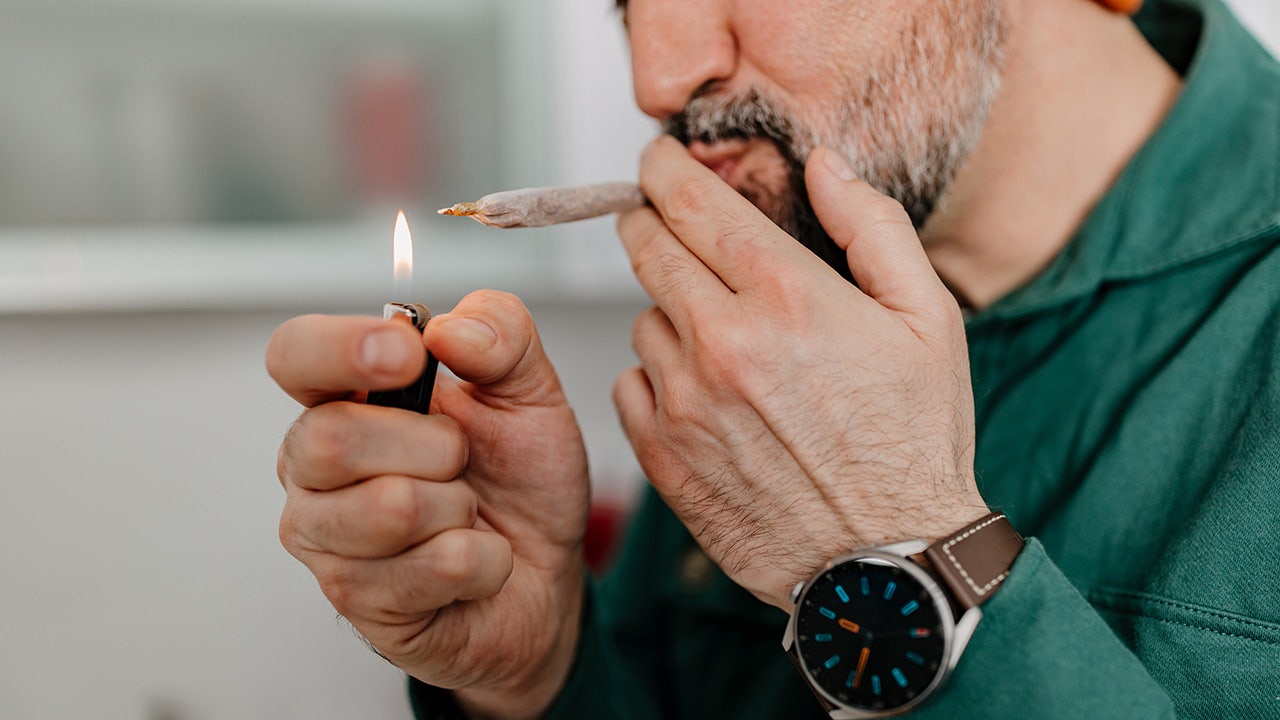
Man smoking marijuana

Although evidence is limited, emerging research is linking marijuana use with cancer, according to experts. (iStock)

“However, recent studies suggest that heavier or daily smokers of cannabis have an increased risk of lung cancer,” he told Fox News Digital. “It is also known that marijuana smoking has some of the same chemical compounds and byproducts present in cigarettes.”

Smoking both tobacco and marijuana creates a “direct injury” to lung tissue and can cause inflammation, according to Hererra. Over time, this can lead to cellular DNA damage or mutations that can cause cancer.

CLICK HERE FOR MORE HEALTH STORIES

“It appears that the risk of lung cancer with other forms of cannabis use is likely not as significant, mainly due to not exposing the lungs to burning products or smoke,” he added.

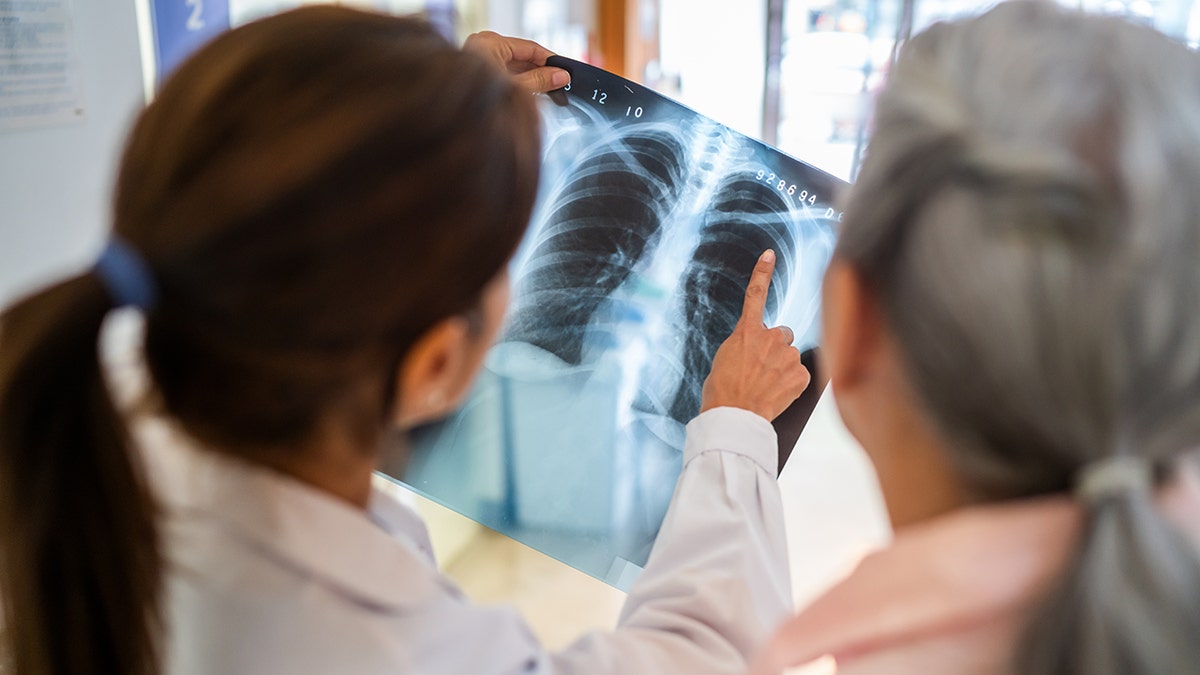
doctor and patient look at chest x-ray

Smoking both tobacco and marijuana creates a “direct injury” to lung tissue and can cause inflammation, according to a doctor. (iStock)

Further studies are needed to confirm the risk related to light and recreational cannabis smoking, as well as vaping, the doctor noted.

It will be important to determine whether marijuana smoking should be considered in the criteria for lung cancer screening eligibility in the future, Hererra added.

CLICK HERE TO SIGN UP FOR OUR HEALTH NEWSLETTER

New research published in the Oxford Academic journal Carcinogenesis found that nicotine-based vapes are likely to cause oral and lung cancer.

“I’d worry about anything you’re breathing into your lungs.”

Researchers at the University of New South Wales analyzed a wide body of global research, finding that “those who vape are at increased risk of cancer compared to those who don’t.”

CLICK HERE TO DOWNLOAD THE FOX NEWS APP

“Considering all the findings — from clinical monitoring, animal studies and mechanistic data — e-cigarettes are likely to cause lung cancer and oral cancer,” lead author and UNSW cancer researcher Bernard Stewart commented in a press release.

Person vaping, face not on camera.

Researchers at the University of New South Wales analyzed a wide body of global research, finding that “those who vape are at increased risk of cancer compared to those who don’t.” (iStock)

Udelsman challenged the belief that vaping may be safer than smoking, noting that some “very severe inflammatory diseases” are beginning to become apparent.

More time is needed to analyze the impact of vaping both marijuana and tobacco, he added.

TEST YOURSELF WITH OUR LATEST LIFESTYLE QUIZ

“The data on vaping is very new, so we don’t know yet, but I’d worry about anything you’re breathing into your lungs, because it infiltrates the cells and air sacs in your lungs, which can cause damage and put you at a higher risk for cancer,” Udelsman warned.


Source link

How a seabird native to Hawaii has adapted to life in Honolulu’s concrete jungle

0
How a seabird native to Hawaii has adapted to life in Honolulu’s concrete jungle


HONOLULU — Kaʻiulani Murphy is quick to spot white terns flapping their wings when she’s guiding Polynesian voyaging canoes across the Pacific.

The birds hunt for food at sea and lay eggs on land. So traditional navigators like her, who look to the stars, waves and other elements in nature to pilot across the ocean, see the bird’s presence as a sign that land is near.

These days voyagers returning to Honolulu have more white terns to track than at any other time in modern history. New data shows their numbers have jumped more than 50% in the past decade — evidence the seabirds are thriving amid the concrete towers, traffic-clogged roads and Waikiki hotels in the state’s largest metropolis.

They’re defying the fate of many other native birds in Hawaii, where disease and predators that aren’t native to the islands have caused indigenous bird numbers to collapse.

“This is our big city,” said Murphy, who has navigated canoes to Tahiti, Japan and Rapa Nui. “It’s crazy to me that they’re getting to such a big population within Honolulu.”

There were 691 eggs and chicks in Honolulu trees as of this week, said Rich Downs, coordinator of the volunteer organization Hui Manu-o-Kū.

The group takes its moniker from the Hawaiian name for the white tern, which means “bird of Kū,” the god of war.

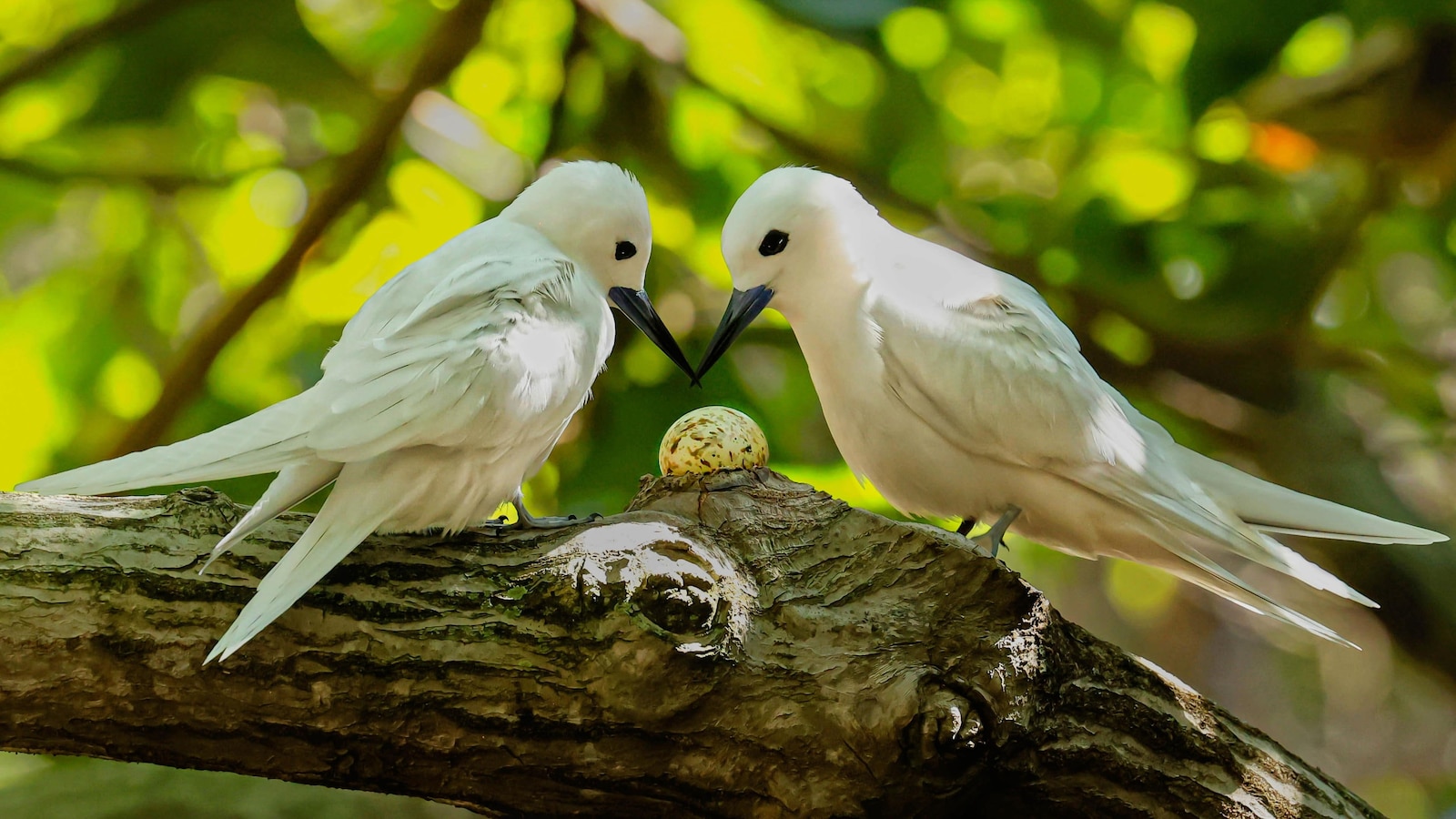
Manu-o-Kū can breed year round, but activity peaks from winter into early spring. They’re the only seabirds that don’t build nests, but instead lay their eggs on bare tree branches, cliff ledges or window sills. After hatching, the young sit on a branch until they can fly, their strong claws helping them hold on even in strong storms.

They’re found near islands in warm waters around the world, but in Hawaii they live mostly among remote, primarily uninhabited atolls in the northwest. The only place they’ve settled among the archipelago’s larger islands is Oahu, which is home to 1 million people.

Scientists aren’t sure why the birds are thriving in Honolulu. The city might be hospitable because humans have reduced the numbers of predators like rats and cats around restaurants and buildings. Busy roads can also deter predators. Barn owls and mongoose, other species that like to feed on terns, are rare in the urban core.

“All the lights and the noise, the commotion of people and traffic, and things like that, doesn’t seem to bother them,” said Eric VanderWerf, the executive director of Pacific Rim Conservation, a nonprofit that supports native birds in Hawaii and the Pacific.

Downtown trees offer favorable habitat. A cup created by the scar tissue of a trimmed tree branch is an ideal place for an egg, so well-maintained trees create plentiful homes.

The most recent population survey, conducted by Hui Manu-o-Kū in 2023 but unpublished until now, showed Oahu’s population of breeding adults jumped 1.5 times to 3,600 compared to 2016.

It offers a stark contrast with Hawaii’s other native birds. Since humans arrived in Hawaii, 71 of 113 bird species found only on the islands have gone extinct. Those remaining are often listed as threatened or endangered. Many are found in small numbers in higher elevation forests.

While native to the islands, manu-o-Kū were not observed breeding on Oahu until 1961, when scientists saw a pair of adults with a single egg.

Decades later, as the bird’s population soared, Honolulu named manu-o-Kū its official bird in 2007. School children sing songs about the species. An annual festival celebrates them every May.

Hui Manu-o-Kū staff tie blue plastic ribbons around the trunks of trees hosting eggs and chicks to alert tree trimmers to stay clear. The ribbons also help bird-watchers keep track of the white terns, as does an online map.

For eight years, Joyce Hsieh’s been taking photos of the birds as they incubate their eggs, feed young birds and raise hatchlings. One of her preferred spots is a Target parking garage, because she can drive up to the third floor to reach the same level as the birds in nearby trees.

White terns have about the same body length as pigeons but a larger wingspan. They fly up to about 120 miles (193 kilometers) from land and feast on small fish and squid chased to the ocean surface by larger species like tuna.

Murphy, the traditional voyager, is Native Hawaiian. She sees parallels between Hawaii’s birds and her people.

Diseases introduced by the first Europeans killed Native Hawaiians in vast numbers in the 1800s. But Hawaiians — resilient and adaptive like manu-o-Kū — are still here, and their population is growing.

When she encounters the birds offshore en route to Oahu, she said it’s like seeing old friends.

“It’s just a special feeling,” she said.


Source link

Tiger Woods declines Ryder Cup captaincy after DUI, car crash

0
Tiger Woods declines Ryder Cup captaincy after DUI, car crash


NEWYou can now listen to Fox News articles!

Team USA will not have Tiger Woods as a captain at the next Ryder Cup, after Woods’ latest controversy. 

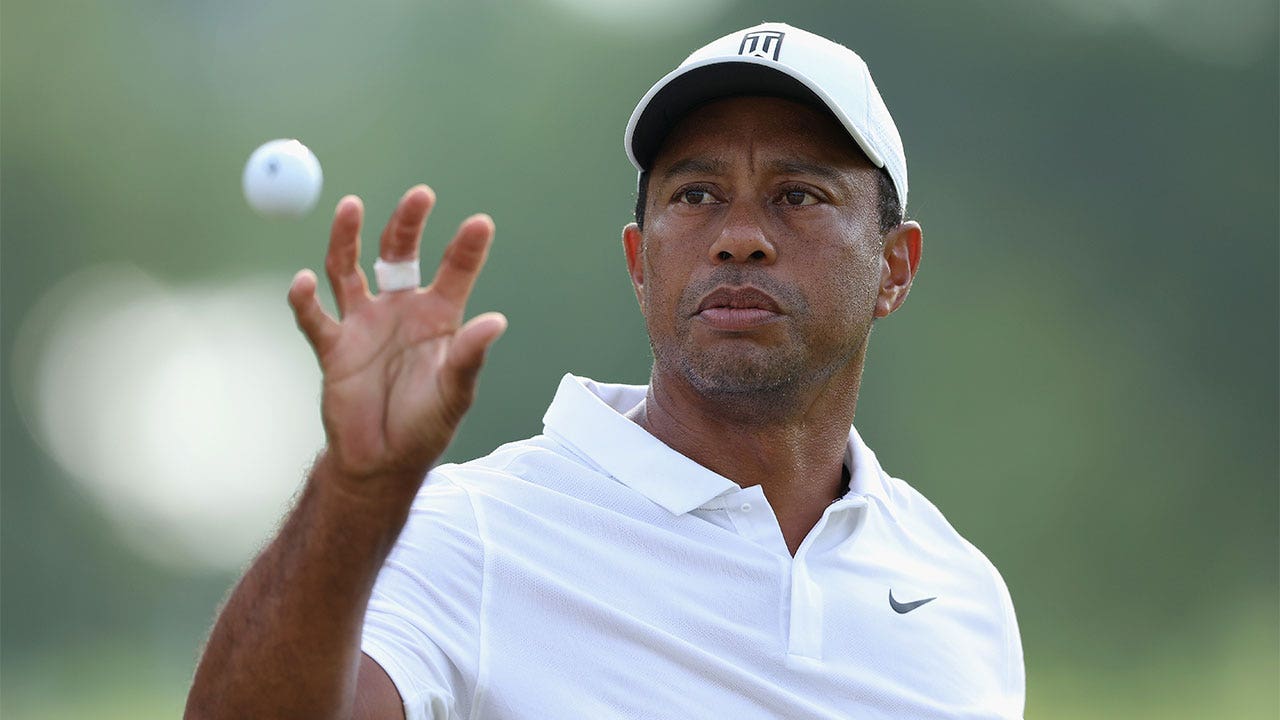
Woods formally turned down the Ryder Cup captaincy Wednesday as he steps away from golf activities after he entered a not guilty plea to suspicion of driving under the influence. Woods’ SUV clipped the back of a trailer and flipped on its side last week on a residential road near his home on Jupiter Island, Florida.

The Ryder Cup decision by the PGA of America was not a surprise given the last five chaotic days involving Woods dating to his Friday arrest.

CLICK HERE FOR MORE SPORTS COVERAGE ON FOXNEWS.COM

“The PGA of America stands in full support of Tiger Woods as he steps away to focus on his health and well-being,” the statement said. “We commend Tiger for prioritizing his long-term health and deeply respect the courage it takes to make such a personal decision.”

The PGA of America added that Woods “has shared with us” that he will not be captain.

Woods posted a statement Tuesday night saying that he was stepping away indefinitely “to seek treatment and focus on my health.”

A motion filed Wednesday by his attorney, Douglas Duncan, asked a judge that Woods be allowed to travel outside the country to begin “comprehensive inpatient treatment.”

Duncan said the recommendation from Woods’ doctor was based on the golfer’s “complex clinical presentation and the urgent need for a level of care that cannot safely or effectively be done within the United States as his privacy has been repeatedly compromised.

JOHNNY MANZIEL REACTS TO TIGER WOODS CRASH IN FLORIDA

“Ongoing medical scrutiny and public exposure create significant barriers to his care and would result in setbacks and an inability to fully engage in treatment.”

Martin County Court Judge Darren Steele approved the motion, which did not say where the inpatient treatment facility was located.

Woods sought treatment at an inpatient facility in a Mississippi clinic in January 2010 after he was caught in a series of extramarital affairs, and his agent said he sought treatment at another inpatient clinic after his 2017 DUI arrest.

“I’m committed to taking the time needed to return in a healthier, stronger, and more focused place, both personally and professionally,” Woods said in his statement.

Woods also turned down an offer to be Ryder Cup captain last time, waiting until the early summer of 2024 to tell the PGA of America that he did not have the time. That led to Keegan Bradley being selected just over a year before the 2025 matches on New York’s Long Island, which Europe won.

Three players on the Ryder Cup committee — Justin Thomas, Jordan Spieth and Bradley — are playing in the Masters, the first major of the year.

CLICK HERE TO DOWNLOAD THE FOX NEWS APP

Tiger Woods of Jupiter Links Golf Club waves to fans as he is introduced at the start of a match of the TMRW Golf League (TGL) against Boston Common Golf on Jan. 27, 2025, in Palm Beach Gardens, Florida. (AP Photo/Rebecca Blackwell)

Luke Donald has already agreed to captain a third straight time for Europe, which has won the last two Ryder Cups. No captain has ever won three straight.

The Associated Press contributed to this report. 

Follow Fox News Digital’s sports coverage on X and subscribe to the Fox News Sports Huddle newsletter.


Source link

Israeli paramedic delivers baby, rushes it to bomb shelter during Iran attack

0
Israeli paramedic delivers baby, rushes it to bomb shelter during Iran attack


NEWYou can now listen to Fox News articles!

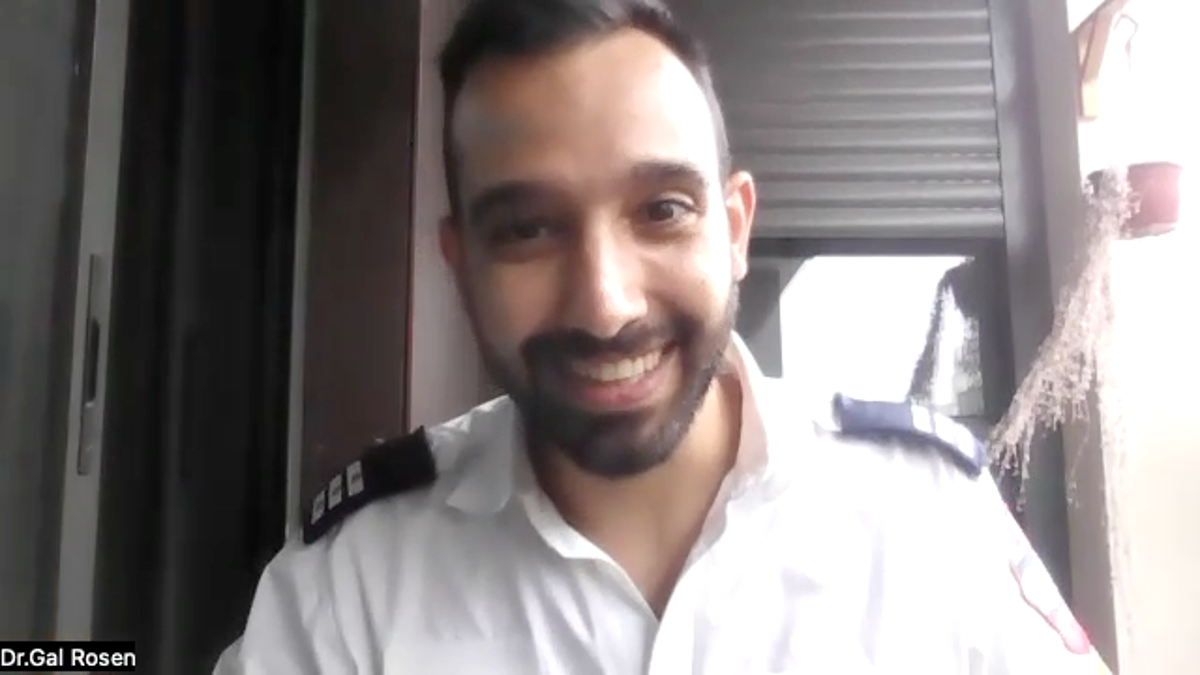
Dr. Gal Rosen is an Israeli paramedic who has saved lives under the threat of missile attacks.

Racing from emergency to emergency, heart pounding, but calm under fire — “don’t think, just act.”

He said he lost his mother when he was a child at the hands of a murderous terrorist. He saved lives as an army paramedic, but he continues to do it now as a civilian — defiantly choosing to live in Israel and work at Tel Aviv’s Magen David Adom (MDA) while under threat and emergencies from multiple-front wars.

He saves lives in the “dark” of war. He sees lives go, sometimes after making difficult split-second decisions.

ARIZONA DEPUTIES SAVE CHOKING 2-WEEK-OLD BABY IN ROADSIDE RESCUE AFTER PARENTS’ EMERGENCY CALL

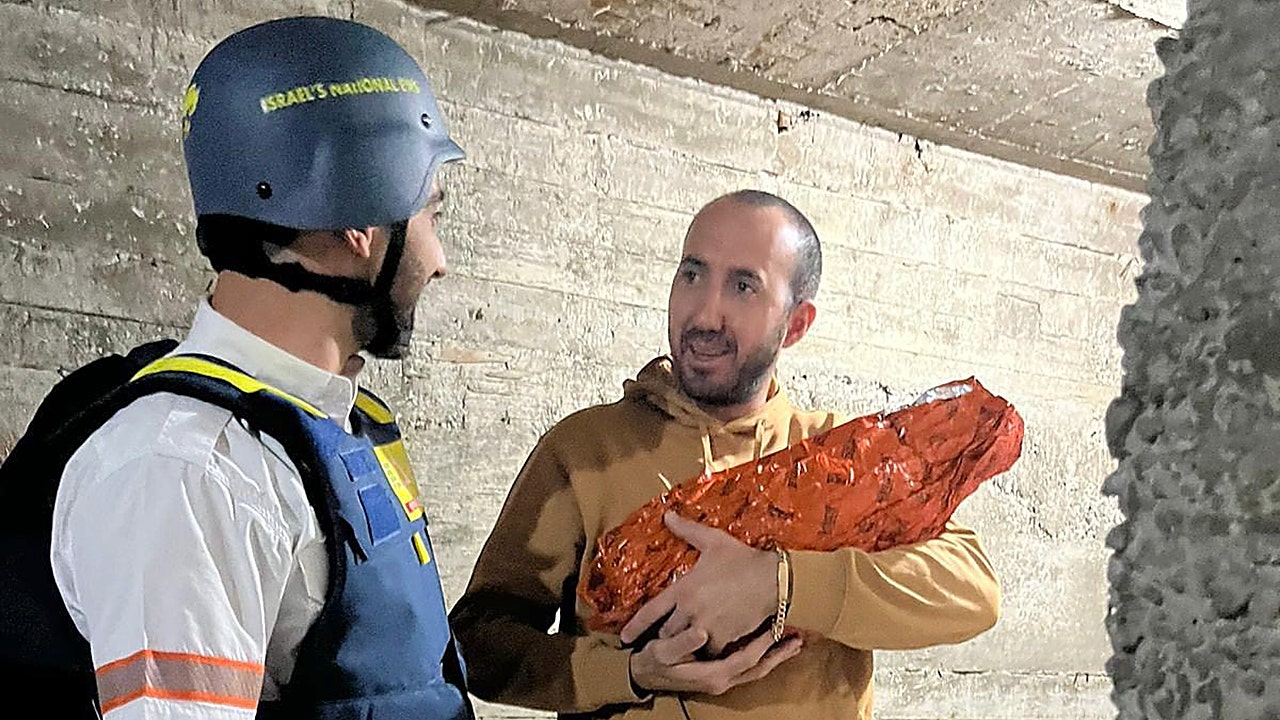
Dr. Gal Rosen, a Tel Aviv paramedic, has delivered five babies in his time, but Nikola’s baby boy was his first born under the stress of missile attack and blaring Iron Dome sirens. (Viri Acoca / Photo Provided)

“We need to choose sometimes,” he says, speaking to Fox News Digital during a rare moment off between emergencies. “And this is hard.”

But, today, he is sharing a story of “light”: a stark contrast from the stories he usually refuses to share with his family to spare them the horrifying realities of war — even if they live those themselves.

Last Thursday, Rosen delivered a healthy baby boy into the world and, in sudden threat of a missile attack and blaring sirens, carried that son away from the mother in the ambulance as he and the father raced to reach a bomb shelter.

This was his fifth emergency delivery of a newborn as a paramedic. It was his first under the threat of a missile attack and blaring sirens.

“It was so surrealistic situation, in my opinion, never happened to me, something like this,” he said, able to smile about the gravity of it all one week later, after finally finding sleep and time to reflect.

“This is an amazing thing to share at home,” Rosen said. “Most of my stories are not like this, most of our stories I share are really hard things for my family to hear. This is why, usually, I’m not sharing with my family stories from my work: ‘Sorry, I’m not doing it.’

“Car accidents or about the CPRs or about really difficult situations that I had to deal with.”

Just two days after bringing one life into the world, he saw five go.

“I had, like last Saturday, five cases of death in the shift,” he said. “I don’t want to get home and tell about it in my family, right? But this story is amazing.

UNSUNG HEROES OF 2025: FIRST RESPONDERS AND EVERYDAY AMERICANS WHO SAVED LIVES ACROSS US

Dr. Gal Rosen smiles

MDA Dr. Gal Rosen smiles, telling his remarkable story of “light” as a paramedic delivering a newborn baby under the “dark” of war and under the stress of a missile interception with sirens blaring. (Fox News Original)

“I went to my grandma,” he continued, “and said, ‘You have to hear it.’

“She was so proud of me and also my family and my father and my friends and my partner. Of course, this is a really nice story to tell to everyone.

The call came around 6:30 a.m. local Tel Aviv time on a Thursday morning: a woman was in labor, getting an assist on emergency delivery over the phone as if it was a movie.

But this was real life, a new life and war.

By the time the MDA paramedic team arrived, the baby was still inside and the husband was helping his wife through the final moments of delivery. Dr. Rosen stepped in for the last few minutes and helped safely deliver the boy.

Then came the alert.

Within moments, a warning sounded that a missile attack on Tel Aviv was expected in about 10 minutes. The paramedic suddenly had to balance the urgency of a wartime emergency with the delicate, critical first steps of childbirth.

He quickly placed the newborn on the mother’s chest for skin-to-skin contact, a key step for bonding and early development. He had the father cut the umbilical cord and helped the mother nurse the baby for the first time.

NYPD OFFICERS SAVE CHOKING 2-YEAR-OLD BOY, BODYCAM VIDEO SHOWS

“I tried to do something as close as possible to reality for them,” he said, wanting to preserve the intimacy of a normal birth even though they were far from a hospital delivery room.

With the help of the father and her team, he then moved the family into the building’s shelter. There, in the middle of blaring alarms and the sounds of missile interceptions overhead, relatives from the apartment building — a grandmother, an aunt and others — came downstairs and saw the baby for the first time.

“It was the first time they met the baby, while there were alarms,” he said. 

“Adrenaline” and former army paramedic instinct took over.

“I put the helmet, I put the vest and everything, I took the baby, and we stopped by the side and I ran with the baby to a public shelter,” he recalled. “So, me and the father, we’re running together, I’m taking the baby with me, running to a shelter and just a random building and there was no shelter there.

“‘OK, this is not good.’ We need to go out.

“And we’re going out. There is still alarms; I know that we have like maybe 20 seconds left, going to another building, and then we’re getting into a public shelter. There is 50 people there in the shelter and they closed the door. We were still there standing in the shelter, so I gave the father the baby.

“I didn’t want the idea for the father also — you know, in the future — to think about the situation that a stranger held his baby while there is a missile attack.

In the shelter, with the postpartum mother still in the ambulance under the Iron Dome, the unmistakable sound of war came with a shock.

“We also heard the interception with the Iron Dome,” Rosen said.

The sound, he said, was impossible to ignore: “a boom,” followed by a shock wave you could feel.

The air was vibrating.

The grateful father and mother, identified by MDA as Nikola and Violet, said the experience was frightening but that the emergency team helped keep them calm.

ICE AGENT SAVES LIFE OF ‘UNRESPONSIVE’ 1-YEAR-OLD BOY IN JFK AIRPORT AS PANIC ENSUES IN TSA SECURITY LINE

“It wasn’t a simple experience,” they wrote in a joint statement, preferring to keep privacy but permitting Dr. Rosen to share the war story out of praise and thankfulness.

“The labor started at home, and just minutes after the MDA team delivered the baby, the siren caught us, and we went down to a shelter. The team functioned amazingly, calmed us, and treated us in the best possible way. This isn’t the ideal experience, but we’re happy everything ended safely, and we’re grateful to the team who helped us so much.”

In that cramped shelter of about 50 huddling Israelis, surrounded by strangers and the threat of falling missiles, the room broke into applause. People congratulated the father and shouted “Mazal tov.”

Mother was still in the ambulance with members of the MDA team, still at risk postpartum, as the Iron Dome was busting missiles overhead.

And after 10 minutes that we sat there, we went out, and we walked in the street with a baby, 30 minutes old, crossing the intersection together, going to the ambulance,” Rosen said. “They put a helmet on her and a vest on the mother, and one of my teammates stayed with her, because she couldn’t come to the shelter. It was too much time, too risky for her.

“And, you know, in these moments, I didn’t think so much. So I just act.

“I realized that it would be better to protect the son; it would better to go to find a shelter. And we didn’t think about the idea that maybe we’ll be in alarms, because we were in the situation, we were at the moment, we’re with the family, with the delivery, with everything, and you can’t imagine something like this — even though it’s Israel, and now we can actually imagine everything.

“Still, it was really, really, really exciting — excitement and happiness – and a good thing because most of our days right now are dark.”

Despite losing his mother to a murderous terrorist and living under the threat of multiple-front wars and shrieking Iron Dome sirens and missile attacks, Rosen would choose no other life.

MISSILES ABOVE, NEWBORNS BELOW: ISRAELI HOSPITALS SHIFT CRITICAL CARE UNDERGROUND

MDA response Israel

Magen David Adom (MDA) emergency teams respond to the scene of Iranian missile barrages in Tel Aviv, Israel on Friday, June 13, 2025. (Magen David Adom (MDA))

“My mother was murdered in a terror attack when I was a kid, when I was a child, and to choose to still be here with my family, to live here: This is our home and to choose, going to a different path, not hate.

“I will save lives, and I will do my best to help other families going through these situations, and I will do my best to make sure there are no other families that will need to suffer from a loss.

“So I think this is the mentality of Israelis in general. But still, see, this is one of the only places in the world that people are getting rescued by a flight to come back to Israel.

“In a war,” he deadpanned.

But, with everything happening under the stress of war, Rosen kept the calm, precision and resolve of an army paramedic, knowing the best medicine for a baby born under stress is skin-to-skin and mother’s milk.

“I learned in med school, I learned these two things are the most important: Put the baby on the skin, give them the bond, help her to nurse,” he said. “It also can help the mother a lot when she nursing the baby. It’s also helping with postpartum bleeding. And a lot of things.

“So this situation, it’s hard to do when we are in this missile attack.”

But all is well that ended well and — in the case of Nikola and Violet’s newborn — began as well as could be under the circumstances.

“I was so excited I couldn’t sleep for — like the delivery. It was something like 17 hours into my shift,” he recalled. “So I worked 16 hours. It was after 17 hours shift.

CLICK HERE TO DOWNLOAD THE FOX NEWS APP

“Now and after 17 hours shift, I went back home, I tried to sleep, I couldn’t sleep, and then I had to go to another shift. So I was awake for at least 24 hours.

One week later, the adrenaline and excitement have not worn off. And the baby boy, mother, father and MDA paramedic team live on to tell an all-timer.


Source link

A year on: Four ways Trump’s tariffs have changed the global economy

0
A year on: Four ways Trump’s tariffs have changed the global economy


US tariffs stand at the highest rate in decades. But what has the impact been?


Source link

England women appoint Tom Smith as bowling coach

0
England women appoint Tom Smith as bowling coach


England have appointed former Gloucestershire bowler Tom Smith as their spin-bowling coach for this summer.

The former left-arm spinner joins Charlotte Edwards’ coaching team for a summer that includes a home T20 World Cup and series against New Zealand, India and Ireland.

England have a number of established and promising left-arm spin bowlers, including Sophie Ecclestone, Linsey Smith, Tilly Corteen-Coleman and Charis Pavely.

The 38-year-old will also work with spin-bowling all-rounders Charlie Dean, Alice Capsey and Sarah Glenn.

“I’m delighted Tom is joining us after a professional playing career spanning nearly 20 years, most notably at Gloucestershire, before moving into coaching at the same county and working with Birmingham Phoenix women,” said Edwards.

“Tom is hugely respected in the game and was a vastly experienced white-ball bowler who will no doubt share some of his great knowledge.”

Smith added: “The opportunity is an amazing one, and I’m incredibly excited to get started. It’s shaping up to be a brilliant summer, with a home World Cup on the horizon.”

England open their summer with white-ball series against New Zealand and India before the T20 World Cup begins on 12 June.


Source link

Rishabh Pant’s luxurious Delhi home is defined by modern aesthetics, fitness-focused spaces and luxury cars worth crores!

0
Rishabh Pant’s luxurious Delhi home is defined by modern aesthetics, fitness-focused spaces and luxury cars worth crores!


A tour inside Pant’s Delhi home shows a design rooted in “less is more” or modern minimalism. The living room has neutral tones of beige, white, and grey.
Another prime feature is a dedicated display unit. It showcases all his cricketing achievements, including trophies and memorabilia.

The dining and lounge areas have wooden accents and glass elements The interiors of the house are uncluttered.
Bedrooms
The personal bedroom looks like a personal retreat. The wooden flooring, and soft LED lighting and large windows add to the relaxing ambience of the house. The natural light floods the space and the design shows a growing trend in premium Indian homes.

(PC: Instagram/rishabpant)


Source link

Sophia Wilson, Tierna Davidson rejoin USWNT roster for Japan friendlies

0
Sophia Wilson, Tierna Davidson rejoin USWNT roster for Japan friendlies


Forward Sophia Wilson and defender Tierna Davidson will return to the United States women’s national team this month for the first time in over a year.

Each player was announced on Wednesday as part of USWNT head coach Emma Hayes’ 26-player roster.

The USWNT will play Japan three times in a week from April 11-17.

“I have of course remained in contact with [Wilson] and we spoke regularly, and this absolutely feels like the right time,” Hayes told reporters in a virtual news conference.

“Not just because she’s playing again at a high level, but I think it’s really important for us to start getting these players like Soph back into a rhythm in preparation for the World Cup qualifiers.”

The 25-year-old Wilson last played for the United States in late 2024 after scoring three goals at the Olympics to help the Americans win the gold medal.

She missed the entire 2025 NWSL season on maternity leave and gave birth to her first child in September.

Wilson, who has 24 goals in 58 caps for the USWNT, has played in all four games for the Portland Thorns thus far this NWSL season, making her first start on Saturday.

Her return reunites her with forward Trinity Rodman, another member of the self-proclaimed “Triple Espresso” front line that helped the USWNT win a fifth Olympic gold medal.

Mallory Swanson, the third member of that group, remains on maternity leave after missing all of 2025.

Those three players combined for 10 of the USWNT’s 12 goals at the 2024 Olympics.

Davidson last played for the USWNT in February 2025. She tore her ACL at the beginning of the 2025 NWSL season.

Davidson returned to the field for Gotham at the start of the 2026 NWSL season, playing 74 minutes over three matches so far.

The left-footed center-back has 67 caps for the USWNT and was part of the 2019 World Cup-winning team.

Davidson also started four of the six games at the 2024 Olympics, including the semifinal and final following a brief injury scare mid-tournament.

“What a long journey she’s been on,” Hayes said about Davidson. “[She’s] shown once again not just her resilience but her determination to bring her back to a great level. … I am super excited for lots of reasons.

“She’s a great player, but she’s such a brilliant person. She’s a deep thinker and someone who challenges me. And I enjoy her company. I’m really, really looking forward to bringing her back in.”

Both players will be on minutes restrictions for the three matches against Japan, Hayes said, meaning further opportunities for Jameese Joseph and Ally Sentnor up top.

After widespread experimentation in her first full year in charge — 32 players made their international debut in Hayes’ first 32 games in charge, by far a record — Hayes has called up a roster without an uncapped player for the second straight camp.

The USWNT won the SheBelieves Cup in March, defeating Argentina, Canada and Colombia.

One addition from that previous roster is the return of goalkeeper Jane Campbell, who has been excellent for the Houston Dash to start the 2026 NWSL season.

Campbell, with 10 caps, is still the most experienced goalkeeper on the roster despite ostensibly being the No. 3 in the group.

Jaedyn Shaw will join the team in training camp despite recent limitations with Gotham FC due to a hamstring injury.

Hayes said that Shaw should be ready to start one of the games against Japan.

“When you are trying to build connections between the players, it’s a team — and we have to keep that team or at least the core of that team together for as long as possible so that they build up not just the relationships off the pitch, but on the field,” Hayes said.

“For me, that’s of a higher order. Sometimes I am going to have to take decisions like I am doing this camp, with Tierna, with Jaedyn.”

Six players who were on the SheBelieves Cup roster are absent from this USWNT roster, several due at least in part to injuries.

Japan will pose a stiff test for the USWNT, especially with the teams meeting in such quick succession.

The Nadeshiko won the 2026 AFC Women’s Asian Cup last month, defeating hosts Australia 1-0 in the final and outscoring opponents 29-1 across the tournament.

The United States and Japan will play on April 11 in San Jose, California; on April 14 in Seattle; and on April 17 outside Denver.

Hayes said she will play one squad in two of the games, and another squad in the other as she rotates players and develops the playing pool.

“Look, we can focus on results and those things, and of course I want to win football matches, but it’s not my primary motivation today,” she said.

“My primary motivation is can I get exposure for players… “This is a fantastic test. They are champions of Asia. They are easily one of the best teams in the world.

“They have a group that has developed together. They’ve got more than 17 players playing in the WSL. I think this is, without question, one of the favorites to win the World Cup.”

USWNT Roster by Position (Club; Caps/Goals) 2026 April Matches vs. Japan

GOALKEEPERS (3): Jane Campbell (Houston Dash, 10), Claudia Dickey (Seattle Reign FC; 8), Phallon Tullis-Joyce (Manchester United, ENG; 6)

DEFENDERS (9): Tierna Davidson (Gotham FC; 67/3), Emily Fox (Arsenal FC, ENG; 74/1), Naomi Girma (Chelsea FC, ENG; 52/2), Avery Patterson (Houston Dash; 10/1), Lilly Reale (Gotham FC; 7/0), Emily Sams (Angel City FC: 9/1), Emily Sonnett (Gotham FC; 115/2), Gisele Thompson (Angel City FC; 7/0), Kennedy Wesley (San Diego Wave FC; 4/0)

MIDFIELDERS (7): Sam Coffey (Manchester City, ENG; 44/5), Lindsey Heaps (OL Lyonnes, FRA; 173/39), Claire Hutton (Bay FC; 15/1), Rose Lavelle (Gotham FC; 118/27), Olivia Moultrie (Portland Thorns FC; 15/5), Jaedyn Shaw (Gotham FC; 34/10), Lily Yohannes (OL Lyonnes, FRA; 16/1)

FORWARDS (7): Michelle Cooper (Kansas City Current; 10/1), Jameese Joseph (Chicago Stars FC; 4/1), Trinity Rodman (Washington Spirit; 52/13), Emma Sears (Racing Louisville FC; 17/6), Ally Sentnor (Kansas City Current; 18/7), Alyssa Thompson (Chelsea FC, ENG; 29/4), Sophia Wilson (Portland Thorns FC; 58/24)


Source link