British motorists faced unprecedented surges in fuel costs last month, with new analysis revealing record monthly increases driven by the Iran oil crisis.
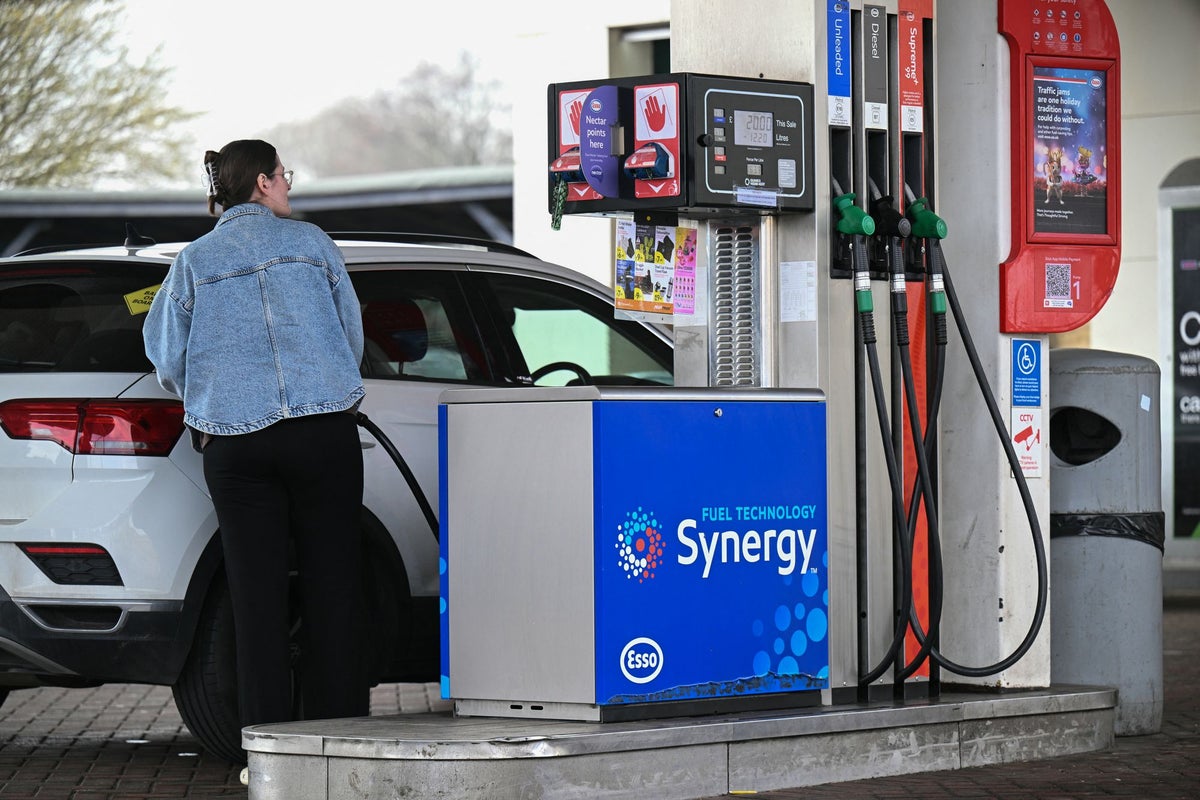
The RAC reported that the average price of a litre of petrol at UK forecourts jumped by 20p, from 132.8p on 1 March to 152.8p by the end of the month.
Diesel drivers experienced an even steeper rise, with the average cost per litre soaring by 40p, from 142.4p to 182.8p, over the same period.
These significant hikes eclipsed previous monthly records of 17p for petrol in June 2022 and 22p for diesel in March 2022, which occurred in the wake of Russia’s invasion of Ukraine.
Despite last month’s record rises, average fuel prices are still below the all-time highs of summer 2022 when petrol peaked at 191.5p per litre and diesel at 199.0p per litre.
RAC head of policy Simon Williams said: “March has been truly unprecedented – fuel prices have never risen this fast in a single month.
The increases surpassed the biggest monthly jumps of 17p for petrol in June 2022 and 22p for diesel in March 2022, which followed Russia’s invasion of Ukraine (Lucy North/PA Wire)
“The increases drivers have had to endure in March 2026 far exceed those seen in the early days of the war in Ukraine.
“While the monthly rise in a litre of petrol is bad enough, the jump in the cost of diesel is even harder to swallow at 40p a litre.
“With long-term RAC research showing eight-in-10 people are dependent on their vehicles, these costs must really be taking their toll on households as well as businesses.”
Motorists are being urged to reduce their speed by 10 per cent in a bid to “improve fuel efficiency” while still “keeping up with the flow of traffic”.
Drivers were also advised to anticipate road conditions, such as traffic lights and roundabouts, to avoid “continuous harsh braking”.
AA president Edmund King said: “It is well worth drivers adapting their driving style and speed both to save money and enhance safety.
“We estimate that diesel drivers can save £10 per tank by changing their driving style.”
Millions of motorists are embarking on Easter getaway trips across the UK this week despite the escalating cost of fuel at the pumps.
Motoring organisation the AA estimated a staggering 21.7 million journeys were planned for Thursday alone.
This figure, derived from a survey of over 13,000 members conducted between March 13-19, predates the recent escalation of conflict in the Middle East.
Separately, the RAC predicted this Easter would see the busiest roads since 2022.
Oil prices, which significantly influence wholesale fuel costs, have surged in response to Iran’s tightening grip on tankers navigating the crucial Strait of Hormuz.
The RAC said the average price of a litre of diesel at UK forecourts on Wednesday was 184.2p, up 29% since the war started on February 28.
Average petrol prices have reached 153.7p per litre, a rise of 16% over the same period.
Drivers embarking on Easter trips to continental Europe are advised to save money by refuelling before they leave the UK (Lucy North/PA Wire)
Most drivers are planning to keep their Easter journeys relatively short, according to the AA.
Just over half (53%) expect to travel under 50 miles, with 5% planning trips of between 50 and 100 miles.
About 1% expect to travel between 100 and 200 miles, with fewer than 1% planning to clock up more than 200 miles.
Visiting family and friends is the most common Easter road journey purpose, with work and shopping trips also featuring prominently.
Expected congestion hotspots include:
The M6 through Birmingham and further north towards Blackpool.
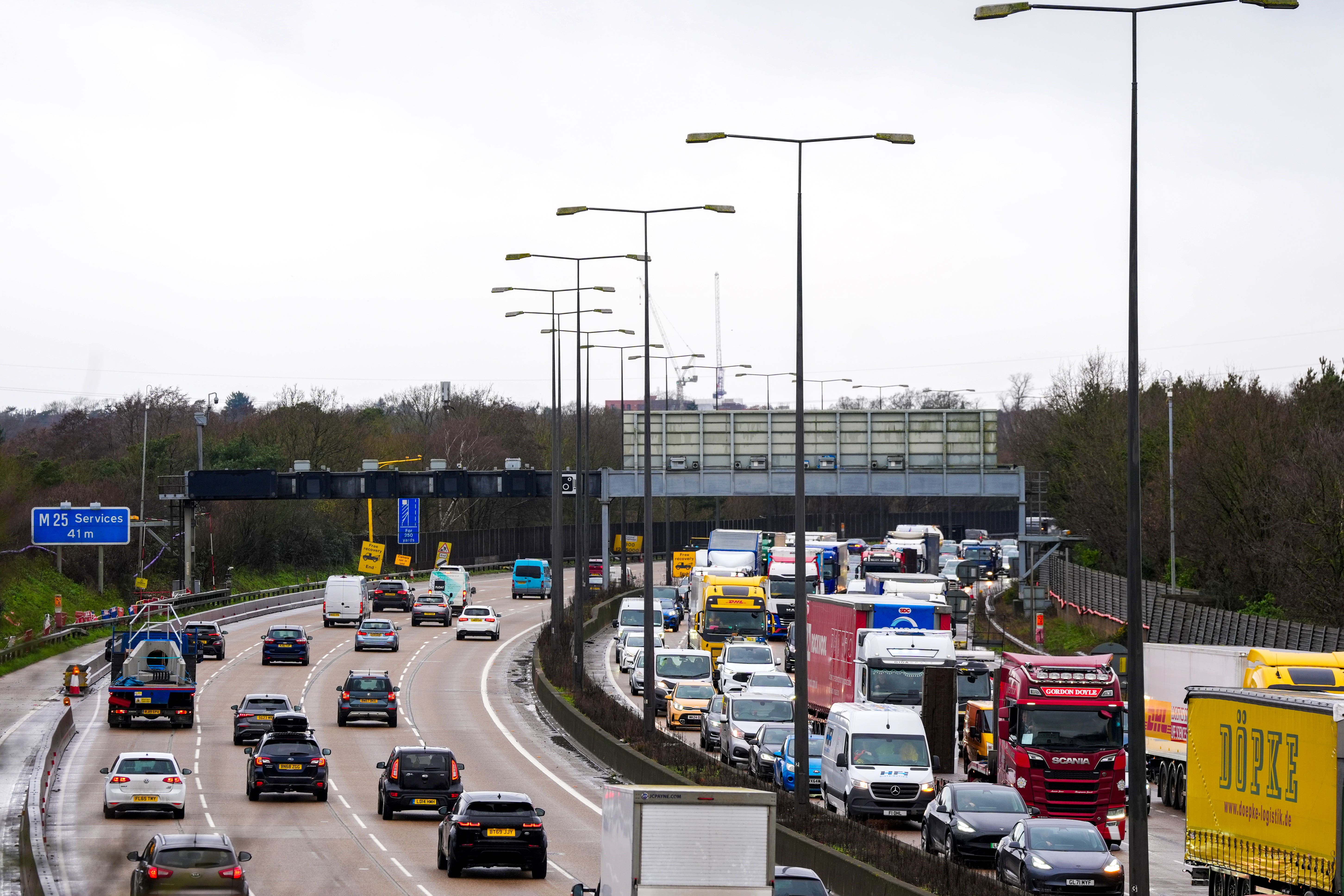
The M25 between the M23 and M40.
The M5 in the Bristol area and further into the South West.
The A303 in Wiltshire.
The M4 in South Wales.
National Highways said it will lift 1,500 miles of roadworks from its network of motorways and major A roads in England between Thursday and Easter Monday to ease journeys.
Drivers embarking on Easter trips to continental Europe are advised to save money by refuelling before they leave the UK.
Just over half (53%) of people surveyed expect to travel under 50 miles, with 5% planning trips of between 50 and 100 miles (Ben Whitley/PA)
Analysis of the latest European Commission data by motoring research charity the RAC Foundation found the average price of a litre of petrol in France on March 23 was £1.71, some 25p more than in the UK (£1.46 per litre).
A number of other European countries also had significantly higher prices than the UK, such as the Netherlands (203p per litre), Germany (180p per litre) and Belgium (£156p per litre),
The figures show diesel prices were also higher on the continent, with forecourts in France (183p per litre) and the Netherlands (214p per litre) charging 13p and 44p per litre respectively more than those in the UK (170p per litre).
Steve Gooding, director of the RAC Foundation, said: “For those driving on the continent this Easter it is a case of out of the frying pan and into the fire.
“If pump prices are high here – and indeed they are – then in many parts of Europe they have gone through the roof, including in France.
“It might seem counterintuitive, but filling up at Dover rather than in Calais could be the wise option.”
Travel trade organisation Abta estimated that two million people from the UK will travel abroad between Good Friday and Easter Monday.
UK holidaymakers jetting off to the European Union are being warned to expect two-hour delays on arrival as countries are ramping up the deployment of a new border system.
The EU’s Entry Exit System involves people from third-party countries such as the UK having their fingerprints registered and photograph taken to enter the Schengen Area, which consists of 29 European countries, mainly in the EU.
Trade body Airports Council International said the latest data collected from airports across Europe shows a “continued deterioration in waiting times at border crossing points”.
Delays are “regularly reaching up to two hours at peak traffic times, with some airports reporting even longer queues”, it added.
EasyJet said it is preparing for its busiest Easter getaway, with up to 16,000 flights from UK airports during the two-week school break.
Meanwhile, thousands of Easter train journeys will be disrupted as Network Rail carries out more than 270 upgrade projects across Britain.
This includes a six-day shutdown on the West Coast Main Line starting on Good Friday, meaning no intercity services will run between London Euston and Milton Keynes.
A parent reflecting on daily life with young children has struck a chord online, describing a level of constant interaction that feels far removed from their own upbringing.
Reddit user nfc22 shared that from the moment they return home from work, their children want to be involved in everything, from cookingdinner to spending time together in shared spaces.
‘Shut my brain off’
“I’m constantly engaging with them and the only time I’m able to shut my brain off is while I’m sitting in bed before I go to sleep,” the parent wrote, adding that while the experience is positive, it is also, “insanely exhausting.”
The post contrasts sharply with memories of childhood independence, where time was often spent playing alone or with friends while parents focused on work, chores and routines.
Responses suggest that the shift is not just personal, but part of a wider generational change in parenting.
One Reddit contributor pointed to research backing up the experience: “Yeah, there are studies [about] this!
“Parents today spend significantly more time with their kids (something like moms spend 50 percent more daily child care time today than in 1965, despite higher rates of dual working parent households. This is why we’re all burnt out (and why our parents were not).”
Data supports that claim. According to a University of California (UCI), Irvine study, mothers in 2012 spent about 104 minutes per day on child care, compared with 54 minutes in 1965, while fathers increased their time from 16 minutes to 59 minutes daily.
The same study notes that, “the time parents spend with children is regarded as critical for positive cognitive, behavioral and academic outcomes,” said Judith Treas, a sociologyprofessor at UCI.
Changing Expectations
That increase in parental involvement appears to reflect changing expectations about what parenting should look like. The UCI research describes a cultural shift toward more hands-on caregiving, including activities like reading, playing and helping with homework.
For some, the contrast with their own upbringing carries emotional weight.
Another Reddit commentator admitted: “I have almost no memory of my parents interacting with me as a kid. My dad was always working, so there’s that, but my mum just couldn’t be bothered with us.”
The same commentator added that the experience shaped their adult relationships, writing, “I have no real relationship with my mum now as an adult, but I miss my dad a lot, we catch up when we can.”
Others on the forum see the increased time together as worth the effort.
A parent said they, “spend every waking hour with my kids. Yes, it’s exhausting, yes, I can’t always get the housework done etc., but it’s so worth it.”
Research suggests there may be benefits to that level of involvement. A study published in Frontiers in Psychology found that, “the more time parents spent with children, the higher their children’s well-being will be.”
The study adds that, “parental accompaniment is an important determinant of children’s well-being,” linking time spent together with improved emotional and psychological outcomes.
Striking the Right Balance
Even so, the day-to-day reality described by parents shows the strain of balancing work, household responsibilities and near-constant interaction with children.
The original poster noted that their children rarely play independently despite having their own rooms and toys, preferring instead to remain close and engaged.
The discussion reflects a shift in how childhood and parenting are experienced, with many families moving away from more hands-off approaches toward continuous involvement.
For parents like nfc22, the result is a routine that feels rewarding but relentless, raising questions about how much time together is ideal and how families can balance connection with rest.
Newsweek has reached out to nfc22 for comment via Reddit. We could not verify the details of the case.
Based in London, Emily Keogh is ESPN’s women’s soccer correspondent, specializing in the WSL and UWCL
Multiple Authors
MUNICH, Germany — Manchester United manager Marc Skinner called on the club to develop the depth needed to compete in Europe after losing 5-3 on aggregate to Bayern Munich in the Champions League quarterfinals, saying the defeat could be the “punch in the face” the club needs to match the spending of Europe’s top clubs.
The visitors trailed heading into Wednesday’s second leg after Bayern secured a 3-2 win in the first match in Manchester last week. Though they evened the aggregate score early on in Munich, the hosts were able to net a quick double in the final 10 minutes to knock United, the debutants in their first full run in the competition, out of the tie.
United exceeded expectations in reaching the knockout rounds but after acknowledging the disparity in resources between Europe’s top clubs and United, Skinner called on the club to match the spending of those top clubs.
“I think we will learn from what investment is really needed to go into this level of competition for consistent years,” he said after the loss. “I think we’re still learning as a club, of course, we are.
“Because we wear Manchester United’s badge, everybody expects us to be the very best team in the world. We have that expectation too. So that’s the pinch point, because we want to be the best.
“We’ve got to grow because we’re eight years old. If we want to compete at this latter stage, we’ve seen what we’ve got to do as a club. And then it’s our choice now, isn’t it? We have to look at what we seriously want to achieve, and we’ll learn and grow from it. Even as a club, we’re still learning. It takes, sometimes, a punch in the face to wake up.”
United only had four outfield substitutes available after missing eight players through injury, many are due to excessive overuse, Skinner confirmed.
In the most recent accounts, United’s wage bill of £5.88 million was about half of Arsenal’s spending of last season (£11.3m). They also spent significantly less on agent fees — £197k — while top-spenders Chelsea had an outlay of £1.08m.
“We need to design a team of the highest-level experience,” Skinner added. “Having the depth needed to compete — we’ve had a taste of it now — to have the depth and the experience of that depth, is key if you want to go later in these competitions.
“I’ve loved the competition, the levels of the competition, the different experiences, but when we have eight players out currently, we just couldn’t compete enough in that second half. If we’d had them, I honestly think we could have gone through tonight, that’s how well we played in the first half.
“We’ve had a taste of it now. We need to design the squad with that depth of experience in order to go to that stage, if that’s what we want to do.”
The company, which manufactures rockets, space exploration technology and Starlink satellites, is currently privately held. But on Wednesday it made a confidential filingwith the US Securities and Exchange Commission (SEC) for an initial public offering, which would allow shares to be traded in the stock market.
Americans’ “magic number” for the savings they need to retire with a measure of financial comfort is $1.46 million, according to new research from Northwestern Mutual.
That figure, based on a survey of 4,375 people who were asked how much money they think they need in retirement, is up from $1.26 million in 2025. John Roberts, chief field officer at the financial planning firm, said the increase reflects ongoing consumer concerns about inflation, with elevated prices in recent years straining household budgets and making it harder for people to save.
The poll was fielded before the Iran war, which has only heightened such concerns as fuel prices rise.
Respondents also worried that artificial intelligence could impact their careers, with 33% saying they fear how the rapidly emerging technology will affect their jobs. Such concerns about job security could be leading some Americans to think they need a bigger nest egg, Roberts noted.
The reality of retirement savings
In general, Americans’ perception of how much money they need to retire is starkly at odds with their actual savings. Of people in the U.S. with retirement accounts, only 5% have at least $1 million socked away, while roughly 9% have $500,000, according to NerdWallet.
Older age brackets tend to have larger nest eggs, but even workers who are nearing retirement often fall short. The median retirement savings for Americans aged 55 to 64 is $185,000, NerdWallet found.
Americans also aren’t saving as robustly. Payroll firm Dayforce found that Americans last year trimmed their annual contributions to their 401(k) accounts to 8.9%, down from 9.2% to in 2024.
“We’re acknowledging there’s a need… but we’re not taking enough action,” Roberts told CBS News.
Savings of $1.46 million would provide roughly $4,800 in retirement income per month, according to Northwestern. But Americans often undershoot how much they think they need to retire.
Unexpected expenses can crop up, depleting funds more quickly than expected. In some cases, people have to tap their savings before hitting retirement age. Recent research from financial services firm Vanguard shows a record share of Americans are taking hardship withdrawals to cover an immediate need, like a medical expense.
“They’re kind of saying, future me is going to live lean,” Rorberts said. “But it’s not actually how it plays out in reality.”
House Speaker Mike Johnson and Senate Majority Leader John Thune announced the Republican-controlled Congress “in the coming days” will fund the Department of Homeland Security through both the appropriations process and reconciliation process — but the track they’re pursuing leaves open the possibility that it may take longer than President Donald Trump had wanted.
House Republicans appear to have caved to those in the Senate, who wanted to fund DHS with the exception of immigration enforcement, which Democrats supported.
To tackle that thornier issue, which prompted the shutdown in the first place, Republicans say they will use the reconciliation process, which avoids the filibuster in the Senate. However, doing so would require them to rely on their incredibly thin margins in both chambers.
“In following this two-track approach, the Republican Congress will fully reopen the Department, make sure all federal workers are paid, and specifically fund immigration enforcement and border security for the next three years so that those law-enforcement activities can continue uninhibited,” the top Republicans said in a statement on Wednesday.
June 1 deadline
The announcement came shortly after Trump publicly demanded Republicans use reconciliation — a process that avoids the filibuster in the Senate — to send him a bill no later than June 1 that would fund Immigration and Customs Enforcement and Customs and Border Protection.
“We are going to work as fast, and as focused, as possible to replenish funding for our Border and ICE Agents, and the Radical Left Democrats won’t be able to stop us,” Trump wrote in a post on his social media platform on Wednesday.
President Donald Trump speaks during the signing ceremony for an execituve order on mail ballots, in the Oval Office of the White House in Washington, March 31, 2026.
Evan Vucci/Reuters
Lawmakers left the Capitol on Friday for a two-week recess after failing to reach a deal to fund DHS. Democrats demanded reforms to ICE and CBP after two American citizens were fatally shot by federal agents during the administration’s immigration crackdown in Minneapolis earlier this year.
The partial shutdown, which began on Feb. 14, is now the longest in U.S. history.
The Senate unanimously passed legislation last week to fund all of DHS except for ICE and CBP with the aim of later funding these agencies through reconciliation, but the House rejected the Senate’s bill.
Instead, House Republicans pushed through a short-term bill to fund the entire department for eight weeks at current levels, which Senate Minority Leader Chuck Schumer said would be “dead on arrival” in the Senate.
Senate plan to fund everything but immigration enforcement
It’s unclear how this will play out over the next several days, but House Republicans could to try to pass the Senate bill during pro-forma sessions over recess.
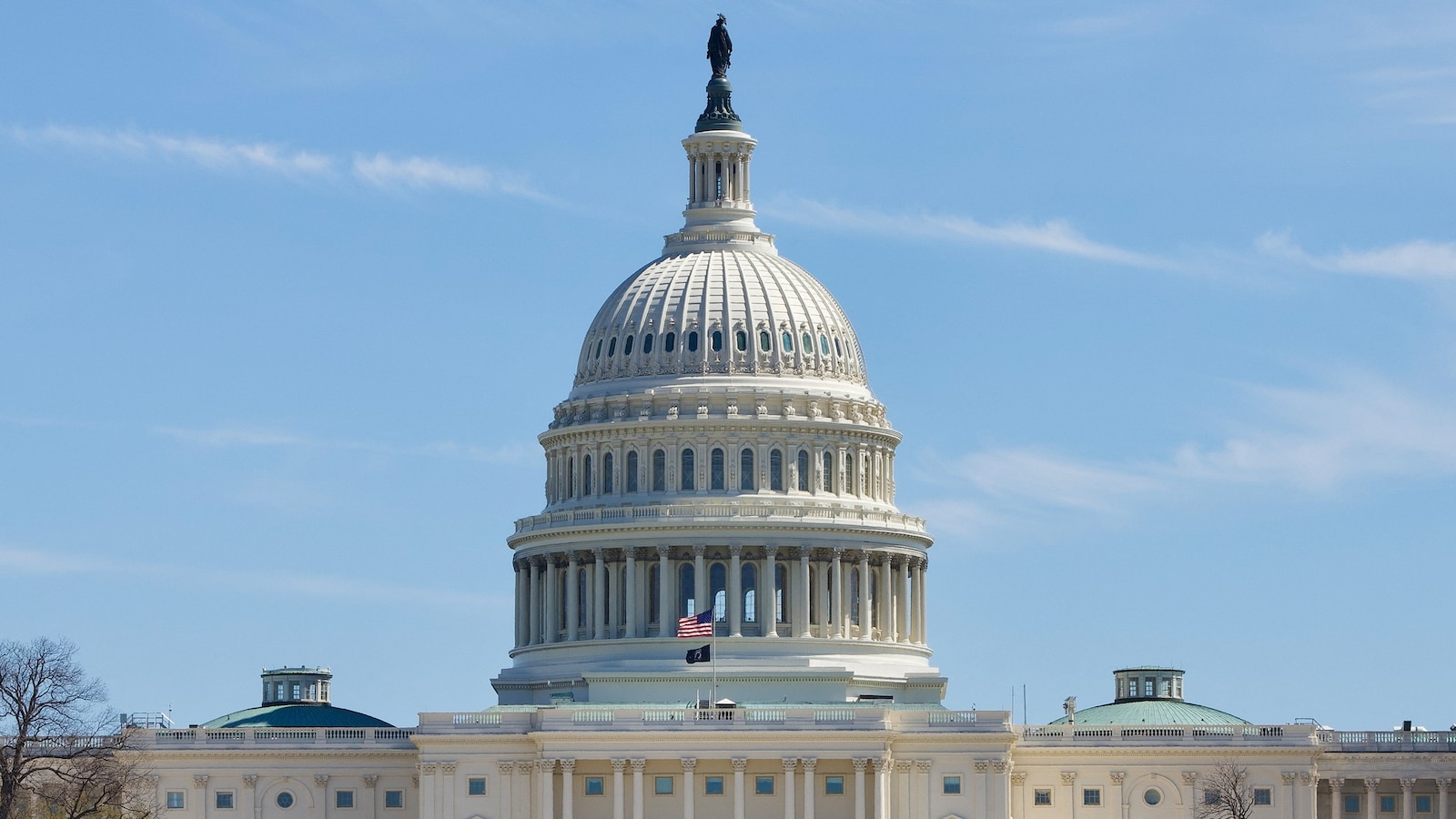
The US Capitol building is seen in Washington, March 28, 2026.
Heather Diehl/Getty Images
ABC News has asked Johnson’s office about how the House will take up the Senate’s DHS funding bill.
“While we hoped they would accept the 60-day [continuing resolution] to fund the Department entirely so that bipartisan negotiations could continue, it is now abundantly clear that Democrats place allegiance to their radical left-wing base above all else — including their own power of the purse — which means open borders and protecting criminal illegal aliens,” Johnson and Thune said.
“That is not acceptable to Republicans in Congress, nor is it to the American people. We cannot allow Democrats to any longer put the safety of the American public at risk through their open border policies, so we are taking that off the table,” they stated.
Funding border security
Additionally, Johnson and Thune said Republicans will move forward to fund border security and immigration enforcement for three years through budget reconciliation — a legislative tool that gives Congress an expedited way to move forward certain spending and tax bills.
A key advantage of the process is that reconciliation legislation is not subject to a filibuster, meaning it can be passed with a simple majority vote in the Senate instead of 60 votes.
But with such small GOP majorities in both chambers, passing a bill this way would require almost every single congressional Republican to endorse it. Gaining that support is not a given, and could prove quite time consuming, making Trump’s June 1 deadline rather ambitious.
Trump urged unity in his social media post on Wednesday demanding action by Republicans.
“Through simple unification, Republicans can do this without the Democrats!” his post read.
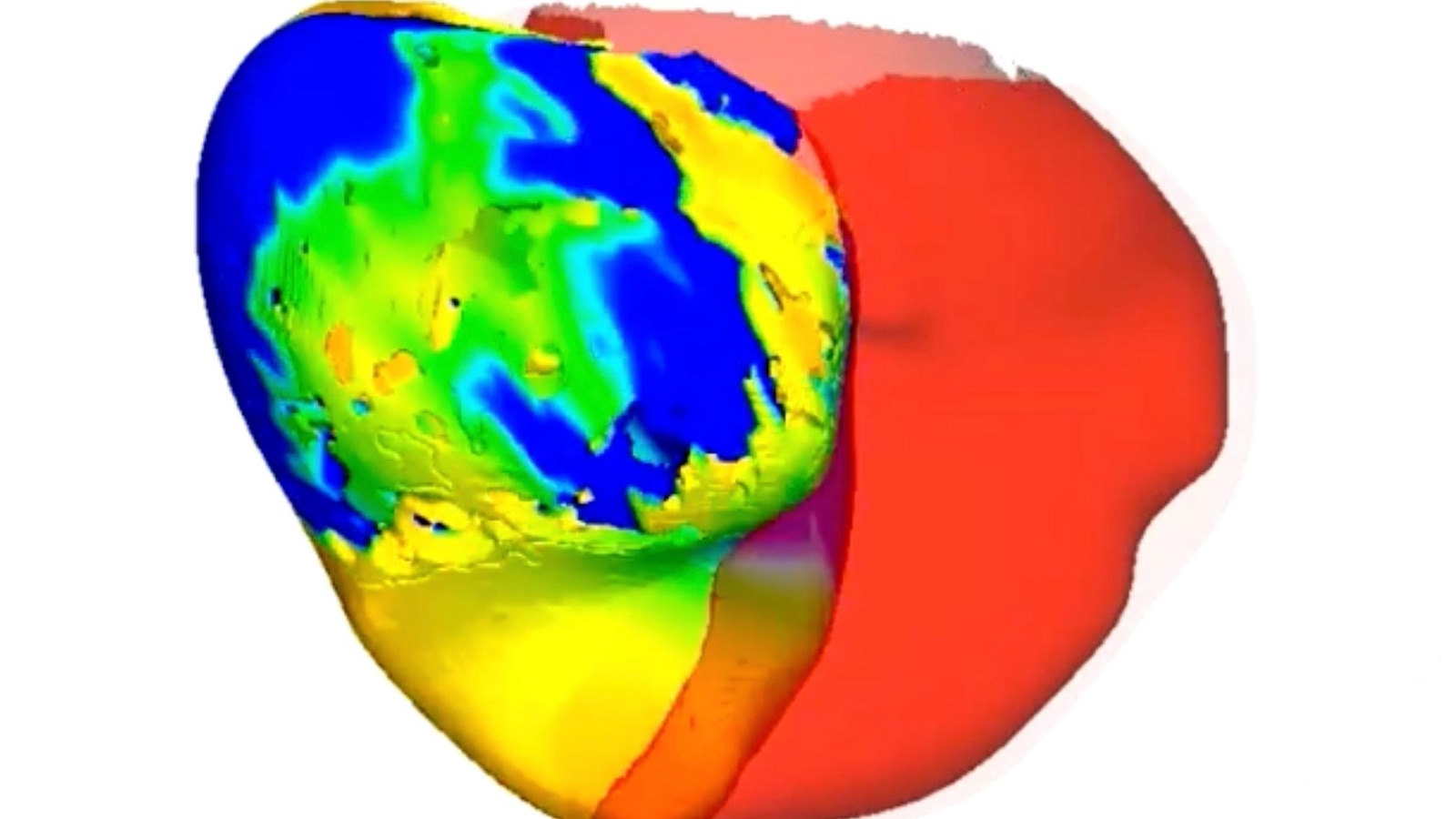
WASHINGTON — Scientists created virtual replicas of patients’ diseased hearts so precise that blocking a dangerous irregular heartbeat in these digital “twins” showed doctors how to better treat the real thing.
One of the first clinical trials of these custom models suggests it might improve care for ventricular tachycardia, a notoriously difficult-to-treat arrhythmia that is a major cause of sudden cardiac arrest, blamed for about 300,000 U.S. deaths a year.
The study, by researchers at Johns Hopkins University, was a small first step. The Food and Drug Administration allowed the digital twin technology to guide treatment for just 10 patients, and much larger studies will be needed.
But the results reported Wednesday in the New England Journal of Medicine come as doctors increasingly are exploring how a technology long used in aerospace and other industries might be harnessed for better health, too.
Dr. Jeffrey Goldberger, a heart specialist at the University of Miami who wasn’t involved with the study, experimented with more rudimentary iterations 15 years ago and praised the new findings. “This is what we envisioned,” he said.
Doctors have long used 3D models, both physical and computer-generated ones, to simulate disease and practice techniques. But Hopkins biomedical engineer Natalia Trayanova said true digital twins predict how a real organ can react to different treatments. Her lab is pioneering colorful interactive models developed with an advanced MRI scan and other data from each patient.
“We treat the twin before we treat the patient,” Trayanova said. “Did it work? And if it did, are there new things that arise” that will require more or different care?
The heart’s electrical system powers our heartbeat. Ventricular tachycardia is a super-fast heartbeat triggered when an electrical wave short-circuits in the organ’s bottom chambers, the ventricles, and prevents them from pumping blood out to the body.
“You see this heart that is basically quivering,” Trayanova said.
Medication can help but the main treatment is ablation, when doctors thread catheters to the heart to burn misfiring tissue. But it’s a bit trial-and-error, as patients spend hours under anesthesia while doctors determine where to aim. Repeat ablations are common, and many patients have an implanted defibrillator as backup.
Enter Trayanova’s digital twins of patients’ ventricles. Colors swirl on a computer screen – blue, green, yellow and orange – showing how the heart’s electrical wave moves across the chamber’s healthy areas before getting stuck on damaged tissue. It’s trapped in a circular motion that she compares to the swirl of a hurricane.
“It allows me to recreate the functioning of the patient’s organ and then predict what is the best way to ablate,” she said.
The technology locates a dysfunctional region where the electrical wave repeatedly hits. Virtually ablating it will show if that solves the problem or if another arrhythmia forms that also will need zapping. “Then we poke it again,” she explained.
Trayanova’s team created customized ablation targets for each of the 10 study participants. Cardiologists transferred them to a mapping system they use as a guide and aimed just at those targets instead of hunting their own.
More than a year later, eight patients had no arrhythmias while two experienced only a single brief episode while they were healing — better than the treatment’s typical 60% success rate, said Dr. Jonathan Chrispin, a Hopkins cardiologist and the study’s lead author. All but two also stopped their anti-arrhythmia medicine.
More importantly, cardiologists may burn away less tissue by targeting “specifically the areas that we think are critically important,” Chrispin said. “We could potentially make these procedures shorter, safer, more effective.”
The Hopkins team hopes to study the digital twin approach in a larger study with other hospitals, and has begun a trial using it to treat a more common type of irregular heartbeat called atrial fibrillation. Other researchers are studying digital twins for cancer care.
___
The Associated Press Health and Science Department receives support from the Howard Hughes Medical Institute’s Department of Science Education and the Robert Wood Johnson Foundation. The AP is solely responsible for all content.
She remained in a relationship with one twin, who was named on the birth certificate and initially acted as the legal father, the filing stated. When the relationship ended, it triggered a legal dispute.
The child (referred to as “P”), who was conceived in 2017, is now 8 years old, according to court documents. (Child not pictured)(iStock)
The mother and the twin who is not listed on the birth certificate brought the case, seeking to overturn an earlier ruling and have him legally recognized as the child’s father, the document detailed.
The Court of Appeals ruled that legal paternity rights are only granted to a genetic father. While DNA testing shows a 50/50 chance for each twin to be the father, there is no definitive answer.
“Currently, the truth of P’s paternity is that their father is one or other of these two identical twins, but it is not possible to say which,” stated Lord Justice Moylan in the Court of Appeal ruling.
Identical twins have long presented a challenge in DNA testing, previous medical research has shown.
Monozygotic (identical) twins share virtually identical genetic profiles, including the markers used in standard paternity tests, meaning they “cannot be differentiated using standard DNA testing,” according to a study published in Forensic Science International: Genetics.
Since neither twin can prove he is the biological father, neither can be given legal parental responsibility, the court declared.(iStock)
There are more advanced methods, such as whole genome sequencing, that can detect some rare genetic mutations among twins, but researchers say these techniques are complex, expensive and not commonly used in legal cases.
A study published in PLOS Genetics confirms that distinguishing between identical twins’ DNA requires highly specialized analysis that goes beyond standard forensic testing.
Melissa Rudy is senior health editor and a member of the lifestyle team at Fox News Digital. Story tips can be sent to [email protected].
BALTIMORE — Samuel Basallo made a little history when the Baltimore catcher became the first major leaguer to end a game with a successful challenge via the Automated Ball-Strike System.
No word on whether he got to keep the ball.
Albert Suárez was on the mound for the Orioles in the top of the ninth inning against Texas when his 1-2 pitch to Evan Carter with two outs was called a ball by plate umpire Manny Gonzalez. Basallo challenged, the replay showed most of the ball catching the upper outside corner of the strike zone, and Baltimore’s 8-3 win was in the books.
“I think we had two (challenges left) at that point,” the 21-year-old Basallo said through a translator. “I thought why not use it? Better to use it and see what happens instead of holding onto it.”
Basallo, who also hit a 437-foot homer Wednesday, used a little body English while the replay was in progress, then headed toward the mound for a hug with Suárez, who pitched three innings for his first save since 2017.
“I wasn’t thinking it was a strike, and then when he challenged I was like, ‘OK, let’s see,’” Suárez said. “Good thing we got it.”
This is the first season this technology is being used in regular-season big league games.
The Orioles used a challenge in a crucial ninth-inning spot Sunday, turning a full-count walk into a strikeout as they held off Minnesota 8-6. Twins manager Derek Shelton was ejected after that one — he thought the challenge signal didn’t come fast enough.
Suárez was called back to the majors after Zach Eflin had to leave Tuesday’s start with elbow discomfort. After an early flight Wednesday, he was able to give the rest of the bullpen a rest.
The 36-year-old Suárez was asked his view on the ABS in general.
“I think I like it more after what happened today,” Suárez said.