Home Blog Page 902

April 2026 payment dates for universal credit, benefits & pensions with Easter change

0
April 2026 payment dates for universal credit, benefits & pensions with Easter change


April is around the corner, and with it a new financial year that promises to bring lots of change to households across the UK.

Cost of living concerns have grown as conflict in the Middle East suddenly threatens to hit Britain’s economy. The situation has severely disrupted the global oil trade, bringing knock-on effects to the price of essentials like energy and food.

Economists say that the worst impacts can be avoided should the conflict end soon, but uncertainty remains as the exchange of fire continues.

In positive news for household finances, inflation saw a steep drop in January to 3 per cent, marking a 10 month low. Some analysts now predict the rate could hit the Bank of England’s target of 2 per cent by April, which was last seen briefly in 2024.

The downward trend means prices are rising less quickly, but for many the cost of living still remains too high.

Around two-thirds (63 per cent) of Brits say they have had to cut back on the essentials to handle the cost of living, recent analysis by the Cost of Living Action group found.

Meanwhile, 55 per cent of households living in poverty now contain at least one working person, according to the Resolution Foundation think tank, which revealed the scale of the issue.

The state pension is expected to rise by 4.8 per cent from next April in line with annual earnings growth (PA)

Against this difficult economic backdrop, households should claim all the support they are entitled to. There are now around 24 million people in the country claiming some combination of Department for Work and Pensions (DWP) administered benefits, which include those drawing a state pension, representing around one in three people.

Trading 212 logo

Get a free fractional share worth up to £100.
Capital at risk.

Terms and conditions apply.

Go to website

ADVERTISEMENT

Trading 212 logo

Get a free fractional share worth up to £100.
Capital at risk.

Terms and conditions apply.

Go to website

ADVERTISEMENT

Yet research by Policy in Practice shows that £24bn worth of benefits goes unclaimed every year – you can use its helpful calculator to work out what you might be entitled to.

Are you struggling with the DWP or the cost of living? Share your story: [email protected]

Here is an overview of the financial support available to households this April and key dates for benefit and state pension recipients to look out for:

Benefit payment dates in April

Benefit payments will go out as usual in April, except on two key dates. Anyone due a benefit payment on Friday 3 April (Good Friday) or Monday 6 April (Easter Monday), should instead receive this on Thursday 2 April.

This includes:

  • Universal credit
  • State pension
  • Pension credit
  • Child benefit
  • Disability living allowance (DLA)
  • Personal independence payment (PIP)
  • Attendance allowance
  • Carer’s allowance

For more information on how and when state benefits are paid, visit the government’s website.

The DWP is aiming to complete the migration of all “legacy benefits” to universal credit by the end of March 2026. Those receiving tax credits, income support, jobseeker’s allowance, and housing benefit should have received a notice about moving to universal credit already.

Are you having issues with universal credit, PIP, or any other benefit? Get in touch via email: [email protected]

Pension payment dates in April

The basic state pension is paid straight into bank accounts, similar to how benefits are paid. It is usually paid every four weeks, with the exact day you receive it corresponding to the last two digits of your national insurance (NI) number.

Here’s when you should be paid based on those numbers:

  • 00 to 19: Monday
  • 20 to 39: Tuesday
  • 40 to 59: Wednesday
  • 60 to 79: Thursday
  • 80 to 99: Friday

The same bank holiday payment date changes that apply to most benefits will also apply to state pension payments.

When will benefit rates go up?

In April 2026, all universal credit claimants will receive an above-inflation income boost of around 6.2 per cent to the standard allowance. For a single person over 25, this will be a £6 per week increase, rising from £92 to £98.

For couples with one or both partners over 25, it will be an increase of £9 per week, rising from £145 to £154.

Most other benefits should be uprated by September’s inflation rate alone, increasing by 3.8 per cent. This includes PIP, DLA, attendance allowance, carer’s allowance, ESA and more.

However, at the same time, the monthly payment rate for the health-related element of universal credit for new claimants will be cut from £105 to £50. The rate for existing claimants will also be frozen until 2029.

This is a reduction of more than £200 a month, cutting the additional rate by around half. This means it is advisable for anyone who thinks they might be eligible to apply as soon as they can.

The state pension will rise by 4.8 per cent from next April in line with annual earnings growth, the government has confirmed. This will bring the weekly amount to £241.05.

For more information about the new benefit rates, you can read The Independent’s guide.

Other help available

Crisis and Resilience Fund

From April, councils will be able to administer Labour’s new ‘Crisis and Resilience Fund’, designed to support low-income households at times when affording the essentials becomes a struggle.

It will replace both the household support fund and discretionary housing payments.

Crisis payment

The first part of the new scheme will be a ‘crisis payment’ to to support low-income households that have experienced a financial shock, or are at risk of entering crisis.

Like the Household Support Fund, councils will continue to have discretion over the exact eligibility criteria. However, the government’s guidance says it should not be limited just to those in receipt of benefits.

The DWP has asked that councils take a ‘cash-first’ approach to the crisis payment, meaning cash payments should be awarded unless there is a fair reason not to do so.

Housing payment

A new ‘housing payment’ will also be introduced across the UK, aimed at providing financial support towards housing costs for those in need.

This will usually be related to rent, such as needing rent in advance, a rental deposit, or shortfall. It could also cover a lump sum associated with housing, like the cost of moving.

Unlike the crisis payment, the housing payment will be restricted to those in receipt of certain benefits. These are either housing benefit, or universal credit with the housing element for rental costs. However, DWP says those who do not qualify but are still in need could be considered for a crisis payment instead.

Budgeting advance loans

The government offers a “budgeting advance loan” for people on universal credit who face an emergency lack of money. The loan has a maximum repayment period of two years.

These loans are interest-free and are automatically deducted from universal credit payments. You can borrow an ‘advance’ of up to:

  • £348 if you’re single
  • £464 if you’re part of a couple
  • £812 if you or your partner claims child benefit

Following Labour’s 2024 Budget, a new cap was introduced on the amount the DWP can deduct from benefit payments to repay loans and debts, including budgeting advance loans.

Beginning in April 2025, deductions from universal credit have been capped at 15 per cent of the standard allowance, down from 25 per cent.

Charitable grants

If you are struggling financially, you may be eligible for certain charitable grants. There is a wide range of grants available depending on your circumstances.

However, these grants will typically require you to meet specific criteria and will only be able to offer limited funds.

Charitable grants are available for people who are disabled or ill, carers, bereaved, unemployed, students, and for many other reasons. The charity Turn2us has an online tool to search for grants which may be available to some.
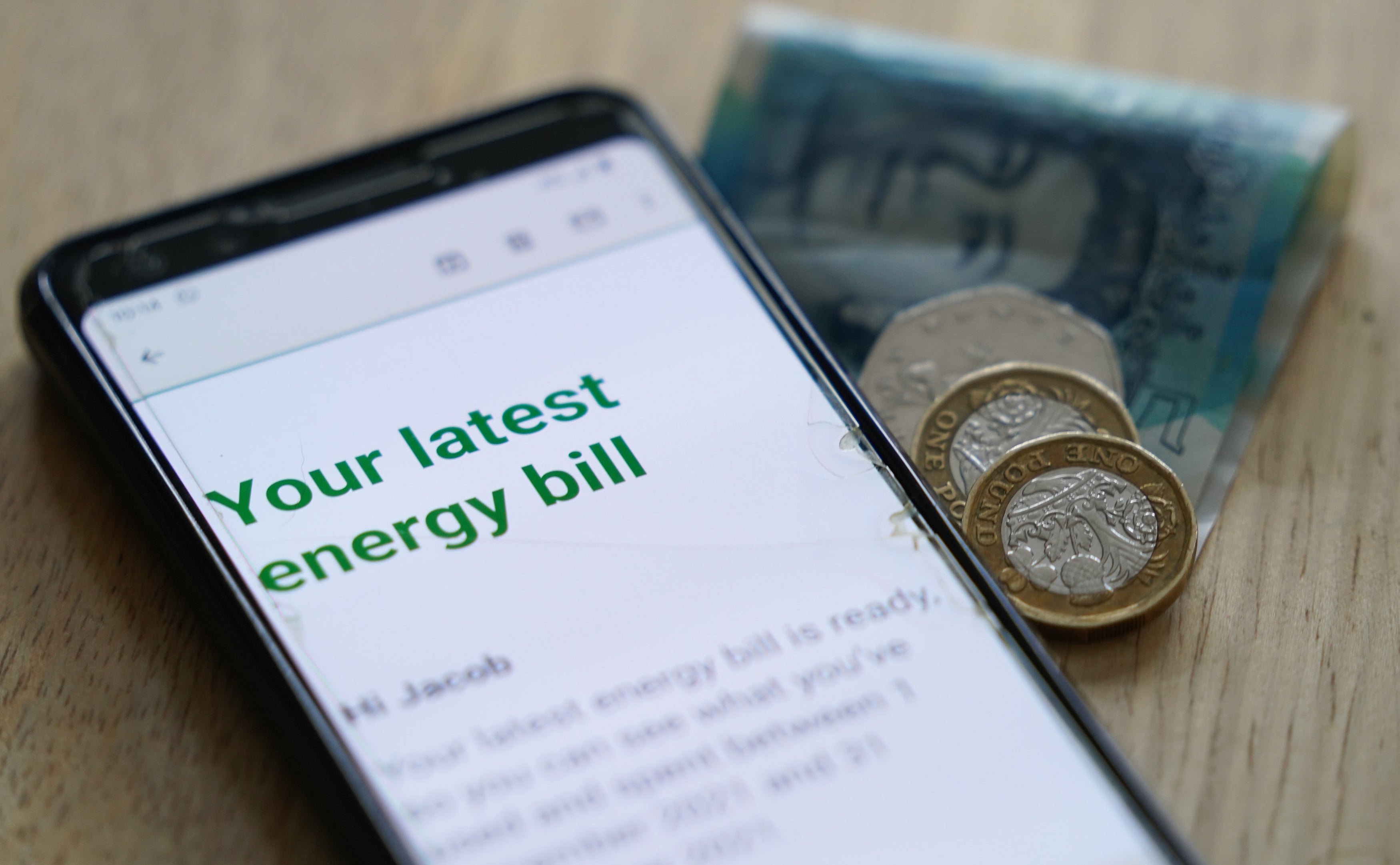
Some energy suppliers offer assistance to those who aren’t able to afford their bills, including Octopus and British Gas
Some energy suppliers offer assistance to those who aren’t able to afford their bills, including Octopus and British Gas (PA)

Energy provider help

A number of energy suppliers offer help for those struggling with their energy bills. These include British Gas, Scottish Power, EDF, E.ON, OVO and Octopus. It is worth contacting your energy provider to find out if you are eligible.

Some also offer free devices like electric blankets for households with vulnerable residents to keep warm.

Social tariffs for broadband and water

For those struggling with household costs, social tariffs are available for both broadband and water bills. This will mean a reduced rate for certain eligible households.

For water, every company operating in the UK has a social tariff by law. However, the amount on offer can vary between regions and, because water providers can’t be chosen like energy providers, the support has been criticised as a “postcode lottery”.

For instance, some offer as much as 90 per cent off bills, while others cap support at a 20 per cent reduction.

To find out what support your water company offers, it is worth checking on its website or contacting the helpline. In all cases, households will need to be deemed to be on a low income and/or in receipt of certain benefits.

Similarly, many broadband providers offer social tariffs to those on certain benefits like universal credit or pension credit.

Council tax reduction

If you meet certain criteria or are on certain benefits, you may be able to apply for a discount on your council tax of up to 100 per cent (this is sometimes called council tax support).

Your local council may still be able to offer you a discretionary reduction if you can demonstrate you are facing severe hardship and can’t afford to pay your council tax.

To apply for a council tax reduction, contact your local council via the government’s website.

Up to 30 hours of free childcare

From 1 September 2025, all working parents in the UK became entitled to 30 hours of free childcare for children up to the age of four. This concluded a gradual set of expansions that began in April 2024.

Parents must apply online and reconfirm their eligibility every three months, in time for each school term. Working parents can also apply for tax-free childcare, giving back 20p for every 80p you put towards childcare, up to a maximum of £500 a year.

Energy price cap: Is it going up?

Ofgem’s energy price cap will drop to £1,641 for 1 April to 31 June 2026 – decreasing by around seven per cent, or £117. It will remain at £1,758 until 31 March.

The energy price cap is the maximum amount energy suppliers can charge you for each unit of energy if you’re on a standard variable tariff. That includes most households. It is expressed as an annual bill for an average home.

Many experts – including Ofgem itself – are recommending households consider a fixed tariff energy deal, with many on the market offering lower than the price cap rate.

Ofgem will announce its cap for July to September by 27 May. This could be a steep increase of as much as 10 per cent, or £160, increase due to the situation in the Middle East, energy consultancy Cornwall Insight has warned.

Will there be another cost of living payment in 2026?

The DWP has not announced any continuation of the cost of living payment scheme that ran between 2022 and 2024. The final payment should have been made to eligible households between 6 February and 22 February 2024.

Mental health support

  • In the UK and Ireland, Samaritans can be contacted 24 hours a day, 365 days a year. You can call them for free on 116 123, email them at [email protected], or visit samaritans.org to find your nearest branch
  • Mind runs a support line on 0300 102 1234 which provides a safe and confidential place to talk about how you’re feeling. There is also an information line on 0300 123 3393 for nearby support, and a welfare benefits line on 0300 222 5782 to support the mental health of those navigating the benefits system
  • Disability charity Scope has a forum where people can have supportive chats with others going through the same experiences
  • The NHS offers an online mental health triage service


Source link

Perfect homework, blank stares: Why colleges are turning to oral exams to combat AI

0
Perfect homework, blank stares: Why colleges are turning to oral exams to combat AI


The assignment involves no laptop, no chatbot and no technology of any kind. In fact, there’s no pen or paper, either.

Instead, students in Chris Schaffer’s biomedical engineering class at Cornell University are required to speak directly to an instructor in what he calls an “oral defense.”

It’s a testing method as old as Socrates and making a comeback in the AI age. A growing number of college professors say they are turning to oral exams, and combining a variety of old-fashioned and cutting-edge techniques, to help address a crisis in higher education.

“You won’t be able to AI your way through an oral exam,” says Schaffer, who introduced the oral defense last semester.

Educators are no longer naively wondering if students will use generative AI to do their homework for them. A big question now is how to determine what students are actually learning.

College instructors across the U.S. are noticing troubling new trends as generative artificial intelligence becomes more sophisticated. Take-home essays and other written assignments are coming back perfect. But when students are asked to explain their work, they can’t. The long-term impact of AI use on critical thinking remains to be seen, but educators worry students increasingly see the hard work of thinking as optional.

At the University of Pennsylvania, Emily Hammer, an associate professor of Middle Eastern Languages and Cultures, now pairs oral exams with written papers in her seminar classes.

“It comes across as if we’re trying to prevent cheating,” Hammer says. “That’s not why we’re doing this. We’re doing this because students are actually losing skills, losing cognitive capacity and creativity.”

Hammer forbids AI use on all writing assignments but tells her class she knows she can’t enforce that. However, if they haven’t written their papers themselves, defending the material face-to-face will likely be “a very stressful situation.”

Hammer’s class is part of “a massive shift toward in-person assessments,” both written and oral, at Penn, says Bruce Lenthall, executive director of the school’s Center for Teaching and Learning. The Ivy League school is one of a small but growing number of universities that have started running faculty workshops on oral exams.

Oral exams are not traditionally part of the modern American undergraduate system, unlike certain European universities. For instance, in the Oxbridge tutorial system in England, students meet faculty for weekly discussions. Some U.S. colleges saw a move toward oral exams during the COVID-19 pandemic to address concerns about online cheating, and interest has intensified since the launch of ChatGPT in 2022.

During the pandemic, engineering professor Huihui Qi launched a three-year study at the University of California, San Diego on how to scale oral exams. Several universities have since invited her to provide faculty workshops or discuss her research.

At New York University, several types of oral assessments are on the rise. More faculty are requiring office hours, assigning presentations and cold-calling on students in class. Instructors are saying, “I need to look my students in the eye and ask, ‘Do you know this material?’” says Clay Shirky, vice provost for AI and technology in education.

One NYU professor has put a modern spin on the traditional oral test.

Panos Ipeirotis, a professor at NYU’s Stern School of Business, unveiled an AI-powered oral exam last semester for the final exam in a class on AI product management. He calls it “fighting fire with fire.”

Students log in from home, at any time that fits their schedule. A voice cloned from a business school professor greets them.

“Hi there,” says the voice on their screen. It asks for the student’s name and school ID number and then says, “I’m ready to conduct your exam today.”

The chatbot starts with questions about a final group project and drills into details based on each student’s answers. If the student stumbles, the AI agent gives them clues, along with criticism and positive feedback. Ipeirotis grades the exams separately, also with the help of AI.

“We wanted to check: Do you know what your team did? Were you a free rider? Did you outsource everything to AI?” says Ipeirotis, who designed the tool with ElevenLabs, a company that develops generative AI voice agents to conduct job interviews.

Students in the class this semester are redesigning the AI agent to smooth out some kinks, and Ipeirotis plans to use it in all his future classes.

“I want oral exams everywhere now. I want to pair it with every single written assignment,” says Ipeirotis. “I don’t trust written assignments anymore to be the result of actual thinking.”

Feedback from students last semester was mixed.

Business major Andrea Liu found the chatbot’s voice to be surprisingly human, but the conversation felt choppy with odd pauses. It asked multiple questions at once, which was confusing. And it was jarring to hear a voice but not see a person.

“It felt kind of awkward to be talking to what was pretty much a blank screen,” says Liu, 21.

But, she agreed with worried educators: “There is no perfect world where AI exists and kids are not abusing it.”

Across the humanities and STEM disciplines, like computer science, educators worry that students who skip the mental struggle that is necessary for problem solving won’t develop the skills they need to advance in upper-level classes and careers.

That’s why Schaffer, the Cornell professor, introduced the oral defense in his biomedical engineering class. He requires students to sign up for 20-minute sessions of Socratic-style questioning after submitting written problem sets, which are assigned several times each semester.

With a class of 70 students, Schaffer splits the job with his teaching assistants. They no longer grade the written problem sets, just the oral defenses. He calls it “incentivizing” his students to do the work, or at least understand it enough to explain.

Schaffer’s class is highlighted in a new “Oral Assessment Workshop” offered by Cornell’s Center for Teaching Innovation.

Other examples at Cornell: a religious studies professor who now holds 30-minute “final conversations” with students instead of a final exam; and another engineering course where the professor gives four-minute mock interviews to each student in a 180-person class.

Skeptics point out oral exams can be unsettling for students who are shy or have serious anxiety, but clarifying the format ahead of time and starting with softball questions can help, says Carolyn Aslan, who leads Cornell’s oral exam training.

“Sometimes it’s actually good to get that quiet student one-on-one, and you finally get to hear from them. Sometimes that is the breakthrough,” Aslan says.

Several of Schaffer’s students say they felt nervous at first but ended up preferring the oral exam.

“I honestly liked it a lot,” says Cornell junior Olivia Piserchia, a biomedical engineering major. She initially found the oral defense nerve-wracking but came to value the one-on-one time with instructors. It kept her from feeling lost in a large class and helped her build the skill of articulating her technical knowledge, as she would need to in a job.

“Having that live check-in holds you accountable,” says Piserchia. “It’s a lot harder to look people in the eyes and say out loud, ‘I don’t know this.’ And, that makes you realize, ‘I should study this.’”

___

The Associated Press’ education coverage receives financial support from multiple private foundations. AP is solely responsible for all content. Find AP’s standards for working with philanthropies, a list of supporters and funded coverage areas at AP.org.


Source link

How Dhurandhar 2 songs bridged Bollywood’s generation gap and turned retro into Gen Z’s new cool

0
How Dhurandhar 2 songs bridged Bollywood’s generation gap and turned retro into Gen Z’s new cool


Dhurandhar 2: The Revenge did not just arrive with a soundtrack, it arrived with chaos, drama, and a playlist that refused to pick a side. One minute it is Tamma Tamma, the next it is Rasputin, and somehow, it all makes sense. The film’s music feels like your parents’ cassette collection crashing into your Spotify algorithm, and instead of clashing, they start vibing.

This is not remix culture. This is reinvention with attitude.

When nostalgia got a bass drop

Composer Shashwat Sachdev has not simply polished old hits; he has re-engineered them for a generation raised on reels and rage beats. Tracks like Aari Aari carry their early 2000s DNA, but now come layered with heavy trap drops and sharp rap cuts that feel straight out of a late-night gaming session.

Pinterest |  Each track is designed with dramatic shifts, soft, melodic build-ups that explode into hard drops.

Image credit : Pinterest | Each track is designed with dramatic shifts, soft, melodic build-ups that explode into hard drops.

The result is a dual experience. Millennials get their nostalgia fix, while Gen Z gets something that actually belongs on their playlists. No one feels left out, and that is rare.

Action scenes that said “why be subtle?”

The film goes full chaotic genius by pairing high-stakes action with songs that were never meant to be “serious.” Imagine intense sequences backed by Tamma Tamma or a reworked Tirchi Topiwale. It sounds absurd on paper, but on screen, it hits different.

Suddenly, these classics are not retro, they are rebellious.

Pinterest | The film goes full chaotic genius by pairing high-stakes action with songs that were never meant to be “serious.”

Image credit : Pinterest | The film goes full chaotic genius by pairing high-stakes action with songs that were never meant to be “serious.”

Built for the algorithm, powered by emotion

The soundtrack clearly understands the internet. Each track is designed with dramatic shifts, soft, melodic build-ups that explode into hard drops. Perfect for reels, edits, glow-ups, and everything in between.

But beyond the virality, there is intent. The music proves that younger audiences are not rejecting the past, they are reshaping it into something louder, darker, and more their own.

Dhurandhar 2 quietly pulled off what most Bollywood projects fail to do: it made different generations listen to the same song and actually enjoy it. Not ironically. Not nostalgically. Just genuinely.

And in 2026, that might be the most dramatic twist of all.


Source link

We quit jobs to travel and find purpose – now we’re facing a ‘job-apocalypse’

0
We quit jobs to travel and find purpose – now we’re facing a ‘job-apocalypse’


Two years ago. Joe Wilson, a 27-year-old engineer from Bristol, quit his mechanical engineering job. After spending 10 months travelling around Latin America – which he’d saved for a year and a half to afford – he’s now hoping to make a long-term move to Mexico City to live with his girlfriend, whom he met while travelling.

Unfortunately for Joe, he finds himself bearing the brunt of a job market that’s in deepening trouble: “I’m back home as finding work in Mexico has been difficult; back here I can earn money doing odd jobs and bar work,” he tells me.

“It’s a tricky time, and especially when you’re trying to look for something specific, especially if you’re looking for something remote. I’ve got friends in similar positions that have been looking for months.”

Joe is not alone. Getting a new job in 2026 is not for the faint-hearted, with official figures revealing that unemployment is holding at a near five-year high and that wage growth is continuing to slow. Jobs are also becoming harder to come by as companies decide to make operational cutbacks. Instead of training up juniors or taking on new hires, companies are prioritising automation through AI to plug skills gaps.

A survey by the British Standards Institution (BSI) of more than 850 business leaders across seven countries – the UK, the US, France, Germany, Australia, China and Japan – found that four in 10 (41 per cent) of bosses said AI was allowing them to cut the number of employees. With multiple headwinds hitting, we are heading into what some are dubbing the “job-apocalypse”, and it’s hardly surprising that ”rejection spreadsheets” are popping up across social media as people reframe knockbacks as progress rather than failure.

Last year, I interviewed several twentysomethings who’d quit stable jobs to embark on a “mini retirement”. Then, it seemed like every young person was – or at least knew someone who was – reevaluating their work-life balance, ditching the nine-to-five for an indefinite period of adventure and reflection. Travels have now been ticked off the bucket list, and with a new war raging in the Middle East, which is set to send inflation soaring and interest rates wobbling, reality is creeping back in. Suddenly, a solid nine-to-five job feels infinitely preferable to being unmoored without a stable income to rely on.

George, 29, quit his job in Bristol at the start of 2025 after working for seven years as a civil engineer. Craving a longer break than a sabbatical, he walked out of his comfortable job and booked a one-way flight to Argentina. He used the time travelling to reflect on the kind of career he wanted, then moved in with his parents in Somerset and worked cash in hand to tide himself over. He’s now reaching the one-year mark of official unemployment and is struggling to find a way back in.

After spending 10 months travelling around Latin America, Joe Wilson’s now hoping to make a long-term move to Mexico City to live with his girlfriend, whom he met while travelling (Supplied)

“It’s been challenging,” George tells me. He had hoped to move to London for a fresh start, with a job that promised more creativity than his former role in civil engineering, but it has been a struggle. “I don’t have direct experience in the role I’m now looking for in event design and construction, he tells me, “but the whole point of my break was to reassess my direction and explore something new.”

George received an email last week from an international conference venue in London, from which he was hoping to receive a job offer. It is pausing recruitment indefinitely due to a shift in demand/general concern about the economy/war.

It’s not just young adults who are feeling the squeeze, however. It’s an issue that’s felt across the board – from graduates trying to get a foot on the ladder, to older workers who stepped away for a better work-life balance, or were made redundant and now fear their age is working against them in a job market that is as tough as they have ever known.

The rise of AI is a significant factor felt by candidates of all ages. “I think what’s changed is that, because of AI, it’s so easy to apply for jobs now,” Alice Stapleton, a career-change coach, tells me.

”This means so many more are applying for the same role, making competition rife for each vacancy. It’s tough to make yourself stand out. This is even harder if you’re looking to change roles or industry,” she tells me. “Fewer employers are willing to take risks.”

For every role on offer, an average of 22 people are now competing for it, according to Totaljobs, and rising wages in an atmosphere of global insecurity are adding to the nervousness around hiring. “Connections and your network are key,” Alice tells me. “You can’t rely on online applications only. It needs to be a multi-pronged approach.”

Official figures paint a gloomy picture for those out of work. A friend of mine has been out of full-time employment since autumn 2024, and has used their time off to travel and is now tutoring to stay financially afloat.

So, were workers too quick to walk out of a job they feel doesn’t serve them? Were they wrong to believe that the grass is greener? Perhaps they’d have been better off watering the grass they were on by understanding why they were unhappy in a role instead of just walking away from it. Had they just grown bored? Could they have set clearer boundaries or had those hard conversations with their manager instead? By shifting their perspective away from quitting, would they be in a better position now?

Back to my tutor friend. While she’s not in her dream job yet, she’d still rather be doing what she is now than be in the wrong job. Instead of accepting the first role that came their way, she has turned down several offers in different industries across the UK. Why? She’s still weighing up which career path is truly meant to be for her.

Despite the hardship of finding a job amid a hiring crisis and navigating a long-distance relationship, Joe still believes his mini-retirement wasn’t the wrong thing to do
Despite the hardship of finding a job amid a hiring crisis and navigating a long-distance relationship, Joe still believes his mini-retirement wasn’t the wrong thing to do (Getty)

Leah Farmer, a life and leadership coach, tells me that when it comes to leaving versus staying, it’s rarely black and white. “Some workplaces are genuinely toxic. In those cases, I tell people to run, not walk, to get out as quickly as they can,” she tells me. “But a lot of people leave for less urgent reasons. It’s incredibly expensive to replace a good employee, so most managers would rather find a way to keep someone than lose them. But many employees leave emotionally before they’ve even tried to advocate for themselves. I often say, if you’re already thinking about leaving, what would it hurt to be honest and ask for what you need?”

Leah tells me that if a client knows they’re going to move on eventually, she’ll encourage them to ask questions such as ‘What could I still learn here?’, and ‘Is there a skill I can build, a pattern I can break, a conversation I need to practice?’. “It might be technical. It might be about communication or leadership. Either way, take advantage of the known while you still have it,” she says. “It’s all part of building your reputation and strengthening your personal brand, even if you’re doing it quietly while planning your next move.”

If you do find yourself nervously checking LinkedIn a little more than you’d like, a practical step which Leah advises to improve your odds and make a successful return is to define your personal values. “Not the kind of values you write on a Post-it and never look at again, but the deep stuff that actually influences your decisions and behaviour,” she says. “A lot of people talk about wanting alignment, but when I ask them to name their top three values, they struggle. Once they get clear, it becomes much easier to filter opportunities and know when something feels off. The clearer they are about what matters to them, the better decisions they make.”

Despite the hardship of finding a job amid a hiring crisis and navigating a long-distance relationship, Joe still believes his mini-retirement wasn’t the wrong thing to do. “I think quitting has given me a great opportunity to learn what I want out of work and life,” he tells me. “I’m feeling a lot more motivated to try and start my own business, and less scared. I’d also love to continue to travel as much as possible – having a fully remote job is still the ideal situation for me.”

How does George look back on his decision to quit? “I’m fortunate that I can afford to live at the moment with little earnings, but in the interest of my long-term happiness, it’s given me a chance to think about the bigger picture for the first time ever.”

Things may be starting to look up for George, who has secured his first interview in London next week. “I hope to be more connected to my colleagues in my next role, feeling more alike to them may lead to more work, socialising and new friendships. Wouldn’t that be a happy ending!”


Source link

Amid US-Israeli attacks, people in Iran struggle to survive ailing economy

0
Amid US-Israeli attacks, people in Iran struggle to survive ailing economy


Tehran, Iran – Iranians are dealing with the fallout of the US-Israeli war on their country for the fourth week while being squeezed by a dwindling economy and the longest internet shutdown the country has ever experienced.

Most of the country is closed down this week for Nowruz holidays to celebrate the Persian New Year.

Recommended Stories

list of 3 itemsend of list

But Iran has had numerous unexpected shutdowns this year, including those due to the 12-day war with Israel and the US in June, and the bloody nationwide protests in January, as well as air pollution rooted in an energy crisis.

For many business owners, significantly reduced market activity over the past year, and specifically in the lead-up to Nowruz, has meant significantly slashed income.

“There was some action in those last few days, but our sales were probably about one-third of usual levels around this time, which is supposed to be the time of the year when we get the most business,” said a vendor selling textiles and related commodities in Tehran’s Grand Bazaar.

“Nobody is sure what comes next when we open back up after the holidays. Things have only gotten worse over the past few years,” he told Al Jazeera, asking to remain anonymous due to security concerns.

Women examine headscarves for sale in northern Tehran, Iran, March 24, 2026 [Vahid Salemi/AP Photo]

Iranians’ purchasing power has been steadily falling for years, and well-paying jobs have become scarce due to a destructive mix of local corruption and mismanagement, paired with a “maximum pressure” campaign of all-encompassing sanctions started in 2018 during President Donald Trump’s first term in office.

Annual inflation was officially about 70 percent just before the war, with food inflation rates pushing more than 100 percent, signalling more trouble ahead for lower-income Iranians. The stock market was in the red with a lot of capital exiting, and experts raised concerns about potential hyperinflation and dollarisation of the embattled economy.

The government has said it is cutting spending and will raise the minimum wage for workers by 60 percent in addition to offering a meagre cash subsidy, but rising costs have proven crushing, particularly since the 12-day war in June. Taxes are also up significantly this year.

A small grocery shopkeeper in western Tehran said the store has regularly had access to most goods and items since the start of the war on February 28, but rising prices have dismayed many customers.

“You can see a lot of people double – checking the prices or making calculations when coming in to buy things. It’s not an uncommon sight these days,” he said.

Some families left Tehran and other major metropolises shortly after the start of the war and have yet to return, concerned about the safety of themselves and their loved ones. Many are burrowing into their modest savings and are left with an uncertain future.

But there is no sign of reprieve, at least in the short term, even though Trump suggested on Monday that diplomacy may yet have a chance to stop the war, they have also seen the Islamic Revolutionary Guard Corps (IRGC) launching projectiles at regional neighbours and driving up global energy costs.

Internet blackout

Inside Iran, the fact that more than 90 million people have now been blocked by the state from accessing the global internet for a 25th day is making everything grimmer for a population left in the dark.

Not only has the shutdown prevented most Iranians from getting their voices out to the global community during the war and largely limited the flow of information to state-run outlets, but it has also inflicted serious psychological and financial pain on the population.

“This time, there is not even a word about when the internet might get reconnected. It is not only humiliating, but it is also forcing businesses to close down and inflation to grow,” said a young woman who ran a small online business selling jewellery and accessories on Instagram and Telegram.

She explained that she has not had a sustainable income in months since another 20-day near-total internet shutdown was imposed by the country in January, when many thousands were killed on the streets during nationwide anti-establishment protests.

Many online shops chose to either stop advertising or suspend operations entirely in the aftermath so they could help spread the news about the unprecedented protest killings.

Assets confiscated

Many private businesses were shuttered or had their online pages suspended by the authorities because they expressed solidarity with the killed protesters, even by posting Instagram stories.

The judiciary also confiscated the assets of a number of Iranians, including those of a renowned businessman who owned cafes and food brands, for protesting.

The latest effort was announced on Tuesday, when the judiciary said a man and a number of those close to him have all had their assets confiscated for being “active elements who are colluding and collaborating with the terrorists and the US-Israel child-killing regimes”.

Local media identified the man as Borzou Arjmand, an actor who has been advocating for the overthrow of the government since leaving the country some time ago.

The judiciary also announced on Tuesday that it now has the ability to “identify and confiscate assets online” for people believed to be aligned with “hostile countries”.

This comes amid numerous warnings of asset seizure issued by authorities against Iranians inside and outside the country for dissent.

“The court cases of terrorist agents of the enemy that have led to definitive sentences are being implemented,” Hamzeh Khalili, the first deputy of the judiciary, told state television in a video message on Monday.

Executions

Iran has executed multiple people over the past week based on national security charges related to last year’s June war and the nationwide protests in January.

Authorities also continue to crack down on any efforts amid the internet shutdown to send footage of war or armed state-run checkpoints on the streets to media outlets outside the country.

The IRGC-affiliated Fars news agency released the “confessions” of an unidentified young woman on Tuesday, who had her eyes and mouth covered with a black mask.

She was arrested because she filmed a missile impact point from the window of her home.

“Those who send videos to anti-Iranian media must await this moment,” said Fars.

Iranian authorities have also explicitly warned that anyone who protests against the establishment on the streets will be shot and killed as an “enemy”.

They have continued to mobilise pro-establishment paramilitary and civilian backers to maintain control on the ground.

Addressing the Iranian people during an interview this week, Brad Cooper, the top US military commander in the region, said it is better for antigovernment protesters “to stay inside for now”.

“[But] there will be a clear signal at some point, as the president [Donald Trump] has indicated, for you to be able to come out,” he said.


Source link

Oil price falls as Trump talks up Iran peace negotiations

0
Oil price falls as Trump talks up Iran peace negotiations


Iran has also said that “non-hostile” vessels can use the crucial Strait of Hormuz shipping route.


Source link

OpenAI ends Disney partnership as it closes Sora video-making app

0
OpenAI ends Disney partnership as it closes Sora video-making app


The move comes less two years after the launch of the AI video app sent shockwaves through the media industry.


Source link

China protests to Japan over alleged break-in at its embassy in Tokyo

0
China protests to Japan over alleged break-in at its embassy in Tokyo


TOKYO — Authorities in Japan confirmed Wednesday they arrested a Japanese army soldier on suspicion of trespass, a day after China protested over an alleged break-in at the Chinese Embassy in Tokyo.

The case, the latest point of friction in an escalating spat between Japan and China, surfaced Tuesday after Beijing protested to Tokyo.

An individual who claimed to be a Japan Self-Defense Forces officer scaled the wall and forced his way into the embassy compound on Tuesday morning, Lin Jian, a Chinese Foreign Ministry spokesperson, said in a news conference in Beijing.

The Tokyo police on Wednesday told The Associated Press that they arrested a 23-year-old member of the Ground Self-Defense Force, or Japan’s army, in the alleged trespassing into the Chinese embassy on Tuesday.

The GSDF confirmed the suspect is a soldier based at the Camp Ebino, in Japan’s southwestern prefecture of Miyazaki, and that officials are “fully cooperating” with police.

The suspect forced his way into the embassy to tell the Chinese ambassador to stop China’s hardline stance on Japan and threatened to kill himself with the knife he was carrying if his demand was rejected, Japanese media quoted police as saying.

Tensions between the two Asian nations have escalated in recent months after Japanese Prime Minister Sanae Takaichi said in November a Chinese military action against Taiwan could constitute “a survival-threatening situation” for Japan requiring the use of force. Beijing, which regards the self-governing island as part of its territory, has since stepped up diplomatic and trade reprisals against Japan.

Japan’s NHK public television said the suspect was detained on the spot and handed over to Tokyo police for further investigation and that nobody was injured.

The man allegedly climbed the embassy wall and a knife was left behind, NHK reported.

“China is deeply shocked by the incident and has lodged solemn representations with the Japanese side, expressing strong protest,” Lin said. “The Japanese side has failed to properly manage and discipline its Self-Defense Forces personnel and has not fulfilled its responsibility to ensure the security of Chinese embassies and consulates and their staff.”

Lin demanded Japan immediately investigate the incident thoroughly, punish the individual involved, provide an explanation to China and take preventive measures.


Source link

BTS: Live comeback concert draws 18.4m global viewers, says Netflix

0
BTS: Live comeback concert draws 18.4m global viewers, says Netflix


The livestreamed show saw the band perform together for the first time since October 2022.


Source link

10 house names inspired by ancient Indian cities and their meanings

0
10 house names inspired by ancient Indian cities and their meanings


The ancient cities in India are not just places with a history, but also a history associated with power, spirituality, knowledge, and richness. Giving your home a name related to these ancient cities would be a reflection of the history associated with these places. Not only are these city names historically significant, but they are also associated with profound meanings that reflect peace, prosperity, knowledge, and devotion. These city names are the best choice for your home if you are looking for something traditional and at the same time associated with profound meanings and a cultural touch. Not only do these city names give your home character, but they also reflect your home’s history associated with India’s glorious past.

PC: AI-Generated


Source link