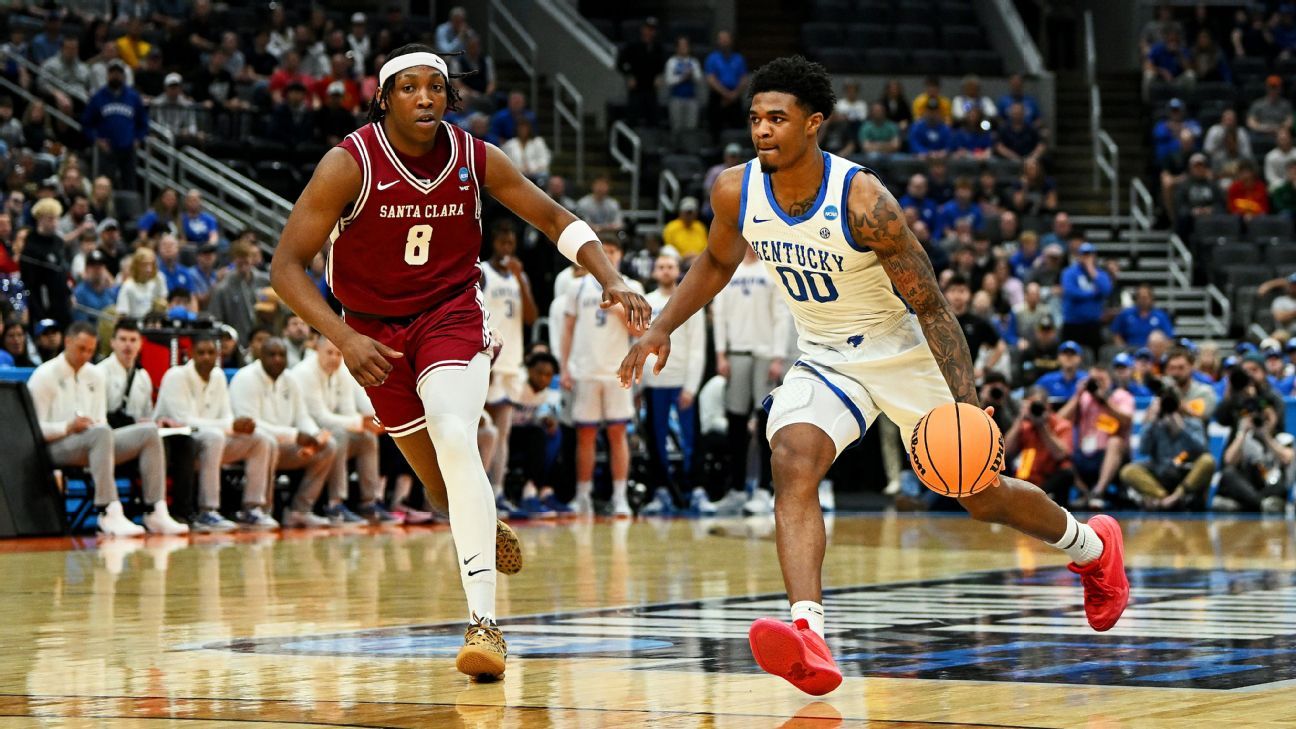
The first day of the 2026 NCAA men’s basketball tournament set a high bar.
The 11-seeded VCU Rams and 12-seeded High Point Panthers delivered the first upsets of March Madness. AJ Dybantsa scored the most points (35) by a freshman in an NCAA tournament debut in BYU’s loss to Texas. And more points rained in with Michigan, Illinois and Saint Louis each eclipsing the 100-point mark Thursday.
The action doesn’t slow down Friday with games underway and more still to tip (all times Eastern):
(15) Tennessee State vs. (2) Iowa State: 2:50 p.m.
(13) Hofstra vs. (4) Alabama: 3:15 p.m.
(9) Utah State vs. (8) Villanova: 4:10 p.m.
(11) Miami (Ohio) vs. (6) Tennessee: 4:25 p.m.
(9) Iowa vs. (8) Clemson: 6:50 p.m.
(12) Northern Iowa vs. (5) St. John’s: 7:10 p.m.
(10) UCF vs. (7) UCLA: 7:25 p.m.
(15) Queens vs. (2) Purdue: 7:35 p.m.
(16) Prairie View A&M vs. (1) Florida: 9:25 p.m.
(13) California Baptist vs. (4) Kansas: 9:45 p.m.
(15) Furman vs. (2) UConn: 10 p.m.
(10) Missouri vs. (7) Miami: 10:10 p.m.
ESPN’s reporters are on-site across the country, tracking the biggest highlights in real time.
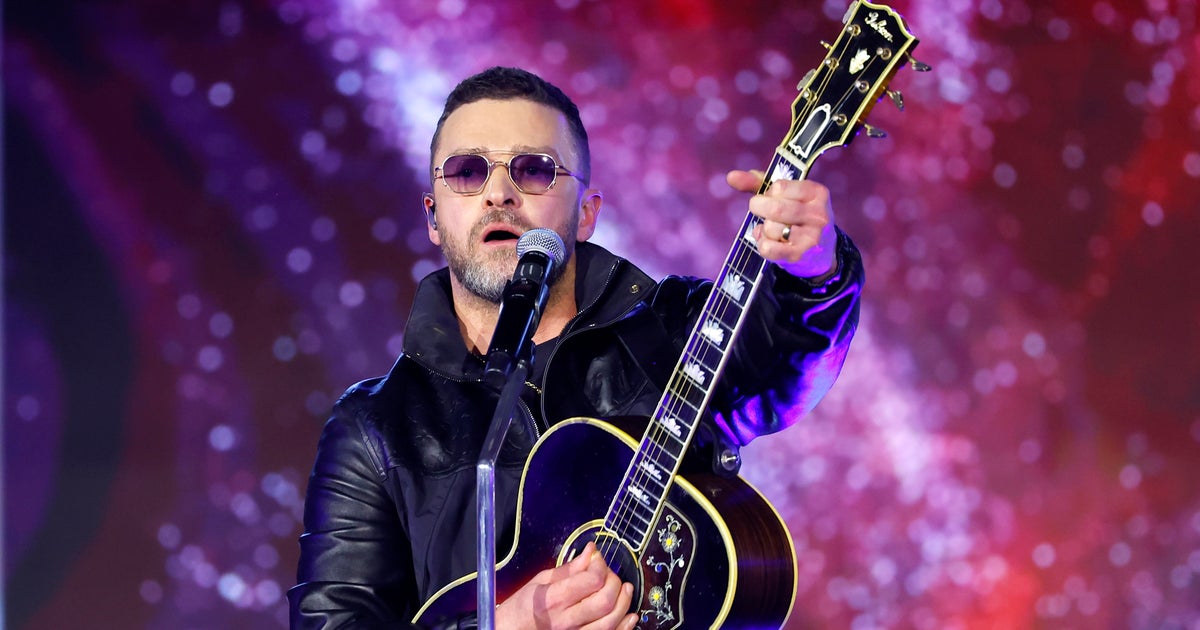
Bodycam video footage of Justin Timberlake’s June 2024 DWI arrest on Long Island will be released to the media, court records show.
The footage will be partially redacted.
Timberlake’s legal team previously sued the Village of Sag Harbor to prevent the release, claiming it showed the pop star “in an acutely vulnerable state” and “would cause severe and irreparable harm” to his reputation. The lawsuit was filed in response to a Freedom of Information Law request.
Now, Timberlake’s legal team and the VIllage of Sag Harbor have come to an agreement on the release of the footage with redactions, court records show.
Acting Supreme Court Justice Joseph Farneti wrote that Timberlake’s team the release with redactions “does not constitute an unwarranted invasion of personal privacy.”
There are some eight hours of footage of Timberlake’s traffic stop and arrest. It’s not clear when, or how much, of that footage will be released as part of the agreement.
“We’re trying to be as transparent as can be with this footage,” Sag Harbor Mayor Thomas Gardella previously told the Associated Press, one of the media outlets that requested the video be released.
“This is a mistake that I’ve made, but I’m hoping whoever’s watching and listening right now can learn from this mistake. I know that I certainly have. And like I said, even one drink, don’t get behind the wheel of a car,” Timberlake said at the time.
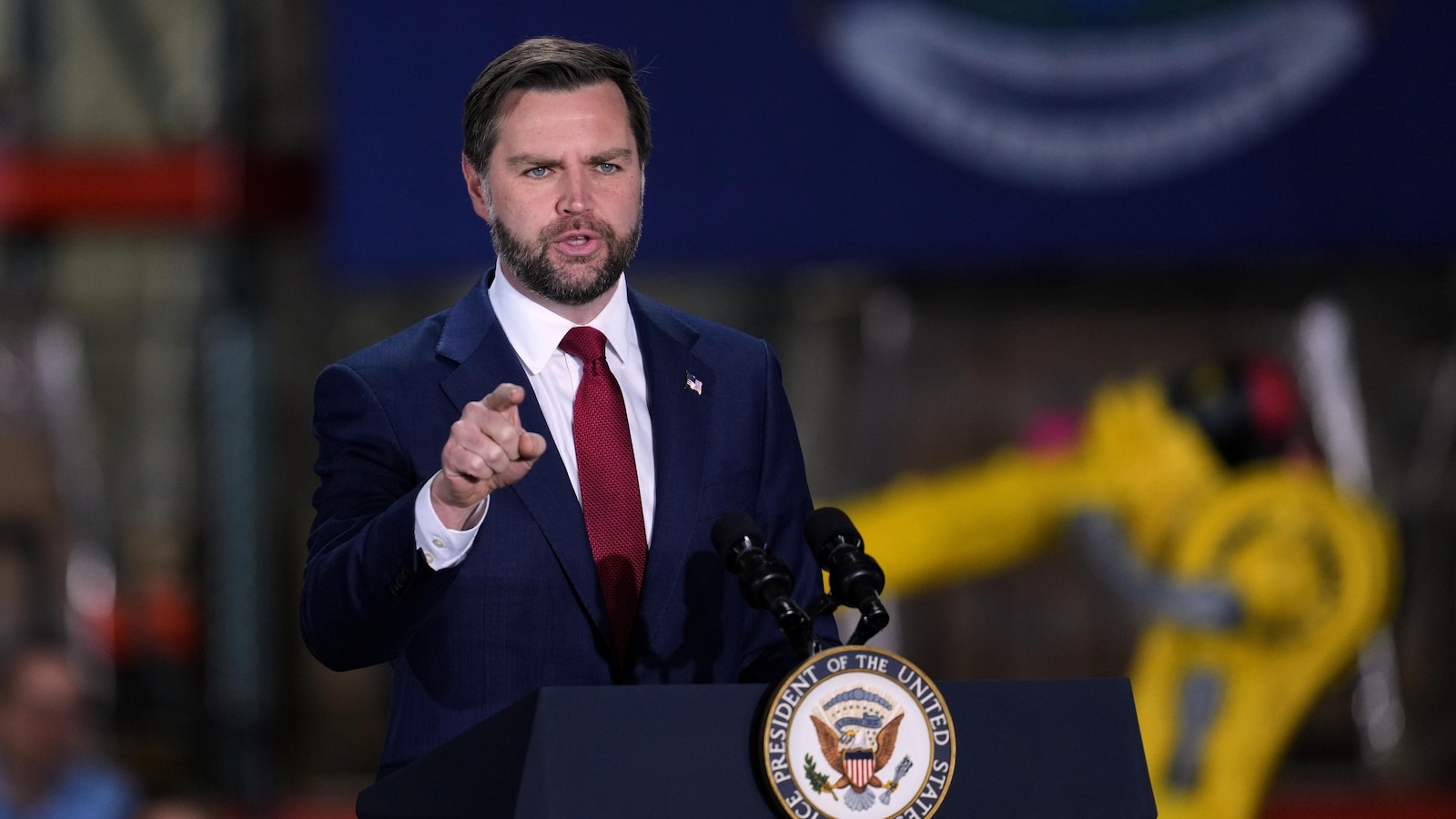
BUDAPEST, Hungary — U.S. Vice President JD Vance will visit Hungary days before Prime Minister Viktor Orbán is set to face his toughest election challenge in two decades, according to Hungary’s foreign minister.
Vance’s office has not confirmed the trip.
The nationalist Orbán, who has been in power since 2010 and is looking for his fifth consecutive election victory on April 12, faces an unprecedented challenge from the center-right Tisza and its leader, Péter Magyar.
Trailing in most polls, Orbán has embarked on a nationwide campaign tour in an effort to shore up support.
Magyar, who has promised to restore Hungary’s democratic institutions that have eroded under Orbán and steer the country back toward its Western allies, has tested what once seemed an unshakable grip on power by the pro-Russian populist.
Speaking on a podcast that aired on Friday, Foreign Minister Péter Szijjártó said Vance’s visit “stems from the very intensive Hungarian–American intergovernmental relationship.” He did not specify a date when Vance might arrive in Hungary.
Vance’s planned trip would come after Secretary of State Marco Rubio visited the capital Budapest last month, where he strongly endorsed Orbán’s candidacy.
Orbán is one of Trump’s most vocal supporters in the European Union, and has actively curried the U.S. president’s favor leading up to the April vote. Orbán earlier expressed his hopes that Trump would make his own trip to Hungary before the election.
Household energy bills could jump by £332 a year in July as recent sharp increases in wholesale prices are set to feed through into Ofgem’s price cap, according to the latest forecasts.
Analysts Cornwall Insight said forecasts for the watchdog’s price cap from July to September had surged to £1,973 a year for a typical dual fuel households – an increase of £332 or 20% on April’s cap.
This marks a significant step up on its forecast from just over two weeks ago, when it had predicted a 10% increase from July.
The independent energy consultants are updating their forecasts every week while the US-Israel war with Iran escalates and the energy market is volatile.
Cornwall said household energy bills over the summer look set to be higher than it had anticipated prior to the escalation of conflict in the Middle East, which has sent wholesale gas and oil prices soaring.
Even if wholesale prices quickly returned to pre-conflict levels, some of the recent volatility will be baked into the next price cap, which covers July to September, it said.
However, the figure is likely to change and the size of the increase to the next price cap will depend on how long gas prices stayed elevated and how long the period of disruption continues.
Ofgem’s price cap is based on average wholesale prices over a three-month period.
A spokesman for the Government’s Department for Energy Security and Net Zero said Cornwall’s forecasts are “highly speculative”, adding: “Using wholesale price fluctuations to predict what will happen in the next few months is not reliable.
“Tackling the affordability crisis is the Government’s number one priority. That is why we are acting to bring bills down now and for the long term.”
The price most households pay for energy will fall by 7% from April 1, or £117 a year, driven by the Government’s promise to cut bills by an average of £150 by removing green subsidies.
However, gas prices have been climbing in recent weeks, and this could feed through into future electricity prices and how much it costs to heat people’s homes.
On Thursday, UK natural gas prices reached a three-year high after jumping by around 25% during the day. Prices had eased back a little on Friday.
The latest spike was driven by attacks on energy facilities in Iran and Qatar, stoking fears about longer-term damage and disruption to gas supplies.
Shell said one of its key gas plants was damaged in the strike on Qatar, which is used to make things like fuel for transport and ingredients for plastics and cosmetics.
Qatar’s state-backed energy company Qatar Energy has halted production of liquified natural gas (LNG) at its site since the beginning of March.
Meanwhile, the UK’s competition watchdog is looking into concerns that households relying on heating oil are facing sudden price increases on the back of the conflict.
Home heating oil, which is used by around 1.5 million households in the UK – primarily in Northern Ireland, is not covered by Ofgem’s price cap, which currently fixes prices until the end of June.
The Competition and Markets Authority (CMA) said on Friday that it had launched a market study into the supply of heating oil to see how it was impacting consumers and whether it needs to intervene.
Growth in India’s eight core infrastructure industries eased to 2.3 per cent in February, down from 3.4 per cent in the same month last year, reflecting weakness in energy-linked segments even as output expanded in several manufacturing-oriented sectors.According to official data, production of crude oil, natural gas and petroleum refinery products declined during the month, moderating the overall expansion in the core sector basket. The eight industries together account for 40.27 per cent of the weight in the Index of Industrial Production (IIP).The combined Index of Eight Core Industries (ICI) rose 2.3 per cent (provisional) year-on-year in February 2026, the Ministry of Commerce and Industry said in a release, noting that cement, steel, fertilisers, coal and electricity recorded positive growth during the month.During April–February of FY26, cumulative growth in core infrastructure output stood at 2.9 per cent, compared with 4.4 per cent in the corresponding period of the previous financial year, indicating a broader slowdown in momentum.“The final growth rate of Index of Eight Core Industries for January 2026 was observed at 4.7 per cent. The cumulative growth rate of ICI during April to February, 2025-26 is 2.9 per cent (provisional) as compared to the corresponding period of last year,” the release said.Coal production — carrying a 10.33 per cent weight — increased 2.3 per cent in February over the same month last year. However, its cumulative index remained unchanged at 185.8 during April–February FY26.Crude oil output (8.98 per cent weight) declined 5.2 per cent year-on-year in February, while the cumulative index contracted 2.5 per cent over the April–February period.Similarly, natural gas production (6.88 per cent weight) fell 5.0 per cent during the month, with its cumulative index slipping 3.5 per cent compared with the year-ago period.Production of petroleum refinery products (28.04 per cent weight) declined 1.0 per cent in February and remained marginally lower — by 0.1 per cent cumulatively — during the first eleven months of the fiscal.Among the growth drivers, fertiliser output (2.63 per cent weight) rose 3.4 per cent year-on-year in February and recorded 2.0 per cent cumulative growth during April–February.Steel production — with a 17.92 per cent weight — posted a strong 7.2 per cent increase in February, while cumulative growth stood at 9.7 per cent.Cement output (5.37 per cent weight) expanded 9.3 per cent during the month and recorded 9.2 per cent growth cumulatively over the fiscal period under review.Electricity generation (19.85 per cent weight) increased 0.5 per cent year-on-year in February and registered 0.9 per cent cumulative growth during April–February.The data indicates that while construction-linked and industrial segments continue to lend support, the contraction in energy-related sectors remains a key drag on overall core infrastructure output.(With inputs from Agencies)
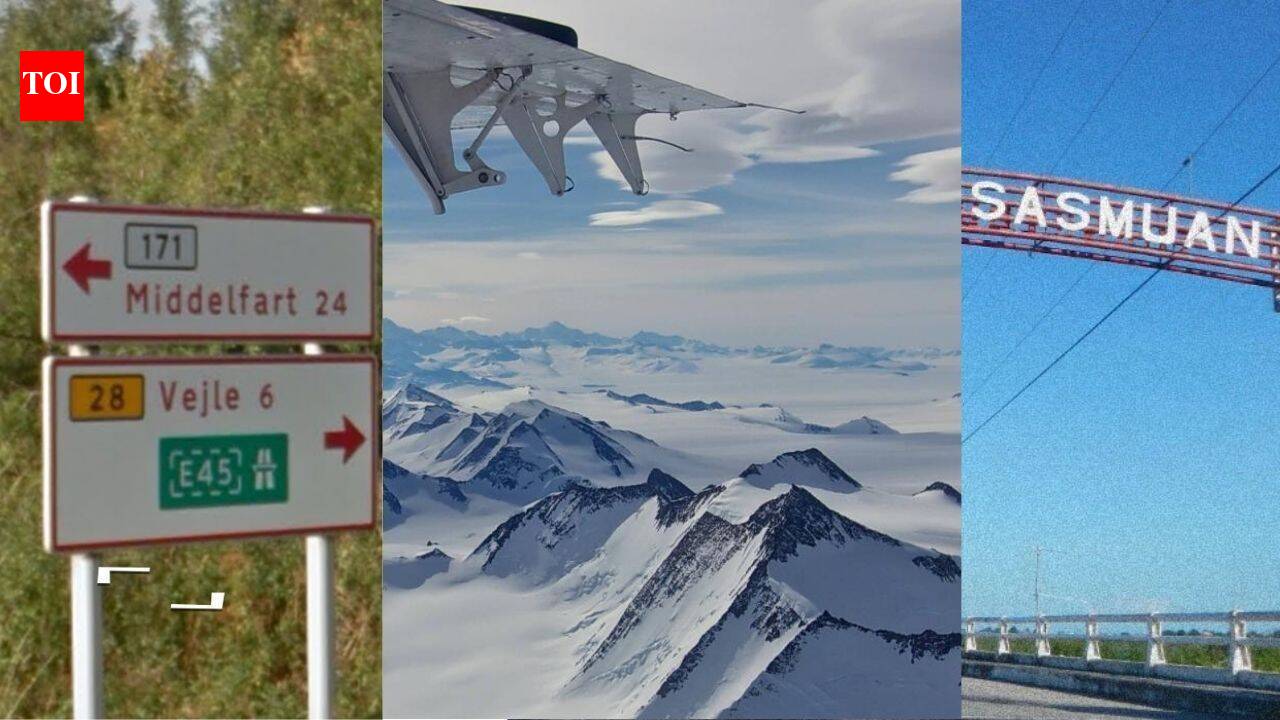
Geographic names can be serious in nature regarding boundaries and culture, but can also be a source of comedic relief. From Antarctica to Turkey, places often use names that provide adventure seekers with photographic opportunities and historians with opportunities to explain. Names may provide humour in English, but each possesses its own history, language or accidental derivation- the history of the people who settled there. Names may arise from an attempted marketing scheme of the 19th century, or be a result of mistranslation from ancient dialects or be the result of an ‘accidental’ colonial society.The following destinations demonstrate that the reality is stranger than the fiction on every occasion, and often funnier; herein exists a world where, from the icy peaks of the Executive Committee Range in Antarctica to the coastal reaches of Useless Harbour in Australia.
Airports across the country are reporting a high number of TSA callouts as the partial government shutdown led to officers receiving $0 paychecks last week.
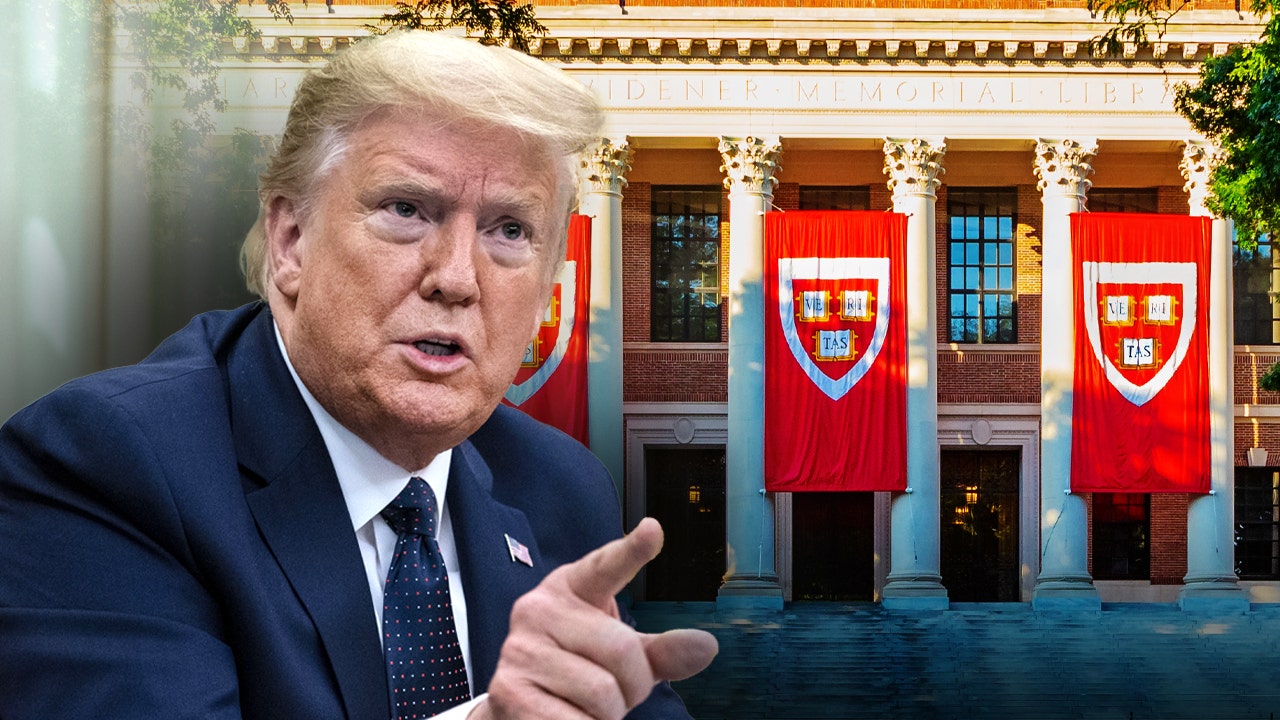
The Trump administration filed a lawsuit Friday against Harvard University, alleging that it failed to protect Jewish and Israeli students by essentially enabling antisemitism on campus in the wake of the Oct. 7, 2023, attack against Israel by Hamas.
The 44-page lawsuit, filed in Massachusetts, is the latest in an ongoing battle between the White House and the Ivy League school. The complaint alleges that Harvard has tolerated antisemitic mobs comprised of students, faculty members and visitors opposed to Israel and has acted with indifference by selectively enforcing its campus rules to permit the continuation of the harassment.
“Harvard University has failed to protect its Jewish students from harassment and has allowed discrimination to wreak havoc on its campus,” a White House spokesperson told Fox News. “President Trump is committed to ensuring every student can pursue their academic goals in a safe environment.”
The Trump administration is seeking to recover billions of taxpayer dollars from Harvard University in a new lawsuit against the elite institution. (Getty Images)
The administration is seeking to recover billions of taxpayer dollars given to the elite university by federal agencies.
“Since October 7th, 2023, too many of our educational institutions have allowed anti-Semitism to flourish on campus – Harvard included,” said Attorney General Pam Bondi. “Today’s litigation underscores the Trump Administration’s commitment to demanding better from our nation’s schools and putting an end to discriminatory behavior that harms students.”
In a statement to Fox News Digital, a Harvard spokesperson said the university “cares deeply” about its Jewish and Israeli students and remains committed to making sure they are embraced and respected.
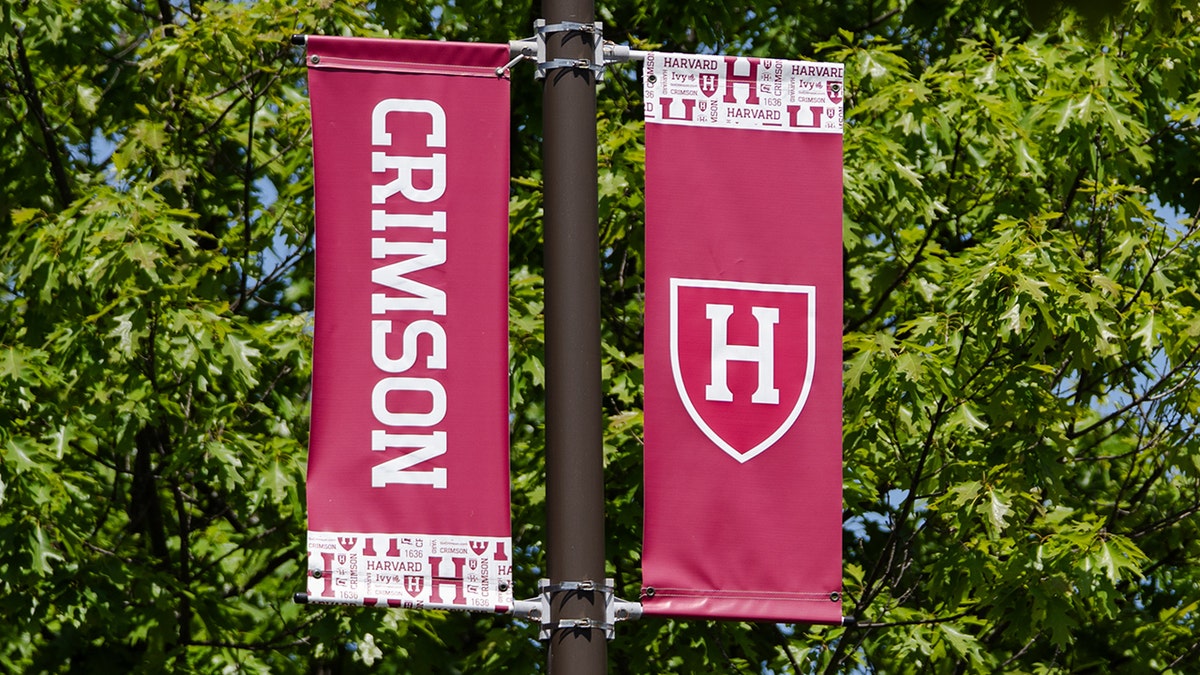
The Harvard Crimson sports crest on banners at the Harvard University Athletics Complex in Boston, Massachusetts, on Tuesday, May 27, 2025.(Sophie Park/Bloomberg via Getty Images)
“Our actions illustrate this. Harvard has taken substantive, proactive steps to address the root causes of antisemitism and actively enforces anti-harassment and anti-discrimination rules and policies on campus,” the statement said. “We also have enhanced training and education on antisemitism for students, faculty, and staff and launched programs to promote civil dialogue and respectful disagreement inside and outside the classroom. Harvard’s efforts demonstrate the very opposite of deliberate indifference.”
The school said it will continue to prioritize such work and defend itself, calling the lawsuit “yet another pretextual and retaliatory action by the administration for refusing to turn over control of Harvard to the federal government.”
Friday’s lawsuit is another in the protracted battle between Havard and President Donald Trump. In June, the administration said a civil rights investigation had led to a formal finding that Harvard tolerated antisemitism.
Anti-Israel demonstrators gather with Palestinian flags at Harvard University for a rally in Cambridge, Massachusetts, on Oct. 14, 2023.(Joseph Prezioso/AFP via Getty Images)
“Harvard remained deliberately indifferent to a level of hostility on its campus so well-known across the nation that members of Congress were writing about it,” government lawyers wrote. “Harvard also intentionally refused to enforce its campus rules — rules it enforced against others — when the victims were Jews or Israelis. This sent the clear message to Harvard’s Jewish and Israeli community that the indifference was not an accident; they were being intentionally excluded and effectively denied equal access to educational opportunities.”
Last year, the school sued the Trump administration over the freezing of federal funds. A judge blocked the Trump administration’s attempt to freeze Harvard’s federal funds.
The Internal Revenue Service was also considering stripping Harvard of its tax-exempt status.
Harvard is slated to receive more than $2.6 billion from the Department of Health and Human Services, the Justice Department said.
In February, the Trump administration said it was seeking to recover $1 billion in damages from Harvard, the main target in its attempt to leverage federal funding in order to crack down on antisemitism on college campuses.
Anti-Israel demonstrators seen at Harvard.(Getty Images )
LONDON — The Champions League anthem was played at the Tottenham Hotspur Stadium on Wednesday. Atletico Madrid were in town, and Spurs were playing in football’s premier club competition with the prize of a quarterfinal against Barcelona at stake.
Despite a 3-2 second-leg victory for Igor Tudor’s team, Spurs suffered a 7-5 aggregate defeat that ended their Champions League dream. Heading into the weekend, they’re now faced with a relegation battle to save their Premier League status.
Who knows when the Champions League anthem will next ring out around Tottenham’s £1 billion stadium? Right now, it seems like it could be an eternity. If Spurs lose at home to Nottingham Forest on Sunday — Spurs (16th) are a point above the relegation zone, while Forest (17th) hover above it on goal difference — next season’s fixture list will be more likely to include Championship games against Preston North End and Lincoln City than Champions League nights against Europe’s elite.
“Nottingham Forest on Sunday is the biggest game in the club’s history for a long time,” former Spurs goalkeeper Paul Robinson, who suffered relegation from the Premier League with Leeds in 2004, told ESPN. “It would just be an absolute disaster for the club from top to bottom if they were to be relegated.”
Spurs last suffered relegation in 1977. They bounced back after just one season, but in those pre-Premier League days, there was no financial hammer blow to dropping down a division. Clubs could ride it out, often keeping their team together and barely feeling the pain, but in the modern game, relegation can mean an instant £100 million hit and a player exodus. For a club the size of Spurs, the implications would be enormous.
But how has it come to this? Spurs were Champions League finalists under Mauricio Pochettino in 2019, they won the Europa League with Ange Postecoglou less than 12 months ago and their status as one of the Premier League’s ‘Big Six’ — alongside Arsenal, Chelsea, Liverpool, Manchester City and Manchester United — should make them too big and too wealthy to ever have to worry about relegation.
However, they are not too good to go down. Spurs haven’t won a Premier League game in 2026 — their last league win was a 1-0 victory at Crystal Palace on Dec. 28 — and since the start of last season, they have lost twice as many league games (36) as they won (18). Tudor, appointed as head coach until the end of the season last month, is the club’s sixth appointment since Pochettino’s exit in November of 2019, and he has taken just one point from four league games in charge.
There has been turmoil off the field too, with Daniel Levy’s 24-year reign as chairman coming to an abrupt end last September. Sporting director Fabio Paratici followed Levy out the door in January.
All of the ingredients of a club in turmoil are there. Bad results, underperforming players, managerial change, instability in the boardroom and supporter unrest. But still: could Spurs really go down?
Where did it all go wrong?
The consensus among many connected with Spurs is that the 2019 Champions League final defeat against Liverpool in Madrid was the fork in the road, with the club ultimately picking the wrong direction.
Pochettino’s team included Harry Kane, Christian Eriksen, Son Heung-min, Hugo Lloris and emerging talent Dele Alli. The coach wanted to take Spurs to the next level, turn them into winners rather than challengers, but the summer transfer window saw potential, rather than proven, talent arrive in the shape of Jack Clarke, Tanguy Ndombele, Giovani Lo Celso and Ryan Sessegnon. By November, Pochettino was out and in came Jose Mourinho, a change that triggered the downward spiral.
“By the time Mauricio left, it was clear he had to go,” a boardroom source told ESPN. “He and Daniel [Levy] just weren’t getting along, I think they were both worn out by each other.
“But Daniel was listening to too many people, wrong people, and I think he was seduced by the idea of having Jose as his manager. Jose is a great manager, but he inherited a squad built for Pochettino — young players who need encouragement and development — and he is just too volatile and aggressive for a young squad. Spurs needed another Pochettino type after Mauricio left, but they went in another direction and it’s never been the same since.”
Ricky Sacks, who hosts the “Last Word on Spurs” podcast, echoes that perspective, saying that the failure to develop Pochettino’s team was the root cause of the problems the club’s now attempting to deal with.
“The club has gone round and round in circles since 2019,” Sacks told ESPN. “There has been no clear idea or identity, nobody knows what they want to do, because they have gone from one style of coach to another.
“They sacked Mourinho four days before the 2021 Carabao Cup final against Man City, failed to back Antonio Conte, and then went from Ange [Postecoglou] to Thomas Frank who, although he seems a good guy, was just never equipped to upscale from Brentford to a club like Spurs. It’s just been a mess.”
Alongside the managerial churn, Spurs have consistently failed to compete at the top end of the transfer market. Tottenham’s biggest-ever signing — forward Dominic Solanke arrived from Bournemouth for a £65 million fee in August, 2024 — is by far the smallest record-transfer among the ‘Big Six’, who have all spent in excess of £100 million for a player with the exception of United, whose record signing is the £89.3 million deal for Paul Pogba from Juventus in August 2016.
Spurs have also earned a reputation for being frugal on player wages. In their most recently published accounts, for the 2023-24 season, Tottenham’s wage bill stood at £222 million — almost half of the £413 million paid by City in the same period — but that figure meant they paid just 42% of their revenue on wages. By comparison, Aston Villa‘s most recent wages to revenue ratio was 71%, while Newcastle United‘s figure was 68%, so Spurs are also falling behind clubs outside of the ‘Big Six’ when it comes to competing for new signings.
Spurs’ owners, ENIC, which is run by the Lewis Family Trust, injected £100 million of new capital into the club last October, but ongoing speculation of a potential sale has not gone away despite ENIC’s denials that they are looking to sell what is, off the pitch at least, a major football club.
It is the magnificent 62,000-capacity stadium, the club’s century-old history and their huge fanbase, both in London and globally, that earns Spurs their place in the ‘Big Six’, but former manager Postecoglou recently questioned whether they deserve to described as a “big” club.
“Obviously, they’ve [Spurs] built an unbelievable stadium, unbelievable training facilities,” Postecoglou told “The Overlap,” a popular podcast. “But when you look at the expenditure, particularly in the wage structure, they’re not a big club.
“I saw that when we were trying to sign players, because we weren’t in the market for those players. I was looking at Pedro Neto, [Bryan] Mbeumo and [Antoine] Semenyo and Marc Guéhi, because if we’re going to go from fifth to there [challenging for trophies], that’s what the other big clubs would do in that moment.”
Instead, Spurs went for Archie Gray, Wilson Odobert and Lucas Bergvall — players for tomorrow rather than today, just like Ndombele, Sessegnon and Lo Celso were in 2019.
Despite the poor recruitment and managerial changes, former Spurs goalkeeper Robinson believes that Levy has been unfairly labelled as the major reason behind the club’s fall from grace.
“Daniel gets a lot of stick and came under a lot of pressure, but when things are right on the pitch, the eyes don’t turn towards the director’s box,” Robinson said. “Spurs have a great stadium and training ground — and Daniel Levy was part of that — but the fans are sick to death of hearing about it because the football side of things has been neglected.
“I think Daniel was badly advised at times, maybe listening to a lot of people as the club grew, but to his credit, he listened to the fans when they were clamoring for trophies and employed two ‘win-now’ managers in Mourinho and Conte. He just didn’t back them enough with win-now players to get them where they wanted.
“You can’t deny that recruitment has been really poor in recent years, but Spurs have also waved goodbye to their top scorers — Kane, Son and Brennan Johnson — from each of the last three seasons.”
play
0:41
Tudor: Tottenham’s win vs. Atletico Madrid important for morale
Igor Tudor reflects on Tottenham’s Champions League exit after their 7-5 aggregate loss against Atletico Madrid.
Tottenham’s failure to sign the players wanted by the manager at the time proved to be an issue right until the end of Levy’s time at the helm. Last summer, Frank wanted Crystal Palace forward Eberechi Eze, Forest midfielder Morgan Gibbs-White and his former Brentford striker Bryan Mbeumo, but the club missed out on all of them. They also tried and failed to Antoine Semenyo in January, with the Bournemouth forward opting instead to move to City.
One source told ESPN that a talent drain of senior figures within the hierarchy has also hurt the club — “they’ve never been good at retaining people,” the source said — with Victoria Hawksley (LIV Golf), Michael Edwards (Liverpool), Paul Barber (Brighton), Damien Comolli (Juventus) and former chief scout and technical director Steve Hitchen all cited as staff who have been allowed to leave Spurs during the Levy era.
But with Levy gone and CEO Vinai Venkatesham — who joined from Arsenal less than a year ago — telling Tottenham’s Fan Advisory Board earlier this month that “significant change” is needed after criticizing Levy’s running of the club, more upheaval is likely in the months ahead, no matter what division Spurs find themselves in.
Can Spurs really go down?
Wednesday’s 3-2 win against Atletico on the back of last Sunday’s 1-1 draw at Liverpool have lifted the mood in and around Spurs, but the Forest game continues to generate anxiety among the club’s fan base.
“It feels like a genuine relegation six-pointer and the momentum from winning or losing will be huge,” Sacks said. “The last two games have raised morale, but they were free hits in some ways.
“Forest is different. The pressure is on and we have to win, so the players have to fight and scrap and we don’t know if they can do that. Let’s not forget that they have only won two home league games all season.”
Despite Spurs being regarded as a sensible, well-run, but cautious, club — something for which Levy has been praised and criticized in equal measure — the financial catastrophe of relegation cannot be overstated.
According to UEFA’s 2025 European Club Finance report published last month, Spurs recorded the third-largest pre-tax loss (at £129 million) in Europe last year, after Chelsea and Lyon, despite generating a club record turnover of £580 million. Revenue was the ninth-highest in Europe due to the stadium’s commercial activity, including NFL fixtures and concerts, and competing in European football. The club’s net debt, due to borrowings for the new stadium, stood at £772.5 million, while reserves dropped from £198 million to £79 million.
Tottenham’s losses led CEO Venkatesham to warn the fan advisory board of a need to monitor the club’s compliance with Financial Fair Play regulations, so there is no question that relegation would create severe difficulties for the club.
Last season, Spurs earned £127.8 million in Premier League prize money despite finishing 17th. Relegation would be cushioned by three years of parachute payments, but they would drop from £48.95 million in year one to just £17.8 million in year three; at the same time, they would be earning just £5.7 million-per-year from the EFL’s broadcasting deal. Villa, Sunderland and Leeds United were forced to close full sections of the stadium after relegation due to the cost of maintaining them without fans to fill the seats. Could the same happen at Spurs?
They would be the biggest club to go down since Leeds in 2003-04 and relegation led to a financial meltdown at Elland Road and the mass exodus of players. It took the club 16 years to return to the top flight.
“I think it would be more alarming and an even bigger story than Leeds if Spurs go down,” said Robinson, who was part of the 2004 Leeds team. “Spurs have been a regular European team, they reached the Champions League final seven years and won the Europa League last year, so it would be much bigger.
“When a team is going down, players know they will be leaving. At Leeds, you would turn up for training not knowing whether somebody would still be there or if the club had moved them on for the finances. That’s what relegation brings — the initial destruction, and then the fight to come back. It’s not easy to do that.”
play
2:17
Gibbs: Tottenham draw Liverpool’s ‘story of the season’
Kieran Gibbs explains what’s going wrong at Liverpool this season following their late draw vs. Tottenham in the Premier League.
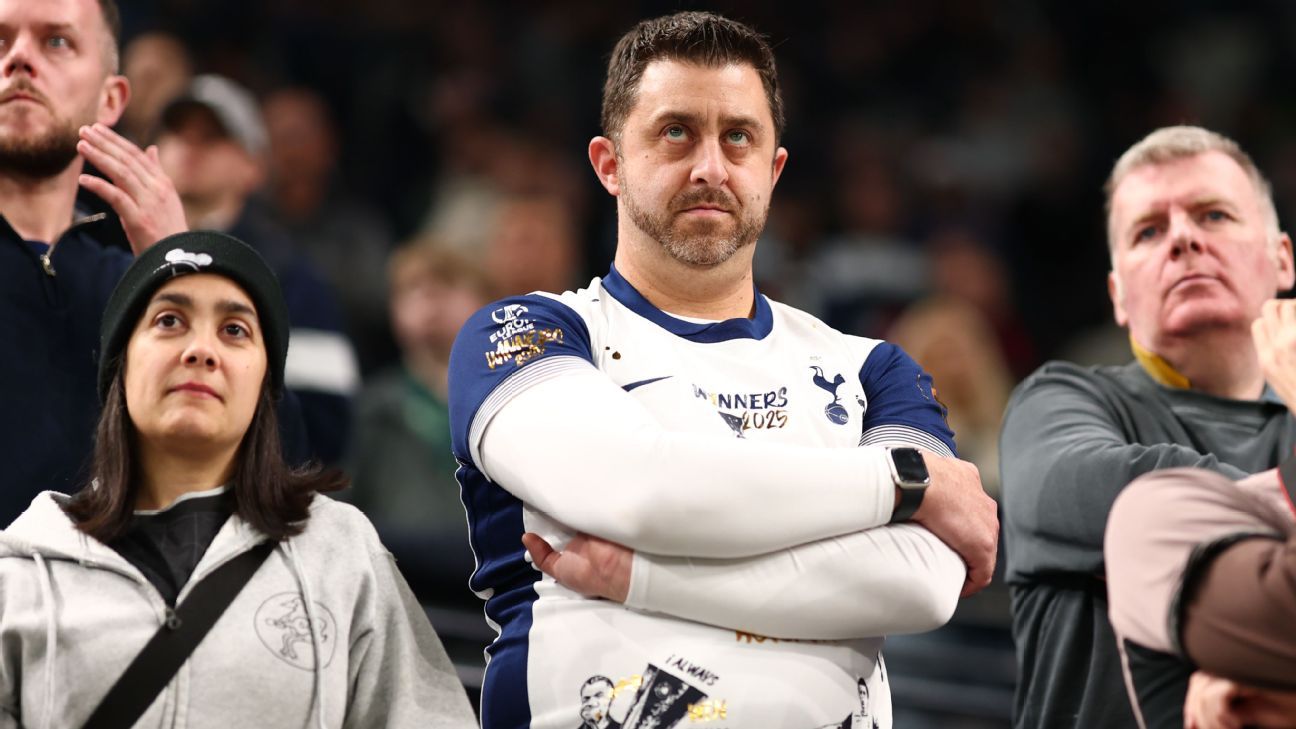
The threat of relegation has, however, led to unity among the Spurs fan base. Plans for a protest against the owners ahead of the Forest game have now been abandoned in favor of a wholehearted attempt to create an atmosphere of support and positivity, with supporters now intending to welcome the team bus with flares and huge crowds on Sunday.
“Given the severity of the situation, nobody wants to be responsible for adding more negativity, so the focus is now on backing the players and being 100% united in that,” Sacks said. “There are still major issues with the ownership, and the majority of fans want new owners, but that is now a matter for another day. The biggest priority is staying in the Premier League, the team needs our help — the club needs our help — so we want to show support and Tudor is backing us to do that.
“He has told all of the players — even the injured ones — to travel on the coach this weekend, so we can give them a real welcome and show our support.”
The worst-case scenario of rivals Arsenal winning the league — worse yet, they could still do the quadruple — and being relegated by Chelsea in the penultimate game of the season at Stamford Bridge is keeping Spurs fans awake at night, as is the prospect of next season’s derby being against League One promotion-chasing Stevenage.
Richarlison‘s equalizer at Anfield, and Xavi Simons‘ match-winning performance against Atletico, have given Spurs hope, so maybe the season isn’t headed for disaster. But this is Spurs, and their fans have become accustomed to expecting the worst and being proved right.
Stock prices in London closed in the red on Friday, although airline stocks showed signs of recovery, as oil prices took a breather amid the ongoing Middle East conflict.
IG’s Axel Rudolph noted that “UK 10-year Gilt yields hit 5%, a level last seen during the 2008 financial crisis”.
The FTSE 100 index was down 145.17 points, 1.4%, at 9,918.33. The FTSE 250 was down 218.07 points, 1.0%, at 21,341.97, and the AIM all-share was down 9.68 points, 1.3%, at 718.17.
The FTSE 100 has lost 342.77 points, 3.3%, over the week.
On the FTSE 100, BP lost 3.6% while fellow oil major Shell lost 0.8%.
On AIM, oil and gas engineering services business Plexus was down 8.1%, despite receiving £1.5 million of orders under a previously announced framework agreement for rental wellhead services with a UK continental shelf operator.
Small-cap company Nostrum Oil & Gas lost 2.0%. The firm operates gas processing facilities and an export hub in north-west Kazakhstan.
Brent oil was quoted at 109.78 dollars a barrel at the time of the London equities close on Friday, down from 110.46 dollars late on Thursday.
It previously spiked at 111 dollars on Friday morning, after Axios reported that US President Donald Trump was mulling plans to get ships passing through the key Strait of Hormuz again by occupying Iran’s Kharg Island.
However, oil prices retreated in light of Israeli assurances that it would refrain from targeting any more of Iran’s energy infrastructure.
Israel had struck Iran’s South Pars gas field on Wednesday, prompting Tehran to attack the energy infrastructure of its neighbouring countries.
Still, Infinox’s Thadeu Dos Santos cautioned that “the market remains highly sensitive to developments in the Middle East and the risk of further supply disruptions…the underlying risk backdrop remains tense.
“Shipping and transit around key regional routes continue to face heightened uncertainty, and the market remains focused on the potential for sustained disruptions to physical flows. With geopolitics still driving risk premia, oil prices are likely to stay volatile and headline-sensitive.”
Meanwhile, airline stocks performed well. FTSE 100’s easyJet and British Airways parent International Consolidated Airlines both gained 1.0%. On the FTSE 250, Wizz Air gained 1.6%.
JD Wetherspoon was the worst mid-cap performer, down 11%, after it issued a profit warning based on rising costs despite reporting sector-leading sales growth.
Gold was quoted lower, at 4,593.70 dollars an ounce against 4,603.53 dollars on Thursday.
On the FTSE 100, Antofagasta lost 4.0% while Endeavour Mining lost 3.5%.
Small-cap gold and metals project developer Cloudbreak Discovery, however, gained 17%.
Cloudbreak said planning is underway for an initial 3,000 to 5,000 metre drilling programme at the Darlot West gold project, and that it believes there is “very significant potential” for the project to host “significant” gold mineralisation.
Meanwhile in the UK, the Office for National Statistics had earlier reported that net borrowing amounted to £14.33 billion in February, the second-highest recorded figure for last month and only beaten during the height of the Covid-19 pandemic.
And in further unwelcome news, Analysts Cornwall Insight said household energy bills could jump by £332 or 20% annually in July as recent sharp increases in wholesale prices are set to feed through into Ofgem’s price cap.
It said forecasts for the watchdog’s price cap from July to September had surged to £1,973 a year for a typical dual fuel households.
This marks a significant step up on its forecast from just over two weeks ago, when it had predicted a 10% increase from July.
In European equities on Friday, the CAC 40 in Paris closed down 1.8%, while the DAX 40 in Frankfurt ended 1.9% lower.
The pound was quoted lower at 1.3323 dollars at the time of the London equities close on Friday, compared to 1.3367 dollars on Thursday. Against the euro, sterling fell to 1.1526 euros from 1.1597 euros a day prior. The euro stood at 1.1561 dollars, higher against 1.1527 dollars. Against the yen, the dollar was trading higher at 159.20 yen compared to 158.09 yen.
Stocks in New York were lower. The Dow Jones Industrial Average was down 0.4%, the S&P 500 index was down 0.7%, and the Nasdaq Composite was down 1.1%.
The yield on the US 10-year Treasury was quoted at 4.37%, widening from 4.27%. The yield on the US 30-year Treasury was quoted at 4.94%, widening from 4.84%.
IG’s Rudolph said investors are “increasingly pricing in a more hawkish Federal Reserve amid concerns that the conflict could sustain inflationary pressures.”
The biggest risers on the FTSE 100 were Metlen Energy & Metals, up 1.1p at 35.4p; Croda International, up 36p at 2,554p; Entain, up 6.4p at 544p; easyJet, up 3.6p at 353.6p; and Burberry, up 10p at 1,014.5p.
The biggest fallers on the FTSE 100 were Smiths Group, down 232p at 2,118p; Babcock International, down 60p at 1,275p; Antofagasta, down 130p at 3,143p; Coca-Cola Europacific, down 280p at 6,910p; and BP, down 20.9p at 562.3p.
On Monday’s economic calendar, the eurozone has consumer confidence and the US has the Chicago Fed national activity index.
On Monday’s UK corporate calendar, Applied Nutrition reports half-year results and several companies release annual reports, including Partners Group Private Equity, Thungela Resources and Distribution Finance.