“Insulin injections remain a daily burden for many patients,” said associate professor Shingo Ito, a researcher in the study’s press release. “Our peptide-based platform offers a new route to deliver insulin orally, and may be applicable to long-acting insulin formulations and other injectable biologics.”
Oral insulin could one day replace injections for people with diabetes, new scientific discoveries suggest.(iStock)
The study, published in the journal Molecular Pharmaceutics, tested the delivery of oral insulin by building a carrier peptide called DNP-V. This peptide helps to transport insulin through the small intestine, where protein drug absorption is usually poor.
In diabetic mice models, the researchers administered the peptide by mouth with zinc-stabilized insulin, which was formulated with zinc ions to make it more stable, according to the study.
“Insulin injections remain a daily burden for many patients.”
The result was a rapid and significant drop in blood glucose, as well as a sustained (longer-term) decrease. The mice’s blood sugar was reduced to near-normal levels.
When DNP-V was attached directly to insulin, the results showed enhanced absorption in the intestines and a similar glucose-lowering effect, the researchers noted.
The treatment was effective in different diabetes models, significantly reducing blood sugar spikes after meals with just one dose per day.
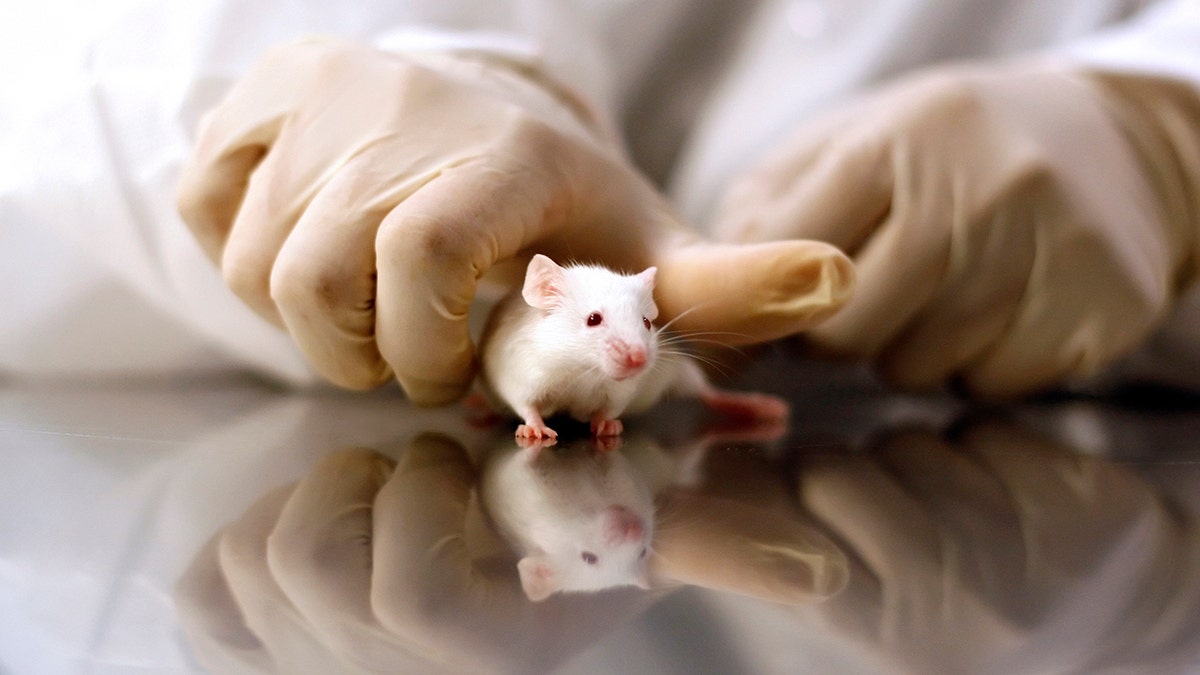
The study was done in mice, which leaves uncertainty if the treatment will translate to humans.(iStock)
The findings suggest that DNP peptides could serve as flexible, adaptable platforms for delivering large-molecule drugs by mouth, the authors concluded in the study abstract.
“This technology can simply and effectively convert injectable biopharmaceuticals into orally administrable forms, offering a promising path to practical, patient-friendly oral therapies,” they wrote.
Although the researchers are optimistic about the findings translating to larger therapeutic models, they noted that the results in mice do not guarantee the same outcome in humans, and that more research is needed.
For diabetics, insulin is typically administered via injection to regulate blood sugar levels.(iStock)
Dr. Marc Siegel commented on this development, noting that oral insulin could make a big difference in healthcare.
“Insulin use, especially in type 1 diabetes, is sometimes difficult to regulate by injection,” Siegel, who was not involved in the study, told Fox News Digital. “Oral use would have major advantages.”
Easter used to be a fairly simple affair; a nice bit of lamb, an Easter egg or two and handmade cards. But these days, there’s pressure to make it more of an extravaganza, with themed outfits, home makeovers and excessive amounts of chocolate (not ideal, when chocolate prices have soared).
On top of that, “schools are closed for that extra bit longer. That means, if you’re a parent, you’re having to spend more on looking after your children during that time, whether it’s putting them into holiday clubs or taking them to various events, on excursions,” says Rajan Lakhani, personal finance expert and Head of Money at Plum.
The rate of inflation won’t help either. “Inflation has been quite significant over the past few years, and until recently, it had started coming down, but now potentially it’s increasing again, with what we’re seeing going on with geopolitical events,” says Lakhani. “Even though the rate of inflation is decreasing, that doesn’t mean prices of things are decreasing, it just means they’re increasing at a lesser pace.”
These factors combined can lead to a very pricey Easter, but there are ways to cut costs and watch the pennies…
Make an Easter budget
As with anything that could bust your average weekly spend, it’s worth having a budget in mind. One you’ll actually stick to. “Easter is one of those holidays that can steeply become very expensive if you aren’t careful. Between the chocolate spending and the pressure for a full Easter dinner, costs can add up really fast,” says Lakhani. “There are various apps where you can create a specific pocket allocated to your Easter spending and draw from that specifically, so you’re not using any other money, and you’re reminding yourself to stick to that budget.” Try Plum, Monzo and Pocket.
Chocolate and the egg hunt
First, temper expectations. “The Easter bunny doesn’t need to shop for high-end chocolate,” says Lakhani. “You can buy affordable, good-tasting chocolate, like supermarket-own brands and wrap it up yourself in colourful tissue paper with a ribbon, and that creates similar excitement.”
The Easter bunny can also be late. “If your family doesn’t mind a delayed celebration, wait till Monday morning, many of the biggest retailers will reduce Easter egg prices significantly during that period after Easter Sunday.” And that doesn’t have to stop you having an Easter egg hunt. “Kids remember searching for the items and being with friends or family, more than the volume of sugar or chocolate,” says Lakhani. “Replace the chocolate eggs with reusable plastic eggs filled with stickers or fun items. Or create oval shapes from felt, and have coupons to find which allow the kids to stay up later or offer some form of reward.”
Skip shop-bought chocolate nests for making your own too, using own-brand chocolate and cereal. “My kids love stirring in the cornflakes or shredded wheat,” says Lakhani. You can save on the mini eggs on top by shopping around too. “Big brands have seen shrinkflation, so it’s really important you check out different options so you’re getting value for money.”
The roast dinner and beyond
Children will generally miss out on free school meals being off school for Easter, so food spend will go up alongside the Easter meal. Shopping around, buying frozen rather than fresh, buying in bulk, making the most of leftovers and being signed up to supermarket loyalty schemes, will all help, as will batch cooking.
Get a free fractional share worth up to £100. Capital at risk.
For the roast on the big day, “big supermarkets will offer pre-prepared food options, but it’s best to work out whether you can save money by cooking from scratch,” says Lakhani, it’ll also likely taste better. “For example, honey-roasted parsnips; supermarkets will be selling them for upwards of £3 for a small portion, when you can easily buy carrots, parsnips and whatever you want with your lamb, along with a pot of honey, for less than that.”
Again, delaying until Easter Monday means you could snag a roasting joint for half the price too, and “stick to what’s in season, whether it’s carrots, peas or spring greens, they’ll be much fresher and much cheaper.”
Plus, “if you are hosting extended family, you don’t have to shoulder all the costs” says Lakhani. Ask loved ones to bring side dishes, pudding, or even chocolate eggs.
The shops are chock-full of Easter decorations, but homemade can be just as good and fun to create. Simply raid your recycling box for materials and grab a glue stick. “Making origami bunnies, weaving paper baskets or making papier mache eggs and getting the kids involved is a really good option to not only keep costs down but keep them engaged during the holidays,” says Lakhani.
If you do want to buy some decorative bits, consider buying in the post-Easter sale and hold onto them for next year, and, “go online to source discount codes and vouchers before buying anything” says Lakhani. The same applies for excursions and meals out. “There’ll be a lot of offers at this time of year, like ‘kids go free’. You can use AI tools like Perplexity and Claude which can scout multiple sites for discount codes, offers and vouchers,” he adds. “That’ll help you save money and time because you’re not having to trawl through lots of individual sites to find the most relevant discounts.”
Time together
You really don’t have to go all out for Easter, regardless of what you’re seeing other families doing on social media. “Kids don’t remember the extravagance. What they remember is actually spending time with family, doing an Easter egg hunt with their cousins and siblings, and that’s what’s most fun about it,” says Lakhani. “People are so busy now, and when it comes to working life, things are so fast moving. The opportunity to take a few days holiday and spend some quality time with family and your children is really important.”
For many, the pursuit of healthy skin begins and ends with a meticulous routine of cleansers, serums, and moisturisers. Yet, a ubiquitous item in our daily lives, handled constantly and rarely cleaned, is quietly undermining our efforts: the mobile phone. Pressed directly against the skin, this device has emerged as a significant, yet often underestimated, contributor to irritation and even infection.
Dermatologists are increasingly observing a distinct pattern among patients, colloquially termed “phone acne,” even if it lacks a formal medical diagnosis.
Dr Munir Somji, chief medical officer and founder of DrMediSpa, explains that phones “come into contact with our hands, bags, make-up and countless surfaces throughout the day,” leading to a rapid accumulation of oil, bacteria, and debris.
He notes, “When the screen is then pressed against the skin, particularly along the cheek and jawline, that build-up can transfer onto the skin.” This, combined with the heat and friction generated by the device, can irritate the skin barrier and contribute to breakouts.
Consultant dermatologist Dr Derrick Phillips has witnessed similar cases in clinics, particularly during the pandemic when phone usage surged. He observed, “Some patients developed asymmetrical flare-ups of acne on one side of the face,” typically correlating with the side where they held their phone.
While experts agree phones are unlikely to be the sole cause of acne, they can certainly act as an aggravating factor, especially for those already prone to breakouts.
The contaminants lurking on our screens extend far beyond a vague notion of “dirt.” Dr Somji details that “phone screens tend to collect skin oils, sweat, make-up residue, dust and everyday bacteria from hands and surfaces.”
Bacteria on the phone can also cause skin irritation and inflammation (Alamy/PA)
Dr Phillips adds that studies have identified common skin bacteria such as Staphylococcus aureus and Staphylococcus epidermidis on mobile devices, alongside dead skin cells and environmental debris. Given the frequency with which we check our phones and the infrequency of cleaning, this build-up is inevitable. Crucially, unlike many other everyday items, phones are often pressed directly against the face or handled by hands that then touch the face, creating a direct pathway for bacterial transfer to the skin.
The impact of a dirty phone goes beyond the occasional blemish. Dr Somji highlights that “the most common concerns tend to be breakouts and clogged pores, particularly along the cheeks, jawline and chin,” adding that “some people may also experience irritation or redness, especially if they already have sensitive or reactive skin.” Dr Phillips explains that it is a confluence of factors, not just bacteria. “The heat from the device, friction against the skin and the occlusion created when the phone is held tightly to the cheek can trap sebum, sweat and dirt in the pores,” he says, fostering an environment ripe for breakouts. Emerging research also suggests that short-wavelength visible light emitted from screens “may influence certain skin bacteria,” though its clinical relevance is still under exploration.
Experts say cleaning your phone is vital, as it may go on public transport and into your bed all in one day (Alamy/PA)
For those committed to their skincare, the solution to phone hygiene is straightforward: daily cleaning. Dr Somji advises, “Ideally, phones should be cleaned every day, particularly if you regularly hold them against your face,” or if you touch your face while using your phone.
He stresses that “even a quick wipe once a day can help reduce the build-up of oil and bacteria.” He also recommends increased vigilance after activities like workouts or when using your phone with make-up, both of which can increase screen residue. Dr Phillips concurs, stating that daily cleaning is the most effective preventative measure against bacterial transfer. This doesn’t need to be time-consuming; a quick wipe with an antibacterial product at the end of the day can yield significant long-term benefits.
However, the method of cleaning is as crucial as its frequency. Dr Somji recommends that “the safest approach is usually a soft microfibre cloth with a small amount of alcohol-based screen cleaner or disinfectant wipes designed for electronics.”
These products are formulated to eliminate bacteria without leaving irritating residues. Dr Phillips cautions against harsh household cleaning products, explaining, “Bleach or strong detergents can damage the screen and may leave residues that could irritate the skin.” Instead, opt for electronic-specific cleaners, avoid spraying liquid directly onto the device, and ensure the screen is fully dry before use.
Phones are not the only overlooked culprits in our daily lives. Dr Somji points out that “pillowcases, make-up brushes, reusable face cloths, headphones, hats and even glasses can all collect oil, bacteria and product build-up.” Dr Phillips further adds keyboards, laptops, and even car steering wheels to the list of items that can contribute to bacterial transfer. Simple adjustments, such as washing pillowcases weekly, regularly cleaning make-up brushes, and being mindful of anything that repeatedly touches your face, can significantly reduce irritation and breakouts.
Ultimately, effective skincare extends beyond the products we apply; it encompasses everything our skin comes into contact with.
The star Indian wicketkeeper-batter Dinesh Karthik was blessed with a baby girl recently. For him, home is not just a luxurious address but more of a personal space shaped by family values.
SEOUL, South Korea — In their latest joint public appearance, North Korean leader Kim Jong Un and his teenage daughter rode a tank together, state media photos showed Friday, days after they watched rocket launches and fired pistols.
The official Korean Central News Agency reported that Kim oversaw firing and other drills involving tank units and infantry troops on Thursday and called for completing war preparations.
KCNA images showed Kim and his daughter, both wearing black leather jackets, riding in an olive-green tank with other soldiers during Thursday’s training. The images showed the girl sticking her head out of the tank’s hatch, while Kim sitting on the top of the tank and smiling.
The girl, reportedly named Kim Ju Ae and about 13, has accompanied her father to a number of high-profile military and other events since late 2022, sparking outside speculation that she is her father’s likely heir. North Korean state media has called her Kim Jong Un’s “most beloved” or “respected” child and published footage and photos indicating the two’s closeness.
Last week, they fired pistols during a visit to a light munitions factory and watched a live-fire test of multiple rocket launch systems. Last September, the girl went to Beijing with her father, and during New Years’ Day celebrations she kissed her father on the cheek.
South Korea’s spy agency assessed last month Kim Jong Un was close to designating her as his heir. Some experts disagree with that assessment, citing Kim Jong Un’s relatively young age and the extremely male-dominated nature of North Korea’s power hierarchy.
The North Korean training, meanwhile, came as the U.S. and South Korea were engaged in their annual military exercises that North Korea views as an invasion rehearsal. The U.S. and South Korea wrapped up their 11-day computer-simulated command post exercise on Thursday, but they are still continuing field training.
SALEM, Va. — NYU‘s record 91-game winning streak is over after a 60-52 loss to Scranton in the Final Four of the Division III NCAA tournament on Thursday night.
The Violets (29-1) had the second-longest winning streak in NCAA history, trailing only UConn’s 111-game run.
The two-time defending champion Violets got off to a slow start and trailed 30-18 at the half to Scranton (32-0). NYU rallied in the second half, cutting the Lady Royals’ lead to three early in the third quarter, but Scranton answered.
Down 13 in the fourth, NYU got within 56-52 with 46 seconds left but could get no closer as Scranton hit free throws down the stretch, including two by Meghan Lamanna to seal the win.
The Violets last loss was March 11, 2023, when they were beaten by Transylvania in the Elite Eight. Senior Caroline Peper was the only player on the team who had lost a game in her career. She had 19 points in the loss and is the lone senior on the squad.
NYU had been winning by an average of more than 35 points this season. The Violets broke the Division III record for most consecutive wins, held by Washington University of St. Louis, on Feb. 8 with their 82nd consecutive win.
Scranton had beaten Pitt in an exhibition game earlier this year.
OKLAHOMA CITY — Tyler Tanner had 26 points, seven rebounds and five assists, and Vanderbilt rallied to beat McNeese 78-68 on Thursday for its first victory in the NCAA tournament since 2012.
The Commodores (27-8), the No. 5 seed in the South Region, will play No. 4 seed Nebraska in the second round Saturday.
Duke Miles scored 13 points and Devin McGlockton and Tyler Nickel each had 12 for Vanderbilt, which trailed by 12 points in the first half and then took control after the break.
The Commodores shot 51% (26 of 51) from the field and made 17 of 20 free throws.
“What an extremely hard-fought game, and that’s what you expect in the NCAA tournament,” Vanderbilt coach Mark Byington said. “That team is used to winning, and they came out right away and jumped us from the start. I just don’t think we were ourselves for the majority of the game, especially the start.”
Garwey Dual scored 16 points and Larry Johnson had 15 for No. 12 seed McNeese, which was trying to knock off a No. 5 seed for the second straight year. The Cowboys beat Clemson in the first round last year under Will Wade, who then left for N.C. State.
“I thought we were able to get our game plan into the game for the most part,” McNeese coach Bill Armstrong said. “Turned them over 13 times, which they don’t do much. Won the turnover margin by seven. That gave us a chance to win.
“And we fought on the boards with an SEC team, only getting outrebounded by three. We were right there. We shot 18 more shots than they did. We didn’t finish as many plays down the stretch.”
McNeese led for much of the first half before Vanderbilt, which lost to Arkansas in the SEC tournament championship game, found its game. Nickel’s 3-pointer with 4:09 left in the half gave the Commodores a 30-28 lead, their first since 3-2.
“I don’t know if it was something going on from the hangover,” Byington said. “I know our guys prepped well. They were excited to play. We just didn’t have the normal bursts we did. What I really like is I don’t think we had our best game, but the guys just figured out a way.”
Vanderbilt led 38-35 at halftime and extended it to 45-35 on back-to-back 3s by Miles and Nickel early in the second half. McNeese responded with a 7-0 run to make it 45-42, but that was as close as the Cowboys (26-9) would get.
McNeese made 25 of 69 shots (36.2%).
Inside presence McGlockton made all six of his shots and had eight of Vanderbilt’s 37 rebounds. AK Okereke led the team with nine boards. The Commodores outscored McNeese 34-22 in the paint.
Fast-starting Vanderbilt couldn’t keep up with hot-shooting McNeese early, Through eight minutes, the Cowboys shot 64.3% (9 of 14) from the field and 75% (3 for 4) from beyond the arc. Vanderbilt, by comparison, had connected on only one of six 3s. The Commodores were 8 for 18 after that (44.4%).
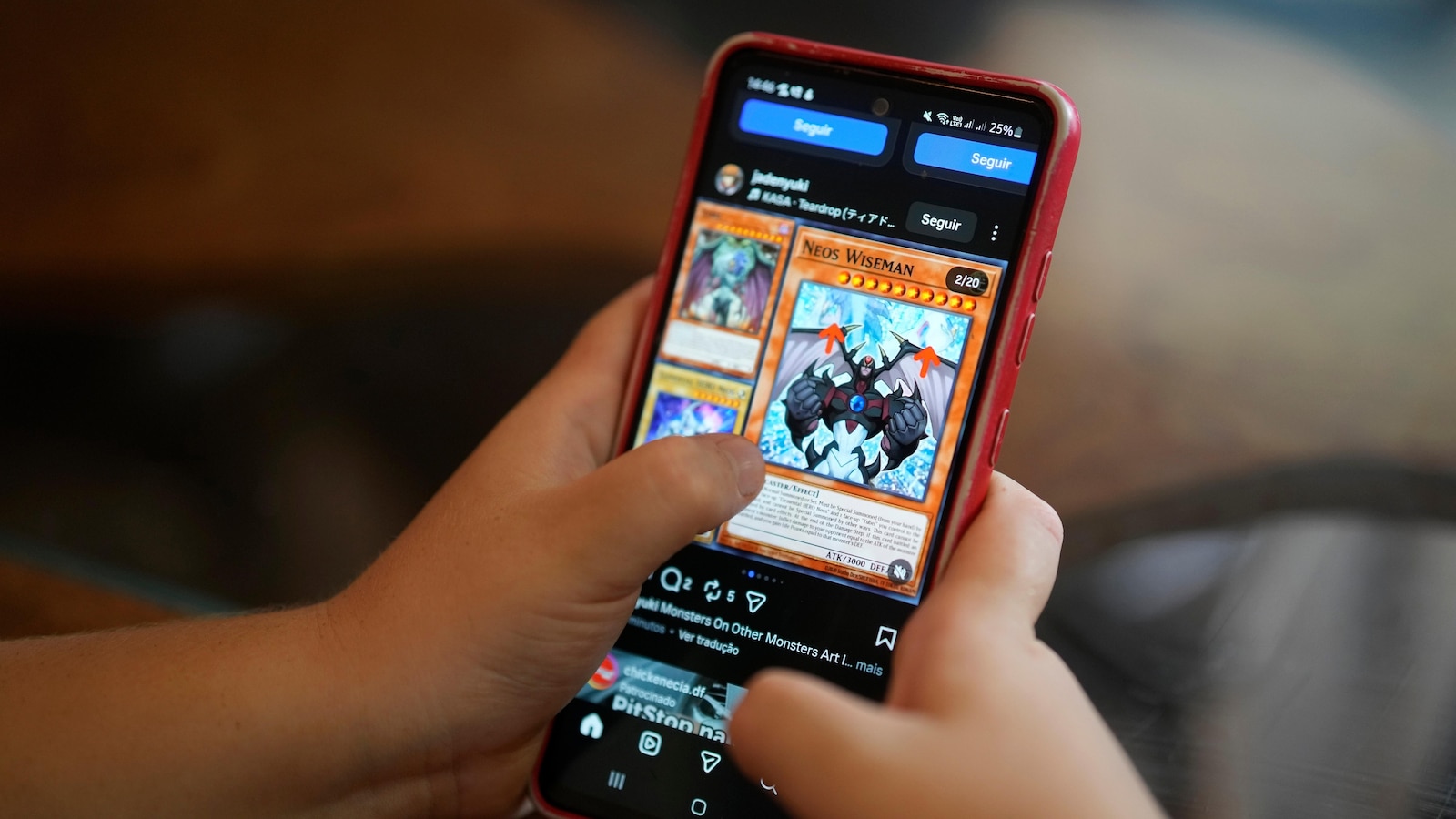
RIO DE JANEIRO — A Brazilian law that seeks to shield minors from addictive, violent and pornographic online content took effect this week, with experts calling it a milestone in the protection of children and adolescents.
The issue gained traction in August, after influencer Felipe Bressanim, known as Felca, published a video denouncing the sexualization of children and adolescents online. The 50-minute video, which has 52 million views on YouTube, accelerated the approval of a bill that had been in the works since 2022.
The Digital Statute of Children and Adolescents passed both houses of Congress and was sanctioned by President Luiz Inácio Lula da Silva in September. It came into force on Tuesday.
Under the new law, minors under 16 are required to link their social media accounts to a legal guardian to ensure supervision. The legislation also prohibits platforms from using addictive features such as infinite scroll and the automatic play of videos. Digital services are also obliged to implement an effective age verification mechanism that goes beyond self-declaration that the user is over 18 to protect them from accessing inappropriate or prohibited material.
“We can no longer think that freedom doesn’t go hand in hand with protection,” said Lula during Wednesday’s signing ceremony. “Enough of tolerating exploitation, sexual abuse, child pornography, bullying, incitement to violence and self-harm just because it happens in the digital environment.”
Maria Mello, head of the digital branch at the Alana Institute that defends the rights of children, said that manipulative design meant to keep people engaged is particularly harmful for children.
“It increases anxiety levels, pulls children out of school, causes vision problems,” Mello said. Other issues include sexual exploitation, encouragement of self-harm, cyberbullying and exploitation of children’s and adolescents’ personal data for commercial interests.
Unlike an outright ban, Brazil’s law seeks to strengthen parental supervision, said Guilherme Klafke, a law professor at Getulio Vargas Foundation, a think-tank and university. The new framework, he said, “places more responsibility on those who offer digital products and services that may be accessed by children and adolescents.”
Lincoln Silva, a 48-year-old businessman who was picking up his two children aged 8 and 11 from school Thursday in Rio de Janeiro, welcomed the new legislation, saying it will reduce access to information that people shouldn’t have at a certain age. “There’s information we should only have in adulthood,” he said.
Tech companies have made a series of announcements to coincide with the new law. WhatsApp last week said it would introduce parent-managed accounts, allowing legal guardians to decide who can contact the child’s account and which groups it can participate in.
And Google said that in Brazil it would use artificial intelligence to estimate whether a user is a minor or adult in order to automatically block certain content. YouTube users under 16 years old will also need parental supervision to create or maintain a channel, the company added.
Companies that disregard the new law could face fines of up 50 million reais (approximately $9.5 million).
The new restrictions may create frustrations among young users, said Renata Tomaz, a communications professor at the Getulio Vargas Foundation. She said it was essential to dialogue with children to make sure they understand why the law was implemented.
“We need to convey all these points that we consider essential to protect children and adolescents in such a way that allows them to look at this law and say: ‘It’s good that I’m being protected.’”
—
Diarlei Rodrigues and Mario Lobão contributed to this report.
NASHVILLE, Tenn. — Three teenagers in Tennessee sued Elon Musk’s xAI this week, claiming the company’s image-generation tools were used to morph real photos of them into explicitly sexual images.
The high school students, who are seeking to proceed under pseudonyms, filed the lawsuit in California, where xAI — Musk’s artificial intelligence company — has its headquarters. They are seeking class-action status in order to represent what the lawsuit says are thousands of victims like themselves who either are minors or were minors when sexually explicit images of them were created.
According to the lawsuit, Jane Doe 1 was alerted anonymously in December that someone was distributing sexually explicit images of her on a social media website.
“At least five of these files, one video and four images, depicted her actual face and body in settings with which she was familiar, but morphed into sexually explicit poses,” the lawsuit states. It claims the person distributing the images knew Doe and used xAI’s image generation tools to turn real photos of her into sexually abusive ones. One of the images was taken from a homecoming photo. Another was taken from a high school yearbook.
The person distributing the images also created explicit images of at least 18 other girls, two of whom are co-plaintiffs in the lawsuit. In late December, local police arrested the perpetrator and confiscated his phone. They found that he had uploaded the images to several platforms where he traded them for sexually explicit images of other minors.
Other AI companies have prohibited their image-generators from producing any sexually explicit content, even of adults. Musk saw this as a business opportunity and promoted the ability of xAI’s Grok chatbot to create “spicy” content, the lawsuit claims. However, there is currently no way to prevent the generation of explicit images of adults while completely blocking the generation of images of children, the lawsuit claims. It also claims that xAI knew Grok would be able to produce sexually explicit images of children but released it anyway.
The lawsuit claims the person who distributed images of the plaintiffs used an application that licensed the xAI technology or “otherwise purchased its access to Grok, and was used as a cut-out or middleman.”
XAI did not respond to an email from The Associated Press seeking comment. But a Jan. 14 post about the controversy on the social media platform X said: “We remain committed to making X a safe platform for everyone and continue to have zero tolerance for any forms of child sexual exploitation, non-consensual nudity, and unwanted sexual content.
“We take action to remove high-priority violative content, including Child Sexual Abuse Material (CSAM) and non-consensual nudity, taking appropriate action against accounts that violate our X Rules. We also report accounts seeking Child Sexual Exploitation materials to law enforcement authorities as necessary.”
Meanwhile, the students in the lawsuit said they worry that the images created of them will live forever on the internet. They fear stalking because their real first names and the name of their school are attached to the files. They worry that their friends and classmates have seen the photos and videos, which appear to be real, and they worry about who will see them in the future.
Jane Doe 1 said she has suffered from anxiety, depression, stress. “She has difficulty eating and sleeping and suffers from recurring nightmares,” the lawsuit states. Jane Doe 2 “has begun self-isolating and avoiding being on her school campus, and even dreads attending her own graduation.” Jane Doe 3 suffers from constant fear and anxiety that someone will see the AI-generated images and recognize her face, according to the lawsuit.