
Home Blog Page 952

Jurors wade through daunting evidence in high-stakes Meta trial about social media risks to children

0
Jurors wade through daunting evidence in high-stakes Meta trial about social media risks to children


SANTA FE, N.M. — A daunting stream of testimony and evidence has been presented in a New Mexico case that explores what social media conglomerate Meta knew about the effects of its platforms on children.

State prosecutors allege Meta failed to disclose the risks that its platforms pose for children, including mental health problems and sexual exploitation. Meta’s attorneys have said the company has built-in protections for teenagers and weeds out harmful content but acknowledged some dangerous content gets past its safety nets.

The trial is approaching its seventh week. Jurors aren’t deliberating yet. But if they find that Meta — which owns Instagram, Facebook and WhatsApp — violated New Mexico’s consumer protection laws, prosecutors say sanctions could add up to billions of dollars. Meta, however, says it would seek a different calculation.

The trial that started Feb. 9. is one of the first in a torrent of lawsuits against Meta and comes as school districts and legislators want more restrictions on the use of smartphones in classrooms.

A slated second phase of the trial, possibly in May before a judge with no jury, would determine whether Meta created a public nuisance with its social media platforms and should pay for public programs to fix matters.

Here’s what to know about the possible outcomes of the trial:

Meta is confronting three counts of violating the New Mexico Unfair Trade Practices Act that protects consumers from deceptive or predatory business practices.

After closing arguments, jurors will weigh whether Meta knowingly misrepresented the risks on its platforms — by omission or active concealment at the least.

The case could sidestep or challenge immunity provisions that protect tech companies from liability for material posted on their social media platforms under Section 230, a 30-year-old provision of the U.S. Communications Decency Act, as well as a First Amendment shield.

In California, a jury already is sequestered in deliberations on whether social media companies should be liable for harms caused to children using their platforms, in one of three bellwether court cases that could set the course for thousands of similar lawsuits.

New Mexico’s case is built on a different foundation — including a state undercover investigation where agents created social media accounts posing as children to document sexual solicitations and the response from Meta.

The lawsuit, filed in 2023 by New Mexico Attorney General Raúl Torrez, also says the dangers of addiction to social media haven’t been fully disclosed or addressed by Meta. Meta hasn’t agreed that social media addiction exists, but executives acknowledge “problematic use” and say they want people to feel good about the time they spend on Meta’s platforms.

Among thousands of pages of documents, the New Mexico trial examines a raft of internal Meta documents and communications. Jurors also heard testimony from Meta executives, platform engineers, whistleblowers who left the company, psychiatric experts and tech-safety consultants.

The jury also may be influenced by testimony from local public school educators who have struggled with disruptions linked to social media, including the exchange of violent and sexually explicit images, along with sextortion schemes targeting children in New Mexico.

The two additional counts of consumer protection violations allege that Meta engaged in “unconscionable” trade practices that were grossly unfair.

In opening statements, prosecution attorney Donald Migliori emphasized accusations that Meta targeted social media engagement with children in an unconscionable way as a source of long-term profit while knowing children were at risk of sexual exploitation on social media. Meta disputes that argument by highlighting platform safety features and content filters for teenagers, who are seen by Meta as trendsetters with limited purchasing power to satisfy advertisers.

The jury would decide whether the conduct was “willful” and merits civil penalties of up to $5,000 per violation, and may help calculate the number of violations.

Torrez says those penalties could add up, given the number of people in New Mexico using Meta’s platforms. Meta, however, has asked to cap those sanctions at one penalty per misleading statement or fair-trade violation — and not the number of social media views or users.

State District Judge Bryan Biedscheid is overseeing both phases of the trial. He would decide nuisance allegations as the case advances — and whether the company is on the hook financially to repair damage.

Prosecutors have accused Meta of carelessly creating a marketplace and “breeding ground” for predators who target children for sexual exploitation. They allege Meta’s platforms also undermine the mental health of teenagers in a variety of ways — from sleep deprivation and depression to self-harm.

Attorneys for Meta accuse prosecutors of cherry-picking evidence as well as shoddy investigative work that may have made matters worse.

At trial, Meta executives described robust systems for detecting child sexual abuse material on its platforms and notifying law enforcement — but said the company also cautions users that its enforcement isn’t flawless.

“We believe it’s important to disclose the risks, but to do so in a consistent and rigorous way,” Instagram head Adam Mosseri said, describing a philosophy that extends to blog posts, service agreements and more.

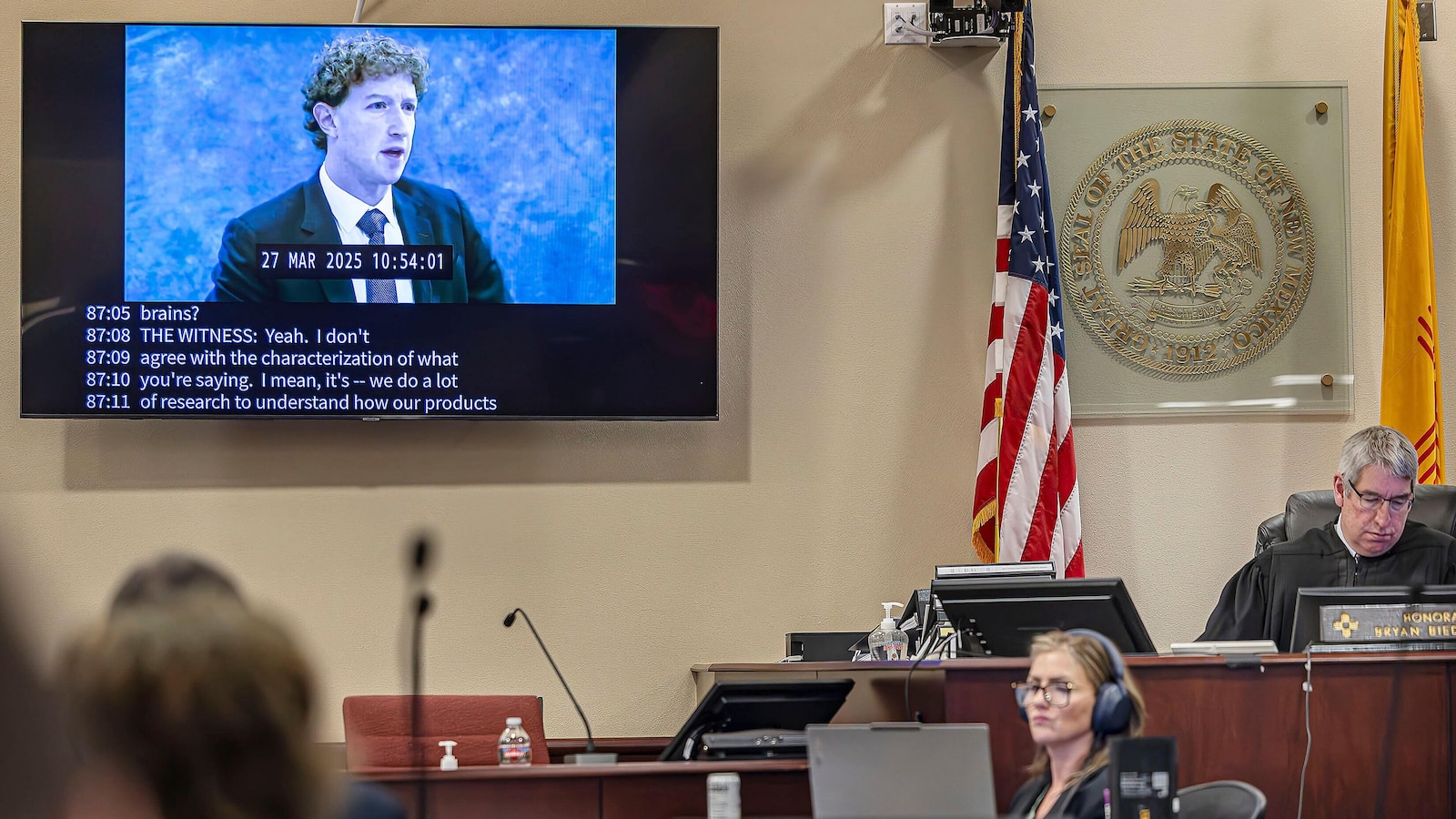
In a video deposition played at trial, Meta CEO Mark Zuckerberg said that “safety is extremely important for the service and having it be something that people trust and want to use over time.” He said Meta in 2017 stopped linking business performance goals directly to the extended amount of time users spend on its platforms.

Torrez says he will request court-ordered relief to make Meta change the way it does business and remedy the harm to children from social media.

“We’re going to have meaningful investments in targeted strategic programming around how you use the internet and how you use social media in ways that are responsible and healthy,” he said on the opening day of the trial.


Source link

Drone video from inside a Fukushima reactor shows a hole in pressure vessel, likely fuel debris

0
Drone video from inside a Fukushima reactor shows a hole in pressure vessel, likely fuel debris


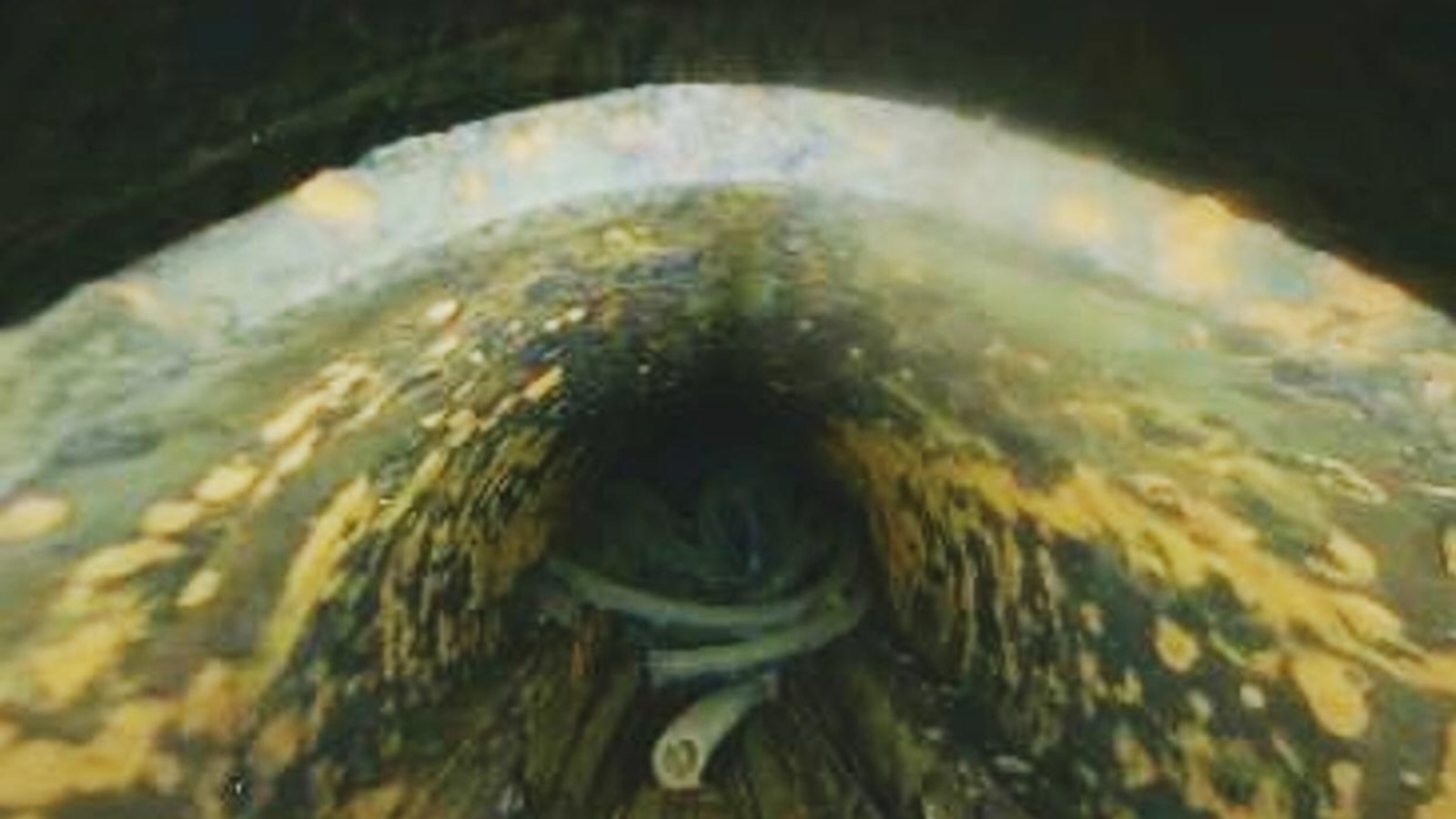
TOKYO — A video taken by tiny drones sent into one of three damaged reactors at the Fukushima Daiichi nuclear power plant showed a gaping hole in the thick-walled steel container of the core, with lumps of likely melted fuel debris hanging from it, in a first sighting of a pressure vessel bottom since the meltdown 15 years ago.

The rare footage was taken by micro-drones — measuring 12 by 13 centimeters (4.7 by 5.1 inches) and weighing only 95 grams (3.3 ounces) each — deployed for a two-week mission to collect visual, radiation and other data from inside the Unit 3 reactor. It was released late Thursday.

The March 11, 2011 massive quake and tsunami destroyed cooling systems at the Fukushima Daiichi plant, causing meltdowns at reactors No. 1, 2 and 3.

The three reactors contain at least 880 tons of melted fuel debris with radiation levels still dangerously high. Tokyo Electric Power Company Holdings, which manages the plant, successfully took tiny melted fuel samples from the Unit 2 reactor last year, but internal details remain little known.

TEPCO plans more remote-controlled probes and sampling to analyze melted fuel and to develop robots for future fuel debris removal that experts say could take decades more.

Sending drones as close as possible to the pressure vessel’s bottom was an important goal of the latest probe, according to the plant operator, Tokyo Electric Power Company Holdings.

During multiple flight missions in the probe that began March 5, remote-controlled micro-drones, one at a time, carefully flew around debris, broken equipment and other obstacles to take footage inside the primary containment chamber, including around the bottom of the pressure vessel.

The footage showed tubes with ruptures and other damaged structures that used to be inside the pressure vessel, which originally was enclosed. It also showed brown and gray objects hanging like giant icicles.

TEPCO spokesperson Masaki Kuwajima said officials confirmed there was a hole at the bottom of the vessel and that those hanging objects, lumps and deposits are believed to be melted fuel debris.

The drones also collected radiation measurements and data to produce a detailed three-dimensional map of the inside of the Unit 3 reactor, Kuwajima said. “We have obtained valuable data that can be used for our future internal investigations and to develop melted fuel debris removal strategy.”

The latest drone mission came nearly a decade after an earlier underwater robot probe provided a less clear picture of the inside of the Unit 3 reactor.


Source link

Scramble for Jet Fuel Shows How Energy Shortages Are Rippling Across Asia

0
Scramble for Jet Fuel Shows How Energy Shortages Are Rippling Across Asia


Three weeks into a war in the Middle East that is roiling energy markets, Asia is confronting one of the first major consequences of an oil shortage, as jet fuel prices surge to record levels and governments scramble to keep flights running.

Airlines have canceled thousands of flights, stranding tens of thousands of passengers. Major regional energy suppliers, including China, South Korea and Thailand, are restricting exports, while import-dependent countries like Vietnam are forced to ration and call on others for help.

The accelerating crisis offers a first glimpse of what happens when oil supplies are suddenly choked off by an unexpected crisis with no clear end in sight. The pain is most acute in Asia, where countries rely on Middle Eastern oil and have limited stockpiles, and experts warn that it may foreshadow more disruptions if the war drags on.

“We’re peering into what our gasoline and diesel future is going to look like if this doesn’t get resolved,” said James Noel-Beswick, the head of commodities at Sparta Commodities, a data firm.

“Jet is kind of a canary in the coal mine,” he said.

The risk of oil shortages rippled across Asia within days after the United States and Israel went to war against Iran, bringing shipping through the Strait of Hormuz to a halt. About a fifth of the world’s oil flows through the narrow shipping corridor along Iran’s southern coast, and most of it ends up in Asia.

In Indian cities, people started hoarding liquefied petroleum, widely used for cooking. Bangladesh canceled university classes. The Philippines has moved to a four-day workweek. In Vietnam and Thailand, gas stations posted “sold out” signs as governments with limited stockpiles imposed emergency conservation efforts.

Then came a shock no one expected. Jet fuel prices spiked to a record high of more than $200 a barrel, more than doubling the prewar price.

“It is at unprecedented levels,” Nikhil Ravishankar, the chief executive of Air New Zealand, told a local media outlet last week after it canceled around 1,100 flights through early May.

Jet fuel prices have risen faster and more drastically than the price of Brent crude, the global benchmark for oil, which settled at $108.65 a barrel on Thursday — up about 50 percent since the war started.

Jet fuel is often the first refined oil product to run short, in part because it is held to stricter quality standards than other fuels. It must be stored in specialized tanks, making large reserves costly, and it cannot sit for long periods without degrading. As a result, there is less buffer to absorb supply disruptions. And unlike gasoline or diesel, which have more flexible supply chains, jet fuel depends on specific components that are harder to substitute, leaving fewer alternatives when supplies tighten.

The structure of the global fuel system magnifies the problem. Countries that extract crude oil are often not the ones that refine it. South Korea, for example, is a major exporter of jet fuel, but relies heavily on imported crude, much of it from the Strait of Hormuz.

Countries like Australia have reduced their refining capacity over the years, leaving them more dependent not only on imported oil but also on other countries’ willingness and ability to refine and sell it.

China was one of the first countries to restrict exports of refined oil products, including jet fuel, days after the fighting began last month. The move reverberated across the region, where China supplies at least half the fuel consumed in some countries.

In recent days, Thailand, a major supplier to Vietnam, imposed a temporary ban on certain fuel exports, including jet fuel, while South Korea capped exports of some gasoline and diesel products, further squeezing jet fuel supplies as refineries put a priority on domestic demand.

“We’ve seen a ban on crude product exports, and China has been one of the first to do so,” said Neil Beveridge, the director of research at Bernstein, a market research firm, citing conversations with traders and companies in the oil sector. The moves prompted companies to hoard oil on the expectation that the situation would only get worse, he said.

In Vietnam, fears of price spikes and fuel shortages have incited panic. Hundreds of drivers on motorbikes, the main mode of transport in the country, have lined up late into the night outside gas stations in Hanoi.

The situation has grown so dire that Vietnam’s foreign minister and prime minister have met with ambassadors and senior officials from China, South Korea, Thailand, Japan and the United Arab Emirates, urging them to help, including sharing access to strategic reserves.

Nearly three-quarters of Vietnam’s aviation fuel is imported, mostly from China and Thailand. Vietnam’s Civil Aviation Authority warned this week that jet fuel shortages could emerge as early as April. Vietnamese airlines are weighing fare increases and flight cuts to cope with rising costs and tightening supplies. Even at higher prices, securing additional fuel remains a serious challenge.

“Access to fuel supplies is extremely difficult at the moment, as it depends entirely on external factors, particularly the conflict in the Middle East,” said Bui Ngoc Bao, chairman of the Vietnam Petroleum Association.

For Australia, the current shock is a situation long flagged as a vulnerability because of the nation’s reliance on imports, including in the government’s own review. The country imports 90 percent of its fuel and had about a 32-day supply of jet fuel on hand in early March, according to the country’s energy minister.

A local media report that at least one fuel tanker bound for Australia failed to load at a Chinese port in mid-March fanned fears that shortages were ahead.

On Thursday, Prime Minister Anthony Albanese reassured the public that the country’s fuel supply remained secure, attributing any shortages to panic buying, noting that demand had more than doubled in some regions. At the same time, he announced a task force on fuel security, saying he wanted the country to be “overprepared.”

As a part of the measures, Australia will also keep more of the domestically produced fuel in the country, he said.

“The conflict is an unprecedented shock to global energy markets,” Mr. Albanese said, adding: “Already, Australians are feeling the consequences of this.”

The chief executive of Sydney Airport, which accounts for 40 percent of the country’s jet fuel consumption, said last week that the airport typically held around a 25-day supply. But the reliability of that stock “depends on international shipping lanes, global refining capacity and geopolitical stability,” the executive, Scott Charlton, said in remarks at a summit on renewable fuels.

Of the war now jeopardizing all those fronts, he said: “We’re reminded quickly how interconnected energy, aviation and geopolitics are.”

Muktita Suhartono contributed reporting from Bangkok, and Murphy Zhao from Hong Kong.


Source link

Eid under siege: Little to celebrate in Gaza as Israel tightens chokehold

0
Eid under siege: Little to celebrate in Gaza as Israel tightens chokehold


As attention shifts to the Iran war, tighter restrictions on Gaza are driving shortages, price hikes and growing suffering, turning a time of celebration into one of anxiety for millions.

While the world’s attention is fixed on the Iran war, Israel has quietly tightened its chokehold on Gaza, further restricting the flow of goods and aid. As Eid al-Fitr begins, a time meant to be marked by joy and family gatherings, millions in Gaza are struggling under deepening shortages and rising hardship. What should be a moment of celebration has instead become one of anxiety, as the worsening crisis strips Eid of even its simplest pleasures.

The economic crisis is not merely a case of ordinary inflation or a temporary shortage of goods, but the result of a complex interplay between the Israeli occupation, local market dynamics, and broader regional and international strategies. Israel has repeatedly taken advantage of external tensions, such as those involving Iran or Lebanon, to justify tightening restrictions on the movement of goods through crossings while intensifying military pressure on Gaza. This leaves residents directly exposed to soaring prices and shortages of essential commodities.

Even when goods are available in the markets, some traders have taken advantage of the crisis to make excessive profits by raising prices unjustifiably. Tomatoes, for example, which used to be 3 shekels ($0.97) before the recent events, now cost 20 shekels ($6.48). Essential canned goods have increased at similar rates. Cooking gas now costs 80 shekels ($25.92) for an 8kg cylinder, meaning that a family may need about 640 shekels ($207.37) per month just to secure cooking gas. Electricity prices have also increased from 18 shekels ($5.83) per unit to 25 shekels ($8.10), while the cost of living for families who often rely on alternatives such as kerosene stoves (babur) for cooking instead of wood has risen sharply.

Price hikes do not stop here. Meat has become prohibitively expensive, essential medicines are increasingly inaccessible at reasonable prices, and even the simplest Eid traditions are now out of reach for many. This price manipulation reflects how some traders exploit the economic fragility and psychological pressure faced by residents, intensifying feelings of injustice and frustration among the population.

The ongoing war, repeated violations of ceasefire arrangements, and Israel’s broader strategy of using external conflicts as justification for military pressure have turned the narrative of “continuous security threats from Gaza” into a recurring pretext for closing crossings or using them as a tool of control. In this way, Gaza has increasingly become entangled in wider regional tensions and military calculations.

Under these circumstances, Eid al-Fitr in Gaza has become a symbol of daily hardship. Families are forced to choose between basic necessities and the traditions of the holiday. Meat, vegetables and cooking gas have become luxuries for many, while the majority struggle simply to secure the essentials of daily life.

Even when supplies exist, the monopolisation of goods and unjustified price hikes make the local market fragile and expose the weakness of Gaza’s economic structure. Every attempt to stabilise prices or increase supply faces strict restrictions linked to the blockade, creating opportunities for traders to secure quick profits at the expense of ordinary civilians.

In the end, Gaza’s crisis is not merely an economic issue; it reflects a complex intersection of occupation, blockade, commercial exploitation, and regional and international policies that have left the territory marginalised.

Eid al-Fitr, once a symbol of joy, has become a reminder of a lost celebration, but also a call for the international community to take meaningful action: to ensure the flow of humanitarian aid, protect civilians from exploitation and prevent human suffering from being turned into an opportunity for profit.


Source link

Iran oil attacks trigger 35% gas price spike – and fears of interest rate rises

0
Iran oil attacks trigger 35% gas price spike – and fears of interest rate rises


Britain is to “step up” defensive support for Gulf states after Iran attacked energy sites across the region in a “serious escalation” of the war that could push up inflation and interest rates.

The price of Brent crude climbed as high as $119 a barrel and European gas prices briefly surged by 35 per cent after Iran pounded Qatar’s Ras Laffan energy hub and other Middle Eastern oil and gas infrastructure with missiles.

Interest rates were held at 3.75 per cent instead of the previously expected cut, as the Bank of England warned that the war could push inflation as high as 3.5 per cent by July on the back of rising energy bills, and that rates could rise – creating misery for homeowners.

It came as:

  • US defence secretary Pete Hegseth said “ungrateful” European allies should be thanking Donald Trump for the war
  • Trump claimed he was unaware of Israel’s strike on Iran’s South Pars gas field
  • Oman called the US/Israel attacks a “grave miscalculation”
  • Europe’s biggest airlines warned of higher fares

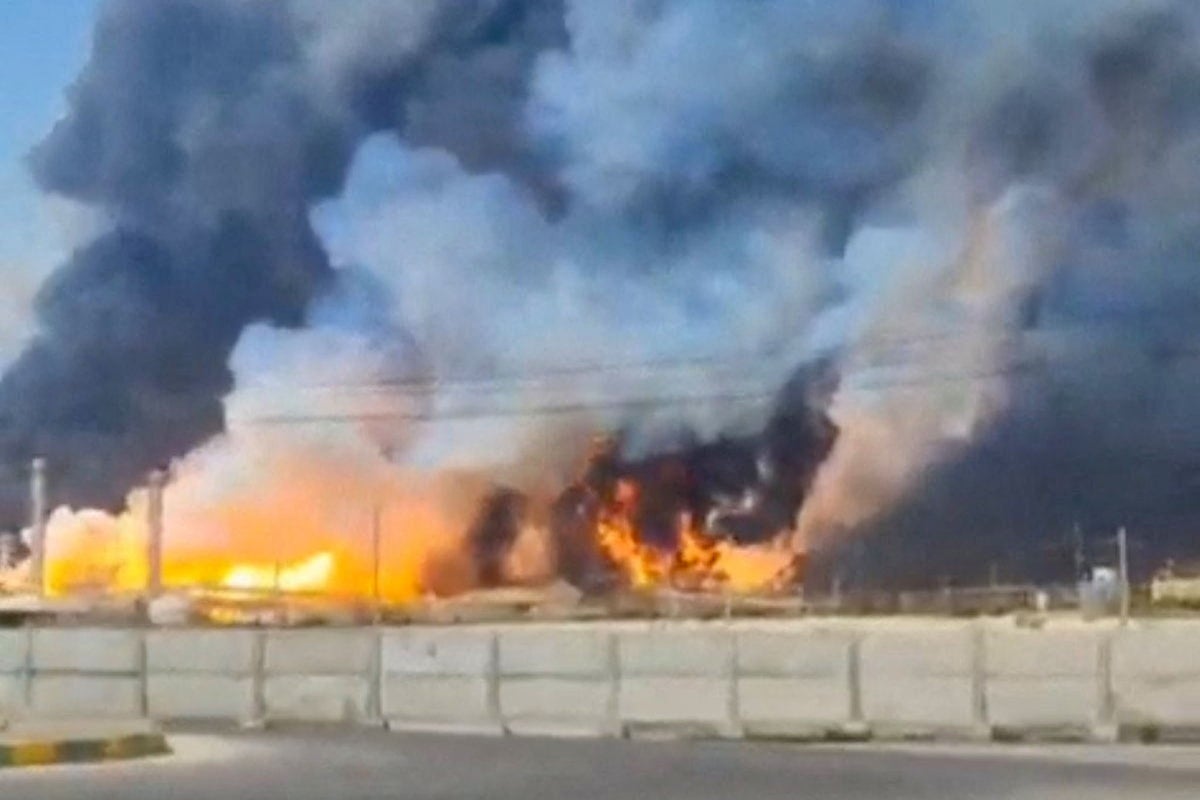
Iran’s attacks were in retaliation to an Israeli strike on the vital South Pars gas field, which drew condemnation from the Gulf states as well as Tehran. It was the first attack of the war so far on an energy production facility. Tehran fired missiles at multiple energy sites across the Gulf, including a Saudi oil refinery, Qatari gas facilities and two more oil refineries in Kuwait.

While Sir Keir Starmer and Emmanuel Macron called for de-escalation, President Trump threatened to “massively blow up” the South Pars facility if Iran did not halt its retaliatory attacks, repeating his claim that US forces had “obliterated” Iran’s navy and military, adding that the war was “substantially ahead of schedule”. He denied that plans were being made to send more American troops to the region.

John Healey, the UK defence secretary, said Tehran’s tit-for-tat responses threatened to further destabilise the region and Europe’s economies. He called them a “serious escalation”, adding: “They further destabilise the region and we will step up the defensive support that we can offer to those Gulf states.”

British forces are already deployed to the Middle East, with RAF jets flying defensive sorties against Iranian drones across the Gulf and British air defence systems protecting critical infrastructure in Saudi Arabia. UK military planners have also joined US Central Command to help formulate proposals for opening the Strait of Hormuz, a critical trade route for the world’s oil and gas.But there were signs of growing frustration towards Washington’s war aims in the Gulf states, with Oman’s foreign minister claiming that the conflict was President Trump’s “greatest miscalculation”.

In the most scathing attack on Washington’s foreign policy yet by a Gulf state, Badr Albusaidi said “this is not America’s war” and criticised Mr Trump for supporting Israel. Writing in he called on American allies to help extricate it from the conflict, which has continued for a third week despite failing to achieve the US and Israel’s stated aim of instigating regime change in Tehran or stopping its nuclear programme.

Meanwhile, the Bank of England has warned that it may have to put up interest rates if the war continues to drive up inflation and unemployment. Its governor, Andrew Bailey, said the impact was already being felt by consumers as petrol prices surge and that he is “ready to act as necessary to ensure inflation remains on track to meet the 2 per cent target”. That would pave the way for a rate hike as early as the end of April.

Bets on the financial markets suggest a 50/50 chance that Britain will face higher interest rates from next month – and the possibility of two more rises by the end of the year.

Danni Hewson, head of financial analysis at AJ Bell, said: “Markets are now pricing in an almost 50 per cent chance that April’s meeting will see rates rise to 4 per cent with the potential for two additional rate hikes by the end of the year. But no one has a crystal ball. No one knows how long the conflict will last or the amount of damage that could be inflicted on crucial energy infrastructure by the time it ends.”


Source link

False social media posts fuel self-diagnosis, says study

0
False social media posts fuel self-diagnosis, says study


Norfolk and Suffolk researchers say the false information about autism and ADHD is most worrying.


Source link

Worcester woman living with endometriosis plans concert to ‘give back’

0
Worcester woman living with endometriosis plans concert to ‘give back’


Joanna Street, lead endometriosis and pelvic pain specialist nurse at Worcestershire Acute Hospitals, said the team were grateful for Amos’s fundraising efforts, with money previously raised used to buy reclining chairs “so that patients who are in pain can sit more comfortably”.


Source link

Nasa’s Moon rocket Artemis rolls back to pad for possible April launch

0
Nasa’s Moon rocket Artemis rolls back to pad for possible April launch


After reviewing the data, Nasa managers signed off on a second rollout and the next phase of checks, which take place at the pad. If those tests are completed without incident, Artemis II will become the first crewed mission in the programme, paving the way for another crewed test flight, Artemis III in Earth orbit, sceduled for 2027 ahead of Artemis IV in planned for 2028, which will aims to see astronauts set foot on the Moon..


Source link

Stock market today (March 20, 2026): Nifty50 opens above 23,200; BSE Sensex up over 700 points – The Times of India

0
Stock market today (March 20, 2026): Nifty50 opens above 23,200; BSE Sensex up over 700 points – The Times of India


Stock market today (AI image)

Stock market today: Benchmark indices Nifty50 and BSE Sensex opened in green on Friday after a big selloff on Thursday that saw markets tank over 3%. While Nifty50 opened above 23,200, BSE Sensex rose over 700 points, just shy of 75,000. At 9:16 AM, Nifty50 was trading at 23,229.15, up 227 points or 0.99%. BSE Sensex was at 74,945.45, up 738 points or 0.99%.Dr. VK Vijayakumar, Chief Investment Strategist, Geojit Investments Limited says, “Market has been oscillating between some hope and fear during the last four days. The gains which Nifty accumulated in the previous three days have been completely wiped out with the 775 point loss yesterday. This oscillation between hope and fear is likely to continue in the near-term.Today there is potential for the market to move up since hope of de-escalation is back. Israel PM’s remarks yesterday indicate that there won’t be further attacks on Iran’s oil and gas infrastructure. This has cooled the Brent crude to $ 106 from the peak of $118 yesterday. The HDFC issue impacted Nifty Bank significantly yesterday and it also contributed to the crash in Nifty. This is likely to be a storm in a tea cup. Even though the uncertainty continues, the market construct is ripe for a bounce back today. Beaten down financials and autos are set for a bounce back.”Indian equity markets tumbled sharply on Thursday, breaking a three-day gaining streak, as escalating tensions in West Asia sparked a global risk-off sentiment. Analysts said the market is entering a phase of heightened vulnerability, with investor confidence increasingly influenced by fast-moving geopolitical developments and a surge in crude oil prices.Asian markets opened higher on Friday after US equities recovered from their intraday lows and oil prices eased. However, Wall Street had closed lower on Thursday, dragged down by declines in Micron Technology and Tesla, as rising oil prices stoked inflation worries and dampened expectations of future interest rate cuts.Gold prices edged up on Friday but were still set for a third straight weekly decline, pressured by a strong dollar and the US Federal Reserve’s hawkish stance, which has reduced hopes of near-term monetary easing. Oil prices, meanwhile, fell on Friday after major European countries and Japan signalled their willingness to support measures to ensure safe passage for vessels through the Strait of Hormuz, while the US outlined steps to boost supply.Foreign portfolio investors remained net sellers, offloading equities worth Rs 7,558 crore on Thursday, while domestic institutional investors provided some support, purchasing shares worth Rs 3,864 crore.(Disclaimer: Recommendations and views on the stock market, other asset classes or personal finance management tips given by experts are their own. These opinions do not represent the views of The Times of India)


Source link

Former Mets outfielder Larry Stahl died; the 10-year veteran spoiled a perfect game

0
Former Mets outfielder Larry Stahl died; the 10-year veteran spoiled a perfect game


Larry Stahl, an outfielder who played for four teams in a 10-year career in Major League Baseball, died March 17. He was 84.

Stahl played for the Kansas City A’s (1964-66), New York Mets (1967-68), San Diego Padres (1969-72) and Cincinnati Reds (1973), seeing time at all three outfield positions and first base. He retired with a .232 batting average, 36 home runs, and 163 RBIs in 730 career games.

More news: Red Sox, Phillies 6-Year Veteran Pitcher Dies

A native of Belleville, Illinois, Stahl is most famous for thwarting a perfect game in progress when the Padres were playing the Chicago Cubs on Sept. 2, 1972.

Cubs starting pitcher Milt Pappas retired the first 26 Padres hitters in a row before 11,144 fans in attendance at Wrigley Field. Padres manager Don Zimmer sent up Stahl, a left-handed hitter, to pinch hit against the right-handed pitcher.

More news: Former Cubs Pitcher Dies

Stahl worked the count full, then checked his swing to draw a walk on Pappas’ 3-and-2 pitch. The perfect game was over.

The next batter, pinch hitter Gerry Jestadt, popped out to second base to end the game, giving Pappas a no-hitter.

Years later Pappas blamed not Stahl but the home plate umpire, Bruce Froemming, for ruining his chance at perfection.

More news: Former World Series Outfielder, 6-Year MLB Veteran, Dies

“They were strikes or ‘that close’ to being strikes that he should’ve raised his right hand,” Pappas told ESPN in 2007. “I had the opportunity for a perfect game, and unfortunately Bruce Froemming did not help me at all.”

Stahl’s career ended on a high note with the 99-win Reds in 1973. He made the only postseason appearance of his career with the Reds in that year’s National League Championship Series, playing in four of the five games against the New York Mets.

More news: Six-time MLB All-Star, World Series Champion, Dies

In the ninth inning of Game 5, Stahl collected the Reds’ final hit of the season — a single — to set the stage for a bases-loaded rally. But the rally, and the series, ended when Tug McGraw retired Joe Morgan and Dan Driessen to put the Mets in the World Series.

After retiring as a player, Stahl went to work for the Peabody Coal Company before retiring to Illinois.

For more MLB news, visit Newsweek Sports.


Source link