Getting a certain amount of sleep could help ward off diabetes, a new study suggests.
A team of Chinese researchers studied how sleep duration on weekdays is associated with insulin resistance, a key risk factor for type 2 diabetes. The long-term observational study, held from 2009 to 2023, included about 25,000 participants.
The “sweet spot” for low insulin resistance was about seven hours and 18 minutes of sleep per night, found the research, which was published in BMJ Open Diabetes Research & Care.
Large deviations from this benchmark — either too much or too little sleep — were associated with worse insulin sensitivity. Shorter sleep was linked with higher insulin resistance, while longer sleep had worse metabolic markers.
Getting extra “catch-up” sleep on the weekends did not make up for deficits during the week, the study found, as excessive sleep showed a risk of worsening glucose metabolism in some participants.
A new study suggests that getting just over seven hours of sleep per night could prevent diabetes.(iStock)
“These correlational findings suggest that sleep patterns, particularly weekend recovery sleep, may be relevant for metabolic regulation in diabetes and could inform considerations for healthcare professionals in managing patient care,” the researchers concluded in the study.
As this was an observational study, the findings show associations rather than cause and effect, they noted. Sleep duration was also self-reported, which could pose a limitation.
The study did not measure sleep quality, which could play a role in outcomes. Other lifestyle factors, like diet, stress and shift work, could influence results as well.
Fox News Digital reached out to the study authors for comment.
‘Useful’ yet ‘too simplistic’
Fox News senior medical analyst Dr. Marc Siegel said the study produced “useful information.”
“We have long known that there is an association between sleep and insulin resistance,” Siegel, who was not involved in the research, told Fox News Digital. “This is because the restorative aspect of sleep helps to regulate metabolic function and hormones, and also decrease inflammation.”
More than 40 million Americans — about 12% of the population — have diabetes, according to 2026 CDC data.(iStock)
“But as this study shows, both too much and too little sleep may lead to more insulin resistance (and diabetes) via metabolic dysregulation,” he added.
Dr. Aaron Pinkhasov, a board-certified psychiatrist and chair of the department of psychiatry at NYU Grossman Long Island School of Medicine, said the concept of sleeping a certain number of hours to prevent diabetes is “too simplistic.”
“Sleep is only one part of metabolic health, along with genetics, body weight, diet, physical activity and stress,” the sleep expert, who also wasn’t part of the study, told Fox News Digital.
“Sleep is only one part of metabolic health, along with genetics, body weight, diet, physical activity and stress,” an expert said.(iStock)
“The study provides only a snapshot in time, so it cannot prove that sleep duration actually causes insulin resistance,” he went on. “It is also possible that underlying problems — such as metabolic illness, pain, depression or low activity — lead people to sleep longer or shorter.”
The “practical message” for adults, according to Pinkhasov, is to aim for about seven to nine hours of quality sleep on a regular schedule, as part of an “overall strategy to reduce diabetes risk.”
“The study strengthens the idea that sleep should be considered as important as diet and exercise when discussing diabetes risk,” he added. “The key message is not the exact number of hours, but that both chronic sleep deprivation and irregular sleep patterns are associated with higher insulin resistance.”
More than 40 million Americans — about 12% of the population — have diabetes, according to 2026 CDC data. About 11 million (27.6%) of cases are undiagnosed, and more than 115 million U.S. adults have prediabetes.
Angelica Stabile is a lifestyle reporter for Fox News Digital.
Even as Iran expands attacks across the Persian Gulf, several of the countries directly targeted are still refusing to join the fight against Iran, opting instead for restraint and diplomacy. Gulf governments say their priority is defending their territory while preventing a wider conflict that could destabilize the region and global energy markets.
When asked by Fox News White House senior correspondent Peter Doocy about Iran’s strikes on Gulf states Monday, Donald Trump said experts had not anticipated Tehran would target neighboring countries.
“Nobody. Nobody. The greatest experts — nobody thought they were going to hit,” Trump said when Doocy asked about Iranian attacks targeting Qatar, Saudi Arabia, the United Arab Emirates, Bahrain and Kuwait.
A plume of smoke rises from the Zayed Port following a reported Iranian strike in Abu Dhabi on March 1, 2026. Iran’s retaliatory missile and drone campaign in the Gulf has killed three people and wounded 58 in the United Arab Emirates since it began, Emirati authorities said on March 1, the day after the U.S. and Israel launched a nationwide attack on Iran killing its supreme leader.(Ryan Lim / AFP via Getty Images)
Tehran widened the conflict after U.S.-Israeli strikes on Iranian oil facilities earlier this month, expanding retaliation to Gulf energy infrastructure and shipping routes in the Strait of Hormuz, according to the Armed Conflict Location & Event Data Project.
Armed Conflict Location & Event Data Project (ACLED) recorded at least 25 Iranian attacks against shipping in the Gulf and the Strait of Hormuz since Feb. 28, as well as strikes targeting energy infrastructure across several Gulf states.
“Tehran targeted Gulf energy infrastructure and shipping in the Strait of Hormuz seeking to raise the costs of the war for the U.S. and its regional partners,” said Luca Nevola, ACLED’s senior analyst for Yemen and the Gulf.
Jacob Olidort, chief research officer at the America First Policy Institute, told Fox News Digital that, “Since Operation Epic Fury began, our Gulf partners have responded with an unprecedented unified front against threats posed by the Iranian regime,” he said, adding that their actions have focused on stopping attacks rather than expanding the war. “This reflects not just a desire to stabilize the region but also a recognition that the U.S. military’s success is what makes that possible.”
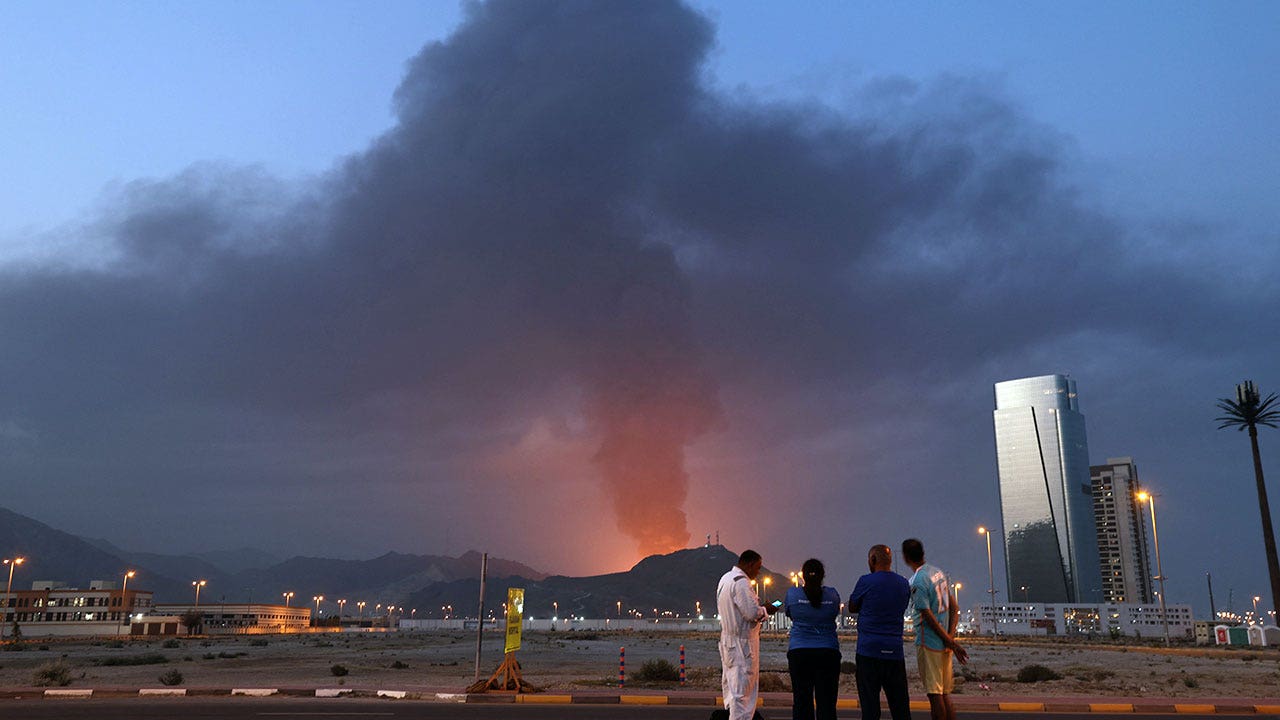
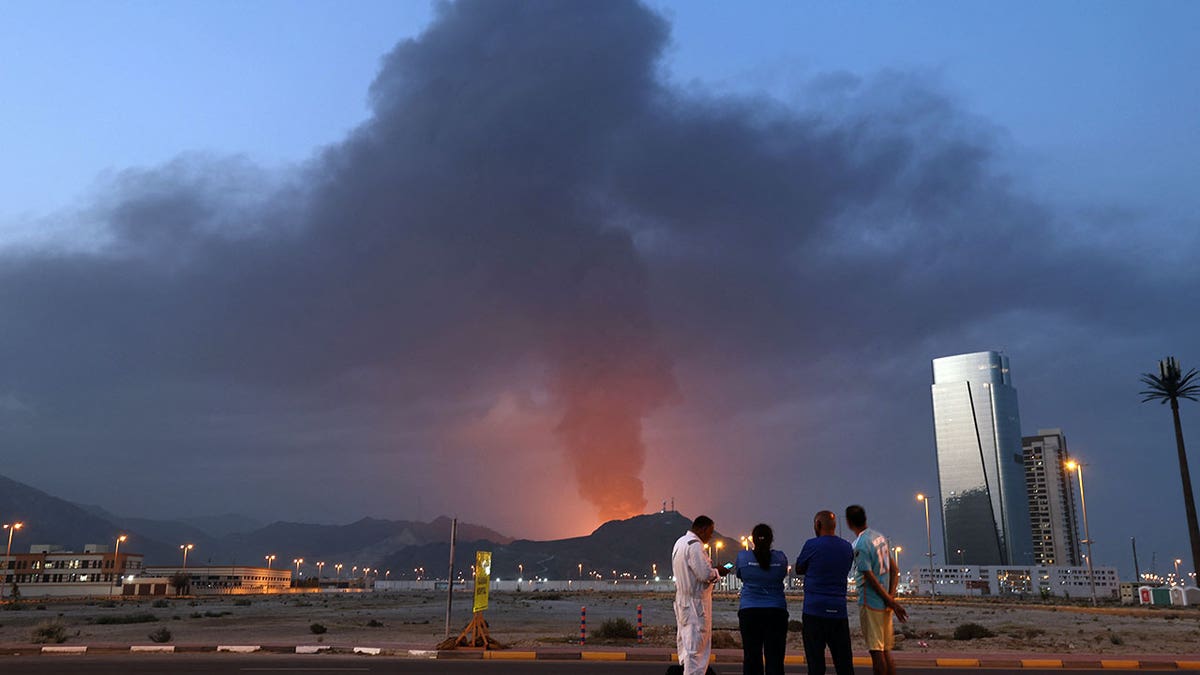
Foreign workers look at a tall plume of black smoke ascends following an explosion in the Fujairah industrial zone on March 3, 2026. Iran’s strikes on Gulf neighbors since February 28, following the U.S.-Israeli attack, forced the UAE to shut its airspace, blindsiding travelers who thought they were headed to one of the region’s safest holiday destinations.(Fadel Senna / AFP via Getty Images)
Salman Al-Ansari, a Saudi geopolitical researcher, told Fox News Digital that Riyadh is focusing on maintaining global market stability. “Riyadh is exercising maximum restraint at the moment, but the real question is how long that restraint can last,” Al-Ansari said.
Al-Ansari pointed to a long-standing Saudi strategic philosophy. “Over a hundred years ago, the founder of Saudi Arabia, King Abdulaziz Al Saud, said: ‘The living do not fight the dead.’ Perhaps Riyadh is following this doctrine, at least until further developments unfold,” he said.
Qatar has taken a similar approach. “The State of Qatar’s policies always seek to de-escalate conflicts,” a Qatari official told Fox News Digital. “Qatar is not a party to this war, and we strongly believe that the violence must end through negotiations. At the same time. Qatar continues to defend its country and sovereignty following the Iranian attacks.”
Firefighters work in Muharraq, Bahrain, after reported Iranian strikes triggered a fire at fuel tanks near the airport, on Thursday, March 12, 2026.(Bahrain Information Ministry/Reuters)
Another factor shaping Gulf restraint is a regional policy of refusing to allow their territory to be used for attacks on Iran. Some U.S. military experts say the Gulf’s hesitation is also tied to long-standing concerns about Washington’s reliability in the region.
Vice Adm. Robert S. Harward, a former deputy commander of U.S. Central Command, told Fox News Digital that inconsistent U.S. policies have eroded trust among Gulf partners. “Our policies in the Middle East have been more cyclical than a revolving door,” Harward said. “We have failed to earn the trust and confidence of our Gulf partners over the last decade and a half. And that lack of trust and confidence has only exacerbated the threat from Iran to the region.”
The now retired vice admiral said Gulf governments are weighing the risks of escalation carefully. “As these countries consider whether to go on the offensive, they are worried about what happens when we leave,” he said. “Admittedly, these countries are challenged to defend themselves against a country of 90 million without us.”
Regional analysts say Gulf leaders are concerned that if even one country joins the fighting, the conflict could quickly engulf the region.
Abdullah Aljunaid, a Bahraini analyst, told Fox News Digital that if one member of the Gulf Cooperation Council enters the war, it could drag the entire bloc with it. “If any member of the GCC decided to join this offensive, it would obligate the rest of the GCC countries to join at the same time,” Aljunaid said.
The consequences could extend far beyond the battlefield. “You could imagine what the oil prices would be. We are definitely talking about north of $150 per barrel,” he claimed.
Iranian flags fly as fire and smoke from an Israeli attack on Sharan Oil depot rise, following Israeli strikes on Iran, in Tehran, Iran, June 15, 2025.(Majid Asgaripour/WANA (West Asia News Agency) via Reuters)
Aljunaid said Gulf leaders are also wary of open-ended military campaigns in the region. “Past experiences show that every time military action is initiated in the region, it never ends according to what was promised,” he said.
Instead, he said Gulf countries are focusing on defensive measures while quietly supporting diplomatic channels, including mediation efforts through Oman.
Lt. Gen. Richard Y. Newton III said Iran made a major strategic mistake by striking Gulf countries. “Iran made a strategic blunder by striking Gulf nations – our allies and friends – with ballistic missiles and drone attacks,” Newton told Fox News Digital.
The retired Air Force commander warned that attacks on key infrastructure such as oil fields or desalination plants could push Gulf states toward a more aggressive response.
“I’m inclined to believe there may potentially be one or two nations in the region inclined to join with the U.S. by going offensive against Iran,” Newton said. “That is certainly within the realm of possibility in the coming weeks.”
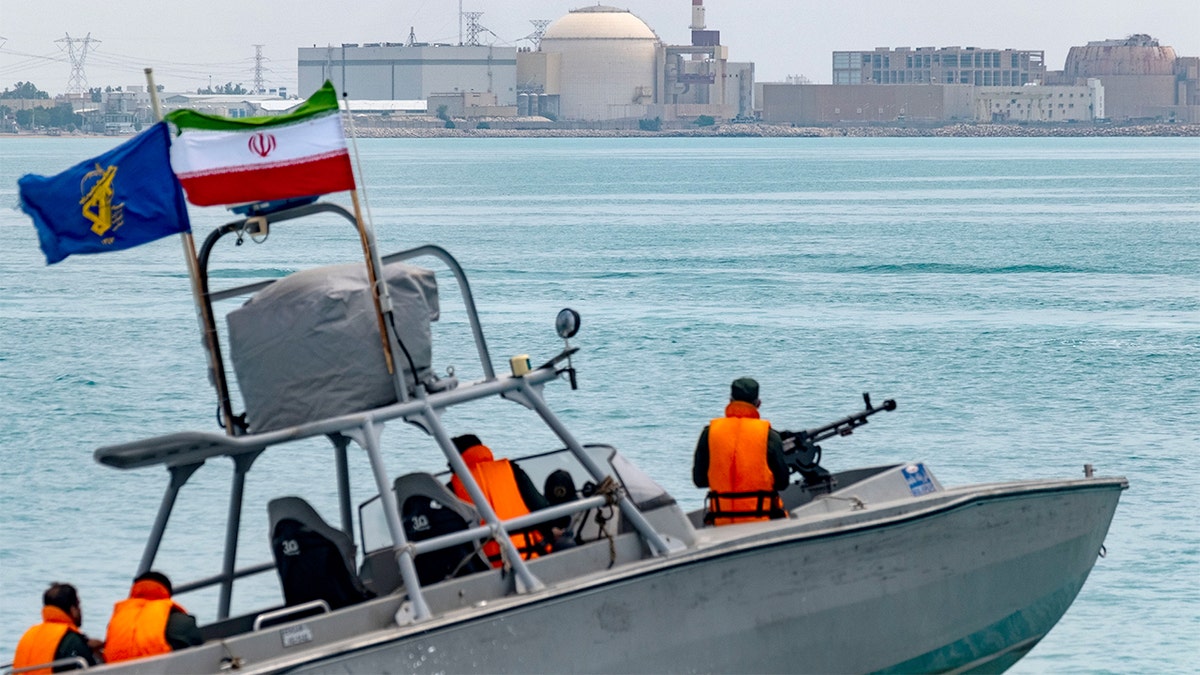
An Islamic Revolutionary Guard Corps speedboat sails in the Persian Gulf during an IRGC marine parade marking Persian Gulf National Day near the Bushehr nuclear power plant in Bushehr, Iran, on April 29, 2024.(Morteza Nikoubazl/NurPhoto via Getty Images)
Newton added that the long-term objective for the U.S. and its partners should be preventing Iran from threatening regional stability and global shipping routes. “That includes achieving maritime dominance in the Persian Gulf and setting the conditions for safe passage for commercial shipping through the Strait of Hormuz,” he said.
For now, however, Gulf leaders appear determined to contain the conflict rather than escalate it, even as Iranian strikes have already reached their territory.
The UAE did not immediately respond to requests for comment.
Efrat Lachter is a foreign correspondent for Fox News Digital covering international affairs and the United Nations. Follow her on X @efratlachter. Stories can be sent to [email protected].
More than 30,000 people are being contacted in the Canterbury area regarding the outbreak of bacterial meningitis in Kent. Two people have died, and others are seriously ill. James Gallagher speaks with immunologist Sir Andrew Pollard about the disease, and finds out what could have caused the outbreak.
That’s the major headline from the UK. But more broadly, for the last few weeks the news has been dominated by the situation in the Middle East. James speaks with Dr Antoine Abou Fayad, a microbiologist and medicinal chemist based in Beirut, Lebanon. He reveals that war, just like the ongoing conflict in the Middle East, provides the perfect storm to accelerate the spread of multidrug-resistant infections. And nobody is safe.
And finally, James finds out about an ongoing trial at the University of Exeter, where interactive computer games are being used by stroke patients to improve their recovery. And, of course, James has a go himself!
Presenter: James Gallagher
Producer: Alice Lipscombe-Southwell
Researcher: Tom Hunt
Editor: Ilan Goodman
Introduction: Reeves to call for rapid AI adoption and deeper ties with EU
Good morning, and welcome to our rolling coverage of business, the financial markets and the world economy.
While the UK economy is being buffeted by the energy shock from the Iran war, chancellor Rachel Reeves is hoping that rapid take-up of artificial intelligence and deeper ties with the European Union can deliver growth.
Reeves is due to deliver a big set piece speech in London today – the Mais Lecture, at Bayes Business School. And she’s expected to identify innovation and AI, closertieswithEurope, and regionalgrowth as three big opportunities for economic growth in the UK.
The annual MaisLecture is a set-piece event for central bank governors, chancellors and prime ministers to set out their economic philosophy.
This will be the chancellor’s second MaisLecture – in 2024, Reeves warned that the UK was entering an “age of insecurity” marked by stalling growth, stagnant living standards, political turbulence and global shocks.
Two years on, and plenty of global shocks later, Reeves will today pledge that the UK will adopt AI faster than G7 rivals, and announce £2.5bn of funding for AI and quantum computing.
In her lecture at lunchtime today, the chancellor is expected to say:
“In this changing world, Britain is not powerless. We can shape our own future. Our method is stability, investment and reform – through an active and strategic state.
“Today, I am making three big choices on the greatest growth opportunities for Britain in the decade to come: growth in every part of Britain, AI and innovation, and a deeper relationship with the EU.
“Our plan is clear. To build for growth, to champion innovation, and to make Britain the place where the industries of the future are created.”
And on AI, she will argue that Britain “cannot afford to stand still” in a world defined by technological change.
I’ll be at the Bayes Business School later today for full coverage of the lecture.
The agenda
10am GMT: ZEW Economic Sentiment Index
1.30pm GMT: The Mais Lecture 2026, delivered by Rachel Reeves, Chancellor of the Exchequer.
Key events
Insolvencies jump as debt relief orders hit record
The number of people in England and Wales falling into insolvency has jumped.
There were 11,609 individual insolvencies registered in England and Wales in February, the Insolvency Service has reported this morning. This was 18% higher than in February 2025 and 6% higher than in January 2026.
There were a record number of debt relief orders (DROs), under which people can have debts of up to £50,000 written off, with restrictions.
Here’s the details:
The individual insolvencies consisted of 768 bankruptcies, 4,210 debt relief orders (DROs) and 6,631 individual voluntary arrangements (IVAs). The number of DROs in February 2026 was a record high in the monthly time series going back to their introduction in 2009, exceeding the previous high of 4,185 in August 2025.
The number of IVAs was higher than both January 2026 and the 2025 monthly average. Bankruptcies were 25% higher than in February 2025, although numbers were affected by the clearing of a backlog following the Insolvency Service moving to a new case management system.
The number of registered company insolvencies in England and Wales has jumped month-on-month, but was lower than a year ago.
The Insolvency Service has reported that 1,878 companies fell into administration or were liquidated in February, 7% higher than in January. On the upside, though, that’s 7% fewer than in February 2025.
Moneyfacts: ‘Trumpflation’ adds almost £800 to average annual mortgage bill
The spectre of ‘Trumpflation’ is looming over Rachel Reeves’s Mais lecture today.
The jump in energy prices, and expectations of higher inflation, have driven up mortgage rates since the Iranian war began.
Data provider Moneyfacts has reported that this has added almost £800 to average annual mortgage bill in the last two weeks.
They report:
Average 2-year fix has risen from 4.83% at the start of March to 5.28% today. It’s highest since April 2025.
Average 5-year fix has risen from 4.95% at the start of March to 5.32% today. It’s highest since February 2025.
AdamFrench,head of consumer finance at Moneyfacts, said:
“War in the Middle East has added almost £800 to a typical annual mortgage bill in just two weeks, which will be unwelcome news for anyone currently seeking a fixed rate deal.
“The average two-year fixed rate has jumped from 4.83% at the start of March to 5.28% today – its highest level since April 2025. The average five-year fix has risen from 4.95% to 5.32%, now at its highest since February 2025. For a borrower with a £250,000 mortgage over 25 years, that equates to paying £788 more per year on a two-year fix, or £651 more on a five-year deal compared to just a fortnight ago.
“Choice continues to fall as lenders pull deals and reprice in response to rapidly rising funding costs with 689 fewer mortgage products available since 9 March – almost a tenth of the market. Borrowers may need to brace for further volatility in the weeks ahead as the global economy braces for a ‘Trumpflation’ wave flowing from the US and Israel led action in Iran.”
Julia Kollewe
Oil and gas prices have risen again after Iran carried out attacks on production facilities for the first time since the start of the war with the US and Israel.
Brent crude, the international benchmark oil price, is up 4% at $104.17 a barrel this morning, nearly 50% higher than levels before the war began on 28 February. European wholesale gas prices are up 3% to €52.45 a megawatt hour, compared with about €30 before the war.
For the first time, Iran successfully targeted oil and gas production facilities, rather than just refineries, terminals and storage.
The United Arab Emirates said a drone struck the Shah natural gasfield – one of the largest in the world – on Monday and set it on fire. Operations remained suspended on Tuesday while officials assessed the damage.
The UK government’s push to adopt artificial intelligence systems faster than the rest of the G7 could raise concerns that Britain could face an early wave of AI-related job losses.
But Treasury minister DanTomlinson has tried to downplay to prospect of job losses caused by AI, arguing that it’s important to embrace new technologies rather than run away from them.
Asked whether he accepted AI adoption would lead to job losses, DanTomlinson told Sky News:
“In the vast history of the UK economy, when big shocks come, when you have the Industrial Revolution, or big changes in the technology that people use, there are changes to the amount of jobs that happen in the economy, or the types of jobs that we have, you don’t see job losses overall.
“And actually, if you look at the next five years, the Office for Budget responsibilities say that employment is going to increase in every single year of their forecast.”
Overnight, the Reserve Bank of Australia became the first central bank to raise interest rates since the Iran war began.
The RBA lifted its cash rate target to 4.1%, back to where it was in February last year.
Michele Bullock, the RBA governor, said strong growth in employment and spending had kept upward pressure on prices and the war in Iran would only worsen the problem.
“High petrol prices will add to inflation, but they’re not the reason for today’s decision.
“Inflation was already too high.”
It’s a busy week for monetary policy decisions, with the Bank of England, the US Federal Reserve, the European Central Bank and the Bank of Japan all setting interest rates this week, along with other central bank decisions in Canada, Brazil, Russia, Switzerland and Sweden.
Reeves to push for “Silicon Valley of Europe” in Oxford-Cambridge corridor
Chancellor Rachel Reeves will also announce she is ready to use compulsory purchase powers to force through the building of “the Silicon Valley of Europe” in a corridor between Oxford and Cambridge, the Financial Times are reporting.
Reeves will tell landowners they will not be allowed to stand in the way of the project, which she is putting at the centre of a revamped growth strategy alongside closer relations with Europe and investments in AI.
The chancellor would say in her Mais economics lecture that the government will intervene where landowners are deemed to be blocking developments or insisting on unreasonable demands, government officials said.
UK building materials supplier Travis Perkins has cautioned this morning that it faces a ‘subdued’ trading environment.
In its full year results for 2025, Travis Perkins reported that the weakness seen in the final three months of the year has continued in 2026, saying;
The trading environment since the start of the year has remained subdued and this reflects a continuation of the weak UK construction activity figures reported for the final quarter of 2025.
The company, which provides building materials to professional builders and tradespeople, also reported a drop in adjusted operating profit to £133m, from £152m in 2024, “reflecting lower margins in Merchanting”.
Reeves told to stop blaming Brexit for economic woes
There’s already a backlash to the chancellor’s Mais speech, before she’s even taken the lecturn at Bayes Business School.
The opposition Conservative parry is unhappy that Reeves is expected to blame Brexit for the UK’s poor economic performance.
Shadow chancellor SirMelStride has accused the chancellor and prime minister of wanting “to row back on Brexit”, Sky News report.
Stride added:
“Labour are desperate to blame anyone but themselves for their economic failures.”
Reeves could cite the Office for Budget Responsibility’s long-term forecast that Brexit will reduce the UK’s long-run productivity by 4% relative to remaining in the EU.
Critics of the chancellor, though, could point to her tax rises on employer, which appear to be pushing up unemployment.
£2.5bn boost for AI and quantum
Here’s a breakdown of the £2.5bn funding package for artificial intelligence and quantum computing in the UK:
A £500m Sovereign AI Fund is set to be launched in April at Wayve, to give British companies access to funding, compute and other support
£2bn to upgrade the UK’s quantum capabilities, including a procurement programme worth up to £1 billion to procure commercial-scale quantum computers.
An extra £13.8m will be injected into the UK’s 5 National Quantum Research Hubs
A further £12m for a edicated commercialisation skills centre to help quantum researchers translate their work into ‘real-world impact’
Yesterday, technology secretary Liz Kendall said the government hoped to retain homegrown quantum startups, engineers and researchers rather than lose them to competing countries.
Introduction: Reeves to call for rapid AI adoption and deeper ties with EU
Good morning, and welcome to our rolling coverage of business, the financial markets and the world economy.
While the UK economy is being buffeted by the energy shock from the Iran war, chancellor Rachel Reeves is hoping that rapid take-up of artificial intelligence and deeper ties with the European Union can deliver growth.
Reeves is due to deliver a big set piece speech in London today – the Mais Lecture, at Bayes Business School. And she’s expected to identify innovation and AI, closertieswithEurope, and regionalgrowth as three big opportunities for economic growth in the UK.
The annual MaisLecture is a set-piece event for central bank governors, chancellors and prime ministers to set out their economic philosophy.
This will be the chancellor’s second MaisLecture – in 2024, Reeves warned that the UK was entering an “age of insecurity” marked by stalling growth, stagnant living standards, political turbulence and global shocks.
Two years on, and plenty of global shocks later, Reeves will today pledge that the UK will adopt AI faster than G7 rivals, and announce £2.5bn of funding for AI and quantum computing.
In her lecture at lunchtime today, the chancellor is expected to say:
“In this changing world, Britain is not powerless. We can shape our own future. Our method is stability, investment and reform – through an active and strategic state.
“Today, I am making three big choices on the greatest growth opportunities for Britain in the decade to come: growth in every part of Britain, AI and innovation, and a deeper relationship with the EU.
“Our plan is clear. To build for growth, to champion innovation, and to make Britain the place where the industries of the future are created.”
And on AI, she will argue that Britain “cannot afford to stand still” in a world defined by technological change.
I’ll be at the Bayes Business School later today for full coverage of the lecture.
The agenda
10am GMT: ZEW Economic Sentiment Index
1.30pm GMT: The Mais Lecture 2026, delivered by Rachel Reeves, Chancellor of the Exchequer.
If you’re looking for the best hair oil for summer overnight oiling, here’s the honest truth—there isn’t just one “magic” oil. It depends on how light it feels on your scalp, how well it supports growth, and whether it suits sweaty summer conditions.
Because summer changes everything. Your scalp produces more oil, sweat builds up faster, and heavy oils can actually block follicles instead of helping growth.
So the goal isn’t just growth. It’s growth + scalp balance + lightweight nourishment.
Let’s break this down properly.
First—what actually helps hair grow?
Hair oil doesn’t directly “grow” hair overnight. What it does is:
Improves blood circulation to the scalp
Strengthens roots (so less breakage = longer hair)
Keeps scalp clean and healthy
And that last part? It’s the most important.
Because even the best oil won’t work if your scalp is clogged, sweaty, or irritated.
So, which is the best hair oil for summer?
If you want a straight answer:
A lightweight oil blend with rosemary + a carrier oil (like coconut or jojoba) is the best for summer overnight oiling.
The NCAA Division I Men’s and Women’s Basketball Tournaments, commonly called March Madness, are the annual postseason tournaments that decide the national champions of the United States’ premier college basketball competitions.
March Madness tips off on Tuesday evening in the USA (or 00:40 CAT on Wednesday morning). For African fans tuning into the action on ESPN or Disney+, there will be plenty of men’s and women’s stars in action who have much in common with them.
Some of the most impressive college basketball players are either of African descent or from Africa – with a select few even learning the game right here on the continent.
We have selected nine players to keep an eye on ahead of three exhilarating weeks of basketball action, culminating in the women’s championship game on April 5 and the men’s game the following day.
The SEC Defensive Player of the Year – a power forward/center from Nigeria who honed his skills at the NBA Academy Africa in Senegal – is already a reigning champion with the Gators.
In what is likely to be his final year in college basketball before making the jump to the NBA, Chinyelu will be looking to retain the title and play more of a starring role than last year – in which he already made an impressive contribution.
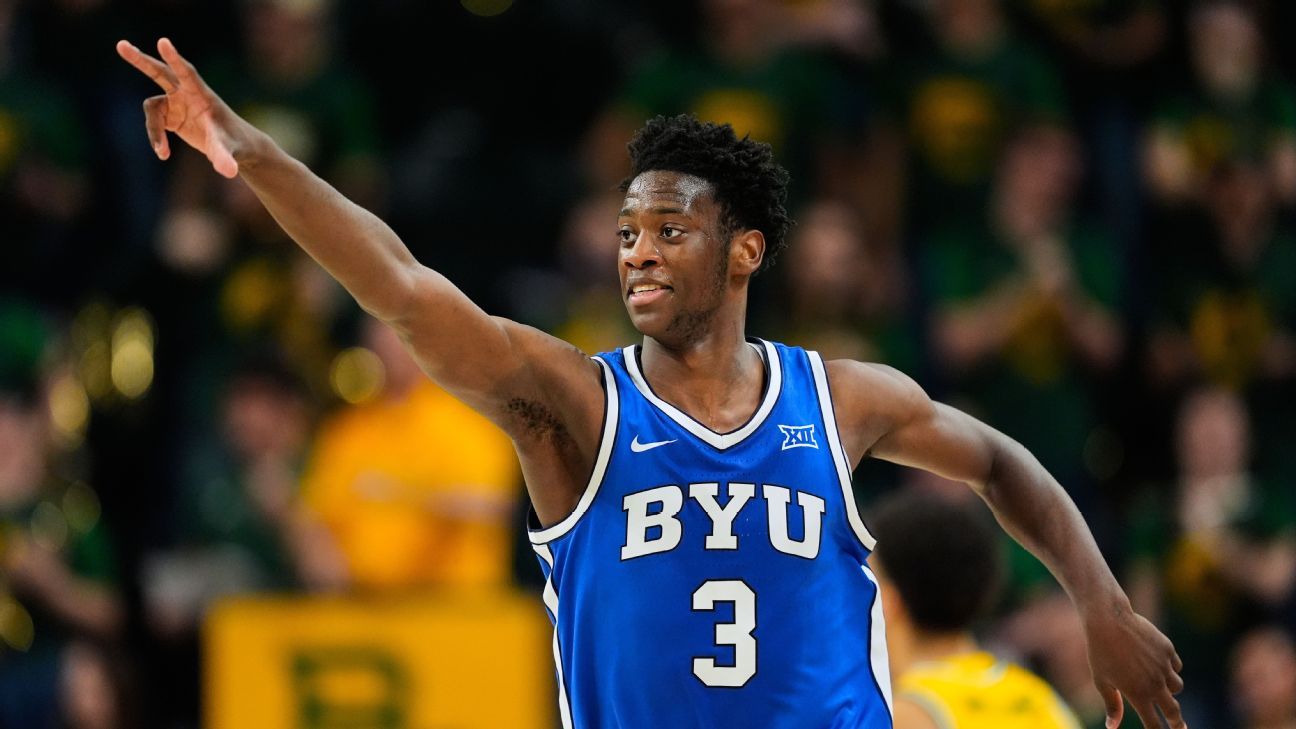
One of the top prospects for the 2026 NBA Draft – if not the top – BYU Cougars small forward Dybantsa’s father is from Brazzaville in the Republic of Congo. His mother, meanwhile, is Jamaican.
BYU are not as fancied as the likes of Florida and Duke for the Championship, but Dybantsa’s presence alone could make them a force to be reckoned with in the later stages of the tournament at the very least.
Ament, a 6-foot-10 forward, is of Rwandan descent through his mother – Godelive Mukankuranga. With a season average of 17.5 points, 6.6 rebounds, 2.5 assists and a steal per game, Ament is likely to be a lottery pick in this year’s NBA Draft. He chose Tennessee over Duke, Kentucky, Arkansas, and Louisville, and now is his time to show the world why.
Ngongba’s father moved to the US from the Central African Republic – reportedly in December 1993 – and met his mother when they were both playing basketball.
Having seen South Sudan star Khaman Maluach go 10th in last year’s NBA Draft after a year at Duke, this could be his opportunity to join his former teammate. Ngongba is struggling with a right foot injury at the time of writing, but could play a crucial role for Duke as the tournament progresses.
Born in Oderzo, Italy, to Senegalese parents, Sarr has EuroLeague experience to his name already, having played for Barcelona. He left last year under controversial circumstances as he allegedly appeared at the 2025 Nike Hoop Summit in Portland, Oregon, without the club’s permission.
It has been clear for some time that Sarr was destined for opportunities at an elite level and March Madness presents him with an opportunity for the shooting guard / small forward to show the world exactly why he took a bet on himself.
South Carolina are always one of the team’s to watch in the Women’s Tournament and this year, they are likely to lean heavily on Okot – a center with a season average of a double-double (13.4 points and 10.9 rebounds per game).
Born in Kenya and of South Sudanese descent, she has deep ties to Africa and could be one of the most influential players this year from anywhere in the world.
Ole Miss will be in action on Friday against Gonzaga in the first round of the Women’s NCAA Tournament and Iwuala is likely to play an important part in their plans. She has cited her father’s resilience through the Nigerian Civil War as an inspiration to her, as per Spectrum News, and has carried the family name to new heights this season with an average of 12.7 points, 8.4 rebounds and 1.3 steals per game.
Maryland will tip off their Women’s Tournament run against Murray State Racers on Friday. Okananwa will play a key role in leading the offense, as the 5-foot-10 guard with Nigerian roots averages 18 points and 5.5 rebounds per game, while also chipping in an impressive 2.3 steals per game.
Defending women’s champions UConn have a roster packed with remarkable depth and among the players who could likely play a key role off the bench is El Alfy. The remarkably talented Egyptian center was the Girls MVP at Basketball Without Borders Africa in 2022.
It was a cruel twist of fate that both her and Boys MVP Thierry Darlan had their careers derailed by injury soon afterwards, but both are on the up again. El Alfy had an important part to play in last season’s championship run and will be eager to go back-to-back and make her family – one well-known across generations in Egyptian basketball – tremendously proud.
How to watch March Madness
Disney+ subscribers in South Africa can join their peers in Europe, the Philippines, Australia and New Zealand by streaming games on the platform. Select games will also air on ESPN channels.
Sam is a writer, broadcaster and podcaster for ESPN. He will write on the Premier League, scouting and transfers.
Multiple Authors
Week after week, month after month, Rúben Amorim sent out his Manchester United players in a 3-4-2-1 shape. Many considered it to be a mistake and, among the many gripes about Amorim’s play, the sentiment “it’s too defensive” was rife.
It is a familiar complaint with a back-three system; with three center backs as opposed to the more typical two you’d find in a back four, it’s easy to see how fans would think a team is setting up to be more defensive. But that’s not necessarily the case.
The last decade or so has been littered with examples of how a team playing a back three can be among the most attacking and aggressive in the sport — with one particularly extreme case currently on show in the Dutch Eredivisie — and even Amorim’s United debunked that theory to an extent. In the 20 Premier League games he managed this season, the Red Devils registered the most shots on target (109) and accumulated the third-most xG (36.14) in the league, behind only Arsenal (36.41) and Manchester City (38.02).
Now Amorim’s team had problems, let’s not pretend otherwise, and we’ll circle back to that a little later. But using a back three is not automatically a cue to sit back and defend, it can be a bold and innovative shape. Here’s why.
Wing backs are attacking, aggressive, and difficult to mark
A trademark feature of the back-three system is the use of wing backs, a position which occupies a unique place in football tactics. It can be difficult to classify them as defenders, midfielders, or forwards as they effectively play all three roles simultaneously in one of the most complex briefs the sport has to offer.
Very few wing backs are defensively minded. It used to be a joke in scouting circles that every full back is a failed winger who has been forced to drop deeper on the pitch, but in the age of “inverted wingers” and wide forwards who can score 40 goals a season, having a wing back who can bolster the attack is hugely beneficial, as their defensive duties are often covered by others.
Left-sided wing back Dimarco has created the most chances by far in Italy’s Serie A this season (76), has the highest Expected Assists tally (8.49) too, which signifies the quality of the opportunities he fashions, and spends more time in the final third than he does anywhere else on the pitch.
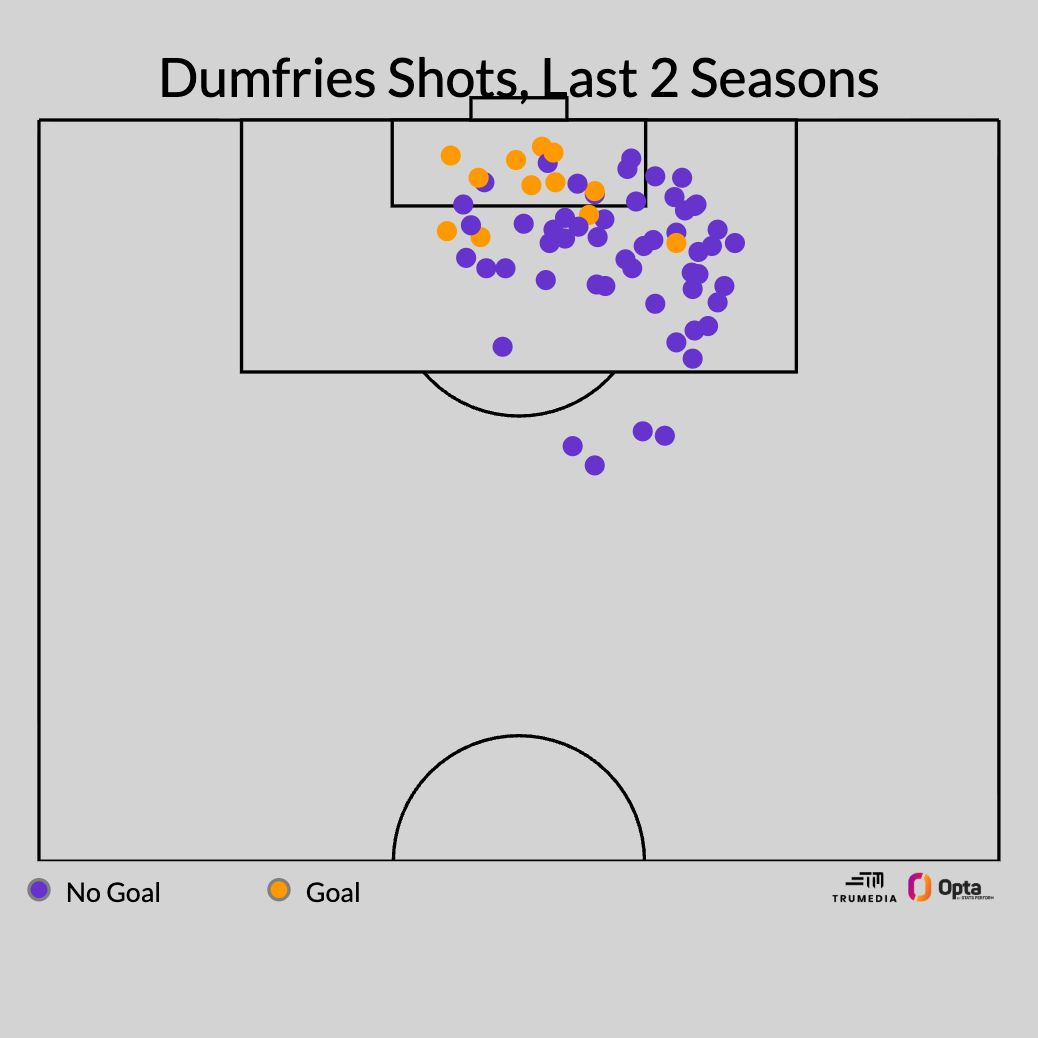
Meanwhile, on the right, Dumfries acts like a striker who has been forced to play elsewhere; he is constantly getting into the opponent’s box and offers a massive threat when he arrives at the back post.
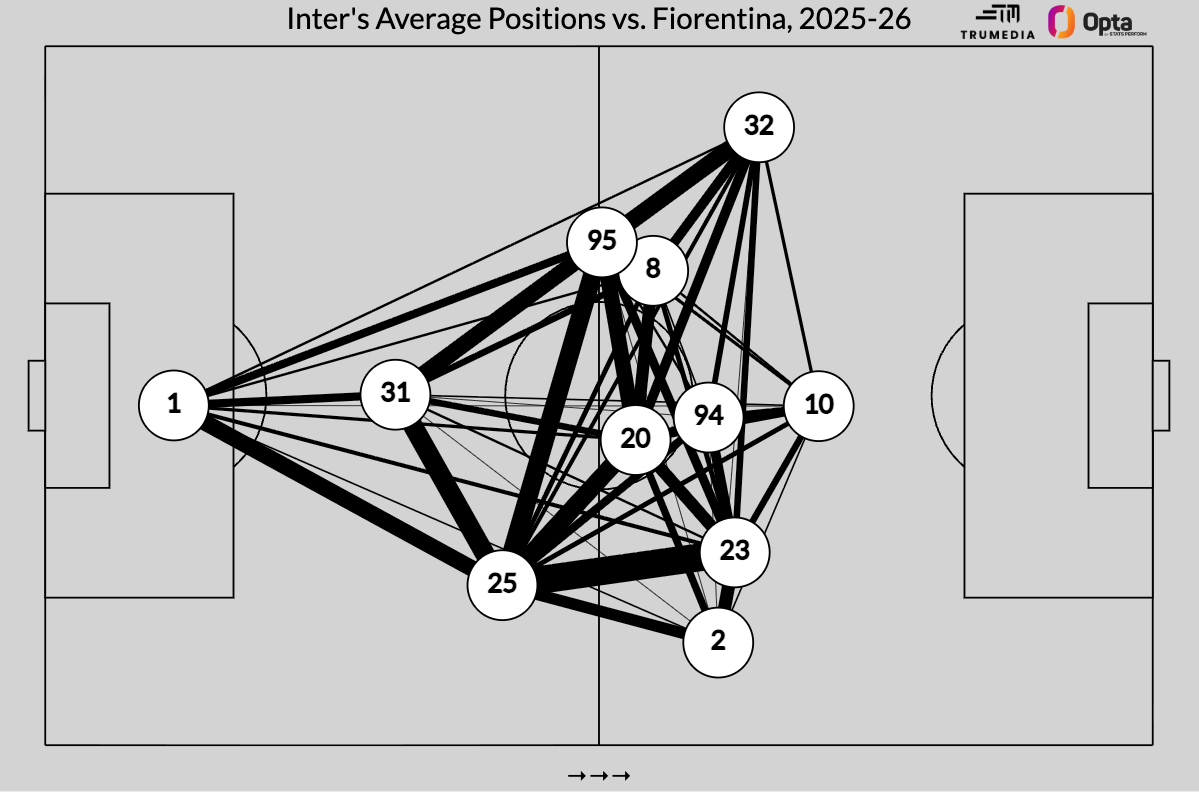
With both wing backs pushed up so high, it’s common for seven or eight of Inter’s players to record the majority of their touches in the opposing half, which would be unusual for most other teams.
Crystal Palace wing back Daniel Muñoz plays in a similar way. He has 15 goal involvements since the beginning of the 2024-25 season and, as with Dumfries, he can be hard for defenses to pick up because he often receives the ball in the space between their defensive and midfield lines. Plus, his incredible speed and stamina means he can run up and down the touchline relentlessly.
Certain coaches, such as Antonio Conte and Simone Inzaghi, have recognized the inherent value of wing backs and utilize them when possible. But in order to unleash them, you have to play a back three, or you’ll be too exposed in defense.
play
1:39
Hutchison: Carrick has made a mockery of Amorim’s Man United
ESPN’s Don Hutchison believes Michael Carrick has made a “mockery” of Ruben Amorim’s Manchester United.
Center backs can push into midfield
Playing a back three doesn’t necessarily mean you’re adding too much defensive personnel to your XI, however.
Some managers design their systems to allow one of the center backs to step up and join the midfield while in possession. So long as that player is comfortable on the ball, they can create a numerical overload in the middle of the pitch (while there are still two center backs covering behind them.)
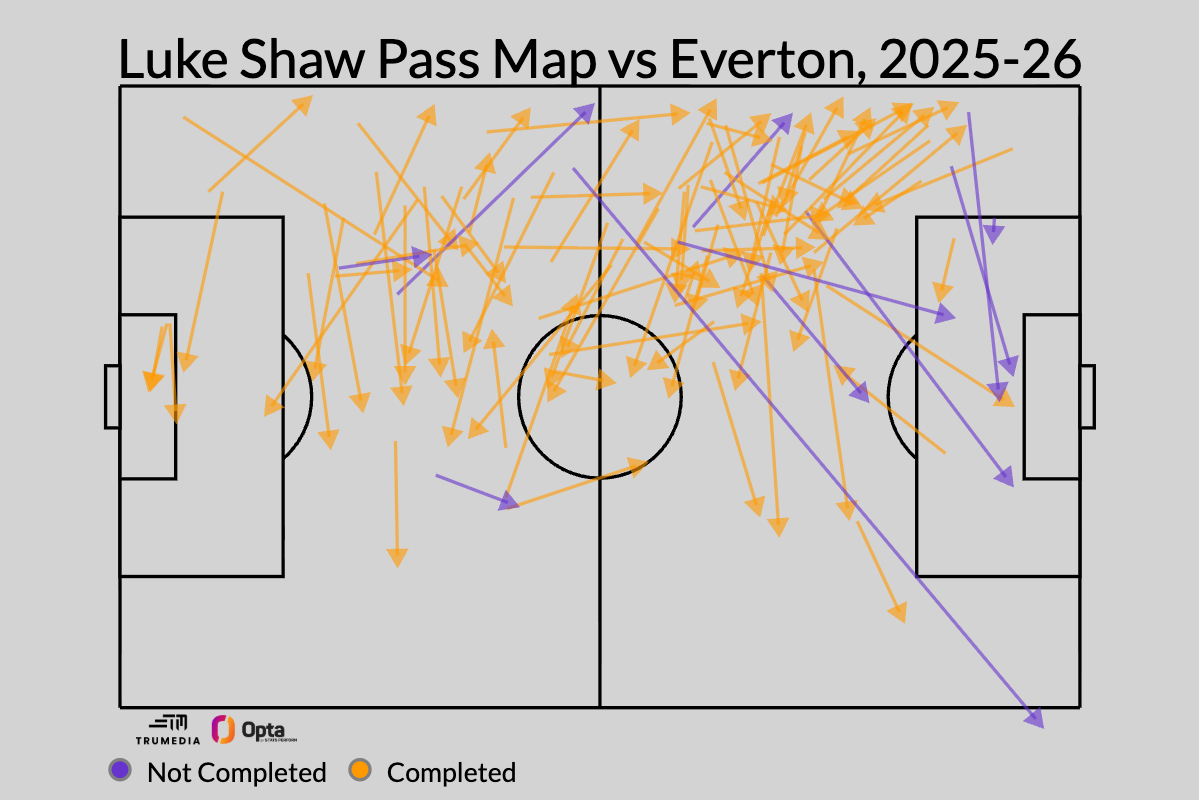
The pass map above shows the strongest cluster of passes coming from what is effectively a left center midfield — or even left No. 10 — space on the pitch. Much of the Red Devils’ passing volume went through Shaw (or Martínez) under Amorim, who pushed up and played very close to Bruno Fernandes and company.
Atalanta’s Giorgio Scalvini has also carried out this role from right center back in the past, Borussia Dortmund’s Nico Schlotterbeck also regularly dribbles into midfield from left center back, while Conte’s Premier League title-winning 2016-17 side at Chelsea encouraged Brazil defender David Luiz to roam forward and affect play however he felt best.
However, the best example of a center back pushing into midfield and completely changing a team’s dynamic is John Stones‘ role for Manchester City’s treble-winning side in 2022-23.
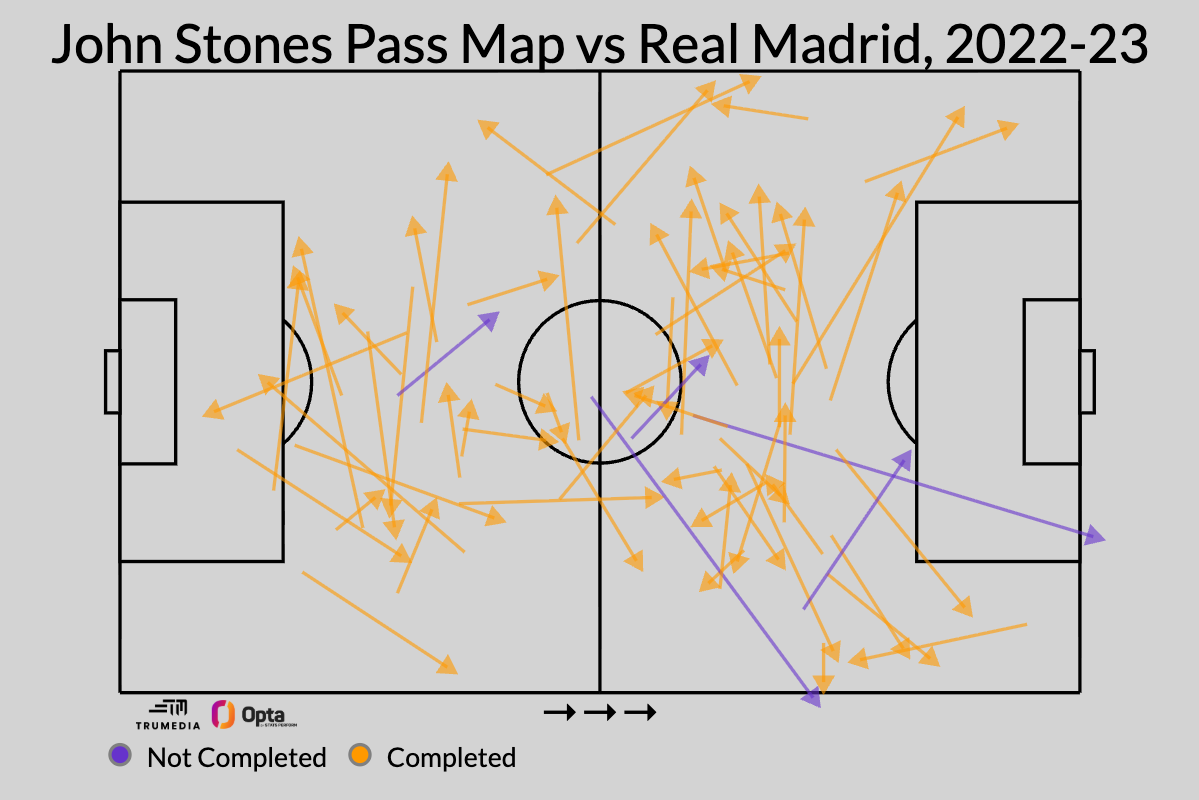
Just over halfway through that campaign, Pep Guardiola discovered a tactical tweak that no team had an answer for. He fielded four center backs (Stones, Rúben Dias, Manuel Akanji and Nathan Aké) in the defensive line, then asked Stones to join Rodri in midfield when the team were on the ball. That in turn pushed Ilkay Gündogan up next to Kevin De Bruyne, creating a 3-2-5 shape.
Stones’ role was to recycle the ball high up, as a midfielder would, but also form a barrier with Rodri to protect against counter attacks. That allowed Guardiola to use five players to attack, spread across the width of the pitch. A simple glance at his pass map (above) against Real Madrid in that year’s Champions League semifinal might fool you into thinking he purely played as a center midfielder … but he didn’t.
play
2:25
Marcotti ‘really disappointed’ in Guardiola’s tactics vs. Real Madrid
Gab & Juls react to Man City’s 3-0 loss to Real Madrid in the first leg of their round of 16 Champions League clash.
Center backs can join the attack
Some center backs even go beyond the central midfield areas and try to affect play in the final third more directly.
When Tottenham’s Cristian Romero played in Serie A for Genoa and Atalanta, he regularly steamed forward and joined the attack. Occasionally he’d appear next to the striker after a 40-yard dash, sensing the chance to arrive undetected and cause chaos.
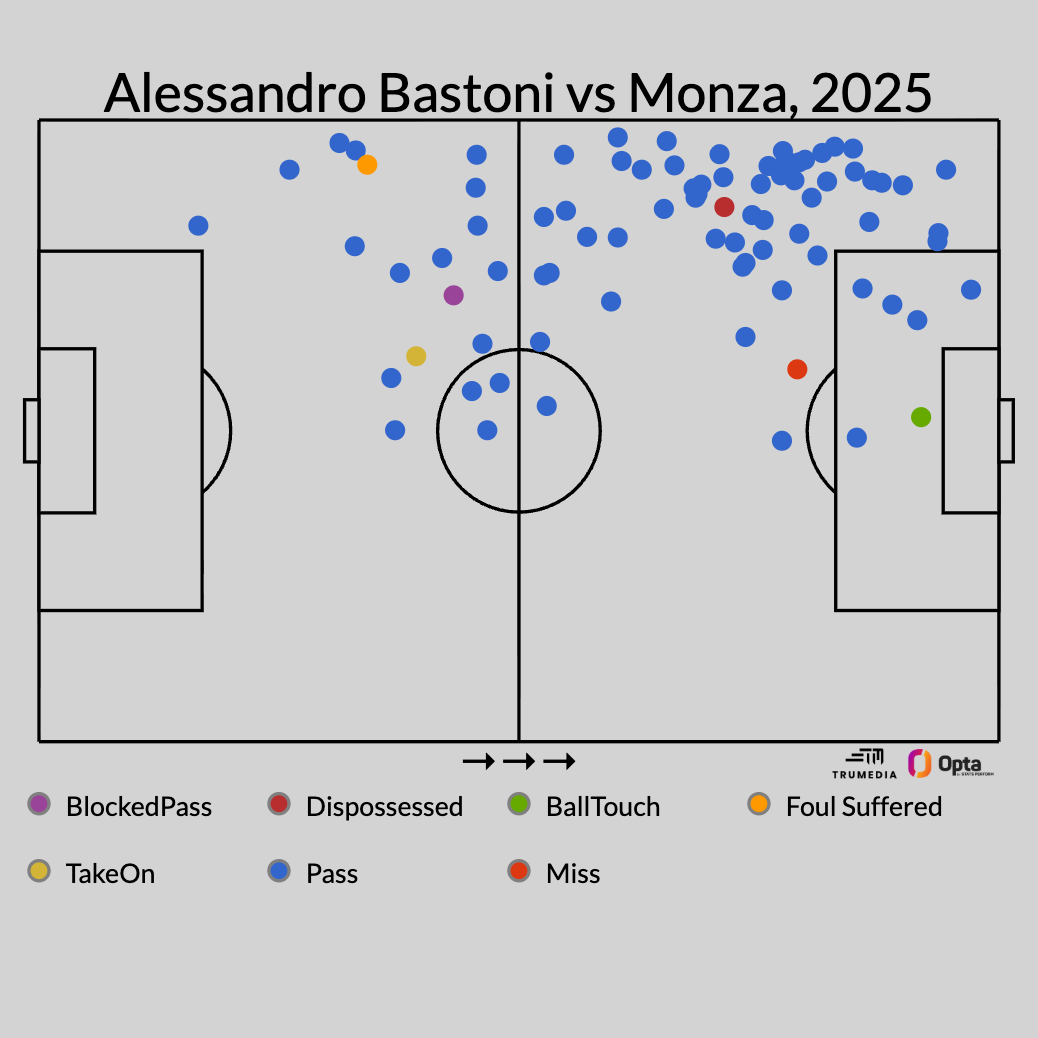
These days, you might see Juventus’ Federico Gatti hammering up the pitch in a similar vein — although not always from a back three, which adds extra risk to the move — and then there’s Inter center back Alessandro Bastoni, who is a solid defender and a great long passer from the back, but also has license to push well beyond the midfield. In fact, the 26-year-old will regularly overlap his wing back (Dimarco), receive the ball and cross, or he’ll make an underlapping run and get into the opposition box himself.
Bastoni has had an astonishing 477 touches in the attacking third this season, the 19th-most in Serie A; he heavily contributes to the league’s best attack, yet also remains integral to a defense that have conceded just 23 goals in 29 games.
But if you think that’s impressive then get ready, because NEC. Nijmegen take it to the extreme.
NEC have a remarkable story. A storied, small club from the Netherlands who have never won a major trophy, they currently sit third in the Eredivisie, above the giants of Ajax and other regular European qualifiers such as AZ Alkmaar and FC Twente.
And they’ve risen to this point by playing the most reckless football you will ever see this season. NEC build out from the back and attack in freeform fashion, with center backs steaming up the pitch to join the forward line, wingers ending up at the back and everything in between. Elazar Dasa, the right center back, has sent in 34 crosses this season, which is more than some teams’ forwards around Europe.
NEC’s base formation is a 3-4-2-1, but as soon as one player makes a pass, they move up the pitch and the shape melts. It is perhaps the ultimate example of why playing with three center backs doesn’t necessarily mean you’re playing defensively. After all, only champions-elect PSV Eindhoven have scored more goals (77) than NEC’s 67, while they’ve only conceded the joint-seventh-most (45), which is impressive given they can leave themselves hugely open at the back on occasion.
Pushing the limits
In the same way that no 4-4-2 is the same — Sean Dyche’s relegation-battling variant for Burnley, which hoofs the ball to a target man, is night and day to Unai Emery’s possession-based, controlled version at Aston Villa — a back three system is not necessarily defensive.
The proof of that is in the pudding: Inter are Serie A’s top scorers with 65; Dortmund are the Bundesliga’s second-top scorers with 55; and Lens are Ligue 1’s third-top scorers with 49. All those teams play a back-three system consistently.
Conte has unleashed a back three to great attacking effect over the years with various clubs such as Chelsea, Juventus and Napoli; while Manuel Gasperini, the creator of some wonderful Atalanta teams that have thrilled in front of goal, is also back-three stalwart.
ESPN’s Ryan O’Hanlon recently argued that the world — and most specifically the Premier League — needs more back threes, as the flexibility and ingenuity the shape allows could be an effective antidote to a world of man-marking, physicality and set pieces.
Not every back-three story is a success, though … and that brings us back round to Amorim’s Manchester United.
His side missed plenty of the opportunities in front of goal, as the Portuguese struggled to get the best out of young striker Benjamin Sesko and stifled creative midfielder Bruno Fernandes in a deeper role that heavily restricted his impact in the final third. Meanwhile, United were defensively poor; only six clubs let in more goals than their 30, as the system was forced on a squad which lacked the athleticism in center midfield to pull it off. And now interim boss Michael Carrick has ditched it for a back four, results have improved.
But don’t let that put you off. As several clubs, from last season’s Champions League finalists Inter to Dutch upstarts NEC are showcasing, a back three can be system that pushes the limits of “attacking” when deployed properly. And isn’t that just what football needs?
Gun traffickers have quietly moved what they say is an unprecedented number of weapons from the United States to Mexico. Our reporter Paulina Villegas followed the trail of these guns.
By Paulina Villegas, Rebecca Suner, Jon Miller, Gabriel Blanco, Joey Sendaydiego, Stephanie Swart and Paul Ratje for The New York Times