It’s one of the most exciting times of year again as March Madness returns. One of the biggest annual sporting events is back, featuring 134 games across the men’s & women’s full tournament. This time around it’s all on Disney+ too! That’s right, every single game across both men’s and women’s tournament will be available so you don’t miss a single moment of the action.
What is March Madness?
March Madness is a single-elimination tournament across men’s and women’s basketball, bringing together the best men’s and women’s college basketball teams in the country. There’s Selection Sunday, when teams find out what side of the knockout bracket they’re on, followed by corresponding rounds including Sweet 16 (the last 16 teams), Elite Eight and Final Four before concluding with the men’s NCAA championship game on April 6 at Lucas Oil Stadium in Indianapolis – home of NFL team the Indianapolis Colts. The women’s final, on April 5, takes place at the Mortgage Matchup Centre, home of the NBA’s Phoenix Suns.
When did March Madness begin?
The first-ever tournament men’s tournament was held in 1939 and was every year after until the 2019-20 season. The event was cancelled in 2020 because of the coronavirus pandemic. In 1939 it started out with just eight teams, before going to 16 in 1951 – it kept expanding until 1985 to the full 64 teams which is the format we have now. The women got under way in 1982 with an inaugural 32 teams – now there’s 68 teams for the 2026 event.
What happened last year?
2025 had some of the fewest upsets in men’s NCAA tournament history as no top-four seed lost in the first round. The men’s final was won by Florida, who overcame Houston 65-63, to claim its third title, and its first since 2007. In the women’s tournament, UConn Huskies landed their 12th title as they beat South Carolina in a 78-79 win.
Who will win this year?
Duke Blue Devils are seemingly the team to beat and are men’s tournament favourites. They’ve swept aside Kansas, Arkansas, Florida, Michigan State and Michigan out of conference this season too. If you’re looking outside of Duke then the teams to watch will be Michigan and Arizona. Florida can’t be ruled out for back-to-back tournament wins neither.
Over in the women’s tournament, a few teams will contend. South Carolina, UConn and Texas are all looking good. Outsiders could well be Notre Dame, UCLA and USC.
Don’t forget your bracket!
Brackets are a huge part of March Madness. Here you can make all your picks, for every game and see how your predictions turn out. Compete with friends and family to show off your skills! Create or join a group now!
ESPN, of course. Joe Lunardi’s Bracketology is tracking the current projection of the field, while Neil Paine’s Bubble Watch predicts the state of the bubble.
In South Africa, Disney+ will be bringing you the action from all 134 games live across the men’s and women’s tournament. Games will also stream on Disney+ in the Philippines, UK and Europe, Australia and New Zealand.
In sub-Saharan Africa, you can watch the action on ESPN’s channels on DStv (218 and 219) and local networks.
Key details including start times and venues
End time: Men’s final takes place on April 7 (1.50am), Women’s final on April 6 (2.20am)
St. Patrick’s Day usually conjures images of partying, Catholicism, Irishnationalism and, perhaps most famously, the color green: green clothes, green shamrocks, green beer and green rivers.
So my students are often surprised when I tell them that St. Patrick’s Day was once a solemn feast day when you’d be far more likely to see the color blue. In fact, there’s even a color known as St. Patrick’s blue.
Historians don’t know much about St. Patrick. But they believe he was born in the fifth century as Maewyn Succat.
He wasn’t Irish; rather he was born in Wales, the son of a Roman-British official. He was, however, captured by Irish pirates and enslaved in Ireland. After six years he went back to Britain but returned to Ireland as one of the missionaries to convert Irish pagans to Christianity. At some point he adopted the Latin name Patricius. In the 10th century, the first evidence of St. Patrick being a beloved figure in Ireland emerged.
In the early 17th century, Luke Wadding, an Irish priest, persuaded the Catholic Church to make March 17 a feast day for St. Patrick.
Back then, feast days were far from raucous affairs: Catholics typically went to Mass and then had a quiet dinner at home to celebrate. Other denominations, including Anglicans and Lutherans, recognized the day as well. But any commemorations would include the color blue. The Dublin Evening Post reported that in a 1785 St. Patrick’s Day ceremony in Dublin, a group of men identifying themselves as patriots “marched in a grand procession round the garden, dressed in true blue, and carrying along with them a number of curious pageants.”
Constance Markievicz, who fought in the 1916 Easter Rebellion for independence and was the first minister of labour in the Irish Free State, maintained that blue was “the old colour of Ireland.” To connect the past to the nationalist movement, she used blue as the background for the Irish Citizen Army’s flag.
In 1934, Irish politician W.T. Cosgrave asserted that blue is “in perfect, traditional, national accord with our history and in close association with the most revered and venerated memory of our patron Saint.”
Since the 12th century, Ireland had been a colony of Great Britain. Like the American Colonists who rebelled against the British crown, a group of rebels called the United Irish launched an insurrection in 1798 in a quest for independence.
Led mostly by middle-class Protestants and in coordination with some Catholics, the United Irish adopted the “wearing of the green” to represent Irish nationalism and their fight against British imperialism.
The rebellion failed, and the British government made Ireland part of the United Kingdom in 1801 to prevent future revolutions. The government also bestowed greater rights to Protestants over Catholics.
Since 1922, when 26 of the 32 counties of Ireland became semi-independent, the tricolor flag of Ireland has been the official flag (Getty)
Ireland became more sectarian over the course of the 19th century, and nationalism became more associated with Catholicism. In some ways, the two became interchangeable.
With nationalism ascendant and Catholics outnumbering Protestants, green was widely embraced, particularly since it had been worn by the United Irish.
Before the 1840s, most Irish immigrants to America had been Protestants, many of whom had been the descendants of Scottish settlers in Ulster and would later become known as the Scots Irish. Like those that would succeed them, they celebrated St. Patrick’s Day to commemorate their connection to Ireland.
In the earliest recorded American celebration of the day, banquets toasting Ireland and St. Patrick took place in Boston in 1737. By the 1760s, annual parades were being held in New York and on the island of Montserrat to celebrate Irish culture and identity.
Irish immigration to the new world increased dramatically after the Great Hunger of the 1840s, when the potato crops failed and over 1 million indigent Catholics arrived in the U.S. Facing discrimination from American Protestants who claimed they were more loyal to the pope than to the U.S., they viewed St. Patrick’s Day as a link to the history and culture of Ireland. Celebrations were a badge of pride and dignity, and they called for Irish independence to demonstrate they, too, believed in republican principles.
About the author
Bryan McGovern is a Professor of History at Kennesaw State University.
Irish nationalist groups active in the U.S. – the Fenians, Clan na Gael and, later, Irish Northern Aid – participated in these American St. Patrick’s Day parades, proudly wearing green to demonstrate their nationalism and the connection to past nationalist groups such as the United Irish.
In Ireland, however, St. Patrick’s Day remained a solemn day of observance with little revelry. The Irish government didn’t recognize St. Patrick’s Day as a public holiday until 1903, and the first parade in Dublin wasn’t held until 1931. Even pubs remained closed on March 17 until 1961.
Since 1922, when 26 of the 32 counties of Ireland became semi-independent, the tricolor flag of Ireland has been the official flag. Green represents the Catholics, orange represents the Protestants, and the white in the middle symbolizes peace. Yet green remains the color associated with St. Patrick’s Day and Ireland throughout the world, largely due to the Catholic diaspora and its association with nationalism.
However, blue still plays a symbolic role in Ireland: Since 1945, the flag representing the president of Ireland has a gold harp with a dark blue background – the color known as St. Patrick’s blue.
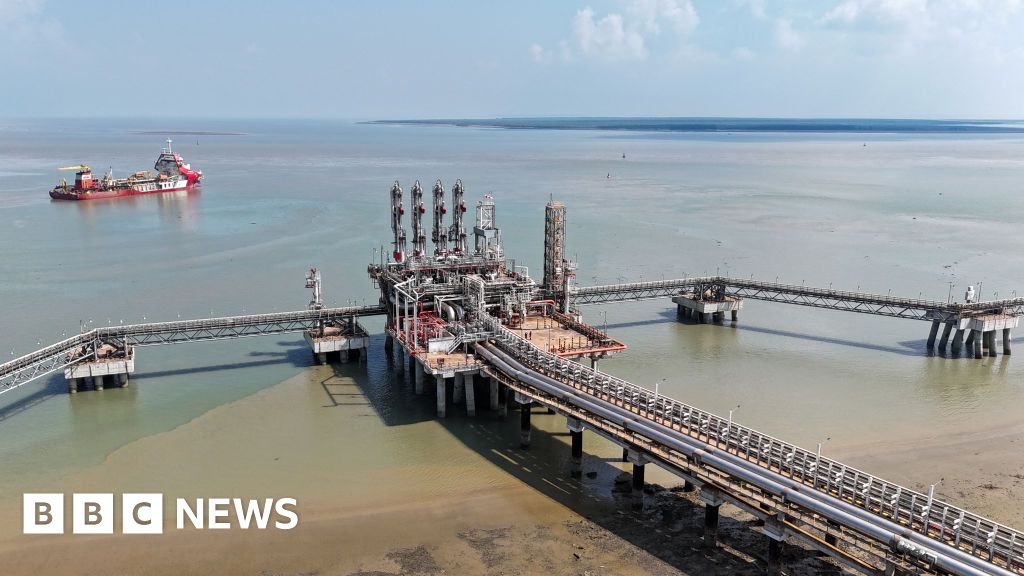
“No disruption is expected for homes and vehicles [using piped gas]. The government has given priority to these two sectors,” says Rahul Chopra, managing director for the Haryana City Gas Distribution Limited, a countrywide gas company with around 100,000 domestic consumers and 195 CNG fuel stations.
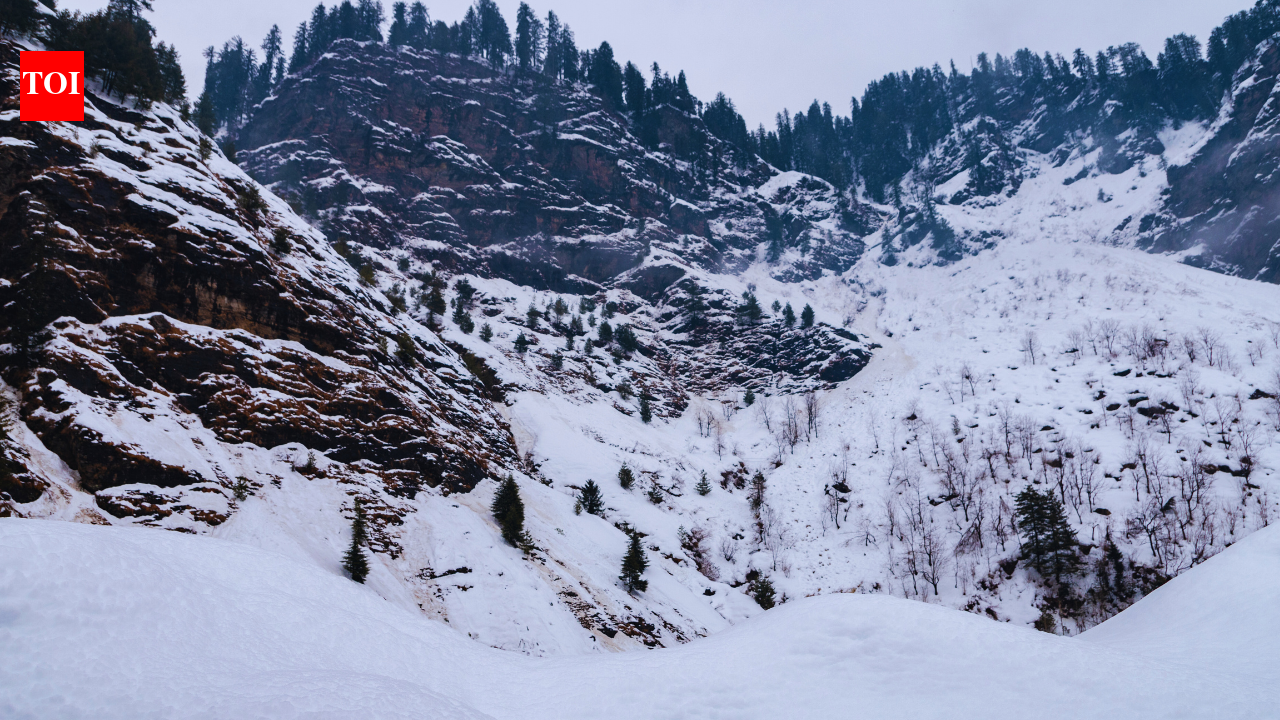
Heavy snowfall in Himachal Pradesh’s Kullu district has triggered a large-scale rescue and snow clearance operation near the Atal Tunnel in Manali, leaving more than a thousand vehicles stranded and prompting urgent intervention by authorities. The Border Roads Organisation (BRO) has been carrying out continuous snow clearance work at the South Portal of the Atal Tunnel since Monday afternoon, following intense snowfall in the region. Deputy Commissioner of Kullu, Anurag Chand Sharma, told the ANI that the operation was initiated as soon as weather conditions began deteriorating. The sudden spell of snow caught hundreds of tourists off guard, particularly those who had travelled from Manali to nearby areas such as Sissu and the Atal Tunnel to experience fresh snowfall over the weekend. As conditions worsened, roads became dangerously slippery, making return journeys nearly impossible. By Sunday evening, more than 1,000 vehicles were stuck in and around the Atal Tunnel, leading to severe traffic congestion both inside and outside the tunnel. Many travellers were forced to spend the night inside their vehicles, with some remaining stranded for nearly 20 hours in freezing conditions.Read more: 10 countries with the highest bird species in the world; India also secures a spot A number of vehicles were guided back to Manali by late Sunday night, whereas the rest was carried out on Monday. “We managed to safely guide around 700 of the over 1,000 stranded vehicles from Atal Tunnel to Manali Sunday night. The remaining 300 vehicles were brought back to Manali by Monday afternoon. We had a team of 40 personnel, but heavy snowfall kept hampering the operation,” Manali DSP K D Sharma, who took part in the operation, told TOI. However, challenges persisted. Around 100 vehicles were still reported stranded near Dhundi as rescue teams continued operations in difficult weather conditions. The Manali–Atal Tunnel highway was subsequently closed at Nehru Kund as a precautionary measure to prevent further movement into affected zones. Significant snowfall has been recorded in this area, with more than two feet of snow recorded in and around the Atal Tunnel and other high-altitude areas. Some popular tourist spots such as Solang Valley, Gulaba, Kothi, Jalori Pass, and areas in and around Lahaul-Spiti such as Keylong, Sissu, and Koksar have recorded fresh snowfall. The impact of the weather was also felt in other areas of Kullu.Read more: Asia’s largest Tulip Garden opens in Srinagar, marking arrival of spring; CM Omar Abdullah inaugurates it today Many of the high mountainous passes, such as the Rohtang Pass, Baralacha La, Kunzum Pass, and Shinku La, received heavy snowfall, while the mid and lower hill regions received moderate to heavy rainfall. Other areas, such as Shimla, Mandi, Kangra, and Chamba, also experienced thunderstorms, lightning, and even hailstorms in certain areas. In Shimla, Khadrala received 10.2 cm of snowfall, followed by Kalpa, which received 6.4 cm of snowfall. Gondhla and Jot also received about 3 cm of snowfall each. Kukumseri also received about 1.5 cm of snowfall. The India Meteorological Department (IMD) has warned of continued unstable weather conditions due to an approaching western disturbance, expected to affect northwest India from the night of March 17. Its impact is likely to be experienced across Himachal Pradesh from March 18 to March 21. An Orange Alert has been issued for March 18 and 19, during which thunderstorms, lightning, and hailstorms are expected in certain districts such as Shimla, Kullu, Mandi, Kangra, and Sirmaur. It is advised that tourists and locals should not travel to high-altitude areas unless necessary. At the same time, police have been deployed in affected areas to take care of traffic and any people who may still be stranded.
Islamabad, Pakistan — The war launched by the United States and Israel on Iran has already killed more than 1,400 people, set off retaliatory attacks by Tehran targeting Gulf nations and Israel, and pushed global oil prices above $100 a barrel.
Now, eighteen days into the conflict, aid agencies and countries neighbouring Iran are increasingly concerned about a potential refugee crisis.
Recommended Stories
list of 4 itemsend of list
The United Nations refugee agency, UNHCR, estimates that 3.2 million people have already been displaced in Iran since US-Israeli strikes began on February 28. For now, the number of people physically crossing Iran’s borders remains comparatively modest. But this is what could happen next, and has put Iran’s neighbours on high alert.
Iran borders seven countries: Afghanistan, Armenia, Azerbaijan, Iraq, Pakistan, Turkiye and Turkmenistan. Iraq shares the longest frontier, stretching for almost 1,600km (994 miles).
Each of these states faces its own political pressures, economic limitations and security concerns.
But pressure on the ground in Iran is mounting. The country’s Red Crescent Society reports that more than 10,000 civilian sites have been damaged since the war began, including 65 schools and 32 medical facilities, while more than 1,400 people have been killed in the US-Israel attacks. Strikes have hit residential areas in Tehran, Shiraz and Isfahan.
Meanwhile, commercial flights out of Iran have been suspended as airspace is closed.
Eldaniz Gusseinov, head of research at the geopolitical advisory firm Nightingale International, noted that because strikes have so far been concentrated largely on Tehran and western and southwestern Iran, other parts of the country — especially provinces bordering Turkmenistan, Afghanistan and Pakistan are absorbing much of the internal displacement.
“If the strike pattern remains the same, internally displaced people inside Iran will increasingly concentrate in provinces located near those states, creating the preconditions for cross-border movement,” the Almaty-based analyst told Al Jazeera.
And things could get worse. If Tehran, a city of about 10 million people, were to lose its electricity grid or water supply in a US-Israel attack, for instance, residents could be forced to leave en masse.
“Infrastructure destruction does not produce the gradual, manageable flows that the Syrian war initially generated. It produces sudden, massive displacement, driven by the collapse of basic urban services,” Gusseinov said.
Turkiye fears repeat of Syrian migration crisis
Among Iran’s neighbours, only Turkiye, Iraq and Pakistan have extensive experience of hosting large refugee populations.
Imtiaz Baloch, an independent researcher focusing on conflicts in Pakistan and Central Asia, said that if the crisis in Iran deepens, many Iranians could seek refuge in neighbouring states, particularly Iraq and Turkiye.
Analysts say no country faces greater political exposure than Turkiye.
“Turkiye is currently hosting many refugees from Syria and other countries. A new influx of Iranian migrants would likely intensify the humanitarian burden and create new challenges for both host countries and international relief agencies in the coming days,” Baloch said.
Turkiye shares a 530km (329-mile) border with Iran and allows visa-free entry for Iranian citizens. It already hosts the world’s largest refugee population, including roughly 3.6 million Syrians, and anti-immigrant sentiment has hardened within domestic politics over the past decade.
Turkiye’s interior minister, Mustafa Çiftçi, said earlier in March that the government had prepared three contingency plans for the war in Iran.
The first involves intercepting migration flows within Iranian territory before they reach the border. The second proposes establishing buffer zones along the frontier. The third would allow refugees to enter Turkiye under controlled conditions as a last resort.
Turkish authorities say they have already strengthened the border with Iran, adding 380km (236 miles) of concrete wall, 203 optical towers and 43 observation posts – undertaken, according to a Turkish Ministry of National Defence statement issued in January, as the US was building up its armada in the Gulf late last year.
“Although there is currently no mass migration detection at our borders, additional measures have been taken on the border line, and these measures will be implemented if needed,” the Defence Ministry stated on January 15.
So far, this has not been necessary. According to Turkish government data on the movement of people from Iran, 5,010 entered Turkiye from between March 1 and 3, while 5,495 exited.
But Turkiye has felt the effects of the war’s spillover in other ways. On March 9, NATO confirmed it had intercepted an Iranian ballistic missile over Turkish airspace. The debris landed near Gaziantep, in the western-most part of the country, about 50km (31 miles) from the Syrian border. Iran denied that it was behind the attack on Turkiye.
Crisis on an unprecedented scale?
What makes the current situation in Iran particularly urgent is the scale of its population, say analysts.
Syria had approximately 21 million people at the start of its civil war. Iran has roughly 90 million. The Syrian conflict caused more than 13 million people to be displaced, including more than 6 million who fled the country.
A proportionate displacement from Iran would represent a humanitarian crisis with few modern parallels. To put it into perspective, if a country of 90 million experienced the exact same scale of crisis as Syria, nearly 56 million people would be forced to flee their homes, and nearly 26 million of them would become international refugees.
Gusseinov said such a scale of displacement and the capacity of international aid agencies is “fundamentally mismatched”.
Furthermore, Iran itself hosts one of the world’s largest refugee populations: about 3.7 million displaced people, most of them from Afghanistan.
“Any mass displacement from Iran, therefore, creates a dual crisis: Iranian civilians fleeing outward, and Afghan and Iraqi refugees who were already in Iran being displaced a second time, or pushed back to countries that cannot absorb them,” he said.
Hamid Shirmohammadzadeh, 35, who arrived in Turkiye from Iran, shows his passport while staying at a hotel in Van province, Turkiye, March 5, 2026 [Dilara Senkaya/Reuters]
Iraq and the South Caucasus face difficult choices
Although most population movement is still taking place within Iran rather than across its borders, Iran’s neighbours do have cause for concern, analysts say.
“Iran’s neighbouring countries are already dealing with their own crises, which limits their ability to absorb a potential refugee influx. Countries such as Syria, Iraq, Azerbaijan, Pakistan, and Afghanistan are facing varying degrees of economic, political, or security challenges. These internal pressures make it difficult for them to accommodate a large influx of refugees,” Gusseinov told Al Jazeera.
Iraq, which shares Iran’s longest border, faces a particularly complex situation.
The country is not only a potential destination for Iranian refugees, but has also been caught in military exchanges between Washington and Tehran. US forces have targeted armed groups operating from Iraqi territory, while Iran and pro-Iran armed groups have struck – or attempted to strike – US military and diplomatic positions inside the country.
The UN’s International Organization for Migration says disruptions on the Iranian side of the border have led to the closure of several crossing points, although Iraqi crossings remain technically open. Meanwhile, the UNHCR says it is monitoring developments closely, and that the Iraqi government would lead any emergency refugee response.
The semi-autonomous Kurdish region of northern Iraq, which, unlike the rest of the country, still allows visa-free entry for Iranian passport holders, adds another layer of complexity.
The region hosts several Kurdish armed groups, some of which have reportedly been in discussions with Washington about receiving military support in return for joining the war against Iran. The development has prompted Iran’s Revolutionary Guard Corps (IRGC) to strike Kurdish positions inside Iraqi territory.
Baghdad has publicly stated that it will not allow its territory to be used to infiltrate Iran, but experts on the region say its ability to enforce the position is limited.
Further north, the South Caucasus states of Armenia, Azerbaijan and Georgia have each expressed concern while attempting to carefully balance relations with both Washington and Tehran.
Azerbaijan has closed its land borders to routine traffic, requiring government approval for any crossing, while Armenia’s border with Iran, which is just 44km (27 miles) long, remains open.
“Armenia is a small economy already absorbing Russian and Ukrainian migrants,” Gusseinov said.
(Al Jazeera)
Pakistan and Afghanistan confront overlapping crises
To Iran’s east lie Pakistan and Afghanistan, each grappling with existing refugee pressures.
According to the UNHCR, since October 2023, about 5.4 million Afghans have returned to Afghanistan from Iran and Pakistan, many not by choice.
Following the withdrawal of US troops from Afghanistan and the Taliban’s return to power in August 2021, a huge wave of Afghans sought refuge across the country’s borders, fearful of economic collapse and security threats.
The UN and international migration agencies estimate that between 1 and 1.5 million Afghans fled to Iran in the immediate aftermath of the US withdrawal, pushing the total Afghan population in Iran to upwards of 5 or 6 million.
Concurrently, hundreds of thousands of newly displaced Afghans crossed into Pakistan, joining a long-established refugee community there and swelling the total number of Afghans in the country to more than 3 million.
In response to this influx and citing domestic economic and security pressures, both Pakistan and Iran initiated aggressive mass deportation campaigns, forcing millions back into Afghanistan. Between late 2023 and the end of 2025, between 2.8 million and 3.5 million Afghans are thought to have been sent back.
Pakistan’s stringent repatriation plans pushed out more than 1.3 million people, while Iran drastically accelerated its expulsions, deporting nearly 2 million individuals in 2025 alone.
According to the UNHCR, in 2026 so far, more than 232,500 Afghans have returned to their country, including 146,206 from Pakistan and 86,253 from Iran.
The primary concern now is that the war in Iran could accelerate these returns, pushing people into communities already struggling to cope and potentially triggering further onward migration. The UNHCR has also warned that largescale and hurried returns of refugees could trigger further instability in the region.
Further complicating the situation, Pakistan and Afghanistan have been engaged in fighting, as Islamabad claims that Afghanistan is providing a safe haven to armed groups launching attacks at Pakistan. Kabul has consistently denied the presence of any such groups on its soil.
Another bout of hostilities in October 2025 led Pakistan to close its borders with Afghanistan. Since then, Afghanistan’s trade and economic ties with Iran have deepened.
“Destabilisation of the Iranian economy, therefore, hits Afghanistan through two channels simultaneously: reduced trade flows and refugee return surges,” Gusseinov said.
Meanwhile, Pakistan faces its own geographical and security challenges.
The country’s border with Iran runs through Balochistan, its largest but most volatile province, where separatist sentiment has simmered for decades. The province has seen an increasing number of attacks by armed groups seeking independence from Pakistan. In February this year, Pakistan’s military concluded a weeklong security operation in the province, and claimed it had killed 216 fighters in targeted offensives.
While Balochistan’s provincial officials say they have sufficient resources to accommodate refugees if large numbers begin arriving across the southern border, researcher Baloch said the reality was more complicated. Any refugee crisis, he said, could make the situation in Balochistan difficult for Islamabad to manage.
“Balochistan’s porous border is next to Iran’s Sistan and Baluchestan province, a region that has historically been home to various separatist groups. Any significant influx of refugees across this border could impose additional security and economic costs on Pakistan,” Baloch said.
Indian IT stocks had already experienced a notable drop earlier this year. (AI image)
Indian IT shares tank! Shares of Indian IT companies dropped by as much as 6% on Tuesday after fresh artificial intelligence announcements from global chipmaker Nvidia, which reignited concerns about AI-driven disruption in the technology services sector. Investor caution also remained high ahead of the US Federal Reserve’s FOMC meeting scheduled for later this week.Indian IT stocks had already experienced a notable drop earlier this year after Anthropic introduced plug-ins for its Claude Cowork agent, capable of automating tasks across departments such as legal, sales, marketing and data analysis. Some analysts had then warned that IT services firms may eventually need to reduce their workforce as more affordable and efficient AI tools begin to replace certain functions.
What Nvidia has announced
At its annual GTC developer conference in San Jose, California, Nvidia said the potential revenue opportunity for its artificial intelligence chips could reach at least $1 trillion by 2027. During the event, CEO Jensen Huang introduced a new central processor along with an AI system built using technology from Groq, a chip startup whose technology Nvidia licensed for $17 billion in December.“The inference inflection has arrived,” Huang said. “And demand just keeps on going up,” he added.Wall Street closed higher after Nvidia’s announcements. The S&P 500 rose 1% to finish at 6,699, marking its strongest single-day gain in more than a month. The tech-heavy Nasdaq advanced 1.22%, while the Dow Jones Industrial Average climbed 0.83%.Investors are also closely watching the outcome of the US Federal Reserve’s FOMC meeting scheduled later this week. The decision is expected to influence sentiment toward IT stocks, as Indian technology companies generate a large share of their revenue from the US market.
Indian IT shares take a hit
Shares of Coforge fell about 6%, while major companies such as Wipro, Infosys, Mphasis, LTI Mindtree and Persistent Systems each declined by more than 2%. Several of these stocks touched fresh 52-week lows during the session, according to an ET report.Earlier, brokerage Nuvama said in a note that the sharp correction in IT stocks since the start of the year, triggered by fears of AI-driven disruption following successive AI tool launches by Anthropic, has made valuations in the sector more appealing.“Reports of my death are greatly exaggerated,” Nuvama said, quoting Mark Twain to describe what it believes reflects the current situation in the IT industry.“Given the advent and adoption of Gen AI, obituaries of the Indian IT services industry are being written all around. The concerns have been amplified by the sharp stock reactions, first with global SaaS and now with IT services companies,” the note said according to ET.Nuvama added that it does not view generative AI as an existential threat to the sector. The brokerage said companies will continue to require system integrators capable of customising plug-and-play enterprise software inputs and outputs to meet specific organisational needs.(Disclaimer: Recommendations and views on the stock market, other asset classes or personal finance management tips given by experts are their own. These opinions do not represent the views of The Times of India)(Disclaimer: Recommendations and views on the stock market, other asset classes or personal finance management tips given by experts are their own. These opinions do not represent the views of The Times of India)
The UK will not let quantum computing talent slip through its fingers and must learn lessons from US dominance of the AI race, the technology secretary has said, as the government announced a £1bn quantum funding pledge.
Liz Kendall said the government hoped to retain homegrown quantum startups, engineers and researchers rather than lose them to competing countries, with the US stealing a march on its western rivals in AI.
“I do look at what’s happened on AI,” said Kendall. “I do think we need to learn the lessons and make sure we give our brilliant scientists, spinouts and startups the ability to stay here and make it happen. And that requires a government that is bold and ambitious and confident in these technologies of the future.”
She added: “Too many people feel they have to move to the US in order to get the funding and support they need to grow and scale their company.”
DeepMind, a groundbreaking AI firm co-founded by Nobel laureate Demis Hassabis, is still based in London but was bought by Google in 2014 for £400m, while major Silicon Valley names such as Meta have been offering vast sums to elite-level talent. The UK remains a major producer of AI talent but some of its biggest AI operations are bases for US companies such as ChatGPT developer OpenAI, Anthropic and Palantir.
Speaking to the Guardian at the National Quantum Computing Centre (NQCC) outside Oxford, Kendall said the government did not want to take a “back seat” on quantum. The UK has produced a number of quantum startups including Quantinuum, a US-UK firm that recently achieved a $10bn (£7.5bn) valuation.
“I want to be at the front of the grid and leading,” she said.
Kendall attended the NQCC with the chancellor, Rachel Reeves, as part of a funding announcement for quantum computing, which uses principles of quantum physics to process information.
The government, in a policy driven by science minister Patrick Vallance, is providing £1bn to help companies design large-scale quantum computers for use by scientists, researchers, the public sector and businesses. A further £1bn, already announced, will support companies and researchers in putting quantum into action in fields such as finance, pharmaceuticals and energy.
Kendall said the UK wanted the money, jobs and security that would come with building a domestic cutting-edge quantum computer by the beginning of the next decade. Last year Google announced it had developed an algorithm enabling a quantum computer to operate 13,000 times faster than a classical computer.
However, fully fault-tolerant quantum computers, capable of realising some of the tasks that augur major scientific breakthroughs, are still some way off as they would require machines capable of hosting hundreds of thousands of quantum bits – the term for a unit of information in a quantum computer.
Classical computers encode their information in bits – represented as 0 or 1 – which are transmitted as an electrical pulse. A text message, email or even a Netflix film streamed on a smartphone is a string of these bits.
In quantum computers, however, the information is contained in qubits. These qubits, encased in a modestly sized chip, are particles such as electrons or photons that can be in several states at the same time, a property of quantum physics known as superposition.
This means qubits can encode various combinations of 1s and 0s at the same time, and compute their way through vast numbers of different outcomes, which is not possible with classical computers. However, they have to be kept in a highly controlled environment, such as one free from electromagnetic interference, or else they can be easily disrupted.
Nonetheless, quantum computers could in theory help design new chemicals, drugs and alloys. Quantum computing could result in a much more efficient representation of chemical compounds, for instance, allowing accurate prediction of what a complex molecule might do and paving the way for new drugs and materials.
And just like that, Venezuela is headed to its first World Baseball Classic final, where it will face the United States in a star-studded showdown.
Thanks to a three-run outburst in the seventh inning, Team Venezuela beat Italy 4-2 on Monday night, completing another come-from-behind victory en route to the title game. Before 2026, Venezuela had made it to the semifinals only twice in its WBC history — and had never won. The U.S., which took down the Dominican Republic 2-1 on Sunday, will return to its third consecutive WBC final in search of its first title since 2017.
We have you covered with everything from the semifinal matchup between Italy and Venezuela, including in-game highlights and postgame takeaways from Miami.
Venezuela’s bullpen saved the day. Things looked dire when starter Keider Montero exited after 1⅓ innings, leaving his bullpen to record 23 outs for a win. And six relievers stepped up to record those outs and hold Italy, one of the tournament’s highest-scoring teams, scoreless. The pitching performance allowed the Venezuelan offense’s three-run seventh inning to suffice and cemented the country’s first appearance in the WBC final. — Jorge Castillo
Venezuela wore gray pants Monday night, but it might as well have been the home team. A sold-out crowd of 35,382 leaned heavily in its favor during this semifinal matchup against Italy, with fans waiving Venezuelan flags, banging on drums and chanting for their nation’s baseball team as it advanced further than it ever has before. Miami is the U.S. city with the highest concentration of native Venezuelans, and in this time of great political upheaval, their baseball team has contributed in ways that transcend the sport.
It has unified a nation. It has connected estranged Venezuelans with the families they cannot visit. And, more than anything, it has become a source of pure joy. That was never more evident than in the top of the seventh, when Venezuela’s offense strung together four straight singles, turning a one-run deficit into a two-run lead and making LoanDepot Park feel as if it might erupt. — Alden Gonzalez
Pour out an espresso shot and a bottle of wine for Team Italy, the darlings of the 2026 World Baseball Classic who leaned in to their heritage and wound up playing some of the best baseball in the tournament. Comprising mostly Italian Americans, the team celebrated home runs with espresso shots and kisses on the cheek, handed out bottles of wine to players of the game and ousted country after baseball-playing country before Venezuela ousted it Monday night. Italy’s offense, so dynamic, ran into a buzzsaw of power arms from Venezuela, ending the magic ride. Italy will be back — and hopefully with it, the sort of funding to help the country organically grow a generation of new ballplayers for World Baseball Classics 20 years down the road. — Jeff Passan
In an age of smartphones, social media and instant communication, it has never been easier to connect … or to offend everyone around us. Many of today’s most common etiquette breaches stem not from malice but from convenience: a badly written message, a thoughtless post, a device that demands our attention. Yet good manners still hinge on the same old principle: consideration for others. From eschewing headphones on public transport to ghosting invitations and sharing thoughtlessly online, here are some of the most common modern etiquette mistakes, why they grate, and how they can be avoided.
Making ‘happy birthday’ posts all about you
A classic daily vignette on social media is someone you follow wishing their friend a happy birthday in their story. Without fail, this is usually a photo of the account holder and the friend; the former looking much better than the person whose birthday it is. Stop making other people’s birthdays about yourself. Post a photo of them on their own, if you really must, but also ensure you extend online birthday posts to all friends, rather than just a select few.
Sending a voice note without a subject
A semi-controversial opinion, but I love a voice note. I love it when my friends and colleagues send me them. But I don’t love it when they send me one without a follow-up line of text explaining what it’s about. Probably, as it is a voice note and not a call or text, it’s in no way urgent. But some sort of nod to its content is always polite. Anything like, “regarding dinner next week; not urgent” or “some background on the new client” will do.
(Sidebar: never send a voice note to someone you don’t know well.)
Checking your smartwatch during a face-to-face chat
Users of smartwatches may well feel a ping or a pop on their wrists, informing them they have a text, their online order has been dispatched, or they have just spent £12.25 at Pret. The Pavlovian response is to glance down to see what the notification is. But when in the company of others, be warned that looking at your watch just reads as “they’re bored of me and checking the time” or “their message is more interesting than me”. Even if you explain that you are reviewing a notification, and not the time, it’s still rude. Avoid the temptation, or put your watch, like your phone, into do not disturb mode before the meeting starts.
It’s considered rude to check your smartwatch while talking to someone. Photograph: pocketlight/Getty Images
Sending work emails outside business hours
The etiquette for emails is that the onus is on the sender to respect the recipients’ time. If you are a lover of a 6am raid on your inbox, great: go for it. But consider saving emails as drafts and sending within the recipient’s regular business hours, or using the schedule-send tool, so you don’t pressure your colleagues and clients into thinking they have to reply at the crack of dawn like you. If you are emailing colleagues in vastly different time zones, of course, there is no issue with sending it early for you but a normal time for them.
Not asking before taking photos in friends’ houses
It’s not your house and so your own rules do not apply. Ask your hosts before any photos or video are taken and then ask again if you want to share it on social media. This now also extends to tradespeople, many of whom have social media accounts. While they may want to capture their handiwork and use it to get new business, they should not be posting their clients’ private spaces online without permission.
Ask before you share photos of someone else’s home. Photograph: Valeriy_G/Getty Images
Music and calls without headphones
This heinous act of selfishness is like a new pandemic. You cannot go five minutes in any major city in the UK, or indeed abroad, without seeing someone making a call on speakerphone, watching TikToks, or listening to music without using headphones: a concept that has been dubbed “barebeating”.
Being charitable, is this because mobiles no longer come with headphones? Or perhaps people are worried about these mini supercomputers getting hot against their ears. Whatever the reasoning, it’s wrong to force those around you to endure whatever you are consuming. If we all did it, there would be an unimaginable cacophony.
Couples reposting each other
There should be a special place in hell for couples who tag each other and then reshare each other’s stories online. Your friends and those you care about probably follow you both, so please don’t force us all to sit through the exact same banality twice.
(Another sidebar: public displays of love on Facebook are also nausea-inducing. Tell them directly, not everyone else.)
Filming people in public without consent
While getting others to consent can be hard to achieve, modern manners suggest considering others who may be in your shot when recording videos and snapping photos. It takes an extra few moments, but is a courtesy that we are all capable of extending to our fellow humans.
Dropping the niceties in emails
Many fall into the trap of thinking that as email is quicker, they can shed formalities, mistaking those small courtesies for some sort of restrictive skin. But with much internal messaging now moving to platforms like Slack and Teams Messenger, I hope people go back to including the niceties in their emails. A quick good morning, closing with a “with all good wishes”, rather than just a curt sentence.
Filming concerts rather than watching
Here’s what no one tells you. No one who wasn’t there really wants to watch your tinny clips of the Mayhem Ball or One Night in Manchester. You’ve paid through the roof for your tickets for Lady Gaga or Harry Styles, and then you forget to experience the concert with your own eyes and ears, too focused on capturing it with your phone, all while perhaps blocking the view of those behind you. Enjoy the moment. It’s probably being filmed in 4K by some streamer, anyway, and their stuff will be better than anything you shoot.
Enjoy the moment … Photograph: Henrik Sorensen/Getty Images
Vaping without asking
While vaping arguably may be less toxic for your lungs than smoking, it is still one and the same thing when it comes to etiquette. Please do not vape in people’s houses, or in their general presence, even if outdoors, without asking first.
Ghosting instead of declining
It is far ruder to ignore an invitation than decline it. You can’t go to everything, so no host should be offended by your prompt regrets. (If you repeatedly decline invitations, then it may be different.) It’s more irritating to have to chase your guests or to wonder why they haven’t bothered to respond.
Sharing pictures of people’s children online without permission
Worse than sharing the inside of someone’s house online is sharing pictures of their children. Some parents are relaxed about their offspring appearing online; others are more private. There is no right or wrong option, unless you are the one who brazenly shares images of others’ children without the parent or guardian’s consent.
Half-hearted dietary requirements
If you’re a vegan, great. Come for dinner, and I will gladly whip up something that hasn’t gone anywhere near a farmyard. But don’t then announce that my pork looks quite good, so you’ll have a bit. Or announce that when you were on holiday a few weeks ago, you fancied an omelette, so had one at breakfast. You either have a dietary requirement or you don’t. Pick a lane.
Not sending any note of thanks after hospitality
It is easier than ever to communicate with our fellow humans today. While you may not send a handwritten note after receiving hospitality (which is still the preferred and most gracious option), the very least you can do is send a text, DM, or even call your host the next day to say how much you enjoyed it all. Even if you didn’t.
Running late and not communicating
While we touch on the ease and variety of communication methods available to us today, please ensure if you are running late, you let whoever is waiting know. The best and easiest way is to send an apology message and then share your location with them so they can track you in real-time and save the bother of messaging you. And if you don’t feel comfortable with location sharing, give as accurate an indication of your ETA as possible. Don’t say “five minutes” when it’s going to be more like 15.
There’s no excuse to let people know if you’re running late. Photograph: andresr/Getty Images
Thinking you have to have an opinion on everything and sharing it
The world is complicated. There is too much going on to have an opinion on every hot-button issue. You can admit that you don’t have an opinion, or are still formulating one. It takes true confidence to say you aren’t sure about something. It’s better to ask sensible questions rather than opine on things you don’t know about.
Bringing an uninvited plus one
I once hosted a party at home when a guest swanned up to me – around 9pm – and announced that his plus one was outside; would I mind letting him in? I stared at him blankly. The Victor Meldrew in me wanted to tell him he didn’t have a plus one, and why did he think it was OK to bring a stranger to my house? Of course, I said nothing of the sort and admitted the plus one. But I kept an extra eye on them that evening, taking great care to count my knick-knacks before and after they left.
Remember, an invitation is only for those whose names are listed. If it doesn’t say “plus guest” then you do not have a mandate to bring one.
Shortening names
Life is different from how it was in etiquette’s perceived heyday. We are much less formal, not automatically deferential. This is a good thing. But do not fall into the trap of thinking that to forge a quicker connection with a new pal you can abbreviate their name off the bat, unless invited. Familiarity can breed contempt!
The graves, freshly dug, lie in neat rows of 20 across. More than 60 have already been carved out of the earth, with a few clusters of people standing gathered around them. Dozens more are marked out on the ground in front: small chalk rectangles, with diggers poised to complete their task.
The cemetery of Minab, photographed as it prepares to bury more than 100 of the town’s young girls, is one of the defining images of the US-Israeli war on Iran, bluntly capturing the devastating civilian toll.
But is it real?
Ask Gemini, the AI service powered by Google, and the answer you receive is no – in fact, Gemini claims the photograph is from two years earlier and more than 2,000km (1,240 miles) away. Rather than graves for small girls killed by a missile, the image “depicts a mass burial site in Kahramanmaraş, Turkey” after the 7.8 magnitude earthquake that struck in 2023. “This specific aerial perspective became one of the most widely shared images of the disaster,” Gemini says, “illustrating the sheer scale of the loss.”
Seeing the same burial image on social media, others turned to X’s AI assistant Grok to check its veracity. Like Gemini, Grok will breezily assure you the photo is not from Iran at all – although it lands on a different date, disaster and location. The image is “from Rorotan Cemetery in Jakarta, Indonesia – a July 2021 stock photo of Covid mass burials. Not Minab,” it says.
In both cases, the AI answers sound sure: they don’t equivocate, and even provide “sources” for the original image, should you choose to check them. Follow the thread to examine those, however, and you’ll begin to hit dead ends: either the image doesn’t appear at all, or the link provided is to a news report that doesn’t exist. For all their impression of clarity and precision, the AIs are simply wrong.
The cemetery image, it turns out, is authentic. Researchers have cross referenced the photo of the site with satellite images that confirm its location, and it can be cross-referenced again with dozens more images taken of the same site from slightly different angles, and again with video footage – none of which experts say show signs of tampering or digital manipulation. The “factchecks” by Gemini and Grok are just one example of a tidal wave of AI-generated slop – hallucinated facts, nonsense analysis and faked images – that are engulfing coverage of the Iran war. Experts say it is wasting investigative time and risks atrocities being denied – as well as heralding alarming weaknesses as people increasingly rely on AI summaries for news and information.
From the opening days of the war, factcheckers have been kept busy with a constant flow of faked imagery online. A photo of what the Tehran Times claimed was satellite imagery of a US radar destroyed in Qatar was exposed as an AI fake made from old Google Earth pictures – its giveaways included the cars, which were all in identical positions to the image from two years earlier.
Widely circulated images of Khamenei’s body being pulled from rubble had “tells” including duplicate limbs among the rescuers. “One fake that stood out to me claimed to show a senior Iranian commander walking around Tehran disguising himself as a woman to avoid potential assassination,” says Shayan Sardarizadeh, a senior journalist at the BBC Verify team, which uses forensic techniques to confirm information and conduct visual investigations. “The street, the building in the background, and the surroundings all seemed like a realistic scene in Tehran.”
This image purporting to show a US radar destroyed in Qatar was exposed as an AI fake. Illustration: Tehran Times/X
Sardarizadeh says AI now makes up a large portion of all of the misinformation the team debunks – and the volume is increasing. In the first few weeks of the Gaza or Ukraine wars, for example, most fake posts the team saw were old or unrelated videos, or repurposed video game footage. Now, “nearly half, if not more, of all the viral falsehoods that we now track and debunk are generative AI”.
That has partly been driven by the ease with which anyone can now generate a realistic video or photo. But the other enormous shift is in people using AI to summarise the news or answer questions, rather than going directly to the original source. Google AI summaries and Grok were only rolled out to the wider international public in mid 2024, and have rapidly become widespread: 65% of people report regularly seeing AI summaries of news or other information, and the portion of people who say they are using generative AI to get information doubled in the past year. Often, however, AI summaries are simply wrong. An international study in 2025 found about half of all AI-generated summaries had at least one significant sourcing or accuracy issue – with some tools, such as Google’s popular Gemini interface, that rose to 76%.
In the case of the Iran war, factcheckers say they are seeing a deluge of this kind of misleading material. As well as the Minab graveyard images, examples include Grok inaccurately suggesting to X users that video footage of fires in Tehran was actually from LA in 2017, and users citing “AI analysis” to misidentify a missile filmed falling next to the Minab school (numerous munitions experts say it is a US Tomahawk, a finding reinforced by fragments reportedly found at the scene and internal US briefings on the bombing).
“Factcheckers now regularly have to address both a false post and also a misleading claim made by a chatbot in relation to that post,” Sardarizadeh says.
Fire burns along Koohsar Boulevard in Tehran, in a screengrab from video obtained from social media and released on 8 March. Grok suggested to X users that such images were from the LA fires in 2017. Photograph: Social Media/Reuters
Part of the problem is how LLM AI models (such as Grok, ChatGPT and Gemini) work. At a very basic level, they are probabilistic language models, constructing sentences piece by piece based on which next word has the highest likelihood of being appropriate. While that process produces convincing, authoritative-sounding sentences, it doesn’t mean the AI has actually analysed the material in front of it.
“AI is perceived as an omniscient entity with access to everything, but without emotions,” says Tal Hagin, an open-source intelligence analyst and media literacy educator – so people tend to trust it. “What you are using is actually a very advanced probability machine, not a truth box.”
The problem is compounded by the authoritative way AI tends to present its findings. It will generate detailed “reports”, including names and dates, references and sources – the kind of material that suggests deep research and understanding, but may in fact be hallucinated or nonexistent. When the Guardian queried Gemini’s answer on the Minab photograph, saying “I don’t think that’s correct, can you search again?” it revised its finding – but to another incorrect location and year. “I apologise for the oversight. Upon re-examining the image … this image was taken in Gaza in November 2023,” it says. Told that that answer was also incorrect, and the photo was from Iran, the bot revised again – to Tehran, during the Covid pandemic. Told that the photograph was taken in Iran in 2025, it responded that it was from the aftermath of an earthquake in southern Iran.
This screengrab shows a series of false AI responses when asked to identify the photograph of graves for victims of the Minab school strike. Composite: Reuters
X and Google did not respond to a request for comment. Both platforms’ AI services note in their small print that they may produce inaccurate results.
For those investigating human rights abuses, the trend poses new challenges. Chris Osieck, an independent open-source investigator who has conducted investigations into a number of civilian casualty bombings in Iran, said researchers’ time was being wasted debunking AI material. Debunking AI videos, for example, often involves carefully inspecting them frame by frame for visual discrepancies. “That time should be devoted to what matters most: reporting on the impact this brutal war has on the people caught in the crossfire.”
And in cases such as Minab, where the material is demonstrably real? Researchers fear the wash of AI slop is sowing doubt in people’s minds that the atrocity they are seeing evidence of ever happened at all. “As the technology continues to get better, it could muddy the waters so much that videos and images of real atrocities get dismissed as fake or AI,” say Sardarizadeh.
“I’ve already seen examples of this in relation to the conflicts in Gaza and Ukraine,” he says.
For those who have lost loved ones, accountability risks being overshadowed by a mass of misinformation, suspicion and doubt.
“At the end of the day, one should also consider what this looks like from the perspective of the families of those who were killed,” Osieck says. “Imagine losing a child and then seeing AI being used online to claim that the event did not happen. That is not just an obstacle for investigators. It is also deeply disrespectful to the loved ones who are grieving.”