
Home Blog Page 734

Industry-backed campaign aims to boost UK’s investment culture

0
Industry-backed campaign aims to boost UK’s investment culture


A campaign aiming to transform people’s attitudes towards investing has launched, with research suggesting that seven in 10 (69%) people rarely or never talk about the subject.

The Invest For The Future campaign is backed by several financial services firms, with support from the Treasury, the Financial Conduct Authority (FCA) and the Money and Pensions Service.

A survey commissioned for the campaign indicated that 44% of people with savings but no investments – which could equate to 10.1 million savers across the UK – would be interested to learn more about investing.

Previous FCA research has indicated that around seven million adults hold more than £10,000 in cash savings and could be missing out on the benefits of investing.

Cash savings that can be easily accessed may be useful for emergencies but those behind the campaign said excess savings may dent people’s ability to achieve their long-term financial goals.

Investments may potentially outperform cash savings over the longer term but the value of investments can go down as well as up and people should consider the level of risk they feel comfortable with. People may also want to consider any fees when weighing up investment options.

The campaign aims to support more people in viewing investing as something for them – and that investing could be a natural “next step” from saving.

It will roll out in phases, starting with digital and social channels, and be expanded to television from the autumn.

Get a free fractional share worth up to £100.
Capital at risk.

Terms and conditions apply.

Go to website

ADVERTISEMENT

Trading 212 logo

Get a free fractional share worth up to £100.
Capital at risk.

Terms and conditions apply.

Go to website

ADVERTISEMENT

The campaign will include a character called “Savvy the Squirrel” and include “savvy cabs” – where taxi passengers can chat with content creators and investors about money and investing.

A fleet of taxis will be transformed into “savvy cabs” in Manchester this week, those behind the campaign said.

Economic Secretary to the Treasury Lucy Rigby said: “With greater awareness of the benefits of investing, more people will be able to make informed decisions about how to make their savings work harder for them.

“That will mean greater prosperity and financial resilience for households across the country and strengthened domestic capital markets, too.”

Sasha Wiggins, chairwoman of the retail investing campaign and CEO of private bank and wealth management at Barclays, said: “The UK has a strong savings culture but a significant investing gap with too many still feeling investing is not for them.”

Chris Cummings, chief executive of the Investment Association and deputy chairman of the retail investing campaign, said: “There is clear demand from millions of savers who want to do more with their money, but do not always feel confident about where to begin.”

Emma Crystal, chief executive of private banking & wealth management at NatWest Group, said: “Thinking about investing alongside saving is increasingly shaping the broader discussion about long‑term financial security.

“Saving remains an important way to build confidence and resilience, particularly in the earlier stages of financial planning, while investing can play a complementary role as longer‑term goals come into focus.”

Richard Flint, chief executive of Hargreaves Lansdown, said: “Too many people in Britain feel that investing isn’t for them. This campaign is about building confidence and awareness, so more people feel able to take that first step and make their money work harder for them.

“People won’t change their behaviour overnight but through creating an engaging and simple campaign to answer people’s questions, we hope that a traditionally dry subject will become more accessible and real.”

Sarah Pritchard, deputy chief executive of the FCA, said: “We want consumers to navigate their financial lives with confidence and invest for the future.

“This campaign is an important part of that, building the stronger investment culture we need. It sits alongside our targeted support rules which will help millions make informed decisions about their finances.”

Changes were made from April 6 meaning some firms can offer targeted support to help people make better-informed decisions about what to do with their money, based on what they would recommend to those in similar circumstances.

Targeted support aims to fill the gap between people receiving general guidance and paying for individualised advice, enabling more people to make informed decisions.

In December, the FCA said at least 18 million people could be offered extra help with their investments and pensions over the next decade with the introduction of targeted support.

Opinium carried out the survey of 4,000 people across the UK in April.

James Andrews, managing editor at Smart Money People and Be Clever With Your Cash, said: “While investing has become more democratised in recent years, thanks to a wealth of digital-first investment solutions, ease of access has not mitigated its inherent risks.

“Yes, investing offers the potential for greater growth, but it also carries the risk that you get back less than you put away, especially over the short term.

Britons should ensure they assess the full range of Isas available to them and choose what best suits their financial situation.

“Both stocks and shares Isas and cash Isas have their own benefits, and the right choice depends on individual goals. Cash Isas mean you know exactly what you have saved and are better suited to short-term financial goals.

“Stocks and shares Isas are more suited to long-term investing, where growth is more likely over time, making them appropriate for retirement planning or building wealth for later life.”

From April 6 2027, changes will mean that, while the total annual Isa allowance will still be £20,000, adults aged under 65 will be able to put away only up to £12,000 in a cash Isa, with the remaining £8,000 allowance potentially going into stocks and shares.

Savers aged 65 and over will retain the annual £20,000 subscription limit for a cash Isa.

Andrew Prosser, head of investments at InvestEngine, said: “Transparency and education around costs must be central to any efforts to boost people’s confidence in investing.”

Holly Mackay, chief executive at Boring Money, said: “We need to take investing out of the members’ clubs and into the school run, into the pub and onto our screens.”

She said that targeted support “has a vital role to play in enabling millions of cash-only savers to take the first step into investing”.

Caroline Raines, director of corporate affairs at Compare the Market said: “With more financial content being shared online than ever before, it’s vital that we ensure consumers are signposted to accurate, balanced guidance rather than misleading information.

“Credible voices in the creator space have an important role to play here – helping to translate complex topics into everyday language without downplaying the risks.”



Source link

WNBA finally embraces Caitlin Clark’s stardom with unprecedented national TV schedule

0
WNBA finally embraces Caitlin Clark’s stardom with unprecedented national TV schedule


Though the mean girls and race idolaters don’t like it, Caitlin Clark is more valuable to her respective sport than any other American athlete is to theirs.

Case in point: the WNBA’s 2026 television schedule.

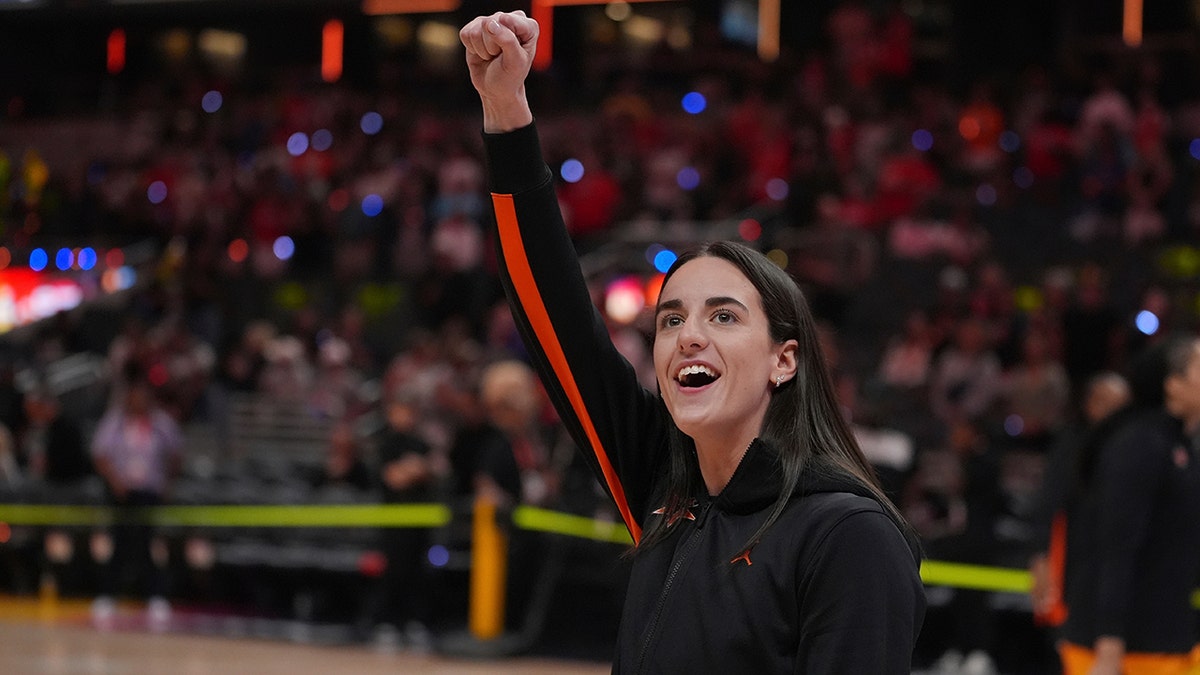
On Wednesday, the league announced the Indiana Fever will become the first team in WNBA history to have all 44 regular-season games aired nationally.

Each of the league’s broadcast partners will carry at least one Fever game:

  • USA: nine
  • Prime Video: eight
  • ION: seven
  • ESPN: six
  • ABC: four
  • CBS: four
  • Peacock: three
  • NBC: two
  • NBA TV: one

Indiana Fever guard Caitlin Clark drives the ball against Connecticut Sun guard Leila Lacan in the second quarter at TD Garden on July 15, 2025. (David Butler II/Imagn Images)

FEVER RULE OUT CAITLIN CLARK FOR 4TH-STRAIGHT GAME AHEAD OF ALL-STAR BREAK

The WNBA is wise to finally acknowledge Clark’s star power. For most of her first two seasons, the league treated her like just another player, sticking her on the back of posters and leaving her out of promos.

But she is not just another player. The league saw firsthand how quickly its popularity dipped last season when Clark missed time with multiple injuries, ultimately limiting her to just 13 games.

Caitlin Clark is to the WNBA what Tiger Woods was to golf, Michael Jordan to the NBA, and Conor McGregor and Ronda Rousey to the UFC. She’s a once-in-a-generation, box office draw.

BASKETBALL LEGEND SAYS CAITLIN CLARK’S 3-POINT ONSLAUGHT LEFT HER SPEECHLESS

Chicago Sky forward Angel Reese sitting courtside at United Center watching NBA game

Chicago Sky forward Angel Reese watches an NBA game between the Chicago Bulls and Orlando Magic during the first half at United Center on Jan. 2, 2026. (Kamil Krzaczynski/Imagn Images)

What made the league’s hesitation so baffling is that Clark’s rise lifts everyone around her. The more popular she is, the more exposure her teammates and opponents receive.

In fact, Angel Reese is only a household name because of Caitlin Clark. Even Dan Patrick, hardly a culture warrior, argued that point last year.

“[Reese’s] her attention, her notoriety is based off Caitlin Clark because she wins the national title, the first thing she does is mock Caitlin Clark,” Patrick said on his radio show. “And then, she doesn’t even celebrate with her teammates. So, she’s made it personal with Caitlin Clark. Then, she’s played off of that.”

HOW CAITLIN CLARK BATTLED THROUGH CULTURE WARS EN ROUTE TO HISTORIC 2024

“WNBA has been around a couple of decades and people didn’t notice the game, they’re noticing it now. Well, that’s because of Caitlin Clark, not Angel Reese,” he concluded.

Indiana Fever's Caitlin Clark reacting to fans before WNBA All-Star game

Indiana Fever’s Caitlin Clark reacts to fans before the WNBA All-Star basketball game in Indianapolis on July 19, 2025. (Michael Conroy/AP)

That said, some women would be wise not to embarrass themselves under the brighter lights that Clark brings.

For example, DiJonai Carrington and Chennedy Carter exposed themselves as bitter, unhinged, racially-obsessed, cheap-shot artists during Clark’s rookie season. They targeted her with hard fouls on the court and smears on social media.

CLICK HERE TO DOWNLOAD THE FOX NEWS APP

There will be even more attention on the league this year because of the Fever’s national schedule. It will be up to the other women to grow the game beyond just Clark.

We will see if they have the composure and impulses to do so.


Source link

Booking.com data breach exposes traveler data to scams

0
Booking.com data breach exposes traveler data to scams


NEWYou can now listen to Fox News articles!

You probably didn’t expect a travel booking platform to send you into a security spiral. Yet here we are.

Booking.com confirmed that hackers may have accessed customer data, including names, email addresses, phone numbers and booking details. That is enough information to make scam messages look real.

If you’ve booked a hotel or rental through the platform, this is worth your attention.

Sign up for my FREE CyberGuy Report

  • Get my best tech tips, urgent security alerts and exclusive deals delivered straight to your inbox.
  • For simple, real-world ways to spot scams early and stay protected, visit CyberGuy.com – trusted by millions who watch CyberGuy on TV daily.
  • Plus, you’ll get instant access to my Ultimate Scam Survival Guide free when you join.

SMART TRAVEL SAFETY TIPS BEFORE YOUR NEXT TRIP

Booking.com says hackers may have accessed customer names, emails, phone numbers and reservation details. The breach could make phishing messages look far more convincing. (KairosDee/Getty Images)

What happened in the Booking.com data breach

The company sent email notifications to affected customers after detecting “suspicious activity involving unauthorized third parties” accessing guest booking information. That’s the corporate way of saying someone got in who shouldn’t have been there.

One user shared the full notification on Reddit, where dozens of others said they received the same message. That suggests this was not an isolated case. The notice warned that anything customers “may have shared with the accommodation” could also have been exposed, meaning the breach went beyond basic account data.

What data was exposed in the Booking.com breach

Booking.com confirmed that financial information was not accessed. Physical home addresses were also not part of the breach, according to the company. So no, someone doesn’t have your credit card number or home address from this incident.

What they do potentially have: your name, email address, phone number and the details of your reservation. That’s enough to craft a convincing phishing message, which some hackers may already be doing.

“At Booking.com, we are dedicated to the security and data protection of our guests,” a Booking.com spokesperson said in a statement to CyberGuy. “We recently noticed some suspicious activity involving unauthorized third parties being able to access some of our guests’ booking information, which may include booking details, names, email addresses and phone numbers and anything that travelers may have shared with the accommodation.”

“Financial information was not accessed from Booking.com’s systems, nor were guests’ physical addresses,” the spokesperson continued. “Upon discovering the activity, we took action to contain the issue. We have updated the PIN number for these reservations and informed our guests.”

APPLE NOW LETS YOU ADD YOUR PASSPORT TO YOUR PHONE’S WALLET

Person typing code on a laptop keyboard

A Booking.com breach exposed personal and reservation data that scammers can use to craft realistic fraud attempts. (Annette Riedl/picture alliance)

How scammers are using stolen booking data

A user who posted the notification on Reddit said that two weeks before receiving it, they got a phishing message on WhatsApp that included their real booking details and personal information. That timing matters. It suggests hackers may have already been using the data before many customers were notified.

It is not clear whether that earlier phishing attempt is directly tied to this specific breach, but it shows how detailed booking information can be used in targeted scams.

That is what makes this breach more dangerous than it first appears. When scammers know where you are staying and when, they can create messages that feel legitimate. A fake alert about a problem with your reservation or a request to confirm payment details suddenly looks real.

How past incidents highlight potential risks

This breach did not happen in a vacuum. In 2024, hackers infected computers at multiple hotels with a type of consumer-grade spyware known as stalkerware. In one documented case, a hotel employee was logged into their Booking.com admin portal when the software captured a screenshot of the screen, exposing visible customer data.

That detail points to a broader issue. In some cases, vulnerabilities may exist not just within a platform, but across the hotels and systems connected to it. The current breach may follow a similar pattern, though the company has not confirmed how the unauthorized access occurred.

To put the scale in context, Booking.com says 6.8 billion bookings have been made through the platform since 2010. Even a small percentage of affected users represents a large number of people.

NEW FBI WARNING REVEALS PHISHING ATTACKS HITTING PRIVATE CHATS

A woman with luggage looks at her phone.

A Booking.com breach exposed personal and reservation data that scammers can use to craft realistic fraud attempts. Security experts warn travelers to verify any message about their stay. (martin-dm/Getty Images)

Ways to stay safe after the Booking.com breach

You don’t have to swear off travel apps to protect yourself. A few targeted steps go a long way.

1) Check for an official notification

Check your email for a message from Booking.com. If you received one, take it seriously rather than filing it away. The company says it has updated PINs for affected reservations, but your account itself may still need attention.

2) Update your password now

Change your Booking.com password, especially if you reuse it anywhere else. Credential stuffing attacks are common after breaches, and reused passwords make it easy for hackers to break into other accounts. A password manager can help you create and store strong, unique passwords so you are not relying on the same one across multiple sites. Check out the best expert-reviewed password managers of 2026 at Cyberguy.com.

3) Turn on two-factor authentication

Enable two-factor authentication (2FA) if you haven’t already. It adds a step, but it also blocks access even if someone has your password.

4) Consider identity theft protection

Even though financial data was not accessed, exposed personal details can still be used in scams or identity theft attempts. An identity protection service can monitor your information, alert you to suspicious activity and provide support if your identity is compromised. See my tips and best picks on Best Identity Theft Protection at Cyberguy.com.

5) Watch for highly targeted phishing messages

Be skeptical of any message that references your booking details, whether it arrives by email, text or WhatsApp. Legitimate companies rarely ask you to click a link and re-enter payment information. Hackers with your booking data can write convincing fakes that look urgent.

6) Verify bookings through official channels

If you get a message about your reservation, do not click the link. Open the Booking.com app or type the website address manually. You can also contact the hotel directly using the number listed on its official website.

7) Add a safety net in case you click something malicious

If you accidentally click a suspicious link, strong antivirus software can help detect malicious websites or downloads before they cause damage. Look for tools that offer real-time protection and phishing detection, not just basic virus scans. Get my picks for the best 2026 antivirus protection winners for your Windows, Mac, Android & iOS devices at Cyberguy.com.

8) Limit how your personal data is exposed online

Data brokers collect and sell personal details like your phone number and email address. That makes it easier for scammers to connect stolen booking data to a real person. Removing your information from these sites with a data removal service can reduce how often you are targeted. Check out my top picks for data removal services and get a free scan to find out if your personal information is already out on the web by visiting Cyberguy.com.

9) Report anything suspicious quickly

If you receive a phishing attempt that includes your real reservation details, contact Booking.com directly and report the message to your phone carrier or email provider. Reporting helps shut down scams faster.

Kurt’s key takeaways

Data breaches at major travel platforms are uncomfortable precisely because travel feels personal. Your itinerary, your accommodation and your plans are wrapped up in those booking details, and now someone else may have a copy. The good news is that financial information and home addresses were not part of this breach. The bad news is that the stolen data is detailed enough to be weaponized in targeted phishing attacks, and there’s evidence that it already has been. Booking.com updated its customers, reset PINs for affected reservations and publicly confirmed the incident. That’s more transparency than many companies offer. But the fact that users were receiving phishing messages on WhatsApp two weeks before the formal notification went out is worth sitting with. You can’t control whether the platform you use gets breached. You can control whether you’re an easy target once your data is out there.

How much responsibility should companies like Booking.com take when your personal data fuels scams? Let us know by writing to us at Cyberguy.com.

CLICK HERE TO DOWNLOAD THE FOX NEWS APP

Sign up for my FREE CyberGuy Report

  • Get my best tech tips, urgent security alerts and exclusive deals delivered straight to your inbox.
  • For simple, real-world ways to spot scams early and stay protected, visit CyberGuy.com – trusted by millions who watch CyberGuy on TV daily.
  • Plus, you’ll get instant access to my Ultimate Scam Survival Guide free when you join.

Copyright 2026 CyberGuy.com. All rights reserved.


Source link

I’m on six different NHS waiting lists – it’s taking over my life

0
I’m on six different NHS waiting lists – it’s taking over my life


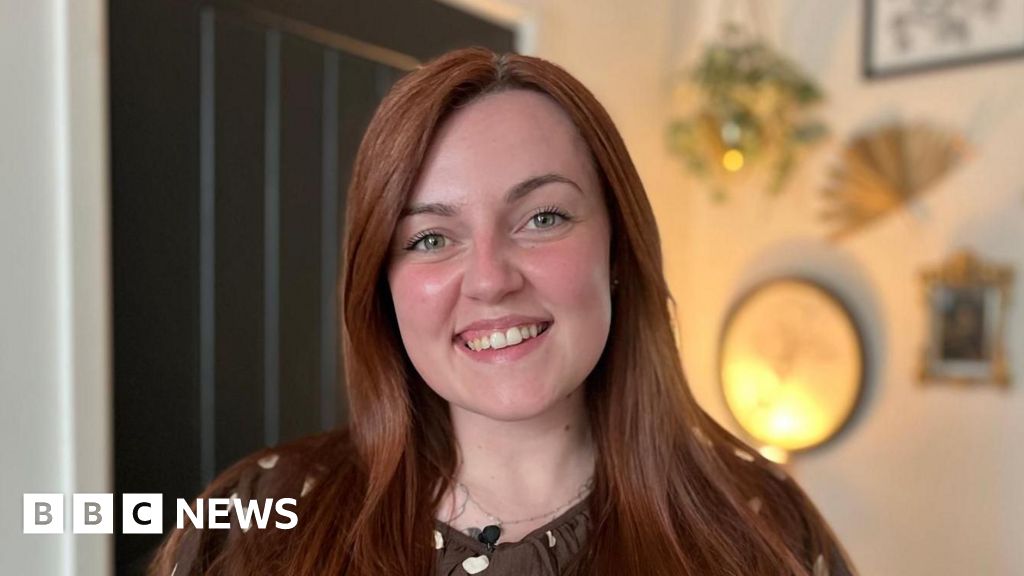
Amy-Jane Davies is one of 713,048 people in Wales waiting for any type of NHS treatment.


Source link

Premier League: Burnley 0-1 Man City Highlights

0
Premier League: Burnley 0-1 Man City Highlights


Manchester City continue their charge towards the Premier League title with victory at Turf Moor to move Pep Guardiola’s side top of the table and relegate Burnley back to the Championship.

MATCH REPORT: Burnley 0-1 Man City

Available to UK users only.


Source link

Red hair may be increasing as study points to surprising evolution trend

0
Red hair may be increasing as study points to surprising evolution trend


NEWYou can now listen to Fox News articles!

A study from Harvard Medical School indicates natural selection has favored the red hair gene, resulting in a potential increase in the number of redheaded people as humanity continues to evolve.

By analyzing nearly 16,000 ancient genomes spanning 10,000 years, researchers identified a list of traits that nature is actively pushing forward. Among the most prominent were the genetic variants for red hair.

“Perhaps having red hair was beneficial 4,000 years ago, or perhaps it came along for the ride with a more important trait,” the authors noted.

22 HEALTH CARE PREDICTIONS FOR 2025 FROM MEDICAL RESEARCHERS

The study, published in the journal Nature, relied on a large database of ancient DNA from West Eurasia. Using new computing methods, the team was able to filter out random fluctuations in DNA to identify what it called “directional selection.”

Directional selection happens when a particular version of a gene gives an organism a strong survival or reproductive advantage, causing it to become more common in a population faster than it would by chance, according to experts.

Directional selection is when a specific gene provides such significant benefits that it rises in frequency across a population much faster than random chance. (iStock)

Prior to this study, scientists only knew of about 21 such instances in human history, one of which was lactose tolerance. This new research uncovered hundreds more.

“With these new techniques and a large amount of ancient genomic data, we can now watch how selection shaped biology in real time,” Ali Akbari, first author of the study and senior staff scientist in the lab of Harvard geneticist David Reich, said in a press release.

COMMON EATING HABIT MAY TRIGGER PREMATURE IMMUNE SYSTEM AGING, STUDY FINDS

The data showed that genetic markers for red hair are among 479 gene variants that have been strongly favored over the past 10,000 years. One likely explanation, the researchers said, is a major shift in human history: the transition to farming.

Redheaded woman on computer

Scientists have long pointed to vitamin D synthesis as a likely driver for the rise of traits like fair skin and light hair. (iStock)

As humans moved away from hunting and gathering and settled into agricultural societies, their environment and behavior changed radically, triggering an evolutionary “acceleration.”

CLICK HERE FOR MORE HEALTH STORIES

While the Harvard study provides the first definitive statistical proof that red hair was actively selected during the rise of farming, the researchers noted that the exact prehistoric benefit still requires more study.

However, scientists have long pointed to vitamin D synthesis as a likely driver for the rise of these light-pigmented traits in northern climates.

CLICK HERE TO SIGN UP FOR OUR HEALTH NEWSLETTER

While redheads remain a minority of the global population today, the Harvard study’s analysis suggests that they may not be an evolutionary accident.

Little girl and older brother in pajamas sitting on bed

While redheads remain a minority of the global population today, the Harvard study’s analysis suggests they may not be an evolutionary accident. (iStock)

Instead, the red hair trait was “boosted” by natural selection as humans adapted to the challenges of a modern world, according to the researchers.

TEST YOURSELF WITH OUR LATEST LIFESTYLE QUIZ

The researchers urged caution in how these findings are interpreted.

CLICK HERE TO DOWNLOAD THE FOX NEWS APP

“What a variant is associated with now is not necessarily why an allele propagated,” the authors noted.


Source link

Rents around the U.S. are growing more slowly than they have in years

0
Rents around the U.S. are growing more slowly than they have in years


Good news, renters, plus a dollop of bad.

The typical monthly rent in March was $1,910 per month, up 1.8% from a year ago. That represents the slowest rate of growth in rental costs since December 2020, according to a new Zillow study

“Rents surged after the pandemic due to a sharp increase in demand colliding with limited supply and strong fiscal support,” Zillow senior economist Kara Ng told CBS News in an email. “Growth is now slowing as new supply comes online, demand normalizes and affordability constraints reduce landlords’ pricing power.”

In another boost for some renters, people’s income rose faster in March than rental costs, giving people a bit more financial wiggle room. 

According to the online real estate marketplace’s findings, single-family rents rose 2.5% on an annual basis in March, the slowest rate Zillow has recorded since 2015, when it started collecting the data. Zillow defines single-family homes as attached or semi-attached row houses, duplexes, quadruplexes and townhomes. Multifamily home rents were $1,757 in March, up 1.3% from a year ago.

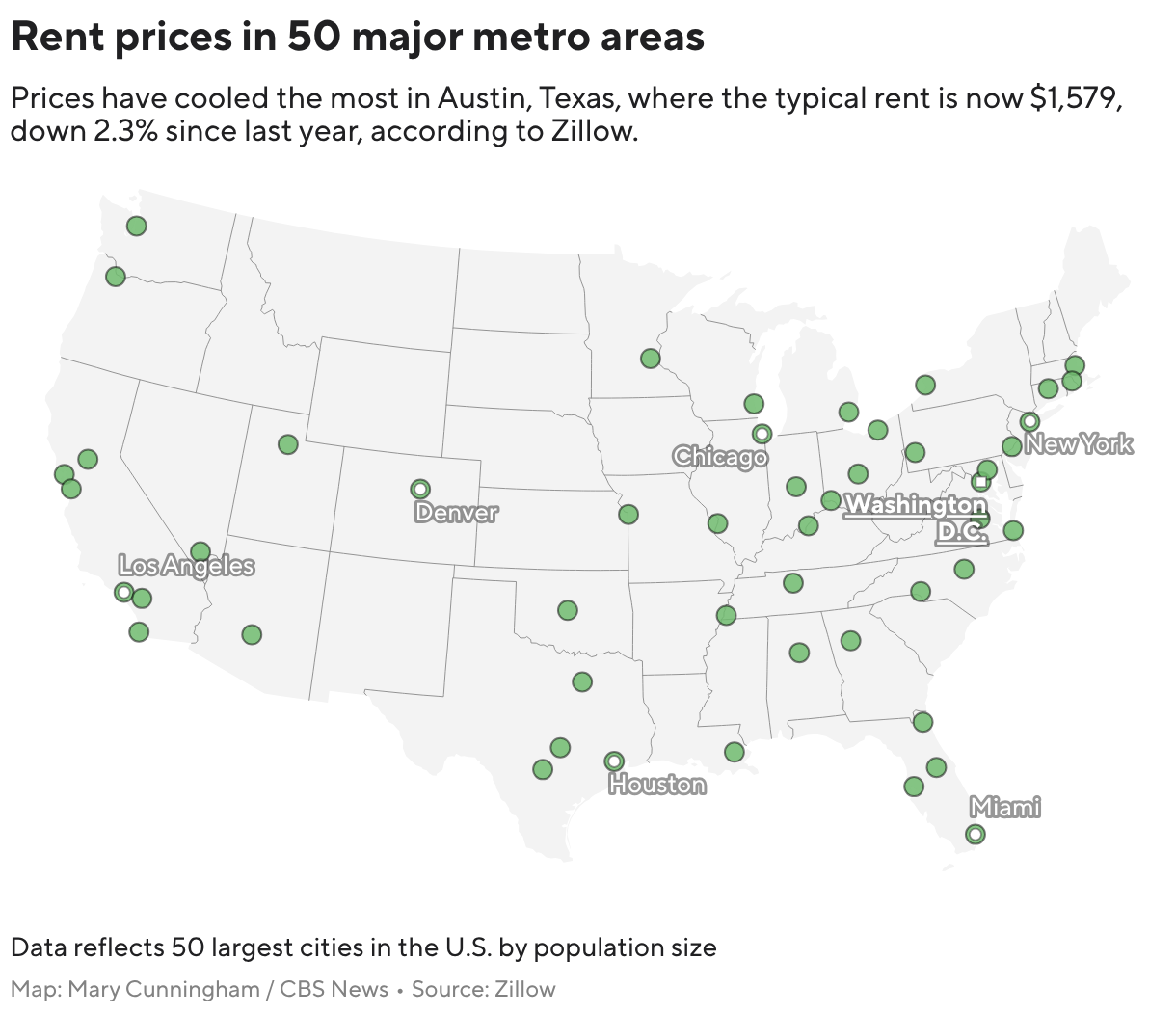
Among the largest U.S. cities, monthly rents cooled the most in Austin, Texas, where prices are down 2.3% as of March compared to a year ago. Rents are down 1.6% year over year in both Tampa, Florida, and San Antonio, Texas, Zillow found.

While the cost of keeping a roof over your head is cooling, Americans still spend a large chunk of their income on rent. The median household spent 26.5% of its income on rent last month, Zillow found. 

Meanwhile, a household must earn at least $76,400 a year to comfortably afford the typical monthly rent of $1,910 — that’s up 35% from before the pandemic. The data shows single-family rents have surged nearly 45% since early 2020, while multifamily rents have jumped 28% over that period. 


Source link

NWSL, players association team up on Project ACL initiative

0
NWSL, players association team up on Project ACL initiative


The NWSL Players Association and the NWSL announced on Wednesday that they have joined Project ACL, an initiative focused on reducing anterior cruciate ligament injuries in women’s professional soccer.

The player-focused study will begin in June and last three years, after which the data will be studied to better understand how to reduce ACL injuries.

ACL injuries are twice as likely to occur in women than men, and roughly two-thirds of ACL injuries in women’s soccer occur without contact from another player, according to existing research.

“The NWSLPA is proud to join Project ACL, which brings together players, leagues and researchers to better understand ACL injuries,” Tori Huster, the NWSLPA’s deputy executive director and a former NWSL player, said in a statement. “That understanding requires looking beyond the individual and examining the conditions players train and compete in each day. Project ACL is an opportunity to build the kind of player-centric evidence that can lead to meaningful changes across women’s professional soccer.”

The study plans to track metrics like player workload and travel, and to understand how such factors intersect with player injuries. Data will be anonymized and shared internally throughout the study, according to organizers.

According to the organizers, only 8% of all sports research is conducted on women, and much of that focuses on amateur athletes.

Project ACL originally launched in England with the Women’s Super League. It is the first study of its kind across multiple professional leagues, according to organizers.

The NWSL and NWSLPA are working alongside Nike and Leeds Beckett University and global players’ union FIFPRO, which is “responsible for the overall guidance and leadership of the study,” according to a press release.

“We are incredibly excited to bring the NWSLPA and the NWSL to Project ACL, which now comprises two of the biggest leagues in women’s soccer,” Dr. Alex Culvin, FIFPRO’s director of women’s football, said in a news release.

“Overall, we believe that player-centricity and collaboration with key stakeholders are central to establishing meaningful change in the soccer ecosystem and that players, competition organizers and stakeholders around the world will benefit from Project ACL’s outputs and outcomes.”


Source link

Crypto billionaire Justin Sun sues Trump family’s World Liberty Financial, alleging fraud

0
Crypto billionaire Justin Sun sues Trump family’s World Liberty Financial, alleging fraud


Cryptocurrency billionaire Justin Sun is suing World Liberty Financial, a crypto venture co-founded by President Donald Trump and his sons, alleging the company illegally blocked him from selling digital tokens worth up to $1 billion. 

The lawsuit, filed on Tuesday in California federal court, also accuses World Liberty Financial of trying to pressure Sun into investing “hundreds of millions of dollars to mint USD1, World Liberty’s stablecoin.” The complaint alleges that the company froze his World Liberty Financial tokens after Sun refused to commit more money to the business. 

Sun also alleged that World Liberty Financial secretly changed contractual rules governing when owners of its tokens could sell their holdings, giving the company “blacklisting power” over who could transfer the tokens. 

“There was no governance proposal (let alone a vote of token holders) on whether World Liberty should have this power, nor did World Liberty announce to token holders what the company was doing. World Liberty simply took the power for itself,” the complaint alleged.

Reached for comment, World Liberty Financial pointed to social media posts from co-founder and CEO Zach Witkoff and co-founder Eric Trump. Witkoff dismissed Sun’s allegations as “entirely meritless.”

“Justin Sun’s recent lawsuit against [World Liberty Financial] is a desperate attempt to deflect attention from Sun’s own misconduct,” Witkoff wrote on social media on Wednesday. “He engaged in misconduct that required World Liberty to take action to protect itself and its users. World Liberty will continue to take all necessary steps to protect its community.”

The litigation threatens to chill Sun’s relationship with President Trump. The entrepreneur, best known as the founder of blockchain company Tron, revealed last year that he was the largest holder of another Trump-backed crypto token, dubbed $TRUMP.

“The only thing more ridiculous than this lawsuit is spending $6 million on a banana duct-taped to a wall. We are incredibly proud of the [World Liberty Financial] team,” Eric Trump wrote in a Wednesday social media post, referring to Sun’s 2024 purchase of an art piece called “Comedian.”

“Fraudulent scheme”

In a social media post on his rationale for the lawsuit, Sun said he remains a supporter of Mr. Trump and blamed “certain individuals” for the alleged issues.

“They wrongfully froze all of my tokens, stripped me of my right to vote on governance proposals, and have threatened to permanently destroy my tokens by ‘burning’ them — all without any proper justification,” he wrote. “I do not believe President Trump would condone these actions if he knew about them.”

Sun’s complaint also accused World Liberty Financial executives, including co-founder Chase Herro, of seeking to “leverage the Trump brand” to illegally drive profits.

“Even though Mr. Sun was one of World Liberty’s anchor investors and biggest supporters, that did not stop Mr. Herro and the company’s other principals from making Mr. Sun a prime target of their fraudulent scheme.”

Diminishing returns

Sun portrayed his support of World Liberty Financial as key to its early success, claiming in the lawsuit that its tokens, which trade under the $WLFI ticker, saw “lackluster demand” and generated just $22 million in sales in the first month. After he bought $45 million worth of tokens, investors poured in, with the company eventually raising about $550 million, he claims.

Once the World Liberty tokens became tradable on Sept. 1, however, Sun alleges he was blocked from selling them. Sun and his businesses “will be unable to realize any economic value from their tokens — which have at times been valued at $1 billion or more — as long as the tokens are unlawfully frozen,” the complaint states.

Since Sept. 1, $WLFI tokens have lost about 25% of their value, according to CoinGecko.

The complaint also alleges World Liberty borrowed at least $75 million in stablecoins by pledging billions of its own $WLFI tokens as collateral, then converted a portion of those funds into cash. That activity could add downward pressure on the token’s price and make it harder for holders to trade the crypto, the suit alleges.

The lawsuit further claims that these developments point to mounting financial strain at World Liberty and alleges the company could struggle to meet its obligations. It cited those concerns as one reason the court should block World Liberty from invalidating Sun’s tokens.

“World Liberty’s collateral is rapidly deteriorating, its governance credibility has been undermined and market confidence in the company is eroding,” the complaint alleges.


Source link

Understanding incel culture – and if schools should be responsible for addressing it

0
Understanding incel culture – and if schools should be responsible for addressing it


Incels – involuntary celibates – believe they have been unconditionally excluded from the dating market and are doomed to remain virgins. This has negative implications for their mood and self-esteem, as well as the women and girls they grow to resent.

For this reason, schools in England are now required to address incel communities, among other sources of online misogyny, in relationships, sex and health education. This is a challenging task when many teachers are already overstretched, and schools are increasingly expected to deal with problems that begin beyond the school gates.

Addressing gender based discrimination and violence requires experts who are well prepared and able to support discussion around these sensitive topics in a manner that does not further stigmatise young people.

Many young people worry about falling behind their peers socially and sexually. Sociological research shows this pressure is observable from high school onward, with pupils mocking each other if they do not appear sufficiently experienced or interested. Survey data finds inexperienced adults are seen as less desirable, even by those who share their inexperience.

Virginity and masculinity

Research in the US found that women were more likely to see their virginity as something to be shared with the right person, while men are more likely to see it as a source of shame to be opportunistically cast off. These sentiments reflect the traditional view of virginity in men as a sign of inadequacy.

Incels take this perception to the extreme, positioning themselves at the bottom of a natural male hierarchy because of women’s supposedly hardwired preferences for alpha males.

This is in contrast to other parts of the manosphere, populated by masculinity influencers. They start from a similar premise – that dating is unfair – but teach followers how to “game” the system. This may be through pseudoscience, body modification, coercion, dehumanisation and dominance.

Incels see their struggle to fit in with adulthood as something inflicted upon them by a combination of biology and social engineering (Getty Images)

Incels see their struggle to fit in with adulthood as something inflicted upon them by a combination of biology and social engineering. They envision the same sexual marketplace as the likes of Andrew Tate, but feel unable to compete in it. This perceived helplessness acts as a justification for their grievances. In this way, they outsource their sexual development, positioning women as gatekeepers to respectability and misogyny as transgressive rebellion.

Crucially, incels’ sense of exclusion goes beyond sexuality. An illustration of this was found in research which suggested that regional inequality is a predictor of incel activity on social media. In other words, economically unequal environments are associated with more incel sentiments. If young men can see “the good life”, but feel blocked from achieving it and their position at the bottom of a hierarchy is inescapable, it can make them feel trying is pointless.

It may seem counterintuitive that incels gravitate towards a philosophy that tells them their life cannot get any better. But this fatalistic worldview, that offers secret knowledge to explain romantic alienation as a scientific inevitability, offers temporary comfort. It absolves responsibility.

Incels often see themselves as rivals in a misery economy, where the goal is to be the most “trucel”: the person with the odds stacked most against them, who therefore has the best reason to be a virgin. But over time, the permanency of their position can become overwhelming as the sadness turns to rage. Most incels confine their anger to messageboards. But in extreme cases incel beliefs have inspired real-world violence including harassment, stalking and even acts of murder.

Research on the influence of “manfluencers” and incel culture in schools suggests that these online cultures do not remain confined to the internet. They spill into classrooms, shaping boys’ attitudes towards girls and women teachers. They normalise sexist behaviour, placing yet more responsibility on teachers to deal with the consequences. One outcome is that the Department for Education has seen a rising number of Prevent referrals related to inceldom.

About the authors

David Smith is a Lecturer, School of Applied Social Studies at Robert Gordon University.

Sabrina Fitzsimons is Co-Director of DCU CREATE (Centre for Collaborative Research Across Teacher Education), Lecturer in Education, Dublin City University. This article is republished from The Conversation under a Creative Commons license. Read the original article.

Social media and video sharing platforms play a large role in both spreading and profiting from this material, so are being increasingly targeted by regulators such as Ofcom. This may well become a catalyst for stricter digital governance.

But at a local level, a meaningful response to these issues must include expanded access to mental health support. Young people also need healthier outlets, both on and offline, for openness and connection.

In schools, education on rejection, empathy, relationship dynamics, self-worth and social skills can play a vital role here. It requires a whole-school approach in which teachers are themselves supported and equipped to respond. A whole-school approach should also mean that individual staff are not left to carry the burden.

This begins with the identification of whole school guiding principles for education interventions. Some schools are supporting all staff to recognise and respond to incel terminology, to recognise the eco-system and appeal of influencers. Specific workshops and lesson plans are also being developed and tested.

Schools and teachers should not be left to tackle this issue alone. Parents are the first port of call for safeguarding young people and they require education and support in recognising and challenging harmful online influences at home.


Source link