The team changes suggested the home side would be favourites, but not the scale of the one-sided encounter that followed.
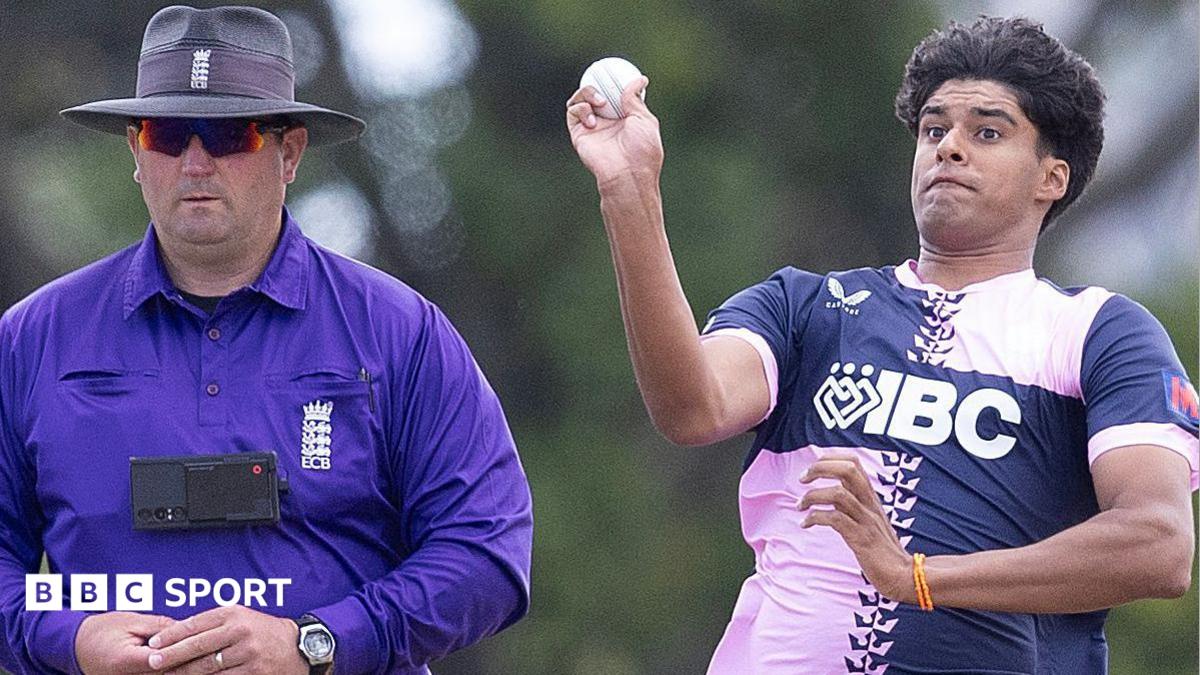
Middlesex recalled Roland-Jones for Jack Nelson, while Glamorgan gave debuts to two seamers – 18 year old academy product Tom Edwards and Aussie Connor O’Riordan, who has been on an extended second team trial.
Both teams have five players at the Hundred, but Glamorgan also chose to rest the overworked Timm van der Gugten as well as veterans Colin Ingram and Chris Cooke, with Zain ul Hassan on paternity leave, teenage prodigy Tom Norton missing at least most of the competition with a back issue, Jamie McIlroy suffering a minor niggle, and Billy Root not selected.
Sharma was quickly into his stride having Callum Nicholls adjudged lbw, but with Byrom getting the ball away for six fours, Glamorgan got to 44 before they fell apart, losing wickets in six consecutive overs.
Sharma had Henry Hurle (10) caught by keeper Joe Cracknell, Jack Hope-Bell caught to mid-off and Will Smale given lbw.
Meanwhile Roland-Jones induced Byrom (29) and Dan Douthwaite to edge to slip, Sam Robson snaffling two smart grabs, while Alex Horton feathered a catch behind.
Roland-Jones bowled his 10 over allocation straight through, while Sharma was replaced after seven by Cornwell, who wrapped up the last three while Cracknell finished with four catches.
The difficult bounce did not excuse the extent of Glamorgan’s struggles against an accurate seam attack.
With 20 coming off a nervous first over from O’Riordan, Josh de Caires got Middlesex off to a flyer.
Captain Andy Gorvin took himself off after just two overs just to give Edwards a bowl, but the 50 came up in just six overs as De Caires and Nathan Fernandes were able to attack with freedom.
Fernandes (14) drove Edwards to mid-on to give the youngster a first senior wicket, and a second quickly followed when Sam Robson was caught behind.
But De Caires (45 not out off 30) hit the winning run off the first ball of the 10th over to complete the rout.
Middlesex next travel to Worcester on Friday 31 July.
Glamorgan are set to come up against former England captain Ben Stokes at Durham on Wednesday, with further away fixtures against Derbyshire and Hampshire to follow as they try to rebuild confidence.
A routine “verify you are human” page should never ask you to open Terminal, the Mac app used to run computer commands. Yet that is how a new malware attack appears to get onto a Mac. The page tells you to copy and paste a command into Terminal. It then shows a convincing progress bar while the command quietly downloads malicious software in the background.
Next, a password box may appear that looks like a normal macOS request. If you cancel it, the malware can come back after you sign in again and repeatedly close Finder, your browser and other apps. Your Mac may feel almost impossible to use until you enter your login password.
The malware, called ClickLock, is built to steal personal information from your Mac. It searches for saved passwords, browser data and cryptocurrency wallet files. It can also install a hidden tool that lets an attacker reconnect to your computer later and control it remotely.
Researchers at cybersecurity company Group-IB discovered the malicious script on VirusTotal, an online service that checks files for threats. Someone first uploaded it there on June 9, 2026, yet none of the security tools on the platform detected it at the time of the researchers’ report. Group-IB says the campaign has targeted at least 100 systems across 33 countries since May.
Here is how ClickLock takes over a Mac and what you can do to protect yourself.
CyberGuy Live: Missed “Sick of Spam?” Get the replay and checklist
Our free CyberGuy Live class, “Sick of Spam?” , has ended, but you can still watch the full replay and download our spam-stopping checklist. Kurt “CyberGuy” Knutsson walks you step by step through simple ways to reduce robocalls, spam texts, junk email and unwanted messages. You’ll also learn how to curb political texts, clean up your inbox and spot messages that could put your personal information at risk.
Get the free replay and checklist now at CyberGuyLive.com.
ClickLock may begin with a fake verification page that tells you to paste a command into Terminal.(Kurt “CyberGuy” Knutsson)
What is ClickLock Mac malware?
ClickLock is a set of malicious scripts designed to steal sensitive information from a Mac. The malware can collect your Mac login password and browser data. It also searches for cryptocurrency wallet files, password manager extensions and information stored in macOS Keychain.
One component installs a persistent backdoor. That hidden connection can allow an attacker to access your Mac remotely even after the other parts of ClickLock remove themselves.
ClickLock gets started without exploiting a known macOS flaw. It also does not need admin-level access at the beginning. Instead, the attack depends on convincing you to run the command yourself.
How a fake verification starts the attack
Group-IB believes ClickLock likely spreads through a tactic called ClickFix. ClickFix attacks show you a fake error or verification request. The page then gives you a command that supposedly fixes the problem.
In this case, the ClickLock script displays a fake Cloudflare verification sequence after you paste the command into Terminal. An animated progress bar cycles through reassuring messages about checking browser signals and confirming you are human.
Meanwhile, the script disables keyboard interruptions and hides the Terminal cursor. It then downloads several malicious components in the background. Researchers have yet to confirm the exact landing pages used in the campaign. They also do not know whether people reached them through malicious search results, compromised websites, phishing messages or social media. However, the script’s design strongly points to a ClickFix-style lure.
The password trap starts with a convincing pop-up
After the malware begins running, it displays a fake macOS password window. The pop-up uses your real username and an Apple icon downloaded by the attacker. If you enter a password, ClickLock checks it against your Mac. When the password works, the malware records it and sends it to the attacker through Telegram.
An incorrect password brings up another request. If you cancel the window, ClickLock installs two LaunchAgents. A LaunchAgent is a macOS instruction that can automatically run software when you sign in. In this case, the LaunchAgents bring the password-stealing components back at your next login.
The malware can repeatedly close apps and pressure you to enter your Mac login password.(Kurt “CyberGuy” Knutsson)
ClickLock can make your Mac feel unusable
When the password-stealing module returns, it begins closing visible apps every 210 milliseconds. It targets Finder, the Dock and Terminal. It also shuts down Activity Monitor, System Settings, Spotlight and common web browsers.
The fake password window may remain as the only useful item on your screen. That can make your Mac look broken while pressuring you to enter your password. Group-IB found that the loop can run for about 83 hours. It stops earlier when the malware captures a valid password.
A real Keychain prompt makes the attack more convincing
A second ClickLock component targets Chrome’s Safe Storage key. Chromium-based browsers use this key to help encrypt passwords, cookies and autofill information stored on your Mac. An attacker with the key and copied browser databases may be able to decrypt that information offline.
This part of the attack triggers a genuine macOS Keychain authorization prompt. However, the malware caused the request. ClickLock then runs another process-closing loop while waiting for you to approve access. Researchers found that this loop repeats every 200 milliseconds and can continue for nearly 35 days. The script also suppresses macOS NotificationCenter for roughly six hours. That could hide warnings or notifications that might reveal the attack.
What ClickLock can steal from your Mac
ClickLock searches for information across eight browsers. Those browsers include Chrome, Firefox, Brave, Microsoft Edge, Opera, Vivaldi, Arc and Chromium.
The targeted browser information includes:
Saved usernames and passwords
Cookies and active session data
Autofill information
Bookmarks and browser storage
Cryptocurrency wallet extensions
Password manager extension data
The malware also searches for desktop cryptocurrency wallets and encrypted wallet vaults. It can collect cached blockchain addresses across several networks. Other targets include macOS Keychain, Terminal command histories and FileZilla server details. The malware also records basic information about your Mac and its public IP address. ClickLock packages the collected information into a ZIP archive. It uploads that archive through Telegram’s Bot API. Files larger than 40 MB get divided into smaller pieces, while retry code keeps trying after network failures.
If your Mac starts acting this way, shut it down and restart in Safe Mode before entering any password.(Kurt “CyberGuy” Knutsson)
ClickLock can leave a backdoor behind
One ClickLock component uses a modified version of the open-source GSocket tool. The malware installs a reverse shell, which gives the attacker a command-line connection to your Mac. On macOS, it disguises the backdoor as an iCloud-related process.
ClickLock uses a LaunchAgent and scheduled commands to keep the backdoor running. It also changes shell configuration files. Most of the other ClickLock modules delete themselves after completing their work. The GSocket component remains installed, which means the attacker may retain access after your Mac appears to return to normal.
Why ClickLock may be difficult to detect
The original ClickLock script had zero detections on VirusTotal when Group-IB analyzed it. Security vendors may update their detection tools as they learn more about the threat. The attackers also stored payloads on compromised websites that previously had clean reputations. Some components run without saving a normal file to the drive. Others erase themselves after stealing data.
However, ClickLock still produces suspicious activity while it runs. Warning signs include nonstop app closures, repeated password requests and sudden access to multiple browser folders. Security tools may also detect unusual connections to Telegram’s API. For you, the earliest warning sign is much simpler. A website tells you to paste a command into Terminal. Legitimate human verification happens inside your browser. It should never require you to run a Terminal command.
Ways to stay safe from ClickLock Mac malware
These steps can help you avoid the ClickLock trap and respond quickly if the password loop starts.
1) Close any website that sends you to Terminal
Leave the page when it tells you to open Terminal and paste a command. A polished design offers no proof that the request is safe. Familiar logos can also be copied. Group-IB warns that a website asking you to use Terminal for verification is attempting to compromise your system.
2) Understand a command before running it
Terminal commands can download software and change important settings. Never run an unfamiliar command simply to see what happens. Ask a trusted technical professional to inspect it first.
3) Question surprise password requests
Think about what you were doing when the password window appeared. A website verification should have no reason to ask for your Mac login password. It should also have no reason to request access to Chrome information stored in Keychain. Cancel the request when the timing feels wrong.
4) Keep macOS security protections current
Install macOS updates and keep automatic security updates turned on. Apple builds malware protection into macOS through Gatekeeper, Notarization and XProtect. Apple updates XProtect automatically as it identifies new malware. However, no built-in protection can eliminate every risk when you manually run a malicious command.
5) Use strong antivirus software
Strong antivirus software can provide another layer of protection against malicious files and suspicious behavior. Still, a clean scan cannot guarantee that ClickLock left nothing behind. The backdoor persists after other components erase themselves. Get my picks for the best 2026 antivirus protection winners for your Windows, Mac, Android & iOS devices at Cyberguy.com
6) Shut down if your Mac starts closing apps
Do not enter your password to make the pop-up disappear. Press and hold your Mac’s power button for up to 10 seconds until the computer shuts down. On a MacBook with Touch ID, press and hold the Touch ID button. Group-IB recommends forcing a shutdown when your Mac becomes unresponsive and keeps requesting your password. The company then recommends starting the Mac in Safe Mode.
Mac with Apple silicon: Wait until the Mac shuts down completely. Press and hold the power button until “Loading startup options” appears. Select your startup volume. Hold the Shift key, then click Continue in Safe Mode.
Intel-based Mac: Turn on or restart the Mac. Immediately press and hold the Shift key until the login window appears.
Once Safe Mode starts, turn off Wi-Fi or unplug the Ethernet cable. Then contact Apple Support or a trusted cybersecurity professional. Removing a browser extension or clearing your history will not remove ClickLock’s persistent backdoor.
7) Secure your accounts from another device
Use a separate trusted device to change the password for your primary email account. Then secure your Apple Account and any financial accounts stored on the Mac. Change password manager credentials and review active sessions. Sign out of devices or sessions you do not recognize. Review the devices connected to your Apple Account and remove unfamiliar ones. Apple also recommends changing your Apple Account password when you suspect unauthorized access. After a professional cleans or resets the Mac, change its local login password. Assume the attacker received that password if you entered it into the ClickLock window.
Kurt’s key takeaways
ClickLock depends on one dangerous moment: convincing you to paste a command into Terminal. Once that happens, the malware can begin stealing information before the password pressure even starts. The biggest red flag is easy to remember. No trustworthy website needs Terminal to prove you are human. If your Mac starts closing apps and demanding a password, shut it down rather than giving in. Start in Safe Mode and get help checking for the persistent backdoor. Then use another trusted device to secure your most important accounts.
Have you ever seen a suspicious password prompt or fake verification page on your Mac? Tell us what it looked like and what you did next in the comments below. Let us know by writing to us at Cyberguy.com
Get my best tech tips, urgent security alerts and exclusive deals delivered straight to your inbox.
For simple, real-world ways to spot scams early and stay protected, visit CyberGuy.com – trusted by millions who watch CyberGuy on TV daily.
Plus, you’ll get instant access to my Ultimate Scam Survival Guide free when you join.
Copyright 2026 CyberGuy.com. All rights reserved.
Kurt “CyberGuy” Knutsson is an award-winning tech journalist who has a deep love of technology, gear and gadgets that make life better with his contributions for Fox News & FOX Business beginning mornings on “FOX & Friends.” Got a tech question? Get Kurt’s free CyberGuy Newsletter, share your voice, a story idea or comment at CyberGuy.com.
As screens compete for families’ attention, children’s development is paying the price, top federal health officials warn.
Early and excessive screen time can trigger severe neurocognitive delays in young children, impacting attention spans, memory and language skills, according to Dr. Stephanie Haridopolos, interim surgeon general and principal deputy assistant secretary of health.
“Parents are now fighting for attention from the screens,” Haridopolos told Fox News Digital.
To help parents combat screen addiction, the U.S. Surgeon General’s Office has released a targeted framework known as “the 5 Ds.”
No. 1: Discuss
Don’t wait for a conflict to establish boundaries, experts recommend. Sit down as a family to outline clear, age-appropriate rules regarding when, where and how long screens can be used throughout the day.
Setting explicit expectations ahead of time cuts down on daily arguments, experts say.
High screen exposure in young children threatens early brain tissue development, leading to delays in attention, memory and speech, experts say.(iStock)
No. 2: Do (model the behavior)
Parents should model healthy screen habits themselves, Haridopolos said.
“If we’re constantly on our screens, then perhaps our children will be, too,” she said, encouraging adults to “be good role models and lead by example.”
Rather than defaulting to giving children a tablet when they’re bored, Haridopolos recommended steering them toward hands-on activities, such as doing arts and crafts or preparing a healthy meal together.
Breaks like summer and the holidays are critical windows for families to reset digital boundaries, the interim surgeon general suggested.
Scrolling while eating can lead to higher caloric intake and increased consumption of ultraprocessed foods, the interim surgeon general warned.(iStock)
Haridopolos encouraged families to build regular screen-free periods into their daily routines, including during meals, car rides and before bedtime.
Mealtimes: Keep family dinners focused on face-to-face conversation.
In the car: Treat travel time as a chance to reconnect rather than defaulting to phones or seat-back screens.
Before bed: Turn off blue-light devices at least an hour before sleep to avoid disrupting natural sleep cycles.
As part of the “Delay” step, the program recommended putting off children’s access to screens whenever possible. (iStock)
No. 5: Delay
As part of the “Delay” step, Haridopolos recommended putting off children’s access to screens whenever possible. One way to do that, she said, is by requiring phones and other mobile devices to be charged overnight in a shared household space — like the kitchen or living room — rather than in children’s bedrooms.
“Those are some simple activities that you can do that will make huge changes in the future,” the interim surgeon general added.
Khloe Quill is a lifestyle writer with Fox News Digital. She and the lifestyle team cover a range of story topics including food and drink, travel, and health.
Hosted by Mo Rocca. Featured: Aging in rural America; compromises to food safety; supermodel and actress Lauren Hutton; singer Corinne Bailey Rae; artist Derrick Adams; worm grunting; and how plants are affected by touch.
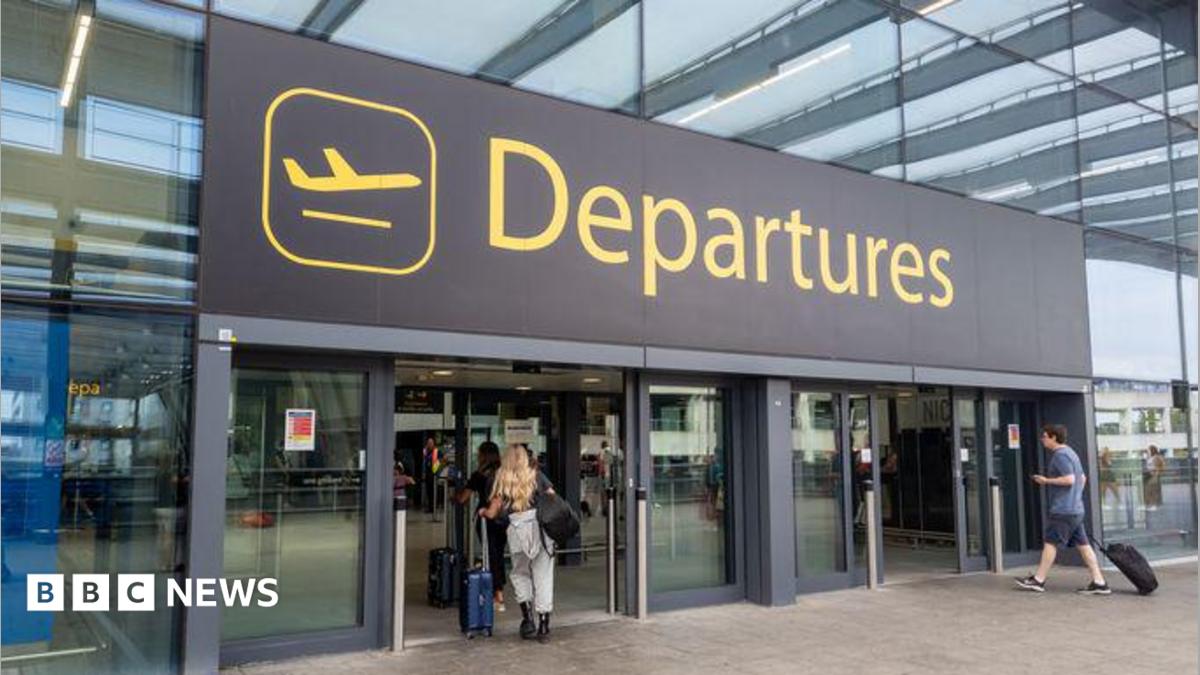
A passenger at the airport, Paul Lee, told the BBC he had not heard any announcements about the issue or seen bottled water being handed out.
He said: “For people who need to go to the toilet, this isn’t good, and still no announcement or official information – and the water they mentioned isn’t being distributed.
“I’m taking off soon, so that’s fine, but for passengers in a few hours, this will be bad.”
Lee added that restaurants and lounges were shut but shops were open.
Former MP and ex-CEO of UK Music Michael Dugher urged the airport on social media to “at least allow people to use the chairs in all the closed restaurants and bars”.
Dugher, who was recently appointed the UK government’s first “music champion”, said: “No water is one thing but depriving people of somewhere to sit is another… families are having to sit on the floor.”
People heading to the airport for flights have been advised not to arrive early.
A statement from Easyjet said: “Due to a water supply issue affecting London Gatwick Airport, bag drop desks are temporarily opening two hours before departure instead of three hours.”
The airline said: “Please do not arrive earlier, as you will not be able to drop off your bags or enter the departure lounge until bag drop opens.”
The Duchess of Sussex described her husband as a “charmer” after he made a surprise FaceTime call during her appearance on MasterChefAustralia.
Meghan appeared as a guest judge on the 18th season of the cooking show on Sunday.
Contesants were challenged to transform a larder ingredient into a dish “fit for a duchess”.
The couple spoke during the show’s judging portion, when Harry made a video call to check in.
“Hi, my love,” she said after producers handed her the phone, introducing Harry to contestants and judges and showing him the dishes.
“My husband’s here,” she told the stunned crowd.
The episode was filmed during Meghan and Harry’s week-long trip to Australia in April, when the couple carried out charitable and commercial engagements across Melbourne, Canberra and Sydney.
“He’s a charmer, isn’t he?” she said after the phone call ended.
Asked about cooking for her family, the Meghan said she had “a lot of palates to appease”, and that her children Prince Archie and Princess Lilibet “are great eaters” who enjoy Brussels sprouts.
She said her husband’s British upbringing means he prefers “meat, potatoes and cream sauce” while the Californian-born duchess favours grilled meats, fish and citrus.
Prince Harry, Meghan Markle, Archie and Lilibet (@meghan/Instagram)
A previous announcement from the Sussexes described the new season as featuring some of the “most impressive amateur cooks the competition has ever seen”.
The duke and duchess’s Australian visit included meetings with mental health charities, Invictus veterans and survivors and emergency service personnel from the Bondi Beach terror attack.
“We love Australia. We had the most sentimental, amazing time. We were here almost eight years ago,” the duchess said of her visit.
“We announced we were pregnant with Archie at the time. It’s full circle.”
Previous seasons of the Australian show have aired in the UK on Channel 4, with British guest judges including Gordon Ramsay, Nigella Lawson, Heston Blumenthal and Jamie Oliver.
It is understood that Meghan was not paid for her appearance on the cooking programme.
Every Saturday at 6 a.m., two weekend nannies arrive at Christine Landis’s home in San Diego, California, to wake up her two young children, make breakfast and manage the morning routine. Landis, a 44-year-old former fintech CEO, does not usually come downstairs until around 9 a.m. after having coffee and talking in bed with her husband.
It’s all part of a home routine that costs $250,000 annually to run and includes a live-in family assistant, weekend care team, housekeeper and private chef who serves them three-course dinners at home while they wear pajamas.
Landis, who sold her tech firm before launching the home-management platform Peacock Parent, does not see outsourcing as stepping back from parenting. It is about applying business logic to buy back time, she said.
“Why are we trying to do it all ourselves when we would never apply that same principle at our job?” Landis told The Independent. “In the companies we work for, we scale for profit. We are delegating. We are outsourcing. You are proud of that fact. And yet at home, I see it as scaling for joy.”
Former tech CEO Christine Landis, of San Diego, spends $250,000 annually on a full domestic support team, including a live-in assistant, weekend nannies and a private chef to run her household with corporate-level efficiency (Dayley Photography)
Time is money
These types of highly-choreographed setups are becoming increasingly common among ultra-wealthy families. Rather than relying on a single nanny or an occasional babysitter, executive parents are bringing in multi-person support teams to manage the household. Domestic staffing agencies and luxury parenting concierges report a rise in demand for specialized help as they increasingly place family assistants, private chefs, coaches and night nurses.
Professional potty-training consultants who work intensively with toddlers can charge anywhere from $600 for virtual support — such as the consult packages offered by NYC Potty Training — to thousands of dollars for multi-day in-home guidance. And private bike-riding lessons, traditionally considered a weekend parenting rite of passage, routinely run hundreds of dollars per session.
To Landis, “scaling” means delegating routine household duties to clear space for the time she spends with her two children, aged five and seven. Anything logistics-heavy or purely functional typically gets handed off to her household staff.
“I still change diapers, but so did our nanny and a night nurse,” Landis said. “I don’t have a chef there in the morning, but do we have egg bites already prepped for us? And do we have bacon that’s already been cooked? Yes.”
Every Saturday at 6 a.m., two weekend nannies arrive at Landis’s San Diego home to handle the morning rush and wake her children, allowing her to stay in bed until 9 a.m. for coffee and conversation with her husband (Dayley Photography)
Domestic infrastructure
Supporting these elaborate setups is a growing network of boutique staffing firms, offering affluent households everything from executive-level HR vetting to full-service lifestyle management.
For long-term domestic infrastructure, agencies like British American Household Staffing, which operates across major cities including London, New York, Los Angeles and Dubai, act as matchmakers for families seeking full-scale support.
The firm focuses on vetting and sourcing highly specialized domestic teams. This includes rotational nannies, Norland-trained childcare specialists (graduates from the elite British nanny school), night nurses, house managers, executive personal assistants and private chefs.
“The traditional nanny remains an essential role, but we are increasingly seeing families think beyond a single hire and build a more comprehensive support structure,” Anita Rogers, founder and CEO of BAHS, told The Independent. “Rather than expecting one person to handle everything, families are recognizing the value of hiring specialists with clearly defined responsibilities.”
This shift is driven by high-earning parents explicitly seeking to run their homes with corporate-level efficiency.
“Many larger households now function much like privately run organizations,” Rogers said. “A household manager may oversee staff, budgets, vendors and multiple properties, while a family assistant coordinates travel, school schedules and the family’s day-to-day logistics.”
Landis’s private chef prepares pre-cooked bacon and egg bites for easy mornings, followed by full three-course family dinners served at home (Dayley Photography)
Building out this kind of domestic enterprise comes with a hefty price tag. According to Rogers, rotational arrangements are particularly in demand for nannies, newborn care specialists, chefs and private drivers. Annual payroll for a fully staffed household commonly exceeds $1 million before benefits and other employment expenses. For a large estate, Rogers says approximately $5 million per year in staffing costs is common, with budgets potentially reaching $10 million.
The firm guides parents through complex household logistics, advising on competitive salaries, schedule structuring, benefits and local tax compliance. Candidates undergo multi-tier vetting, including background checks, past employer reference audits and in-home trial periods, to ensure personality fits and strict non-disclosure discretion before a contract is ever signed.
Addressing critics who claim that multi-staff households amount to delegating basic parenting, Rogers argues that professional support serves the opposite purpose.
“Household staffing is not about outsourcing parenthood,” Rogers said. “It is about supporting it. When each staff member has a clearly defined role, parents are freed from much of the domestic and logistical work and can spend more meaningful time with their children — whether they are playing together, having conversations about values or working one-on-one on schoolwork.”
Parenthood, curated
While placement agencies like BAHS build out a home’s permanent workforce, luxury parenting concierges manage the immediate demands of family life.
U.K.-based The Luxury Parent Concierge operates on an advisory model, stepping in to curate and coordinate every stage of early parenthood. Rather than managing daily chores directly, their concierges handle niche operational logistics, from birth planning, nursery interior design and eco-friendly baby-proofing to sourcing night nannies, meal delivery services and maternal wellness experts.
Zoe Kerswill, founder of U.K.-based agency The Luxury Parent Concierge, which helps executive parents navigate early childhood logistics (Zoe Kerswill)
Founded by Zoe Kerswill, a former Montessori educator and private maternity nurse, the agency grew out of a realization that executive parents needed someone to sort through the endless decisions that come with having a baby.
“Parents today are much more involved in the day-to-day raising of their children than ever before,” Kerswill told The Independent. “They’re not looking to hand over parenting — they want to be present for every milestone. What they’re looking for is the right support around them so they can actually enjoy it.”
That support can range from standard sleep training and custom travel itineraries to hyper-specific concierge tasks like baby name consulting, hospital bag curation, and sourcing bespoke luxury items, including a solid gold pacifier for one client.
“One of the wildest requests I’ve ever had was being asked to source a solid gold dummy [pacifier],” Kerswill said. “It definitely wasn’t something I’d expected, but it’s a great example of how varied concierge requests can be.”
For busy executives, however, hiring this level of support is less about outsourcing and more about bringing intention to the hours they spend with their children.
“They’re outsourcing the research, the planning and the endless decision-making,” Kerswill added. “Many families are starting to view their home life with the same level of intention that they once reserved for their careers. It’s no longer about choosing between a successful career and being a present parent — it’s about building the right support around them so they can have both.”
The ‘silver-spoon’ backlash
Spending $250,000 a year on household help inevitably gets people talking. When Landis shares her setup publicly, critics are quick to accuse her of dodging basic parenting duties or spoiling her kids.
Landis argues that people misunderstand how her household actually runs, noting that her children are still held to clear standards, from clearing their plates into the dishwasher to carrying wet sheets downstairs after a nighttime bed accident.
Peacock Parent founder Christine Landis openly rejects the ‘superparent’ myth, arguing that hiring domestic help to raise her children, aged five and seven, is no different from outsourcing at a startup (Dayley Photography)
“The assumption is that they’re just being fed a silver spoon, and that’s actually a huge reason why I started Peacock Parent — to put a face to it,” Landis said.
“There is a lot more normalcy as far as the lessons we are teaching our children, the standards we are holding them to, than people would assume when you just hear chef, family assistant and all those labeled in one line.”
Micro-outsourcing on a budget
To make this approach accessible beyond seven-figure budgets, Landis founded Peacock Parent and launched Proxy, an on-demand texting and home-management platform designed to help working families streamline household logistics and delegate the mental load as an executive would.
The company advocates a “micro-outsourcing” strategy. Rather than maintaining a full-time staff, families operating on smaller budgets identify their single highest-friction chore, whether that’s paying $20 for a drop-off wash-and-fold laundry service, using grocery delivery to skip weekly store runs or hiring a local college student for two hours on Sundays to fold clothes and prep lunches.
For Kerswill, outsourcing household logistics is an evolution of traditional family values.
“I’ve always believed in the saying that it takes a village to raise a child,” Kerswill said. “The difference is that today’s village simply looks different. It might include a maternity nurse, a trusted nanny, a sleep consultant or a lactation specialist. By delegating the logistics to trusted experts, parents are creating more time and headspace to focus on the moments that really matter.”
More than 100 British-based millionaires, led by Gary Lineker, have written to Andy Burnham urging him to tax their wealth more, telling the new prime minister “we can afford it.”
Independent readers largely agreed, with almost four in five backing a wealth tax on the super-rich in our poll.
But their support in the comments came with a clear condition: close the loopholes first.
Time and again, readers set out what they’d need to see before trusting any wealth tax to work – exit taxes, tighter reporting requirements, and no room for tax advisers to help the wealthy dodge the bill.
Some pointed to modest schemes abroad as proof it can succeed if pitched right, while others questioned why any millionaire needs legislation at all when they could simply donate to HMRC today.
Here’s what you had to say:
Close every loophole first, then tax fairly
A wealth tax is a very good idea but not sufficient on its own. The government need to secure the tax base by legislation to:
A) Make sure that all UK citizens (wherever they choose to live) and all foreign citizens who live and/or own property in the UK are required by law to pay UK taxes unless they can prove that they pay an equal or greater sum elsewhere.
B) Make sure that all forms of wealth of all UK citizens and residents are properly and fully reported and recorded.
C) Levy an exit tax on the wealth of anyone who decides to exit the UK to avoid taxes.
D) Require all tax advisers, accountants and lawyers to be licensed by HMRC to provide tax advice, to obtain prior approval from HMRC for any schemes recommended to clients and to report on all tax avoidance activities by their clients. It is unacceptable that a whole industry of agents and advisers exists for the purpose of helping the wealthy avoid paying their taxes.
Get a free fractional share worth up to £100. Capital at risk.
Once the tax base is secured then a well-designed, progressive wealth tax could raise a lot of revenue and counteract the rampant increase in inequality that already blights our society and is getting worse.
They could already donate to HMRC if they wanted to
Nothing stops millionaires visiting HMRC’s “Make a tax donation” page and taxing themselves until they are blue in the face. But no. What they really want is for others to get taxed. By the way, £24bn a year would be squandered by the government within months on new HS2s, aircraft carriers that don’t work in warm water, pay rises for train drivers and PPE-like scandals. But the resulting exodus of wealth from Britain would not be reversed for generations.
For the latest political headlines delivered straight to your inbox, sign up for our daily View from Westminster newsletter here
Start with an exit tax and end the loopholes
Any wealth tax must be targeted at the 20,000 who have wealth in excess of £10m – with NO loopholes for them to squirrel their wealth away.
Start with an exit tax and the ability for HMRC to tax wealth anywhere on the planet. The US of A taxes its citizens wherever they choose to live. And don’t forget to resource HMRC so that it has the staff to do the job.
Italy uses low tax incentives to attract high-net-worth individuals. But they also have a very modest wealth tax on luxury items (fast cars, yachts, second homes and share investment portfolios). The problem with the UK (and other European countries where wealth taxes have failed) is that they want to levy punitive taxes on wealthy people. They and their assets are generally very mobile. The trick is to charge a modest wealth tax which raises revenue but is low enough that people will wear it.
At a time when the richest 0.001 per cent possess three times the wealth of the poorest 50 per cent globally, something has to be done as all they’re ever interested in is getting even wealthier. There’s bound to be scaremongering from the right-wing press about higher taxes for them, but then it’s all owned by people who fall into the “super rich” category and will use whatever propaganda they can to discourage any such move, naturally. It’s great that Lineker and many others want to contribute extra in taxes, but there are even more who don’t.
The discussion is being framed as a wealth tax, but it could just as easily be referred to as an equalisation of tax rates on earned and unearned income. We have a situation where on the whole the wealthier you are, the lower your effective tax rate is, and that doesn’t seem right. At the other end of the scale, I wonder what the effect would be if we were to abolish VAT (another regressive tax) and at the same time lower the basic rate threshold.
Any tax of this sort doesn’t have the thresholds increased over time and people who we wouldn’t dream of paying it now are dragged into it in the future. Also I feel strongly that wealth should be taxed at the time the asset is realised or death. You shouldn’t be taxed for holding an asset. Not everyone uses their assets to generate loans to avoid taxes. Personally I would change capital gains tax so it applied to all house sales not just second homes.
I venture to guess that there aren’t many on the list that have sufficient assets to end up paying a wealth tax of 2 per cent on assets over £100m. Just a number of supposed influencers and “jumpers on the bandwagon” that have little intention of paying any more than they have to. Lineker of course fought HMRC (and won) his £4.9m IR35 tax appeal just a few years ago. Maybe he and his co-signatories could start by making voluntary payments to HMRC/Treasury in addition to their “normal tax dues” through the available formal route for such payments on the UK Gov website guidance. They don’t even need to tell us how much they were intending to give extra. Oh right, they’re looking for others to be taxed and they’ll keep their hands firmly in their pockets.
I have seen someone suggest a transaction tax. Set an exempt level so that the less well off don’t get taxed. The more you spend the more you pay. I can’t remember the exact figures but it could raise billions and could even reduce other taxes that disproportionately affect the people on lower incomes.
Good for them for being principled. Russian oligarchs et al (if not already taxed) should be hit too. Burnham also needs to introduce fair taxes upon companies like Amazon that do not pay what they ought to, and – vitally – justly tax fossil fuel companies for their utterly obscene profits, especially given the environmental and climate damage they have deliberately and consciously caused and continue to cause, whilst thwarting any attempt to curb them.
Some of the comments have been edited for this article for brevity and clarity.
Want to share your views? Simply click ‘log in’ or ‘register’ in the top right corner to sign in or sign up. Once registered, you can comment on the day’s top stories for a chance to have your opinions showcased.
Want your voice to stand out? Independent Premium subscribers enjoy priority for featured comments. Subscribe here.
Make sure you adhere to our community guidelines, which can be found here. For a full guide on how to comment, click here.
Families have less than a week left to apply for help with the costs of getting ready for the new school year.
The Back to School Bonus scheme offers a one-off payment of up to £150 towards uniforms, stationery and other essentials for children from reception to Year 11.
The last government announced the funding in April for parents who do not receive income support and earn a combined income of £75,000 or less.
The application deadline is Friday 31 July with money due to be paid into bank accounts in August.
LONDON — A manhunt was underway early on Sunday in Germany, where police identified a 21-year-old man who allegedly drove a vehicle into a crowd during Berlin’s LGBTQ+ celebrations on Saturday, killing one person and injuring several others.
The Berlin Police released a photo of the man, whom was they identified as Abdul B., using only an initial for his surname, as is common under German privacy law.
German police stand near a white van that suspect Abdul B. allegedly used in last night’s vehicle crash during the Christopher Street Day Berlin pride parade on July 26, 2026 in Berlin, Germany.
Omer Messinger/Getty Images
“Abdul B. is alleged to have injured several people with a moving vehicle in the Tiergarten area at approximately 10 p.m.,” according to a joint statement released by the Berlin Police and Public Prosecutor’s Office.
The 21-year old suspect identified by police as Abdul B. is seen in this undated handout photo released by the Berlin Police on July 26, 2026.
Berlin Police via Reuters
Police said in a social media post in German that the man had been “known to police” and that he was thought to have been associated with the “Islamist spectrum.” Details about potential motives were not immediately released.
Hundreds of thousands of people had come to Berlin to celebrate Christopher Street Day, one of Europe’s largest LGBTQ+ celebrations, according to the city.
The two-day event was scheduled on Saturday to include a parade, which was to begin in Mitte, in central Berlin, wind its way south into Schöneberg, then turn back northward toward Brandenburg Gate.
At least 16 people were injured when the vehicle crashed into the crowd in Tiergarten Park, according to law enforcement, an area along a footpath within the park and near to the parade’s end.
A person looks on as parade infrastructure is dismantled near the Brandenburg Gate, after a deadly incident in which a vehicle crashed into a crowd near Berlin’s annual Christopher Street Day Pride parade on Saturday evening, leaving multiple people injured and the parade called off, in Berlin, Germany, July 26, 2026.
Christian Mang/Reuters
“One or more people are believed to have subsequently fled the vehicle,” police said. “Furthermore, several people are reported to have been injured with stabbing weapons.”
Several of those who were injured had life-threatening injuries, the Berlin Police told ABC News. Police earlier said 17 people had been injured.
A police officer searches in the Tiergarten Park near the scene where a vehicle rammed into a crowd near the Pride March in Berlin, Germany, Sunday, July 26, 2026.
Markus Schreiber/AP Photo
The person of interest was described by police as having a “slim build.” They said he was about 1.9 meters tall, or about 6′ 3,” with black hair. He was wearing a black hoodie and white pants, police said.
“If you encounter this person, under no circumstances should you approach them or have any direct contact with them,” police said. “They may be armed and dangerous! Immediately contact the police emergency number 110.”
The police on Saturday called off the rest of the celebrations for the night after the incident at the park.
ABC News’ Rashid Haddou, Felix Franz, Jamie Dorrington and Ivan Pereira contributed to this report.